

Holland Defense Adaptations PP Slides

Presentation
•
Other
•
KG - Professional Development
•
Practice Problem
•
Hard

Sloane Betik
Used 1+ times
FREE Resource
10 Slides • 2 Questions
1

LEARNING OBJECTIVES
Describe physical and
behavioral adaptations
that help animals defend
themselves from
predators.
© Stephanie Elkowitz
1
2

© Stephanie Elkowitz
2
Animal Adaptations
• Many animals have
adaptations that help
them defend
themselves against
predators. These
adaptations are called
defense adaptations.
• Defense adaptations
can be physical or
behavioral
adaptations.
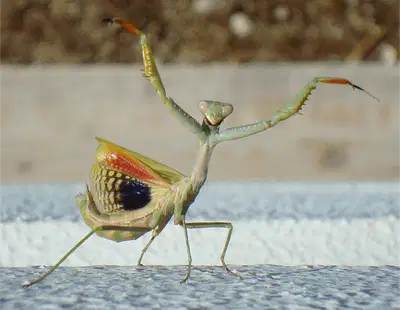
DEFENSE ADAPTATIONS
A praying mantis in defensive
posture.
3
Fill in the Blanks
4

© Stephanie Elkowitz
3
Animal Adaptations
• Physical defense adaptations are physical traits that help an
animal protect itself from attack by a predator. These
adaptations help prevent an attack or help an animal defend
itself during an attack.
• Behavioral defense adaptations are things an animal does to
avoid being attacked by a predator or to ward off a predator
during an attack. Some animals hide or play dead. Other
animals stick together in large groups. Some animals release
poison or odor to fight off a predator.
DEFENSE ADAPTATIONS
5
Multiple Choice
Behavioral adaptations are what?
Adaptations that help defend or ward off attack
Changes in an animal's appearance to blend in or prevent attack
6

© Stephanie Elkowitz
4
Animal Adaptations
• There are six important defense adaptations:
– Camouflage
– Mimicry
– Poison
– Stinger
– Odor
– Body Coverings
DEFENSE ADAPTATIONS
7

© Stephanie Elkowitz
5
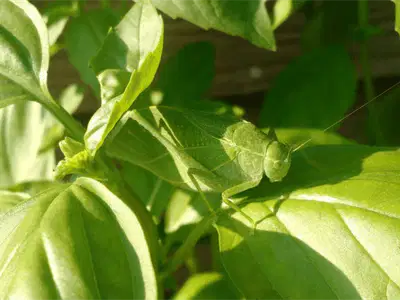
Animal Adaptations
• Many animals have
body coloring or
patterns that help
them blend in with
their environment.
This is called
camouflage.
• Camouflage helps
animals hide from
predators.
DEFENSE ADAPTATIONS
8

© Stephanie Elkowitz
6
Animal Adaptations
• Some animals have body coloring or
patterns that make them look like
another organism. This is called
mimicry.
• Some animals have body coloring
that mimics the coloring of a
poisonous animal.
• Other animals make themselves
look larger. For example, some
butterflies and moths have patterns
on their wings that look like large
eye.
DEFENSE ADAPTATIONS
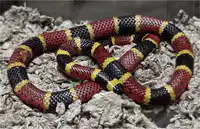
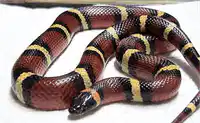
The coral snake (top) is a deadly,
venomous snake. The milk snake
(bottom) is not poisonous but
mimics the coral snake coloring to
appear dangerous.
9

© Stephanie Elkowitz
7
Animal Adaptations
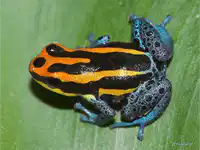
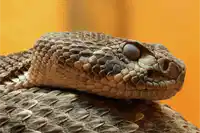
• Some animals produce poison that is
harmful or deadly to other organisms.
• Some frogs excrete poison in their skin.
• Some insects, fish and snakes release
poison (venom) when threatened by a
predator. They bite or sting to release the
venom into the predator or threat.
• Many poisonous animals are brightly
colored or have specific patterns of
colors on their skin. Predators can learn
to recognize the coloring and avoid these
animals.
DEFENSE ADAPTATIONS
10

© Stephanie Elkowitz
8
Animal Adaptations
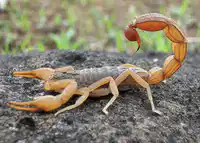
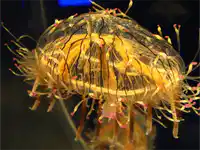
• Some animals have a sharp
structure or “stinging cells” that
releases toxins or venom when
attacked by a predator.
• The toxin or venom harms the
predator.
• Jellyfish have “stinging cells” that
release toxins when threatened.
• Bees, ants and scorpions have
stingers they use to release venom
when threatened.
DEFENSE ADAPTATIONS
11

© Stephanie Elkowitz
9
Animal Adaptations
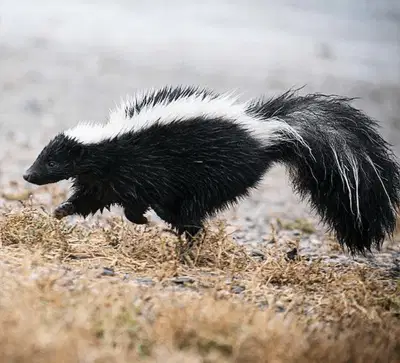
• Some animals release a
toxic or irritating odor to
protect themselves from
predators.
• Skunks are notorious for
releasing a strong
smelling chemical when
they feel threatened.
• Vultures expel a stinky
vomit when they feel
threatened.
DEFENSE ADAPTATIONS
12


© Stephanie Elkowitz
10
Animal Adaptations
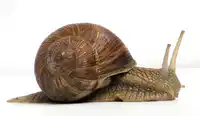
• Some reptiles and invertebrates produce a
shell that encloses all or part of the
organism. The animal can pull its body inside
the shell if attacked by a predator to protect
itself.
• Most reptiles and fish are covered in scales.
Scales protect animals by preventing
damage from sharp objects such as
predators’ sharp teeth.
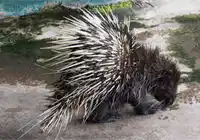
• Some animals, such as the porcupine, are
covered in needles, which harm predators if
they attack.
DEFENSE ADAPTATIONS
LEARNING OBJECTIVES
Describe physical and
behavioral adaptations
that help animals defend
themselves from
predators.
© Stephanie Elkowitz
1
Show answer
Auto Play
Slide 1 / 12
SLIDE
Similar Resources on Wayground

10 questions
9/11
Presentation
•
9th - 12th Grade
10 questions
Author's Claim
Presentation
•
5th Grade
10 questions
Like Terms Introduction
Presentation
•
6th Grade
10 questions
Volleyball
Presentation
•
University
12 questions
2º ano - SOCIOLOGIA
Presentation
•
2nd Grade
9 questions
Vocabulary
Presentation
•
2nd Grade
10 questions
La oración
Presentation
•
2nd Grade
8 questions
Cell Theory Review
Presentation
•
7th Grade
Popular Resources on Wayground
10 questions
HCS SCI 03 Summer School Review 4

Quiz
•
3rd Grade
11 questions
HSMS - Standard Response Protocol
Quiz
•
6th - 8th Grade
16 questions
1.1-1.2 Quiz Review
Quiz
•
9th - 12th Grade
12 questions
Exponent Expressions
Quiz
•
6th Grade
20 questions
Adding and Subtracting Integers
Quiz
•
6th - 7th Grade
11 questions
Northeast States
Quiz
•
3rd - 4th Grade
10 questions
Characterization
Quiz
•
3rd - 7th Grade
10 questions
Common Denominators
Quiz
•
5th Grade
Discover more resources for Other
10 questions
HCS SCI 03 Summer School Review 4
Quiz
•
3rd Grade
11 questions
HSMS - Standard Response Protocol
Quiz
•
6th - 8th Grade
16 questions
1.1-1.2 Quiz Review
Quiz
•
9th - 12th Grade
12 questions
Exponent Expressions
Quiz
•
6th Grade
20 questions
Adding and Subtracting Integers
Quiz
•
6th - 7th Grade
11 questions
Northeast States
Quiz
•
3rd - 4th Grade
10 questions
Characterization
Quiz
•
3rd - 7th Grade
10 questions
Common Denominators
Quiz
•
5th Grade