

Deserts

Presentation
•
Geography
•
7th Grade
•
Practice Problem
•
Easy

Aimee Cooper
Used 2+ times
FREE Resource
22 Slides • 12 Questions
1
Match
Match the following
hot desert
hot dessert
cold desert
cold dessert
hot desert
hot dessert
cold desert
cold dessert
2

Lesson Objectives
To be able to locate the hot desert biome.
To describe why hot deserts are an extreme environment.
To explain how plants and animals survive in this ecosystem
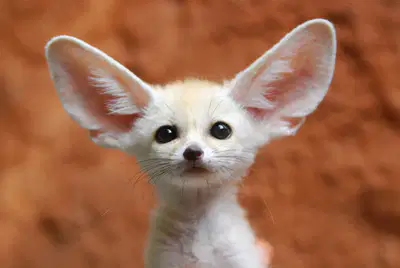
3
Open Ended

What do you think has happened here?
4

Hot deserts
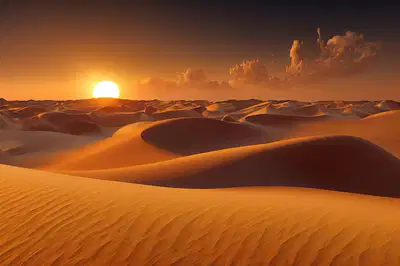
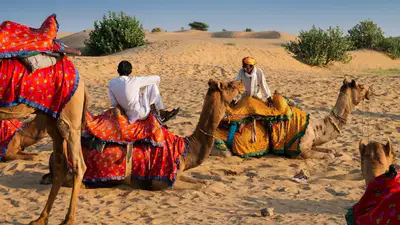
5
Open Ended
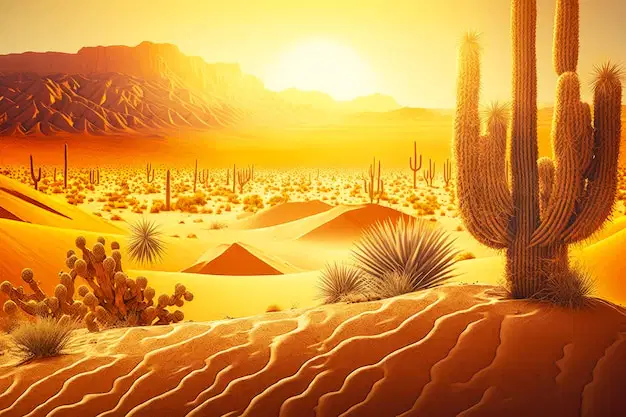
How could we define hot deserts
6
Hot deserts
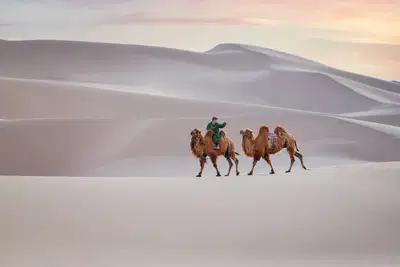
A hot desert is a land of extremes.
Extreme heat and extreme dryness
7

Watch the video clip and make notes about the hot desert biome.
8
Multiple Choice
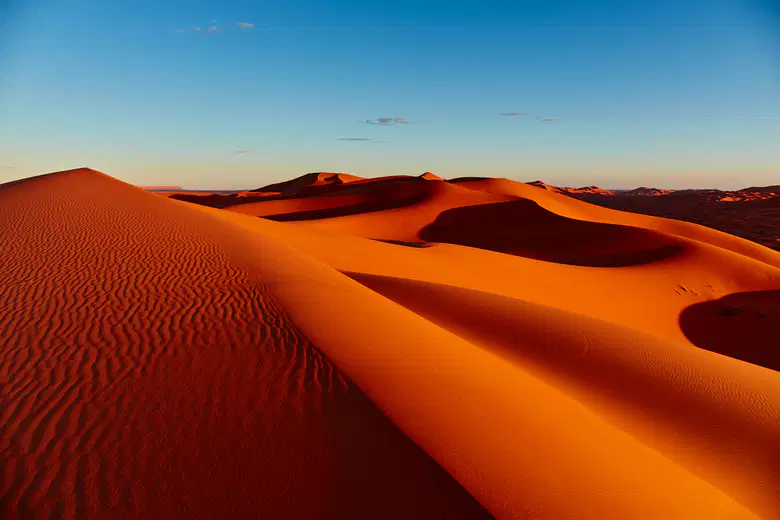
How many mm of rain does a desert get a year?
250mm
25mm
2500mm
2.5mm
9
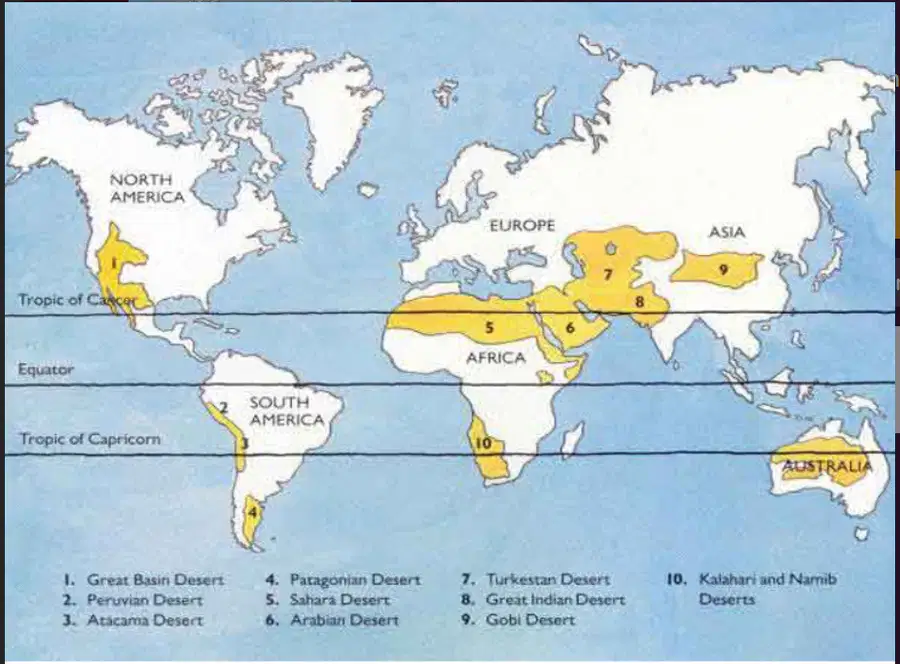
Hot desert location
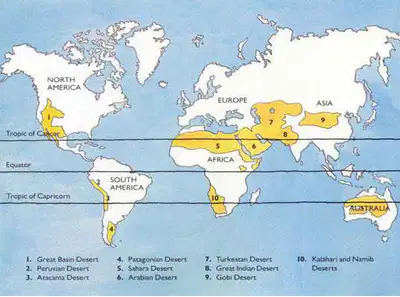
Most hot deserts are found near the Tropics of Cancer and Capricorn, between 15-30° north and south of the Equator. The largest hot desert is the Sahara in Africa which spans the whole width of the continent.
10
Categorize
Great Basin Desert
Peruvian Desert
Atacama Desert
Patagonia Desert
Sahara Desert
Arabian Desert
Turkestan Desert
Great Indian Desert
Gobi Desert
Kalahari Desert
Namib Desert
Great Sandy Desert
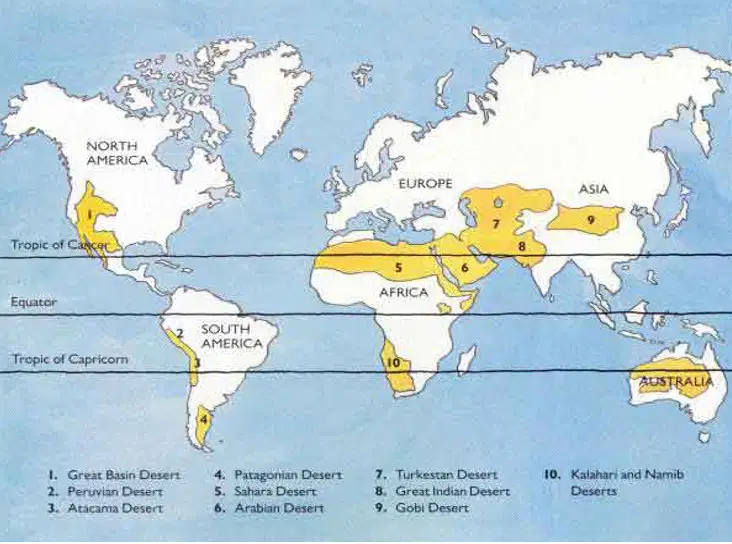
On which continent would you find each of these deserts
11
12

Desert Climates
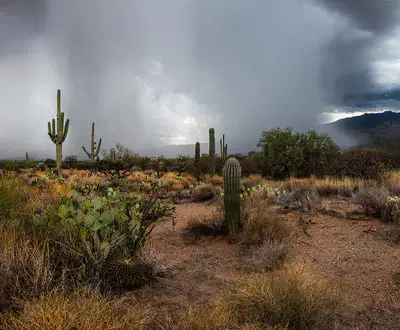
The climate is very hot. Summer day time temperatures can exceed 40°C. However, at night the temperature can drop below 0°C.
The climate is very dry with less than 250 mm of rainfall a year. There is also a big variation in temperature between day and night.
13
Desert Climates
Despite being called hot deserts and having daytime temperatures of up to 50C. Deserts can be very cold at night.
Sometimes the night time temperature in the desert can fall below freezing. This makes it a really difficult place to live.
The difference between day and night temperatures is know as diurnal temperature range.

14
Desert Climates
15
Open Ended
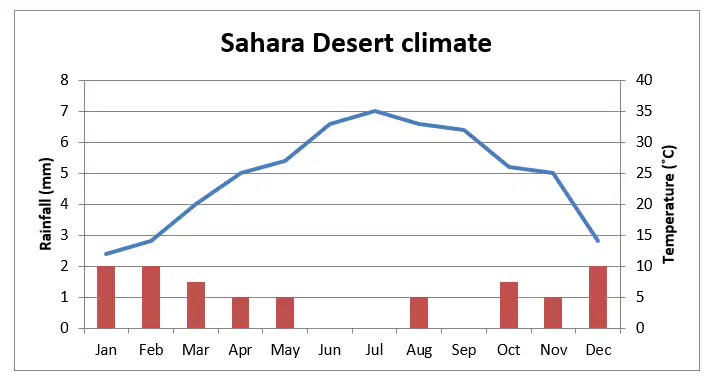
1) What is the peak temperature?
2) How much rain falls in December?
3) Which months have no precipitation?
16
Desert Climates
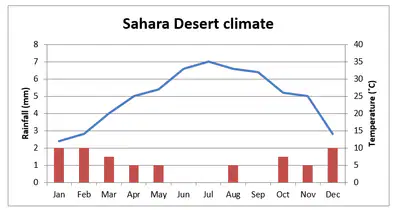
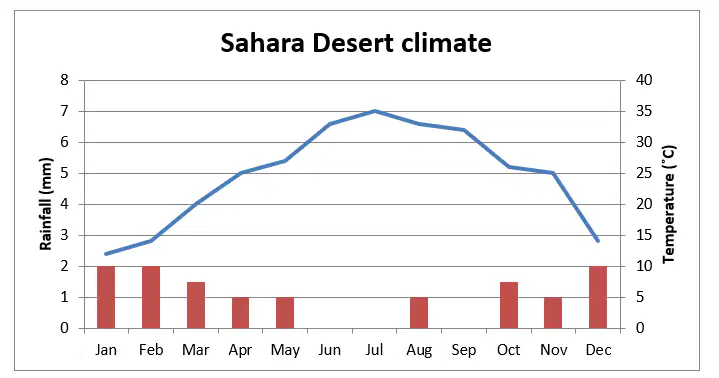
1) What is the peak temperature? 35C
2) How much rain falls in December? 2mm
3) Which months have no precipitation? June July, September
17
Drag and Drop
18

The desert ecosystem
Hot deserts have an extreme climate and challenging environment. There is very little biodiversity in hot deserts because of the harsh climate. Few species are specialised enough to survive there. Plants and animals which do survive there have adapted to difficult conditions. The biotic or living components and the abiotic or non-living components of the hot desert rely on one another.
19
Match
Match the following
biotic
abiotic
diurnal range
biome
ecosystem
living components of an ecosystem
non-living components of an ecosystem
the difference between the highest and lowest temperatures in a day
a large scale ecosystem
a biological community of interacting organisms and their physical environment
living components of an ecosystem
non-living components of an ecosystem
the difference between the highest and lowest temperatures in a day
a large scale ecosystem
a biological community of interacting organisms and their physical environment
20

Desert Soil
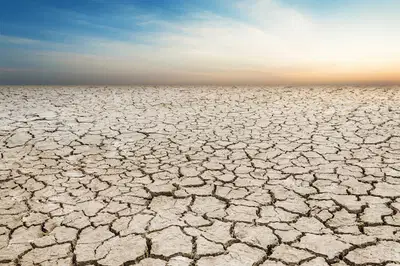
Desert soils are thin, sandy, rocky and generally grey in colour.
Desert soils are very dry. When it does rain they soak up the water very quickly.
The surface of the soil may appear crusty. This is due to the lack of rainfall. As it is so hot water is drawn up to the surface of the soil by evaporation. As the water evaporates, salts are left behind on the surface of the soil.
21
Desert Plants
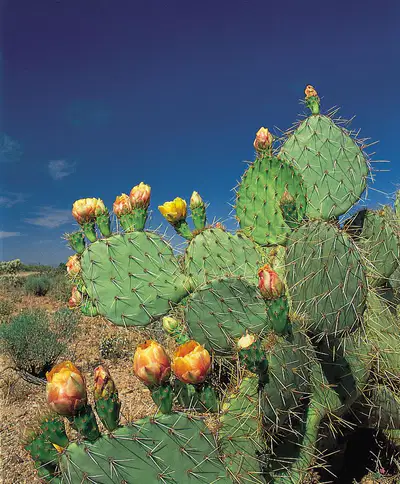
.Hot deserts have distinct characteristics that allow certain species to thrive in such an extreme environment. Plants and animals have developed adaptations which allow them to survive in hot and dry conditions
22
Multiple Choice
Which is the best definition of "adapted"
To adjust to conditions or environment
23
Open Ended
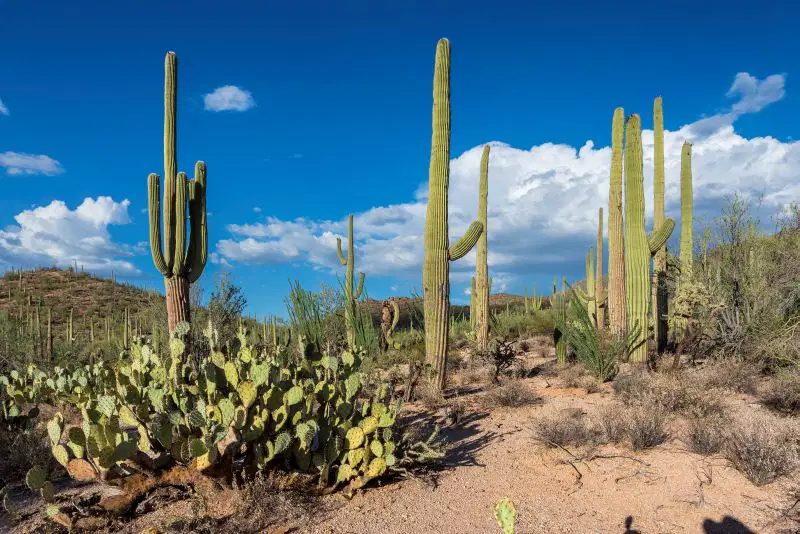
How can plants be adapted to hot desert environments?
24
Desert Plants
Plants with adaptations which allow them to live in hot and dry conditions are called xerophytic. This means they have adapted to live in hot and dry environments.
25
Watch this video clip and make notes about how these plants are adapted to the hot desert environment
26
Desert Plants
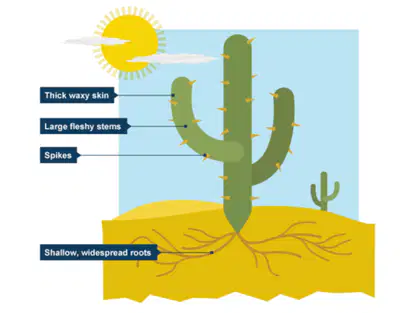
Thick, waxy skin to reduce loss of water and to reflect heat
Large, fleshy stems to store water
Thorns and thin, spiky spines or glossy leaves to reduce water loss
Spikes protect cacti from animals wishing to use stored water
Deep roots to tap groundwater
Long shallow roots which spread over a wide area
Plants lie dormant for years until rain falls
27
Draw
Draw a plant that will be happy in the desert environment. You can use your imagination but must include factors that will help it survive in the desert
28
Animals of the desert
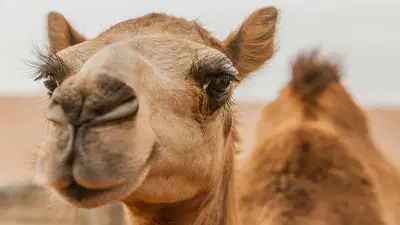
As well as plants, some animals are adapted to life in the desert. They need to overcome a lot of extreme conditions such as hot temperatures, cold nights, lack of water, few plants and lots of sand.
29
Open Ended
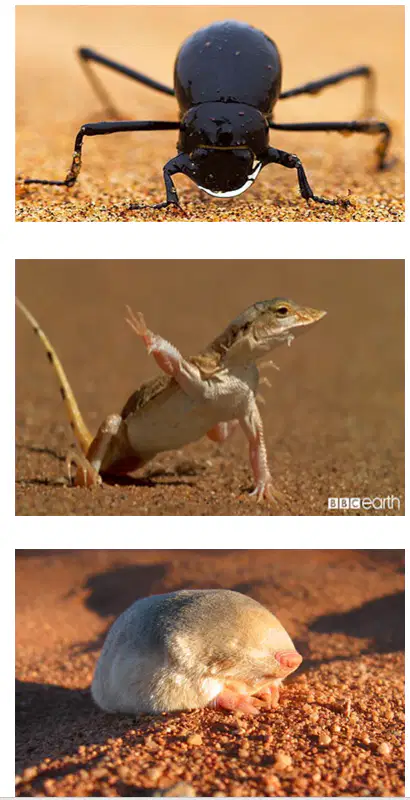
How might animals be adapted for hot deserts?
30
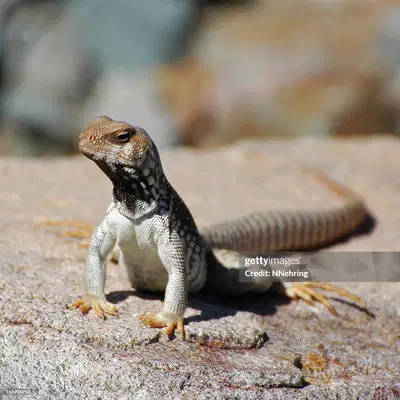
Desert Iguana
The desert iguana can stand hotter temperatures than other lizards, remaining active in up to 46º C.
It changes colour to regulate body temperature. It is darkest in the morning to absorb more heat from the sun, and turns nearly pure white by early afternoon to reflect sunlight. The desert iguana also has a nasal salt-secreting gland that allows it to void salty body waste while conserving water.
31
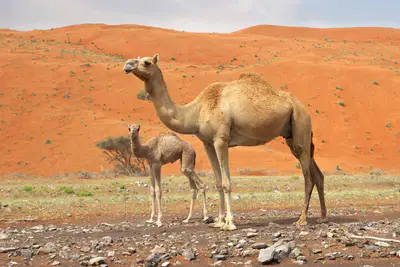
The camel
32
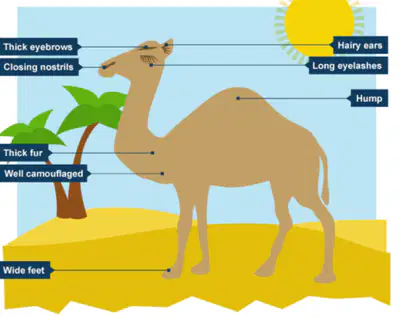
Camel Adaptations
large, flat feet - to spread their weight on the sand
thick fur on the top of the body for shade, and thin fur elsewhere to allow easy heat loss
a large surface area to volume ratio - to maximise heat loss
the ability to go for a long time without water - they lose very little water through urination and perspiration
the ability to tolerate body temperatures up to 42°C
slit-like nostrils and two rows of eyelashes - to help keep out sand
33
Lesson Objectives
To be able to locate the hot desert biome.
To describe why hot deserts are an extreme environment.
To explain how plants and animals survive in this ecosystem
34
Homework

Match the following
hot desert
hot dessert
cold desert
cold dessert
hot desert
hot dessert
cold desert
cold dessert
Show answer
Auto Play
Slide 1 / 34
MATCH
Similar Resources on Wayground

27 questions
Goliad Massacre & Battle of San Jacinto
Presentation
•
7th Grade
28 questions
Contemporary Texas 1950-Present Economy
Presentation
•
7th Grade
28 questions
Budowa i działanie sieci komputerowej 2
Presentation
•
7th Grade
28 questions
Punnett Squares Assignment
Presentation
•
7th Grade
28 questions
Force and Motion Vocabulary
Presentation
•
7th Grade
26 questions
Standard of Living
Presentation
•
7th Grade
25 questions
Urbanizacja w Ameryce
Presentation
•
8th Grade
25 questions
Mapa polityczna Europy i podział administracyjny Polski
Presentation
•
7th Grade
Popular Resources on Wayground
19 questions
Naming Polygons

Quiz
•
3rd Grade
10 questions
Prime Factorization
Quiz
•
6th Grade
20 questions
Math Review
Quiz
•
3rd Grade
15 questions
Fast food
Quiz
•
7th Grade
20 questions
Main Idea and Details
Quiz
•
5th Grade
20 questions
Context Clues
Quiz
•
6th Grade
20 questions
Inferences
Quiz
•
4th Grade
19 questions
Classifying Quadrilaterals
Quiz
•
3rd Grade
Discover more resources for Geography
50 questions
US States & Capitals
Quiz
•
7th Grade
50 questions
U.S. 50 States Map Practice
Quiz
•
5th - 8th Grade
26 questions
Southeast Asia Geo Quiz
Quiz
•
6th - 8th Grade
21 questions
Asia Belief Systems
Quiz
•
7th Grade
50 questions
United States Capitals
Quiz
•
7th Grade
20 questions
SS7G2 Environmental Issues of Africa Flashcard

Flashcard
•
7th Grade