

Domain 3: Module 16 PPT

Presentation
•
Social Studies
•
12th Grade
•
Practice Problem
•
Hard

Daniella Rodriguez
Used 1+ times
FREE Resource
46 Slides • 2 Questions
1


Thinking About Psychology:
The Science of Mind and Behavior 4e
Charles T. Blair-Broeker & Randal M. Ernst
Lecture Slides
by Kent Korek - Germantown High School
BFW Publishers, © 2019
2


• Explore different
periods of
development, and
gain insight into how
we grow up.
• Discover how we
learn and how
language develops.
3


4


Major Concepts
• Learning
• Classical conditioning
• Stimulus/response relationship
5


Learning is the process of gaining, through experience, relatively permanent information and behaviors
Learning
6
7


Classical conditioning is a type of learning in which a stimulus gains the power to cause a response
• The stimulus predicts another stimulus that already produces that response
• Form of learning by association
Classical
Conditioning
8


Stimulus is anything in the environment that one can respond to
Response is any
behavior or action
Stimulus-Response
9


Stimulus-Response
Relationship
10


Stimulus-Response
Relationship
11


Major Concepts
• Unconditioned
stimulus (US)
• Unconditioned
response (UR)
• Conditioned stimulus
(CS)
• Conditioned response
(CR)
12


An unconditioned stimulus (US) is a stimulus that triggers a response reflexively and automatically
• Classical conditioning cannot happen without an unconditioned
stimulus
• Unconditioned stimuli are all around us. Think about:
The smell of a favorite food, which immediately makes you feel hungry
○
A feather tickling your nose, which causes you to sneeze
An onion's smell as you cut it, which makes your eyes water
○
Pollen from grass and flowers, which causes you to sneeze
○
Unconditioned Stimulus (US)
○
○
○
13


An unconditioned response (UR) is an automatic response to the unconditioned stimulus
•The relationship between the US and UR must be reflexive and automatic, not learned
•Some more examples of unconditioned responses include:
○Gasping in pain after being stung by a bee
○Jerking your hand back after touching a hot plate on the oven
○Jumping at the sound of a loud noise
○Twitching your leg in response to a doctor tapping on your knee
○Salivating in response to a sour taste
○Jumping back from a growling dog
Unconditioned Response (UR)
14



A conditioned stimulus (CS) is a previously neutral
stimulus that, through learning, gains the power to cause a response
•The CS must be a neutral stimulus before conditioning occurs
○Bad burrito: You eat a burrito for lunch but become ill shortly after. While the food you ate was previously a neutral stimulus, it becomes a conditioned stimulus through its association with the unconditioned stimulus (illness). As a result, you may develop a taste aversion in which just the idea of eating that same food again causes you to feel ill.
○Dog attack: You are out riding your bike one day and are attacked by a dog. Now, the place where you were attacked has become a conditioned stimulus and you experience fear every time you pass that spot.
○Lunch bell: Students hear the sound of a bell right before they are released for lunch. Eventually, just the sound of the bell alone causes the students to become hungry.
Conditioned Stimulus (CS)
15


A conditioned responses (CR) is the response to the conditioned stimulus
●Usually the same behavior as the UR
○If you witness a terrible car accident, you might develop a fear of driving. Many
phobias begin after a person has had a negative experience with the fear object.
○If your pet is accustomed to being fed after hearing the sound of a can or bag being opened, they might become very excited when hearing that sound.
○If your child receives regular immunizations and cries as a result of these
injections, they may come to associate a healthcare provider's white jacket with this painful experience. Eventually, the child might begin to cry whenever they see anyone wearing a white coat.
○If you are bitten by a barking dog, you may experience feelings of fear and anxiety whenever you hear barking.
Conditioned Response (CR)
16




17
Multiple Choice
An example of an unconditioned stimulus is
18
Multiple Choice
An example of a neutral stimulus turned conditioned stimulus is....
19



Major Concepts
• Acquisition
• Extinction
20



Acquisition is the process of developing a learned response
• The subject learns a new response (CR) to a previously neutral stimulus (CS)
Acquisition
21




Acquisition
22


Extinction, in classical conditioning, is the
diminishing of a learned response after repeated presentation of the conditioned stimulus alone
• In classical conditioning, the continual
presentation of the CS without the US
Extinction
23



Extinction
24


Major Concepts
• Ivan Pavlov
• Pavlov’s Experiment
25



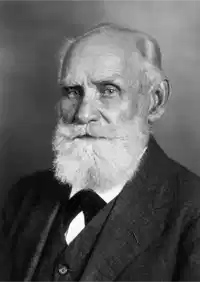
Ivan Pavlov, a Russian physiologist and learning theorist famous for the discovery of classical conditioning, in which learning occurs
through association
Ivan Pavlov
26




Pavlov’s Method of Collecting Saliva
27


Pavlov’s Research Apparatus
28
https://youtu.be/D91H_sbC9zE?si=_pKUHgNtXFqkaBoH
29



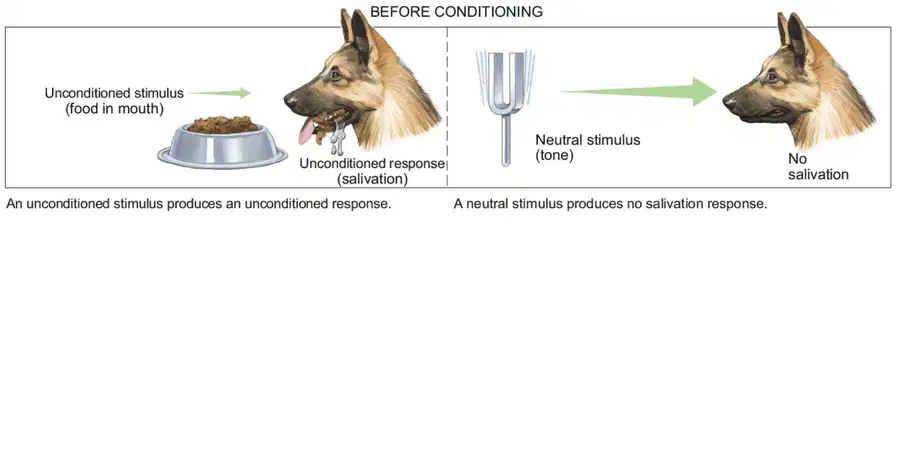
Pavlov’s Experiment
30




Pavlov’s Experiment
31


Pavlov’s Experiment
32



Major Concepts
• Generalization
• Discrimination
33



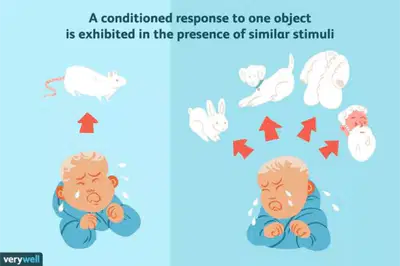
Generalization is producing the same response to two similar stimuli
• The more similar the substitute stimulus is to the original used in
conditioning, the stronger the generalized response
Generalization
34




Discrimination is the ability to distinguish between
two signals or stimuli and produce different responses
• The subject learns that one stimuli predicts the US and the other does not
Discrimination
35




Major Concepts
• Behaviorism
• John Watson
• Little Albert
• Classical conditioning applications
36



Behaviorism is the theory that psychology should only study observable behaviors, not mental processes
• Founded by John Watson
Behaviorism
37



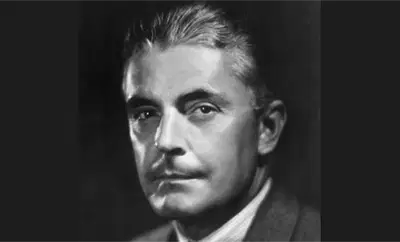
John Watson, the founder of behaviorism, the theory that psychology should restrict its efforts
to studying observable behaviors, not mental processes
John Watson
38


• 11-month old infant
• Watson and Rosalie Rayner, conditioned Albert to be frightened of white rats
• Led to questions about experimental ethics
Little Albert
39
40



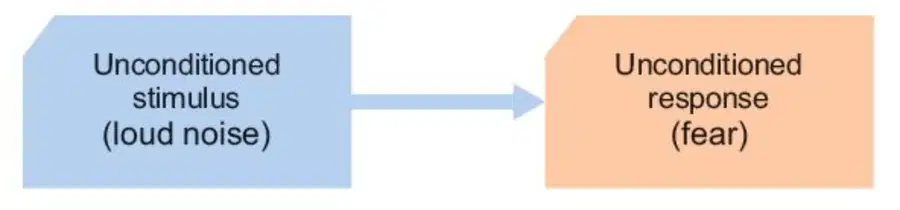

Little Albert – Before Conditioning
41



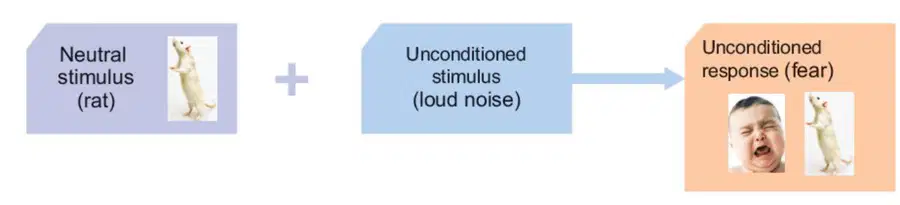

Little Albert – During Conditioning
42





Little Albert – After Conditioning
43




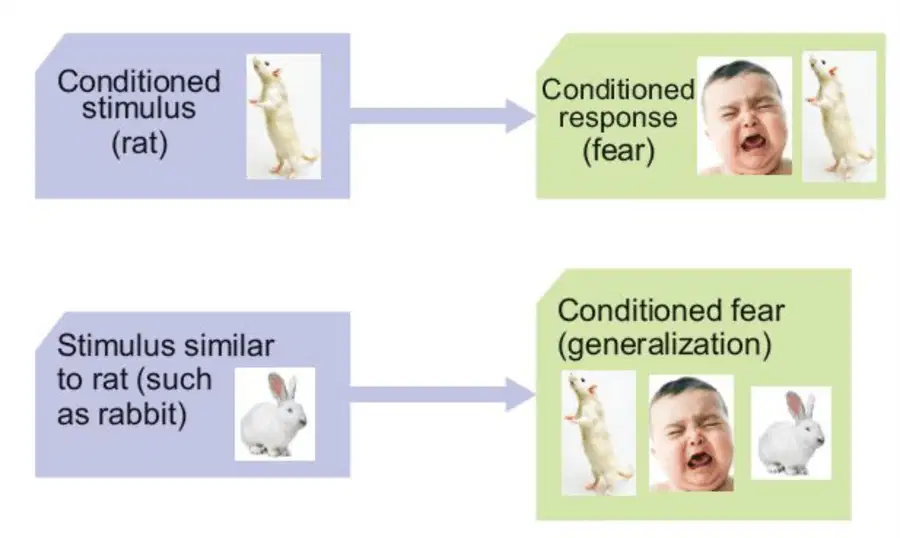
Little Albert - Generalization
44




• Using conditioned emotional states in advertising
• Conditioned emotional states in social relationships
• Conditioned negative emotions
Classical Conditioning Applications
45




Major Concepts
• Cognition
• Robert Rescorla
• Taste aversion
46



Cognition is all mental processes associated with thinking, knowing, and remembering
• What effect does cognition have on learning?
Cognition
47


Robert Rescorla developed, along
with colleague Allan Wagner, a
theory that emphasized the
importance of cognitive processes in classical conditioning
• Pointed out that subjects had to determine (think) whether the CS was a reliable predictor of the US
Robert Rescorla
48




• Subjects become classically conditioned to avoid specific tastes, because the tastes are associated with nausea
Taste Aversion
• Biologically predisposed
to conditioning
Thinking About Psychology:
The Science of Mind and Behavior 4e
Charles T. Blair-Broeker & Randal M. Ernst
Lecture Slides
by Kent Korek - Germantown High School
BFW Publishers, © 2019
Show answer
Auto Play
Slide 1 / 48
SLIDE
Similar Resources on Wayground

44 questions
3.3 The Progressive Presidents Vocab
Presentation
•
11th Grade
40 questions
The Presidency
Presentation
•
10th - 12th Grade
44 questions
EOC Review 1
Presentation
•
11th Grade
42 questions
8.1 The Cold War: American Strategy
Presentation
•
11th Grade
41 questions
Unit 1.3
Presentation
•
11th Grade
40 questions
Application Letter
Presentation
•
12th Grade
48 questions
Lesson-concepts and principles of the social science theories
Presentation
•
12th Grade
44 questions
Feedback Loop & the Endocrine System
Presentation
•
11th - 12th Grade
Popular Resources on Wayground
10 questions
Safety Day 2026 – Student Review

Quiz
•
9th Grade
21 questions
Continents and Oceans
Quiz
•
6th Grade
20 questions
Parts of Speech
Quiz
•
5th Grade
16 questions
Subject & Predicate
Quiz
•
5th Grade
25 questions
Multiplication Facts
Quiz
•
5th Grade
12 questions
Map Skills
Quiz
•
3rd Grade
22 questions
Continents and Oceans
Quiz
•
5th Grade
15 questions
Rounding Decimals
Quiz
•
5th Grade
Discover more resources for Social Studies
20 questions
Chapter 8 Test "Types of Business Organizations"
Quiz
•
12th Grade
39 questions
Unit 7 Key Terms
Quiz
•
11th Grade - University
38 questions
Unit 6 Key Terms
Quiz
•
11th Grade - University
25 questions
Gilded Age Gallery Walk
Presentation
•
9th - 12th Grade
4 questions
3.3A Expressed v. Implied Powers Quiz
Quiz
•
12th Grade
23 questions
USHC 6 FDR and The New Deal Programs
Quiz
•
9th - 12th Grade
19 questions
Spanish American War
Presentation
•
8th - 12th Grade
62 questions
Midterm Review 2026
Quiz
•
12th Grade