

Nationalism/Industrialization

Presentation
•
Social Studies
•
10th Grade
•
Easy

Wilnekia Brinson
Used 6+ times
FREE Resource
23 Slides • 14 Questions
1
Industrial Revolution
Communism/
Capitalism

2
Multiple Choice
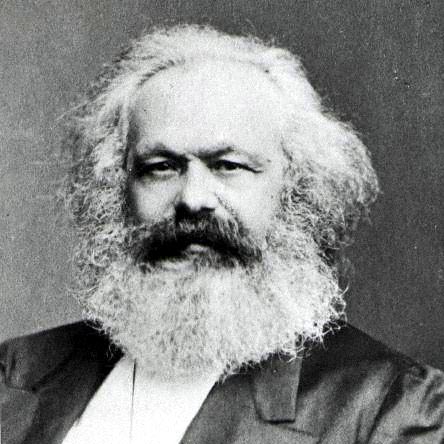
__________________ predicted a violent revolution that would result in the working class taking over in a classless political and economic systems known as communism.
John Adams
Thomas Smith
Karl Marx
Edward Jenner
3
Multiple Choice

The Steam engine
was originally invented to pump water out of coal mines
originally used petroleum to function
was originally invented to improve transportation
originally used electricity to function
4
Eventually settling in London
Through Engels, Marx became aware of the struggles of the working class
He undertook a deep study of Economics
He concluded that the Industrial Revolution had created a system of wage slavery

5
By Michael Vickery

6

7
Multiple Choice
What type of market does Capitalism rely upon?
Traditional Economy
Free Market Economy
Command Market Economy
Communist Market Economy
8

9

10
Multiple Choice

What type of market does Marxism/Communism rely upon?
Traditional Economy
Free Market Economy
Command Market Economy
Communist Market Economy
11

12
One of the first factories in the United States to begin hiring women was the textile mills in Lowell, Massachusetts. By the 1840s, around seventy-five percent of the workforce at Lowell mills were women. These women became known as "Mill Girls" or "Lowell Girls."

13
Most of the "Mill Girls" were the daughters of farmers in the northeast. They took the opportunity to get away from the farm and make some money of their own. Sometimes girls took the jobs to help out their family or to save money for a future family. The women lived in large boarding houses with hundreds of other women. There were lots of rules that the girls had to live by. They typically shared a room with several other women, had to attend church on Sundays, and no men were allowed in the boarding houses.

14
Besides working in textile factories, women began to work all sorts of jobs including jobs as teachers, office clerks, nurses, and seamstresses.

15
Multiple Choice
2. What was the background of most of the mill girls?
a. Farmers' daughters
b. Orphans from England
c. Older women who never married
d. Mine workers
e. Rich city girls
16
Multiple Choice
3. Why did factory owners like to hire women?
a. Because they worked harder than men
b. Because they were strong
c. Because they could pay them less than men
d. To help women enter the workforce
e. To meet government regulations
17
Multiple Choice
4. True or False: Most of the supervisors in the factories were also women.
a. TRUE
b. FALSE
18

19

20
Multiple Choice
These were groups of workers that formed to get better working conditions?
Apprentices
Guilds
Labor Unions
21
Multiple Choice
Workers did this to protest in order to get better conditions, pay, and hours.
strike
boycotted the government
traded
22

23
Open Ended
What were some of the environmental effects of the Industrial Revolution?
24

25

26

27
Multiple Choice
Excessive Pride in one's Nations is
is the belief that people’s greatest loyalty should be to a nation
is the belief that people’s shouldn't be loyal to any nation
is the belief that people should show loyalty to any nation
28

29
Open Ended
What did the European leaders at the Congress of Vienna try to do? Why did they meet?
30

31

32

33
34

35
Poll
Three leaders who used nationalism to unify or unite their nations were
Otto Von Bismarck of Germany
Giuseppe Garibaldi
Count Cavour
Napoleon
King Louis XIV
36
Multiple Choice
Which leader believed in the policy of “blood and iron” to unite and unify German states into a nation.
Otto Von Bismarck of Germany
Giuseppe Garibaldi
Count Cavour
Napoleon
37

Industrial Revolution
Communism/
Capitalism
Show answer
Auto Play
Slide 1 / 37
SLIDE
Similar Resources on Wayground

35 questions
Age of Absolutism in Europe
Presentation
•
9th - 11th Grade
33 questions
Unit 2 China India
Presentation
•
10th Grade
34 questions
1.3 Developments in South and Southeast Asia 1200-1450
Presentation
•
10th Grade
28 questions
Articles of Confederation
Presentation
•
11th Grade
32 questions
Propaganda - Explanation + Guessing Game
Presentation
•
10th Grade
34 questions
Pax Romana & Contributions
Presentation
•
9th Grade
31 questions
Cell division terms 2 - mitosis prep
Presentation
•
10th Grade
31 questions
Intro to Genetics Lesson
Presentation
•
10th Grade
Popular Resources on Wayground
10 questions
Safety Day 2026 – Student Review

Quiz
•
9th Grade
21 questions
Continents and Oceans
Quiz
•
6th Grade
20 questions
Parts of Speech
Quiz
•
5th Grade
16 questions
Subject & Predicate
Quiz
•
5th Grade
25 questions
Multiplication Facts
Quiz
•
5th Grade
12 questions
Map Skills
Quiz
•
3rd Grade
22 questions
Continents and Oceans
Quiz
•
5th Grade
15 questions
Rounding Decimals
Quiz
•
5th Grade
Discover more resources for Social Studies
10 questions
Exploring the Age of Exploration: Key Events and Figures

Interactive video
•
6th - 10th Grade
9 questions
Exploring Ancient Mesopotamia and Its Civilizations
Interactive video
•
10th Grade
10 questions
Debating the Legacy of Christopher Columbus
Interactive video
•
6th - 10th Grade
22 questions
U3T2 Vocab FAC: Domestic Policy
Quiz
•
10th Grade
25 questions
Gilded Age Gallery Walk
Presentation
•
9th - 12th Grade
50 questions
Progressive Era and Urbanization
Quiz
•
10th Grade
10 questions
U3T2D1 Daily Quiz
Quiz
•
10th Grade
10 questions
Exploring the 13 Colonies Regions
Interactive video
•
6th - 10th Grade