

Unit 8 Review Option

Presentation
•
•
Practice Problem
•
Hard

Joshua Wright
Used 3+ times
FREE Resource
59 Slides • 56 Questions
1

Why did Europe start to colonize the New World?
2

3
European countries were competing for dominance amongst themselves in the years prior to 1492. What would fighting for dominance look like? How would establishing colonies help a country in this regard? On top of this some European countries were dealing with overcrowding issues, diminishing natural resources and a newfound desire to learn and achieve relevance due to the Renaissance which had pulled Europe out of the Middle Ages.
Age of Exploration
4

5
Multiple Choice
In what year did Christopher Columbus first make landfall in what is now the Bahamas?
1470
1492
1607
1670
6
Multiple Choice
Which of the following things would attract Europeans to the Americas?
Raw Materials
Bringing Power to their Mother Country
Wealth
All of the Above
7
Multiple Choice
What larger time period was the Age of Exploration a part of and made possible by?
Middle Ages
Renaissance
Reconstruction
Antebellum
8
Multiple Choice
What invention from the Renaissance helped with the production of books as well as maps used to transverse the Atlantic?
Lattice
Ink
Printing Press
Papyrus
9

God, Gold and Glory
10
God
Have the desire to spread their religious beliefs to indigenous peoples or in search of a place where they would not suffer social or legal persecution for what they believe.
Subject | Subject
Reasons for Settlement

11
Gold
Came in search of literal gold or the possibilities for economic success that the New World may offer. Some of these later possibilities of economic growth for the mother country includes the growth of cash crops, fur trade, and the acquisition of other raw materials. Once contact with natives was made trade became very lucrative as well. For some settlers the New World offered a possibility at a new economic life that wouldn't be available to them back in Europe.
Mercantilism: an economic policy designed to increase a nations wealth through exports
Subject | Subject
Reasons for Settlement
12

13
Glory
The fame associated with being an explorer or the political power you could gain from helping your mother country upstart a colony. Also Kings and Queens desired to gain fame and historical relevance for their countries and their reigns through adding new found territories.
Subject | Subject
Reasons for Settlement
14
Multiple Choice
Which of the following is not one of the 3 G's of exploration?
God
Gold
Game
Glory
15
Multiple Choice
True or False: Mercantilism highly values the economic growth of the mother country and follows the belief that colonies function as an economic investment meant to bring back wealth to the mother country.
True
False
16
Multiple Choice
True or False: In triangular trade West Africa sends manufactured goods to the Americas.
True
False
17

18
“Rebirth” of Greek and Roman culture following the Middle Ages. It is a rebirth because people renewed their interest in Classical (Greek (humanism) and Roman) achievements
It is a period of great artistic, literary, and technological achievement and valued human reason to solve problems.
19
Multiple Choice
Which factor was common to the societies in ancient Athens and in Renaissance Italy?
Leaders were elected by a parliament
Humanism was the central philosophy
Civil liberties were given to all inhabitants
Rich landowners had little power
20
Multiple Choice
The revival of Greek and Roman culture, the economic growth of Italian city states and the development of humanism were aspects of the
Age of Revolutions
Protestant Reformation
spread of Islam
European Renaissance
21
The Renaissance began in Italy (and cities like Milan, Rome, Venice (trade and strategic location!) and Florence)
Why?
1. Italy was located as a crossroads for trade
2. Italy recovered earlier and wasn’t as impacted by the Black Death as much as some other places.
22
Multiple Choice
During the 1400s, Venice achieved prominence because its
location was favorable for trade
pleasant climate led to an increase in population
democratic government attracted trade
military power led to industrialization
23
The belief that each person has dignity and worth AND that a person should excel and have interest in a variety of activities. ("Renaissance Man")
Generally focused more on the individual and on secular (worldly) things as well as religious things.
24
Multiple Choice
Which statement best expresses an idea held by many Renaissance humanist philosophers?
governments should establish overseas empires
individuals should withdraw from the world and study religion
people should study worldly as well as sacred matters
scholars should dedicate themselves to the study of life after death
25
Multiple Choice
What was one ideal of Renaissance humanism?
training as a knight and practicing chivalry
obeying divine right monarchs and the church
living apart from the world and taking monastic vows
investigating areas of interest and fulfilling one's potential
26
Multiple Choice
What was a major characteristic of the Renaissance in Europe?
Secular achievements were emphasized
suffrage was granted to men and women
most literature was written in Arabic
Most ancient Greek and Roman ideas were rejected
27
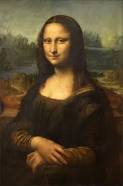
Leonardo – Mona Lisa, Last Supper, etc. (see back)
Michelangelo – David, Ceiling of the Sistine Chapel
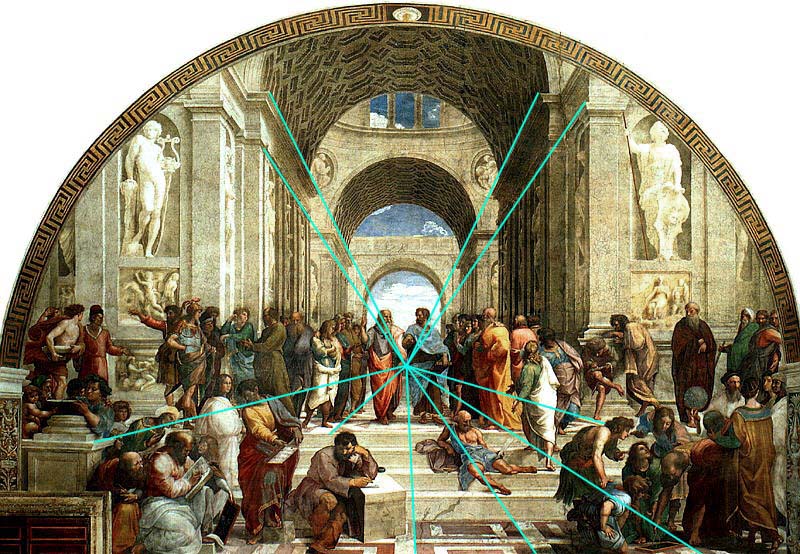
Raphael – School of Athens
Shakespeare
28
Increase literacy rates, quicker spread of ideas, books published in vernacular (local language), books are cheaper as they can more quickly be mass produced.
Helps lead to: Protestant Reformation, Scientific Revolution, Age of Exploration, Age of Enlightenment, French Revolution
29
Multiple Choice
Which advancement in technology revolutionized the way ideas were spread throughout western Europe in the 15th century?
development of the astrolabe
introduction of the telegraph
improvements to the printing press
creation of the telescope
30
A ruler should do whatever is necessary to stay in power and do what’s best for the kingdom.
- "The ends justify the means" - as long as you (a ruler) stay in power and do what is best for the kingdom, it doesn't matter what you have to do to reach that goal.
31
Multiple Choice
What is meant by Machiavelli's belief that the ends justify the means?
Leaders may use any method to achieve what is best for the state
The general public always acts in its own best interest
Pleasing all of the people at any given time is possible
Leaders must always act for the common good
32
Multiple Choice
Niccolo Machiavelli in The Prince advocated that a ruler should
obtain power from a social contract with the governed
place the needs of subjects first
apply Christian teachings to decisions
employ absolute power to maintain order in the areas under their rule
33
Last supper, Mona Lisa, painting, sculpting, anatomy, engineering, helicopter, tank, etc.
He is a “Renaissance Man” because he did so many different things well.
34
By James Moran
35

Historical time period from about 1300 to 1600 in Europe. The term means "rebirth." It refers to a revival of art and learning. The educated people of Europe hoped to bring back the culture of classical Greece and Rome.
Some text here about the topic of discussion.
What was the European Renaissance?
36
Fill in the Blanks
The word, "renaissance" means what?
Type answer...
37
Multiple Select

Which two classical civilizations did the Renaissance view as worthy of study? (SELECT TWO ANSWERS)
Egypt
Mesopotamia
Greece
Sumaria
Rome
38

The Renaissance began in Northern Italy particularly the city of Florence and eventually spread to the rest of Europe. Florence had three advantages that made it the birthplace of the Renaissance: thriving cities, a wealthy merchant class, and the classical heritage of Greece and Rome.
Some text here about the topic of discussion.
Where did the Renaissance begin?
39
Multiple Choice

Where was the birthplace of the Renaissance?
England
France
Germany
Greece
Itlay
40

The growth of city-states in Italy led to increased trade. Cities are often places where people exchange ideas. A wealthy merchant class developed in each Italian city-state. These merchants became patrons of the arts and helped to fund new learning. A patron is someone who financially supports artists.
Some text here about the topic of discussion.
What led to the Renaissance?
41
Multiple Choice

A person who financially supports the Arts is called
Patron
King
Nobleman
42

During the Renaissance, the city of Florence came under the rule of one powerful banking family, the Medici. Cosimo de Medici was the wealthiest European of his time. His family were generous patrons of the arts who collected many rare manuscripts. Eventually the Medici family made their library available to the public.
Some text here about the topic of discussion.
The Medici Family
43
Multiple Choice
Why were the Medicis important to the Renaissance?
The commissioned many expeditions.
They started a university in Florence.
They believed in the teachings of Luther.
They were patrons of the arts.
44
Philosophy of the Renaissance
The study of classical texts led to humanism, an intellectual movement that focused on human potential and achievements. Instead of trying to make classical texts agree with Christian teaching as medieval scholars had. Also, humanists popularized the study of subjects common to classical education, such as history, literature, and philosophy. These subjects are called the humanities.
Some text here about the topic of discussion
45
Multiple Choice
46


During the Middle Ages in Europe people were focused on spiritual behavior. They were very concerned with their souls and the afterlife. The Catholic church was very influential.
Spiritual
However, during the Renaissance society became more secular or worldly. People were more concerned with the here and the now.
Secular
47
Multiple Choice
Renaissance Europeans turned towards non-religious interests/topics. This is known as:
Nationalism
Secularism
Humanism
Realism
48
Multiple Choice

Which of the following best describes, "the spirit of the renaissance"?
"People should work hard and stick to tradition."
"People are not creative and shouldn't try new things."
"People are capable of learning and should create new things."
"knowledge is reserved only for those in positions of authority.”
49
The Renaissance Man
Renaissance writers introduced the idea that all educated people were expected to create art. The ideal individual tried to master almost every area of study. A man who excelled in many fields was praised as a "universal man." Later ages called such people "Renaissance men." Leonardo da Vinci was an example of such a person because of his many talents.
Subject | Subject
Some text here about the topic of discussion
50

Renaissance artists often portrayed religious subjects, but they used a style copied from the Greeks and Romans. They also used perspective to show three dimensions on a flat surface. They also studied human form to make more realistic looking art.
Some text here about the topic of discussion.
Renaissance Art
51
Multiple Choice
52

Leonardo da Vinci was a painter, sculptor, inventor, and scientist. He was a interested in how things worked. Among his many masterpieces, Leonardo painted the Mona Lisa and the Last Supper.
Some text here about the topic of discussion.
Leonardo Da Vinci
53
Multiple Choice
54

55
Period of history from the 1400s to the 1700s.
Europeans sailed on exploration voyages around the world, discovering new routes to Asia, and coming into contact with North and South America which were unknown to people in the Eastern Hemisphere.
first truly global turning point, the Encounter between the “Old World” and the “New World”

56
Multiple Choice
Why was the Age of Exploration the first global turning point?
It was the first to include global brands like Coca-Cola.
It was the first to involve trade across Asia, Africa, and Europe.
It was the first to involve Australia.
It was the first connection between the Old World and the New World.
57

58
Multiple Choice
After looking at the map, which country was not part of the Age of Exploration?
France
England
Russia
Spain
59
Cause #1: European Interest in Asia
Remember the Silk Road? It was no longer safe or was controlled by unfriendly neighbors to Europe.
Europe decided to find a way to reach Asia by water.

60
Multiple Choice
Which trade routes from the ancient and medieval period was no longer an option to buy goods from Asia?
Trans-Saharan Trade
Silk Road
Indian Ocean Trade
Mediterranean Trade
61
Multiple Choice
In order to reach Asia, explorers had to sail around which continent?
Africa
North America
South America
Australia
62
Ottoman Empire's Control of Trade
The Ottoman Empire controlled the old trade routes and would only tade with some European countries.
England, Spain and France were left out and looked for new ways to trade.

63
Multiple Choice
Which empire controlled the old Silk Road and forced many European countries to find a new way to Asia?
Indian Empire
Russian Empire
Ottoman Empire
Ghana Empire
64
Religious Zeal
Many European countries wanted to spread Christianity.
Note: They wanted to make money first, religion was definitely 2nd and they often did it by forcing the local population on the threat of death.

65
Multiple Choice
Many of the European countries wanted to spread?
Islam
Judaism
Christianity
Buddhism
66
Mercantilism and the Pursuit of National Wealth
Mercantilists believed that a country was strongest if it had a lot of gold and silver, so monarchs did everything they could to get it.
Two ways to do this:
Favorable balance of trade, you sell more than you buy
Establish colonies and you import raw materials.

67
Multiple Choice
A favorable balance of trade means that a country is
Selling more than they are buying
Buying more than they are selling
68

69
Multiple Choice
The goal of mercantilism was to get as much _______________ as possible.
Spices and silk
Colonies and lands
Gold and silver
Religion and God
70
8.3
1609 - Founding of Jamestown
1620 - Arrival of The Pilgrims' and signing the Mayflower Compact
1776 - Declaration of the Independence
1787 - writing the U.S. Constitution
1803 - Louisiana Purchase
1861 - 1865 - the Civil War
71
8.3
Reasons for the growth of representative government and institutions during the colonial period
1.) The right to life
2.) To liberty
3.) Property
Together with the right to support and defend them in the best manner they can.
72
Multiple Choice
What was the significance of the Pilgrims' arrival in America?
It led to an alliance between the British and the French.
It led to an early attempt at self-government in the English colonies.
It caused Puritans to separate from the Church of England.
It introduced the slave trade to the Atlantic colonies.
73
8.3
Defined & limited the powers of government
Created a general assembly
Granted government the right to levy and collect taxes
74
Multiple Choice
What was one way slow communication with the British government affected the American colonies?
8.3
the colonies united for trade and defense.
Self-government developed in the colonies.
Smuggling of goods in the colonies decreased.
The colonies petitioned the government to establish a navy.
75
Multiple Choice

The diagram shows a sequence of events in colonial history.
Why is this sequence of events important?
8.3
Colonists created a legislature with two houses.
Colonists declared independence from English rule.
Colonists defended the concept of unalienable rights.
Colonists established a tradition of self-government.
76
Multiple Choice
Which statement best describes the influence of the Fundamental Orders of Connecticut?
8.3
It helped establish the tradition of self-government
It was the first attempt to combine political and religious laws
It established the concept of unalienable rights
It outlined a plan for independence from British rule
77
Major domestic problems faced by leaders:
1.) Maintaining national security
2.) Creating a stable economic system
3.) Setting up the court system
78
Multiple Choice
Why did many farmers, artisans, and former Anti-Federalists support the Democratic-Republican Party?
8.5
they favored the expansion of of a strong national government
supported strict restrictions on immigration
supported the use of tariffs
favored states' rights and the rights' of common man
79
God, Gold, and Glory!!
God - religious freedom
Gold and Goods to trade
Glory - establish a new life on their terms
80
Multiple Choice
Why did European explorers search of the Northwest Passage?
To find the legendary Cities of Gold
To discover new technology for crossing the Atlantic Ocean
To find the legendary foundation of youth
To discover a new sea route to Asia
81
How did Exploration impact Europe, Asia, America and Africa?

82

83
Multiple Choice
The ______ was the trading of goods, raw materials, and enslaved people between Europe, Africa and the Americas.
Circular Trade
Triangular Trade
Mercantilism Trade
84

85
Multiple Choice
Which continent will become the dominant power during the Age of Exploration?
Africa
Asia
Europe
The Americas
86

87

88
Multiple Select
Which of the following were ways that exploration impacted the Americas?
introduction of new foods
diseases wiping out the Native population
Introduction of Christianity
introduction of the feudal systm
89

90

91
Multiple Choice
The introduction of what lead to the need for a new labor force?
capitalism
feudal system
plantation system
92
Multiple Choice
The ________ was section of the Triangular Trade were enslaved Africans were sent to the Americas.
Middle Passage
Columbian Passage
Circular Passage
93

94
Multiple Choice
_______ describes the connection of all continents around the world trading and communicating like never before.
mercantilism
globalization
socialsim
95
96
Discovering new trade or shipping routes meant greater economic power. Great economic power often leads to greater military power. European nations competed through exploration and claiming new lands. (“He who has the most land wins!”)
· Religion: spread Christianity to the natives to save their souls, colonies also were established in North America as refuges for religious groups
· Economic Gain: A country’s power depends on its wealth. Countries can increase their wealth by owning increasing amounts of gold and silver. To do this a country must export (sell to other countries) more goods than it imports (goods from other countries). To increase its wealth and power, the European countries needed colonies to gain more raw materials and people to buy the manufactured products they produced.
97
Multiple Choice
Identify three major reasons for European exploration in the Americas.
Development of trade routes for economic profit
Territorial claim and colonial expansion
Spread of religious beliefs to new populations
To study the Weather patterns of the Sea and Development of trade routes
Territorial claim and colonial expansion
Spread of religious views to protestant populations
Development of trade routes for economic profit
Territorial claim and colonial expansion
Spread of religious beliefs to new populations
Study weather patterns of the sea
98
Vasco da Gama was a Portuguese explorer who commanded the first ships to sail directly from Europe to India.
Bartolomeu Dias was a Portuguese explorer who sailed to the southern tip of Africa in 1488.
Jacques Cartier was a French explorer who claimed present-day Canada for France. He explored the eastern coast of Canada on three separate trips. He mapped and named the Gulf of Saint Lawrence and the St. Lawrence River.
Christopher Columbus was an Italian explorer who was funded by Spain in 1492 to sail across the Atlantic Ocean to reach Asia. Columbus landed on present-day San Salvador (in the Caribbean Sea) and claimed it for Spain. He explored the island of Cuba and Hispaniola. He returned to Spain with proof of his discoveries believing he had explored the coast of Asia.
99
Amerigo Vespucci was an Italian explorer became convinced in 1502 that Columbus had discovered a “new world” and not been on the coast of Asia. In 1507, early mapmakers labeled what is now the South American continent with the name America.
Ferdinand Magellan was a Portuguese explorer who led the first expedition to circumnavigate the globe. In addition to that, he was the first explorer to sail from the Atlantic Ocean to the Pacific Ocean and the first explorer to cross the Pacific Ocean.
Henry Hudson was an English explorer whose exploration of present-day New York led in 1609 for the Dutch East India Company led to the colonization of the area as New Amsterdam (later New York). He explored the region looking for a Northwest Passage to Asia.
Hernando de Soto was a Spanish explorer who explored southern North American in a unsuccessful search of gold. In 1541 the Spaniards saw the Mississippi River for the first time. After dying in May 1542, De Soto was buried in the Mississippi River.
100
Multiple Choice
Which explorer traveled around the coast of Africa and eventually reached India?
Bartolomeu Dias
Jacques Cartier
Vasco Da Gama
Ferdinand Magellan
101
Prince Henry the Navigator’s influence on exploration and voyages in the Age of Discovery
Prince Henry “the Navigator” of Portugal led the way for all other explorers by funding many voyages of exploration beginning in 1420 along the African coast and west into the Atlantic Ocean. These voyages were successful in creating trade with African kingdoms, early mapmaking, and seizing Azores, Madeira, and Cape Verde islands in the Atlantic Ocean.
Subject | Subject
Some text here about the topic of discussion
102
Prince Henry the Navigator’s influence on cartographic improvements and tools related to exploration in the Age of Discovery
· compass – used to help determine the direction in which they were sailing. European explorers learned about it from the Arabs.
· astrolabe – ancient Greek instrument used to find latitude. European explorers learned about it from the Arabs.
· caravel – fast small Spanish or Portuguese sailing ship of the 15th – 17th centuries
· Harrison’s chronometer is a precision timepiece that is carried on a ship and employed in the determination of a ship’s position by calculating longitude at sea, essentially the first GPS. It was invented by Jon Harrison in 1761.
103
Multiple Choice
Which statement identifies how the voyages of discovery contributed to a changing worldwide view in European society?
Mercantilism declined due to new discoveries
Maps accurately depicted new regions
Powerful monarchs lost power as merchants gained wealth
Europeans adopted traditional customs from other regions
104
European Colonization
Location of European colonies in the “new world.”
· Spain and Portugal’s territories were in South America, Mexico and the Caribbean.
· France and England established colonies in North America.
105
How did religion impact the location of settlement by each country?
In Spanish America, as in Portuguese Brazil, Catholic priests were sent to establish missions (religious communities) to teach Christianity to the Native Americas.
106
Multiple Choice
Mexico was colonized by which country?
France
England
Portugal
Spain
107
Multiple Choice

Which number represents an area colonized by a Catholic Power?
Number 4
Number 3
Number 2
Number 1
108
Conquistadors
Cortes defeats the Aztec (Mexico) - In 1519, Cortes traveled to Mexico in search of gold and glory. He arrived with soldiers, sailors, horses, and cannon. His forces frightened the Native Americans who surrendered. Many of the Mayan people were unhappy with the Aztec. During wars with the Aztec, the Mayan people were captured. The Aztec then sacrificed the Mayans to please their Gods. The Mayans helped Cortes defeat the Aztecs. The Spanish conquistadors also brought diseases like smallpox and measles that the Aztec had never been exposed to. It killed the Aztec in massive numbers.
Pizarro defeats the Inca (Peru) – Francisco Pizarro had been a soldier with an explorer who arrived in present-day Panama in search of gold. After the explorer was killed, Pizarro continued the search. The Inca ruled the empire Pizarro was searching for in present-day Peru. Pizarro attacked the empire in the 1530s by capturing the Inca ruler in battle and then tricking him into paying a ransom to be freed. The ruler was then tried for treason and executed. Spain made Pizarro governor of Peru.
109
Multiple Choice
How were the declines of the Aztec and Incan Empires similar?
They were both caused by famines.
They were both caused by European invasions.
They were both caused by natural disasters.
They were both caused by rapid changes in climates.
110
Multiple Choice
· Spanish conquistador
· Traveled along the Pacific Coast of South America
· Conquered the Incan empire
· Brought gold and wealth back to Spain
Which historical figure is best described by the list above?
Amerigo Vespucci
Francisco Pizarro
Hernando de Soto
Hernan Cortes
111
Columbian Exchange
Global exchange of people, goods, technology, ideas, and diseases began – known as the Columbian Exchange.
· American crops new to Europe – corn and potatoes – corn fed livestock which resulted in more meat, leather and wool; potatoes fed more Europeans.
· Native American crops for Europeans – squash, beans, tomatoes, chocolate. Revolutionized Italian cooking and European sweets.
· European and Asian grains brought to America: wheat, barley, rye, rice.
· Caribbean goods brought to America: coffee, bananas, and tropical fruits
ANIMALS: New to America: pigs, sheep, cattle, chickens, and horses
Influence on Asia: Sugar, chili peppers, and silver were exported from the Americas to China in return for silk, porcelain and spices
Influence on Africa: Dependence on enslaved Africans grew with the growth of the cotton industry.
112
Multiple Choice
Which of these describes a result of the Columbian Exchange?
The introduction of the horse to Europe caused an increase in agricultural output.
The introduction of gunpowder to Europe caused war fatalities to increase.
The introduction of smallpox to the Americas caused the American Indian population to decrease.
The introduction of the potato and corn to the Americas caused a famine when crops were hit by disease.
113
Multiple Choice
What was one effect of the Columbian Exchange on the Americas during the Age of Exploration?
Extinction of several species of native livestock
Creation of a confederacy of American Indian peoples
Introduction of the African slave trade
Improvements in industrial practices
114
Spanish Colonization
· Mission system - Catholic priests were sent to establish missions (religious communities) to teach Christianity to the Native Americas.
· Encomienda system – a system that granted a landowner a certain number of native people, who were forced to pay tribute to the landowner in the form of gold or labor. The Spanish enslaved and mistreated the Native Americans. 90% died as a result of contact with Europeans.
· Bartolome de Las Casas – condemned the mistreatment of enslaved Native Americans. In an effort to stop the destruction of the native population, de Las Casas suggested bringing enslaved Africans to replace the Native Americans. He regretted this later and turned against the slave trade supporting the human rights of all enslaved persons.
115
Multiple Choice
Bartolome de las Casa was instrumental in reforming what system in the Americas?
Indentured servitude
Encomienda system
Repartimiento system
Mission system
Why did Europe start to colonize the New World?
Show answer
Auto Play
Slide 1 / 115
SLIDE
Similar Resources on Wayground

111 questions
THE WORLD AROUND US
Presentation
•
1st - 6th Grade
111 questions
Revision lesson topic AP
Presentation
•
6th - 10th Grade
110 questions
Ancient River Valley Civilizations Review
Presentation
•
6th - 7th Grade
108 questions
7 SINIF 2. ÜNİTE
Presentation
•
7th Grade
109 questions
unidad 8 lesson1 and 2 2021-1
Presentation
•
University
112 questions
unit 6 level 2 2024
Presentation
•
University
111 questions
7 grade unit 3
Presentation
•
7th Grade
110 questions
8.2: Slavery and Abolition
Presentation
•
10th Grade
Popular Resources on Wayground
10 questions
How much do you know about our Portrait of an Eagle?

Quiz
•
10th Grade
10 questions
Fast Food Slogans
Quiz
•
6th - 8th Grade
21 questions
Continents and Oceans
Quiz
•
6th Grade
20 questions
Parts of Speech
Quiz
•
5th Grade
16 questions
Subject & Predicate
Quiz
•
5th Grade
25 questions
Multiplication Facts
Quiz
•
5th Grade
12 questions
Map Skills
Quiz
•
3rd Grade
22 questions
Continents and Oceans
Quiz
•
5th Grade
Discover more resources for
10 questions
How much do you know about our Portrait of an Eagle?
Quiz
•
10th Grade
10 questions
Fast Food Slogans
Quiz
•
6th - 8th Grade
21 questions
Continents and Oceans
Quiz
•
6th Grade
20 questions
Parts of Speech
Quiz
•
5th Grade
16 questions
Subject & Predicate
Quiz
•
5th Grade
25 questions
Multiplication Facts
Quiz
•
5th Grade
12 questions
Map Skills
Quiz
•
3rd Grade
22 questions
Continents and Oceans
Quiz
•
5th Grade