

Thermochemistry

Presentation
•
Chemistry
•
10th Grade
•
Practice Problem
•
Hard

Tassnim Alsayed
Used 15+ times
FREE Resource
67 Slides • 0 Questions
1

Our mission is to empower our students to utilize their potentials in a diverse and challenging world. We provide outstanding education for the mind, spirit and
body using state-of-the-art methodologies while fostering intercultural awareness, and lifelong learning.
Our mission is to empower our students to utilize their potentials in a diverse and challenging world. We provide outstanding education for the mind, spirit and
body using state-of-the-art methodologies while fostering intercultural awareness, and lifelong learning.
Basic Concepts Of Thermochemistry
2

Our mission is to empower our students to utilize their potentials in a diverse and challenging world. We provide outstanding education for the mind, spirit and
body using state-of-the-art methodologies while fostering intercultural awareness, and lifelong learning.
Law of conservation of
energy
•There are various forms of energy:
1-Chemical
Energy
2- Light
Energy
3- Kinetic
Energy
4- Heat
Energy
5- Electrical
Energy
3

Our mission is to empower our students to utilize their potentials in a diverse and challenging world. We provide outstanding education for the mind, spirit and
body using state-of-the-art methodologies while fostering intercultural awareness, and lifelong learning.
• In spite of this different forms of energy
there is a relationship between all these forms,
As the energy can be converted from one form to
another,
this leads us to know the law of conservation of energy
4

Our mission is to empower our students to utilize their potentials in a diverse and challenging world. We provide outstanding education for the mind, spirit and
body using state-of-the-art methodologies while fostering intercultural awareness, and lifelong learning.
• law of conservation of energy
Energy is neither created nor destroyed but it can be transformed from one form
to another.
5

Our mission is to empower our students to utilize their potentials in a diverse and challenging world. We provide outstanding education for the mind, spirit and
body using state-of-the-art methodologies while fostering intercultural awareness, and lifelong learning.
• Thermodynamics : is the branch of science that study
the
Heat energy(
Thermo
) and how it
transfers(dynamic).
6

Our mission is to empower our students to utilize their potentials in a diverse and challenging world. We provide outstanding education for the mind, spirit and
body using state-of-the-art methodologies while fostering intercultural awareness, and lifelong learning.
So, what do you think which is boarder field of
science ?
7

Our mission is to empower our students to utilize their potentials in a diverse and challenging world. We provide outstanding education for the mind, spirit and
body using state-of-the-art methodologies while fostering intercultural awareness, and lifelong learning.
Thermodynamics
Thermochemistry
8

Our mission is to empower our students to utilize their potentials in a diverse and challenging world. We provide outstanding education for the mind, spirit and
body using state-of-the-art methodologies while fostering intercultural awareness, and lifelong learning.
Chemical changes(reactions)
• Change in chemical composition of the substance.
• Examples:-
Combustion(burning)
Reactants
New product
9

Our mission is to empower our students to utilize their potentials in a diverse and challenging world. We provide outstanding education for the mind, spirit and
body using state-of-the-art methodologies while fostering intercultural awareness, and lifelong learning.
Physical changes
• No Change in chemical composition of the substance.
• Examples:-
Melting of ice
Boiling of water
10

Our mission is to empower our students to utilize their potentials in a diverse and challenging world. We provide outstanding education for the mind, spirit and
body using state-of-the-art methodologies while fostering intercultural awareness, and lifelong learning.
• And its time to know how can we calculate the heat changes
accompanied by the chemical and physical changes.
• But first we have to know the Basic concepts includes :
1-system and surrounding
2- First law of thermodynamics
3-Temp. and Heat
4- Specific heat
11

Our mission is to empower our students to utilize their potentials in a diverse and challenging world. We provide outstanding education for the mind, spirit and
body using state-of-the-art methodologies while fostering intercultural awareness, and lifelong learning.
• System : Is the part of the universe chosen for study, in which Physical or
chemical change(chemical reaction)occurs.
• Surrounding : Is that part outside the system that exchanges Matter or
Energy(heat) with the system.
1) System and Surrounding
12

Our mission is to empower our students to utilize their potentials in a diverse and challenging world. We provide outstanding education for the mind, spirit and
body using state-of-the-art methodologies while fostering intercultural awareness, and lifelong learning.
• The Chemical reaction can be expressed as a system as
follows:
The medium surrounds
the reaction container
(The laboratory)
The reactants and
products
(The reaction medium)
The wall of container
(flask)
13

Our mission is to empower our students to utilize their potentials in a diverse and challenging world. We provide outstanding education for the mind, spirit and
body using state-of-the-art methodologies while fostering intercultural awareness, and lifelong learning.
The relationship between chemical reaction and
Energy :-
•
• The chemical reactions are accompanied
with changes in Energy (Releasing or
absorbing ).
• This Energy Exchange occurs between the
reaction medium
(System) and its
Surrounding.
14

Our mission is to empower our students to utilize their potentials in a diverse and challenging world. We provide outstanding education for the mind, spirit and
body using state-of-the-art methodologies while fostering intercultural awareness, and lifelong learning.
Difference between system and surrounding.
System
Surrounding
It is part of universe in
which physical or
chemical changes occur
The part outside the
system that exchange
heat energy.
15

Our mission is to empower our students to utilize their potentials in a diverse and challenging world. We provide outstanding education for the mind, spirit and
body using state-of-the-art methodologies while fostering intercultural awareness, and lifelong learning.
All systems can be classified according to their ability to
exchange
energy (Heat) or matter with the surrounding
Open
Isolated
Closed
16

Our mission is to empower our students to utilize their potentials in a diverse and challenging world. We provide outstanding education for the mind, spirit and
body using state-of-the-art methodologies while fostering intercultural awareness, and lifelong learning.
Solid
•
• Matter: Yes
• Heat: Yes
Liquid
•Matter: NO
•Heat: Yes
Gas
•Matter: No
•Heat: No
Open
Closed
Isolated
Types of systems
The system Exchanges
The system Exchanges
The system Exchanges
17

Our mission is to empower our students to utilize their potentials in a diverse and challenging world. We provide outstanding education for the mind, spirit and
body using state-of-the-art methodologies while fostering intercultural awareness, and lifelong learning.
Q) Classify the following figures into 3 types of systems
a)
c)
b)
18

Our mission is to empower our students to utilize their potentials in a diverse and challenging world. We provide outstanding education for the mind, spirit and
body using state-of-the-art methodologies while fostering intercultural awareness, and lifelong learning.
Our mission is to empower our students to utilize their potentials in a diverse and challenging world. We provide outstanding education for the mind, spirit and
body using state-of-the-art methodologies while fostering intercultural awareness, and lifelong learning.
• Energy is very important in our life.
• There are 3 Types of systems:
1. Open
2. Closed
3. Isolated
•
There is a difference between thermodynamics and
thermochemistry.
19

Our mission is to empower our students to utilize their potentials in a diverse and challenging world. We provide outstanding education for the mind, spirit and
body using state-of-the-art methodologies while fostering intercultural awareness, and lifelong learning.
The total energy of an isolated system is constant
even the system is changed from state to
another.
Universe = system + surrounding
EUniverse = Esystem + Esurrounding
∆Esystem = - ∆Esurrounding
2- First law of thermodynamics
20

Our mission is to empower our students to utilize their potentials in a diverse and challenging world. We provide outstanding education for the mind, spirit and
body using state-of-the-art methodologies while fostering intercultural awareness, and lifelong learning.
3- Heat and Temp.
21

Our mission is to empower our students to utilize their potentials in a diverse and challenging world. We provide outstanding education for the mind, spirit and
body using state-of-the-art methodologies while fostering intercultural awareness, and lifelong learning.
22

Our mission is to empower our students to utilize their potentials in a diverse and challenging world. We provide outstanding education for the mind, spirit and
body using state-of-the-art methodologies while fostering intercultural awareness, and lifelong learning.
• Heat is a form of energy, the flow of heat from one position to
another depends on the difference in temperature between them.
• Temperature is the measurement of the average kinetic energy of
matter molecules (it is an indication for the hotness and coldness of
an object)
• The atoms or molecules of the substances are in a continuous
motion (vibration), but they differ in their speed in the same
substance, so it is preferred to express the speed of molecules by the
expression "the average speed of the substance molecules" .
• This increases the kinetic energy of the molecules resulting in a rise
of the temperature of the system and vice versa (direct relationship).
23

Our mission is to empower our students to utilize their potentials in a diverse and challenging world. We provide outstanding education for the mind, spirit and
body using state-of-the-art methodologies while fostering intercultural awareness, and lifelong learning.
Calorie
Joule
It is the quantity of heat needed to raise
the temperature of 1gm of water by 1℃
( 15 ℃ : 16 ℃ )
1 Calorie = 4.18 Joule
It is the quantity of heat needed to raise
the temperature of 1gm of water by
1
4.18℃
Measuring units of the quantity of heat
24

Our mission is to empower our students to utilize their potentials in a diverse and challenging world. We provide outstanding education for the mind, spirit and
body using state-of-the-art methodologies while fostering intercultural awareness, and lifelong learning.
Specific Heat ( C ): it’s the quantity of heat required to
raise the temp. of 1 g of the substance by 1 Celsius degree
qp= m.c . T
4- Specific Heat:
• Specific heat is a characteristic property for the substance, because
specific heat is a constant value for the substance, but it differs from
one substance to another.
25

Our mission is to empower our students to utilize their potentials in a diverse and challenging world. We provide outstanding education for the mind, spirit and
body using state-of-the-art methodologies while fostering intercultural awareness, and lifelong learning.
26

Our mission is to empower our students to utilize their potentials in a diverse and challenging world. We provide outstanding education for the mind, spirit and
body using state-of-the-art methodologies while fostering intercultural awareness, and lifelong learning.
• Specific heat of water is higher than those of the other substances,
because the quantity of heat required to raise the temperature of 1 g
of water by 1°C is higher than that of the other substances.
• The specific heat of the same substance differs according to its
physical state, as observed in case of water vapor and liquid water.
• The substance which requires the absorption of large quantity of heat
for its temperature to be raised, its specific heat is high, and raising or
decreasing the temperature of this substance takes long time, and
vice versa.
27

Our mission is to empower our students to utilize their potentials in a diverse and challenging world. We provide outstanding education for the mind, spirit and
body using state-of-the-art methodologies while fostering intercultural awareness, and lifelong learning.
28

Our mission is to empower our students to utilize their potentials in a diverse and challenging world. We provide outstanding education for the mind, spirit and
body using state-of-the-art methodologies while fostering intercultural awareness, and lifelong learning.
29

Our mission is to empower our students to utilize their potentials in a diverse and challenging world. We provide outstanding education for the mind, spirit and
body using state-of-the-art methodologies while fostering intercultural awareness, and lifelong learning.
Calculation of the quantity of heat :-
qp= m.c . T
Q: Calculate the Specific heat of an unknown substance whose mass is 155 g and
its Temp. is raised from 25 Celsius to 40 Celsius when it absorbs an amount of heat
equals 5700 j ??
30

Our mission is to empower our students to utilize their potentials in a diverse and challenging world. We provide outstanding education for the mind, spirit and
body using state-of-the-art methodologies while fostering intercultural awareness, and lifelong learning.
Our mission is to empower our students to utilize their potentials in a diverse and challenging world. We provide outstanding education for the mind, spirit and
body using state-of-the-art methodologies while fostering intercultural awareness, and lifelong learning.
Chapter 4:
Heat content
Sum of energies stored in 1 mole of the substance
31

Our mission is to empower our students to utilize their potentials in a diverse and challenging world. We provide outstanding education for the mind, spirit and
body using state-of-the-art methodologies while fostering intercultural awareness, and lifelong learning.
Energy stored in the substance in
the form of:
In the atom
In the molecule
Intermolecular force
Sum of potential & kinetic
energies of the electrons
around the nucleus
The energy of the bond in the
molecule
(ionic >covalent)
Forces between molecules like
hydrogen bond
(Vander vaals forces)
32

Our mission is to empower our students to utilize their potentials in a diverse and challenging world. We provide outstanding education for the mind, spirit and
body using state-of-the-art methodologies while fostering intercultural awareness, and lifelong learning.
Change in heat content
• Difference between the heat content of products & reactants
CH4 + 2O2 --- CO2 + 2H2O
Bond breaking Bond formation
absorbs energy release energy
Endothermic exothermic
(+) (-)
∆H = (H)products - (H)reactants
33

Our mission is to empower our students to utilize their potentials in a diverse and challenging world. We provide outstanding education for the mind, spirit and
body using state-of-the-art methodologies while fostering intercultural awareness, and lifelong learning.
Change in standard Heat content :
•
=
−𝑞
𝑛(𝑚𝑜𝑙𝑒)
Q)
34

Our mission is to empower our students to utilize their potentials in a diverse and challenging world. We provide outstanding education for the mind, spirit and
body using state-of-the-art methodologies while fostering intercultural awareness, and lifelong learning.
•If energy released (exo) > energy absorbed
(endo) -----> (∆H = -ve) exothermic reaction
•If energy released (exo) < energy absorbed
(endo) -----> (∆H = +ve) endothermic reaction
35

Our mission is to empower our students to utilize their potentials in a diverse and challenging world. We provide outstanding education for the mind, spirit and
body using state-of-the-art methodologies while fostering intercultural awareness, and lifelong learning.
36

Our mission is to empower our students to utilize their potentials in a diverse and challenging world. We provide outstanding education for the mind, spirit and
body using state-of-the-art methodologies while fostering intercultural awareness, and lifelong learning.
Exothermic
Endothermic
Produce heat
Absorbs heat
Heat content of the reactant more than product
Heat content of the reactant less than product
∆H is –ve sign
∆H is +ve sign
More stable product
Less stable product
37

Our mission is to empower our students to utilize their potentials in a diverse and challenging world. We provide outstanding education for the mind, spirit and
body using state-of-the-art methodologies while fostering intercultural awareness, and lifelong learning.
38

Our mission is to empower our students to utilize their potentials in a diverse and challenging world. We provide outstanding education for the mind, spirit and
body using state-of-the-art methodologies while fostering intercultural awareness, and lifelong learning.
P.O.C
Exothermic
Endothermic
Change in Temp.
+ve
-ve
Quantity of heat (q)
+ve
-ve
Change in heat content
(Enthalpy)
-ve
+ve
39
Our mission is to empower our students to utilize their potentials in a diverse and challenging world. We provide outstanding education for the mind, spirit and
body using state-of-the-art methodologies while fostering intercultural awareness, and lifelong learning.
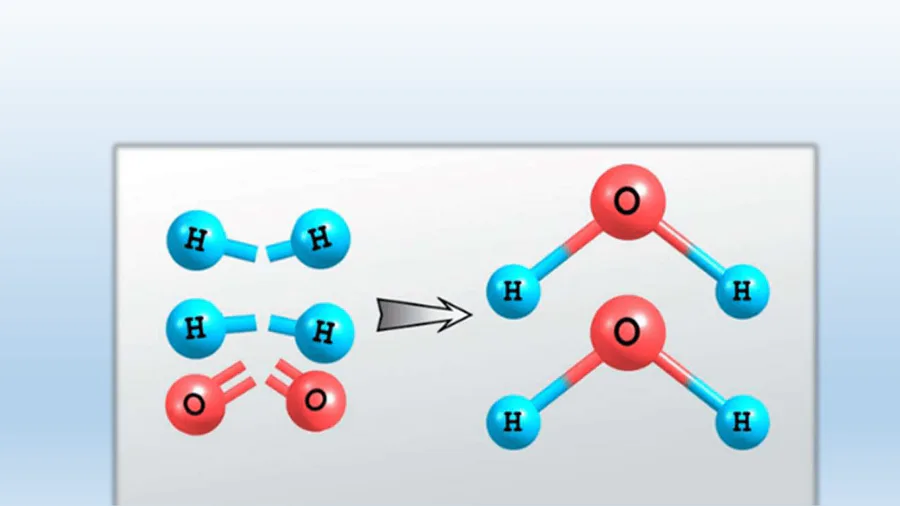
Bond energy: is the amount of energy absorbed to
break a bond OR released Energy during formation of a
new bond in one mole of a substance.
40

Our mission is to empower our students to utilize their potentials in a diverse and challenging world. We provide outstanding education for the mind, spirit and
body using state-of-the-art methodologies while fostering intercultural awareness, and lifelong learning.
41

Our mission is to empower our students to utilize their potentials in a diverse and challenging world. We provide outstanding education for the mind, spirit and
body using state-of-the-art methodologies while fostering intercultural awareness, and lifelong learning.
•Ex.: Calculate the heat of the following reaction &
Determine if it is exothermic or endothermic:
CH4 + 2O2 ---------- CO2 + 2H2O
(C=O) 803,
(O-H) 467,
(C-H) 413,
(O=O) 498
42

Our mission is to empower our students to utilize their potentials in a diverse and challenging world. We provide outstanding education for the mind, spirit and
body using state-of-the-art methodologies while fostering intercultural awareness, and lifelong learning.
Heat changes accompanying physical changes
:-
1- Standard heat of solution
2- Standard heat of dissolution
43

Our mission is to empower our students to utilize their potentials in a diverse and challenging world. We provide outstanding education for the mind, spirit and
body using state-of-the-art methodologies while fostering intercultural awareness, and lifelong learning.
1) Standard heat of solution :-
By dissolving
Sodium hydroxide (NaOH) in water, the
temperature of the solution increases
By dissolving
Ammonium nitrate (NH4NO3) in water, the
temperature of the solution decreases
The solution is called
Exothermic solution , and its H has a negative sign
The solution is called
Endothermic solution , and its H has a positive sign
44

Our mission is to empower our students to utilize their potentials in a diverse and challenging world. We provide outstanding education for the mind, spirit and
body using state-of-the-art methodologies while fostering intercultural awareness, and lifelong learning.
Heat of solution:- H Sol
Standard heat of solution H
Is the quantity of heat absorbed or released on dissolving one mole of solute in
a certain amount of solvent to obtain a saturated solution under standard
conditions.
Is the quantity of heat released or absorbed which is accompanying the dissolving
process to obtain a saturated solution.
Sol
𝑞𝑝 = 𝑚 𝑐 Δ𝑇
45

Our mission is to empower our students to utilize their potentials in a diverse and challenging world. We provide outstanding education for the mind, spirit and
body using state-of-the-art methodologies while fostering intercultural awareness, and lifelong learning.
Molar heat of solution Is the heat change resulting from dissolving one mole
of the solute in an amount of solvent to form one liter of the solution.
• If the amount of solute does not equal 1 mol, we can calculate the molar heat
of solution from the relation :
𝜟𝑯 = −𝒒𝒑
𝒏
Sol
46

Our mission is to empower our students to utilize their potentials in a diverse and challenging world. We provide outstanding education for the mind, spirit and
body using state-of-the-art methodologies while fostering intercultural awareness, and lifelong learning.
EX: By dissolving 80 g of NaOH in an amount of water to
produce 1 L of a solution, the temperature increased from 20°C
to 44.4°C :
[Na = 23 ,0=16,H=1]
(1) Calculate the heat of solution.
(2) Calculate the molar heat of solution.
(3) Is this solution exothermic or endothermic ?
47

Our mission is to empower our students to utilize their potentials in a diverse and challenging world. We provide outstanding education for the mind, spirit and
body using state-of-the-art methodologies while fostering intercultural awareness, and lifelong learning.
Dissolving process is affected by three forces:-
• Attraction forces between particles (molecules) of solvent.(H1)
• Attraction forces between particles (molecules) of solute. (H2)
• Attraction forces between particles (molecules) of solvent and
solute (H3)
48

Our mission is to empower our students to utilize their potentials in a diverse and challenging world. We provide outstanding education for the mind, spirit and
body using state-of-the-art methodologies while fostering intercultural awareness, and lifelong learning.
1) It is an endothermic process, because an amount of energy is absorbed
to overcome the attraction forces between the particles of the solvent with
each other (H1 has positive sign)
2) It is an endothermic process, because an amount of energy is absorbed
to overcome the attraction forces between the particles of the solute with
each other (H2 has positive sign)
3) It is an exothermic process, because an amount of energy is released
when solvent particles are combined with the particles of solute ( has
negative sign)
• The change in heat content of this process is represented by
The value of heat of solution ( Hsol) equals the sum of the change in heat
content of the three steps :
= AH1+ AH2 + AH3
49

Our mission is to empower our students to utilize their potentials in a diverse and challenging world. We provide outstanding education for the mind, spirit and
body using state-of-the-art methodologies while fostering intercultural awareness, and lifelong learning.
50

Our mission is to empower our students to utilize their potentials in a diverse and challenging world. We provide outstanding education for the mind, spirit and
body using state-of-the-art methodologies while fostering intercultural awareness, and lifelong learning.
2) Standard heat of dilution :-
• Standard heat of dilution (H diL) is the quantity of released or
absorbed heat for each one mole of solute upon diluting the solution
from a high concentration to another lower concentration with the
condition of being in its standard state.
• Example:-
When 1 mol of sodium hydroxide NaOH(s) is dissolved in different amounts of
water H2O() , the heat of the solution differs with the difference of the amount of
water, as in the following equations :
NaOH(s) + 5H20(e) Na0H(aq) AH1 = - 37.8 kJ/mol
NaOH(s) + 200H20(l) Na0H(aq) AH2 = - 42.3 kJ/mol
51

Our mission is to empower our students to utilize their potentials in a diverse and challenging world. We provide outstanding education for the mind, spirit and
body using state-of-the-art methodologies while fostering intercultural awareness, and lifelong learning.
Conclusion :-
• It is observed that AH2 value > AH1 value
• It is concluded that the amount of released or absorbed energy increases by
adding another amount of water (solvent).
52

Our mission is to empower our students to utilize their potentials in a diverse and challenging world. We provide outstanding education for the mind, spirit and
body using state-of-the-art methodologies while fostering intercultural awareness, and lifelong learning.
Dilution process takes place in two opposite steps according to the
energy, which are :
1) Separation energy
It is an endothermic process Because separating the ions or particles of the solute
from each other in the concentrated solution needs absorbing an amount of
energy
2) Attaching energy
It is an exothermic process Because the ions or particles of solute are attached to a
greater number of molecules of the solvent, which leads to releasing an amount of
energy
The heat of dilution is the sum of those two energies
(separation and attaching).
53

Our mission is to empower our students to utilize their potentials in a diverse and challenging world. We provide outstanding education for the mind, spirit and
body using state-of-the-art methodologies while fostering intercultural awareness, and lifelong learning.
Heat changes accompanying Chemical
changes :-
1- Standard heat of Combustion
2- Standard heat of Formation
54

Our mission is to empower our students to utilize their potentials in a diverse and challenging world. We provide outstanding education for the mind, spirit and
body using state-of-the-art methodologies while fostering intercultural awareness, and lifelong learning.
1-Heat of Combustion :-
• Combustion of a substance is the fast combination between
this substance and oxygen (an oxidation — reduction
reaction).
• The complete combustion of some elements and compounds
releases a large amount of energy in the form of heat or light
or both.
• The quantity of heat released when any substance combusts
complete in an excess amount of oxygen is known as
(Heat of combustion) Hc
55

Our mission is to empower our students to utilize their potentials in a diverse and challenging world. We provide outstanding education for the mind, spirit and
body using state-of-the-art methodologies while fostering intercultural awareness, and lifelong learning.
• If the combustion takes place at standard conditions, it is called Standard
heat of combustion
Hc
• The combustion of most of organic substances (like fuel and glucose)
produces :
- Water (H20) whether liquid or vapor.
- Carbon dioxide (CO2).
- Heat energy.
56

Our mission is to empower our students to utilize their potentials in a diverse and challenging world. We provide outstanding education for the mind, spirit and
body using state-of-the-art methodologies while fostering intercultural awareness, and lifelong learning.
Examples of Combustion reactions :-
1) Combustion of stove gas (Butagas) :
• Stove gas (Butagas) is a mixture of :
- Propane C3H8 - Butane C4H10
• This combustion reaction produces a large amount of heat which is used in
cooking food and has other uses.
• The following equation and the opposite energy diagram represent the
complete combustion of propane gas :
C3H8(g) + 502(g) 3C02(g) + 4H2O9(l) HC= —2323.7 kJ/mol
57

Our mission is to empower our students to utilize their potentials in a diverse and challenging world. We provide outstanding education for the mind, spirit and
body using state-of-the-art methodologies while fostering intercultural awareness, and lifelong learning.
Combustion of propane gas:-
58

Our mission is to empower our students to utilize their potentials in a diverse and challenging world. We provide outstanding education for the mind, spirit and
body using state-of-the-art methodologies while fostering intercultural awareness, and lifelong learning.
2) Combustion of glucose inside the body of the living organism
•It is one of the very important combustion reactions as it
provides the living organisms with the needed energy to
perform their vital processes.
C6H1206(s) + 602(g) 6CO2(g)+6H2O(l)
Hc = –2808 kJ/mol
59

Our mission is to empower our students to utilize their potentials in a diverse and challenging world. We provide outstanding education for the mind, spirit and
body using state-of-the-art methodologies while fostering intercultural awareness, and lifelong learning.
Calculate the mass of glucose which is burnt to raise
the temperature of 100 g of water from 20°C to 25°C
(assuming no heat is lost).
according to the equation :
60

Our mission is to empower our students to utilize their potentials in a diverse and challenging world. We provide outstanding education for the mind, spirit and
body using state-of-the-art methodologies while fostering intercultural awareness, and lifelong learning.
2-Standard heat of formation HF
• The heat change accompanying the formation of the compound from
its pure constituent elements is called Heat of formation Hf
• If the constituent elements are in their standard state, which is the
most stable state of matter at the standard conditions, therefore the
heat change which accompanies the formation of the compound is
called
Standard heat of formation Hf
61

Our mission is to empower our students to utilize their potentials in a diverse and challenging world. We provide outstanding education for the mind, spirit and
body using state-of-the-art methodologies while fostering intercultural awareness, and lifelong learning.
• Graphite is considered the standard state of carbon.
Because it represents the most stable state of carbon at the standard conditions.
• Standard heat of formation of glucose.
6C(s) + 6H2(g) + 3O2(g)
C6H12O6(s) H = -1260 kJ/mol
Applications based on Heat of formation:-
Note : The Heat of formation of any element is supposed to be zero in
the standard conditions.
62

Our mission is to empower our students to utilize their potentials in a diverse and challenging world. We provide outstanding education for the mind, spirit and
body using state-of-the-art methodologies while fostering intercultural awareness, and lifelong learning.
• Calculation of the change in heat content (the enthalpy) All
of the reactions in terms of the standard heat of formation H
The change in heat content = Heat content of the products — Heat content of
the reactants
• The standard heat of formation of a compound equals its heat content.
• ΔH = [the sum of heat of formation – the sum of heat of formation]
of the products
of the reactants
63

Our mission is to empower our students to utilize their potentials in a diverse and challenging world. We provide outstanding education for the mind, spirit and
body using state-of-the-art methodologies while fostering intercultural awareness, and lifelong learning.
Thermally stable compounds Thermally unstable compounds
Thermally stable at room temperature and
don't tend to dissociate to their constituent
elements
Thermally unstable at room temperature and
tend to dissociate spontaneously to their
constituent elements
The Heat of formation
Has a negative sign
The Heat of formation
Has a Positive sign
Their heat content is lower than the
heat content of their constituent
elements
Their heat content is higher than the
heat content of their constituent
elements
Relation between Heat of formation and the stability of the compound:-
64

Our mission is to empower our students to utilize their potentials in a diverse and challenging world. We provide outstanding education for the mind, spirit and
body using state-of-the-art methodologies while fostering intercultural awareness, and lifelong learning.
65

Our mission is to empower our students to utilize their potentials in a diverse and challenging world. We provide outstanding education for the mind, spirit and
body using state-of-the-art methodologies while fostering intercultural awareness, and lifelong learning.
• By decreasing of the value of the standard heat of formation of the
Compound, its thermal stability increases and vice versa.
• Most of the reactions tend to proceed in the direction of the formation of the
compounds with lower value of heat of formation (higher stability).
66

Our mission is to empower our students to utilize their potentials in a diverse and challenging world. We provide outstanding education for the mind, spirit and
body using state-of-the-art methodologies while fostering intercultural awareness, and lifelong learning.
Hess’s Law
Scientists usually prefer to use indirect methods to calculate heat of reactions.
This is due to many reasons such as :
• A mixture of reactants or products with other substances.
• Some reactions occur very slowly and need a long time like the formation of iron
rust.
• Being dangerous to measure the heat of some reactions experimentally.
• Difficulties of measuring the heat of reaction in normal conditions of pressure
and temperature.
67

Our mission is to empower our students to utilize their potentials in a diverse and challenging world. We provide outstanding education for the mind, spirit and
body using state-of-the-art methodologies while fostering intercultural awareness, and lifelong learning.
In order to calculate the heat changes in these kinds of reactions, Hess proposed a
law which is known as Hess's law of constant heat summation and it states that
the heat of reaction is a constant amount in standard conditions, whether the
reaction took place in one step or a number of steps.
• Hess's law is one of the forms of the first law of thermodynamics, because it
considers the chemical reaction as an isolated system whose heat is a constant
amount.
• Hess's law is dealing with the chemical equations as if they were algebraic
equations which can be added together or subtracted from each other, and their
coefficients can be multiplied by constant numerical values.
• The mathematical relation of Hess's law is : H = H1 + H2 + H3 +…………….
Our mission is to empower our students to utilize their potentials in a diverse and challenging world. We provide outstanding education for the mind, spirit and
body using state-of-the-art methodologies while fostering intercultural awareness, and lifelong learning.
Our mission is to empower our students to utilize their potentials in a diverse and challenging world. We provide outstanding education for the mind, spirit and
body using state-of-the-art methodologies while fostering intercultural awareness, and lifelong learning.
Basic Concepts Of Thermochemistry
Show answer
Auto Play
Slide 1 / 67
SLIDE
Similar Resources on Wayground

50 questions
Coursework No. 4: Responding to Community Contexts
Presentation
•
8th Grade
64 questions
Chapter 11 Tourism Marketing
Presentation
•
University
59 questions
N5 Software
Presentation
•
8th Grade
58 questions
Untitled Presentation
Presentation
•
11th Grade
64 questions
It's up for Debate
Presentation
•
12th Grade
52 questions
CALM | P1 | Analyze the Dimensions of Health |
Presentation
•
9th - 12th Grade
48 questions
Video on Romanticism
Presentation
•
11th Grade
Popular Resources on Wayground
10 questions
Safety Day 2026 – Student Review

Quiz
•
9th Grade
21 questions
Continents and Oceans
Quiz
•
6th Grade
20 questions
Parts of Speech
Quiz
•
5th Grade
16 questions
Subject & Predicate
Quiz
•
5th Grade
25 questions
Multiplication Facts
Quiz
•
5th Grade
12 questions
Map Skills
Quiz
•
3rd Grade
22 questions
Continents and Oceans
Quiz
•
5th Grade
15 questions
Rounding Decimals
Quiz
•
5th Grade
Discover more resources for Chemistry
20 questions
electron configurations and orbital notation
Quiz
•
9th - 12th Grade
25 questions
Writing and Naming Binary Ionic compounds
Quiz
•
10th Grade
20 questions
COUNTING ATOMS
Quiz
•
10th Grade
20 questions
Physical or Chemical Change/Phases
Quiz
•
8th Grade - University
15 questions
Periodicity Module Exam Practice Quiz
Quiz
•
9th - 12th Grade
20 questions
Naming Ionic Compounds
Quiz
•
10th Grade
45 questions
Chem Unit 3 Review
Quiz
•
10th Grade
16 questions
History of the Atomic Theory
Quiz
•
10th Grade