

Leadership

Presentation
•
Special Education
•
University
•
Easy

Ola Shadid
Used 12+ times
FREE Resource
21 Slides • 8 Questions
1


2

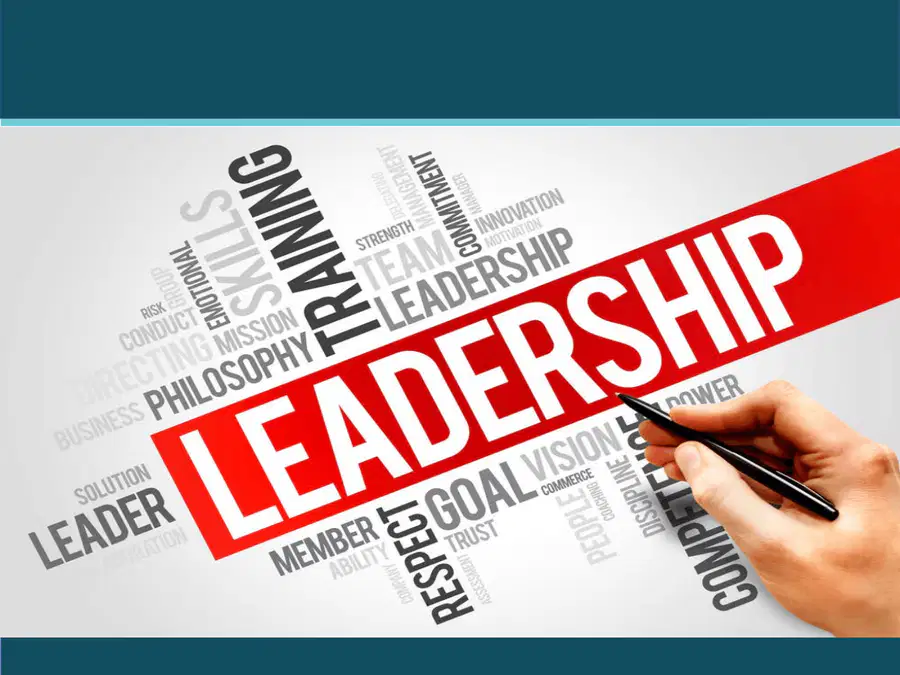
Leadership
& Change
LEARNING OBJECTIVES
• Define leadership
• Identify leadership qualities
• Differentiate between good and bad leaders
• Differentiate between the different leadership styles
3


4

Leadership and Change
5

6
Open Ended
What does leadership mean to you?
7
What is Leadership?
Leadership is the ability to inspire, guide, and influence a group of individuals to work toward a common goal or vision. It involves setting a direction, motivating others, fostering collaboration, and making decisions that contribute to the success and growth of a team or organization.
8
Open Ended
Think of a leader you respect. What THREE qualities make that person an effective leader?
9
7 Leadership Qualities of a Great Leader
Vision
Courage
StrategicPlanning
Cooperation
Humility
Integrity
Focus
10
Open Ended
Which TWO do you think are hardest for a leader to demonstrate consistently?
Vision
Courage
Strategic Planning
Cooperation
Integrity
Humility
Focus
11
Multiple Choice
A team leader makes an urgent decision without consulting others because a safety emergency is unfolding.
Participative/Democratic
Authoritarian
Transactional
Transformational
Laissez-faire
12
Multiple Choice
A leader motivates people around a new vision and encourages change.
Transformational
Transactional
Participative/Democratic
Laissez-faire
Authoritarian
13
Multiple Choice
A leader asks the team for ideas and includes them in the decision.
Transactional
Transformational
Authoritarian
Participative/Democratic
Laissez-faire
14
Multiple Choice
Employees receive rewards when specific targets are reached.
Authoritarian
Participative/Democratic
Transactional
Transformational
Laissez-faire
15
Multiple Choice
A highly experienced team is given freedom to decide how to complete its work.
Authoritarian
Participative/Democratic
Transactional
Transformational
Laissez-faire
16


Individual Activity
• Think of the best and worst managers/leaders that
you have ever worked with or met.
• Note down their attributes.
• Then note down how that affected you as a team member
member.
17
18

Group Activity – Leadership Scenario
Mark , a highly successful project manager, is leading a team of 20 people
on a groundbreaking project for a technology company. The project
involves the development of a cutting-edge product that could
revolutionize the industry. The team has been working diligently for the
past two years, and they are now in the final stages of development, with
a planned launch date just six months away.
A major issue arises when the project's primary investor, who had been
providing crucial financial support, unexpectedly withdraws their funding.
This sudden decision is based on concerns about the economic outlook
and a change in leadership within the investor's organization. Mark's
project is now facing a severe financial crisis, with insufficient funds to
complete the project as planned.
From the perspective of leadership provide recommendations and insights
into how Mark, the project manager, can navigate this obstacle while
applying the key characteristics of leadership.
Consider what actions Mark should take in terms of vision, courage,
integrity, humility, strategic planning, focus, and cooperation to ensure the
project's success despite the financial setback. Discuss the potential
consequences of his actions and the ethical considerations involved.
19

20

21
Are Leaders born or made?
The debate whether leaders are born has been ongoing for years. Some argue that effective leaders possess inherent qualities from birth, while others believe that leadership is a skill that can be developed through learning and experience. Share your perspective on whether leadership is a natural trait or a skill that can be cultivated. Use examples from your own experiences or observations to support your opinion. Additionally, consider the role of both nature (inherent traits) and nurture (education and experience) in shaping leadership abilities. Do you think there might be a combination of both factors at play? Explain your reasoning on BB.
22

23
24

Leadership Style #1: Laissez-Faire Leadership
• Definition: French term meaning "let people do as they choose."
• Key Features:
• Employees have almost full autonomy.
• Leader provides resources but leaves decision-making to the team.
• The leader acts as a supervisor rather than a decision-maker.
• Best for: Highly skilled and motivated teams.
• Challenges: Can lead to poor performance if employees lack
motivation or skills.
25

Leadership Style #2: Authoritarian Leadership
• Definition: The leader makes decisions with minimal input from
others.
• Key Features:
• Leader sets goals and strategies unilaterally.
• Clear structure where everyone knows their roles.
• Quick decision-making process.
• Best for: High-risk environments (e.g., military, emergencies).
• Challenges: Can lead to low morale, reduced creativity, and high
employee turnover.
26

Leadership Style #3: Participative Leadership
(Democratic Leadership)
• Definition: A leadership style where the leader involves the team in
decision-making.
• Key Features:
• Leader considers input from the team before making decisions.
• Employees feel empowered and valued.
• Encourages creativity and multiple perspectives.
• Best for: Teams of similarly skilled individuals or smaller teams.
• Challenges: Slower decision-making, not suitable for urgent
situations.
27

Leadership Style #4: Transactional Leadership
• Definition: Focuses on setting clear goals and rewards/punishments
based on performance.
• Key Features:
• Emphasizes achieving set targets.
• Rewards employees for meeting goals, and consequences for failure are clear.
• Structured and predictable.
• Best for: Self-motivated employees in environments with clear goals.
• Challenges: Limits creativity and innovation, can become
monotonous.
28

Leadership Style #5: Transformational Leadership
• Definition: Leader inspires and motivates employees through
charisma and vision.
• Key Features:
• Leader acts as a role model, assessing individual strengths and weaknesses.
• Focuses on personal development and creativity.
• Builds a positive workplace culture and morale.
• Best for: Teams aiming for strategic goals and innovation.
• Challenges: Requires a charismatic leader and can demand significant
effort to maintain engagement.
29

Case Study
• Case Study #1: Southwest Airlines
• Case Study #2: Starbucks
• Case Study #3: Toro
Questions
1. What was the challenges faced in this case study?
2. How did the leader manage to solve it?
3. What characteristics did this leader have?
Show answer
Auto Play
Slide 1 / 29
SLIDE
Similar Resources on Wayground

21 questions
SPEC 204 Accommodations v. Modifications
Presentation
•
University
25 questions
Newtons 3 laws
Presentation
•
KG - University
21 questions
Lesson 3- Pie charts
Presentation
•
University
23 questions
Modals of deduction & possibility/probability
Presentation
•
University
21 questions
ATIN2_PART4_S26
Presentation
•
University
21 questions
IN ON AT prepositions of place
Presentation
•
University
20 questions
Argumentative Text
Presentation
•
University
24 questions
Olympics
Presentation
•
University
Popular Resources on Wayground
10 questions
Safety Day 2026 – Student Review

Quiz
•
9th Grade
21 questions
Continents and Oceans
Quiz
•
6th Grade
20 questions
Parts of Speech
Quiz
•
5th Grade
16 questions
Subject & Predicate
Quiz
•
5th Grade
25 questions
Multiplication Facts
Quiz
•
5th Grade
12 questions
Map Skills
Quiz
•
3rd Grade
22 questions
Continents and Oceans
Quiz
•
5th Grade
15 questions
Rounding Decimals
Quiz
•
5th Grade
Discover more resources for Special Education
20 questions
Disney Trivia
Quiz
•
University
10 questions
Spanish Greetings and Goodbyes!
Presentation
•
6th Grade - University
20 questions
Physical or Chemical Change/Phases
Quiz
•
8th Grade - University
39 questions
Unit 7 Key Terms
Quiz
•
11th Grade - University
25 questions
SER and Subject Pronouns
Quiz
•
8th Grade - University
38 questions
Unit 6 Key Terms
Quiz
•
11th Grade - University
19 questions
Key Concepts in Buddhism
Quiz
•
University
0 questions
Cell Domain Basic Review (Biology)
Quiz
•
University