

Airplane components

Presentation
•
Physics
•
11th Grade
•
Medium
+1
Standards-aligned

Lisa Hartley
Used 1+ times
FREE Resource
53 Slides • 19 Questions
1

Aircraft Control Surfaces and
Components
© 2011 Project Lead The Way, Inc.
Aerospace Engineering
2

Aircraft Components and Control
• Aircraft range from simple home-built
machines to complex fighter jets
• All aircraft have common structural and
control components that allow for
controlled flight
3

Aircraft Components
Empennage
Fuselage
Aileron
Elevator
Rudder
Vertical Stabilizer
Horizontal Stabilizer
Wing
Flaps
Power Plant
Cockpit
4
Multiple Choice

What is part B?
Wing
Winglet
Cockpit
Spoiler
5

Empennage and Wing Components
Elevator
Rudder
Vertical Stabilizer
Horizontal Stabilizer
Flaps
Ailerons
Horizontal Stabilizer
Elevator
6
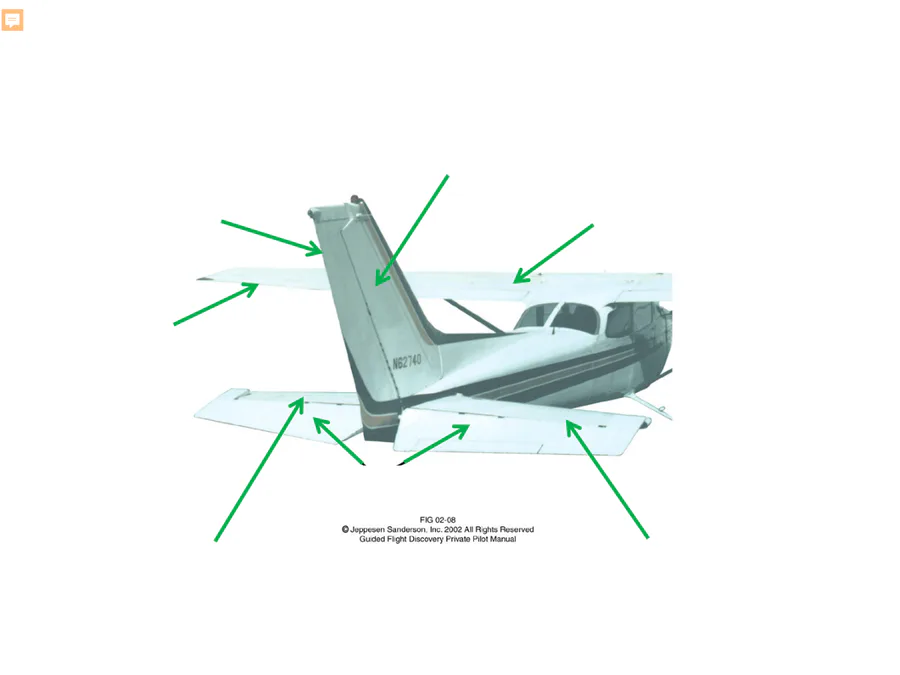
Empennage and Wing Components
Elevator
7
Multiple Choice
The ____________ is powered by an engine (usually just behind the propeller) and the propeller blades create __________to move an airplane forward.
thrust, propeller
lift,drag
propeller, thrust
thrust, drag
8
Multiple Choice
The __________is a part of an airplane that produces much of an airplane’s total lift when air flows over it.
aileron
wing
elevator
rudder
9
Multiple Choice
The _______________ is the main body of an airplane.
cockpit
window
emmpennage
fuselage
10
Multiple Choice
The four forces of flight considered in the design of airplane parts are lift, __________, thrust and __________.
gravity, drag
drag, gravity
lift, drag
11
Multiple Choice
The horizontal stabilizer, vertical stabilizer, rudder and elevator together are called the “_______________.”
flaps
empennage
wings
fuselage
12
Multiple Choice
What is part A?
Wing
Winglet
Cockpit
Spoiler
13
Multiple Choice
The _____________ is used to make the nose of the airplane yaw left or right.
rudder
elevator
ailerons
flaps
14
Multiple Choice
The elevator controls “_____________,” or the up-and-down motion of the airplane’s nose.
flaps
lift
pitch
yaw
15
Multiple Choice
What is part C?
Horizontal Stabilizer
Vertical Stabilizer
Rudder
Elevator
16
Multiple Choice
The three main control surfaces on an airplane are the ailerons, _____________ and elevator.
rudder
flaps
landing gear
tail-fin
17
Multiple Choice
What is part D?
Horizontal Stabilizer
Vertical Stabilizer
Rudder
Elevator
18
Multiple Choice
Jet engines allow airplanes to fly faster and at higher altitudes than propeller airplanes.
lower, and slower
faster and higher
faster and lower
lower and faster
19
Multiple Choice
What is part E?
Horizontal Stabilizer
Vertical Stabilizer
Rudder
Elevator
20
Multiple Choice
What is part H?
Flaps
Aileron
Spoiler
Slats
21
Multiple Choice
What is part K?
Fuselage
Cockpit
Turbine Engine
Slats
22

Empennage
Rudder
Vertical Stabilizer
Horizontal Stabilizer
Trim Tab
Elevator
Trim Tab
23
Multiple Choice
What is part L?
Fuselage
Cockpit
Turbine Engine
Slats
24
Multiple Choice
What is part F?
Horizontal Stabilizer
Vertical Stabilizer
Rudder
Elevator
25
Multiple Choice
What is part G?
Flaps
Aileron
Spoiler
Slats
26

Aircraft Components
27

Fuselage
28

Winglet
29

Wing
Wing Strut
Ribs
Spar
30

Center of Gravity
Center of Gravity (CG) is point where
weight of object is balanced
Centroid located on
the line of symmetry
Centroid of object with multiple lines of symmetry
is located at intersection of lines of symmetry
31

Stability
• Aircraft with positive stability returns to
steady flight after disturbance
32

Stability
• Aircraft with positive stability returns to
steady flight after disturbance
• Maneuverability is an indication of an
aircraft’s ability to handle the stress of
maneuvers
• Controllability is an indication of an
aircraft’s ability to react to pilot inputs
33

Aircraft Attitude
• Aircraft have three axes of flight which
intersect at the center of gravity
Longitudinal
Axis
Lateral
Axis
Vertical
Axis
34

Aircraft Attitude
• Aircraft have three axes of flight which
intersect at the center of gravity
• Aircraft must be stable around these three
axes for controlled flight
Center of
Pressure
Center of
Gravity
35

Aircraft Attitude
• Aircraft have three axes of flight which
intersect at the center of gravity
• Aircraft must be stable around these three
axes for controlled flight
• Aircraft must be controlled to rotate around
these three axes to change direction
Center of
Pressure
Center of
Gravity
36


Longitudinal
Axis
Lateral
Axis
Vertical
Axis
Aircraft Stability and Movement
Around Three Axes of Flight
Roll
Pitch
Yaw
37
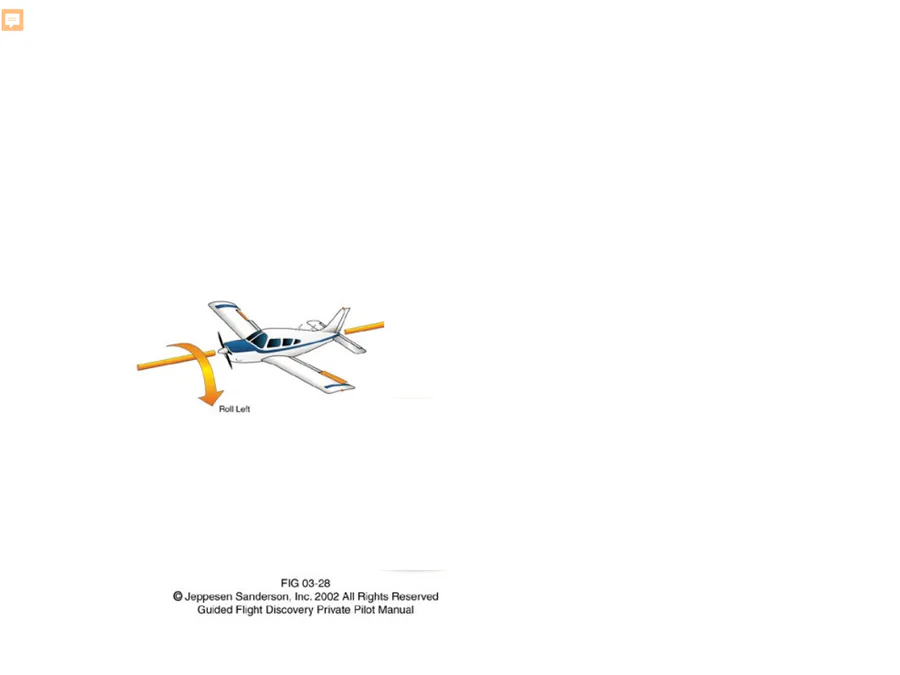
Aircraft Roll Stability and Control
To turn left, the
aircraft must roll left.
Right wing must raise
and left wing must
descend.
Right aileron is
lowered and left
aileron is raised.
Longitudinal
Axis
38

Aircraft Roll Stability and Control
To turn left, the
aircraft must roll left.
Right wing must raise
and left wing must
descend.
Right aileron is
lowered and left
aileron is raised.
Longitudinal
Axis
39


Flight Controls that Cause Ailerons
and Flaps to Move
Yoke rotated
left
Left aileron raises
Right aileron lowers
Left and right
flaps lower
Flaps lever lowered
Flaps are only used
during takeoff and
landing to increase lift at
lower airspeed. Use of
flaps at cruising speed
would damage the wing.
40

Aircraft Pitch Stability and Control
Lateral
Axis
Pitch Down
Push the yoke
forward
To descend, the pilot
reduces power and lowers
the elevator to pitch down
Lower the elevator
41
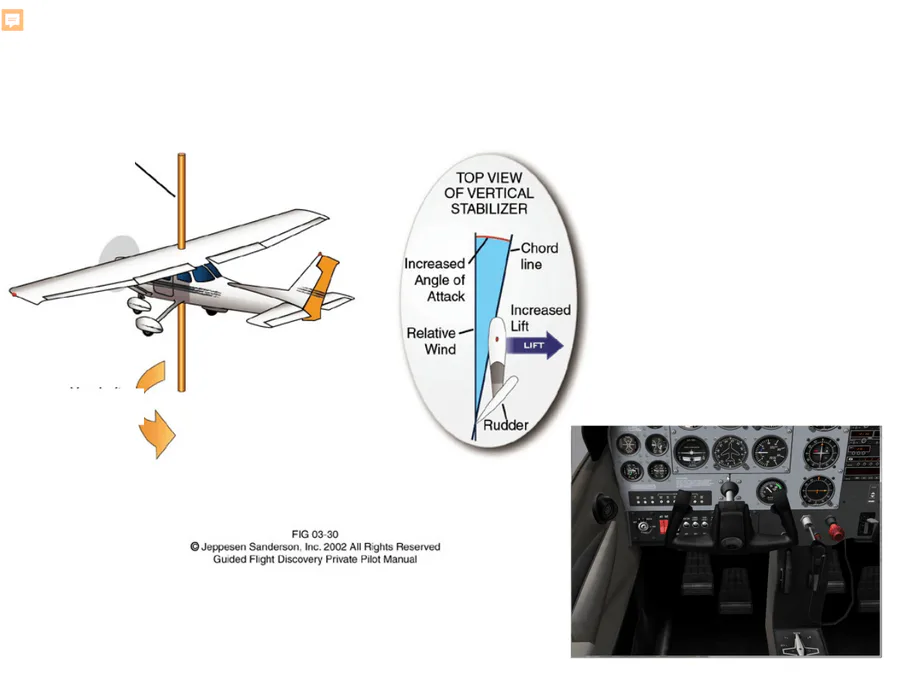
Aircraft Yaw Stability and Control
Vertical
Axis
Yaw Left
Push left pedal
away from you.
To yaw the aircraft
nose left, the
rudder must
deflect left.
42

Aircraft Motion and Control
Axis
Motion
Stabilized by
Control
Pilot Control
Longitudinal
Roll
Wings
Aileron
Yoke twist left
or right
Lateral
Pitch
Horizontal
stabilizer
Elevator
Yoke forward
or aft
Vertical
Yaw
Vertical
stabilizer
Rudder
Rudder pedals
Longitudinal
Axis
Lateral
Axis
Vertical
Axis
Roll
Pitch
Yaw
43

Why Do Airplane Designs Differ?
The differences more than aesthetic
Consider how a design affects lift
and drag and other characteristics
44


Wing Vertical Location
High Wing
Mid Wing
Low Wing
How will the wing location affect aircraft performance?
45
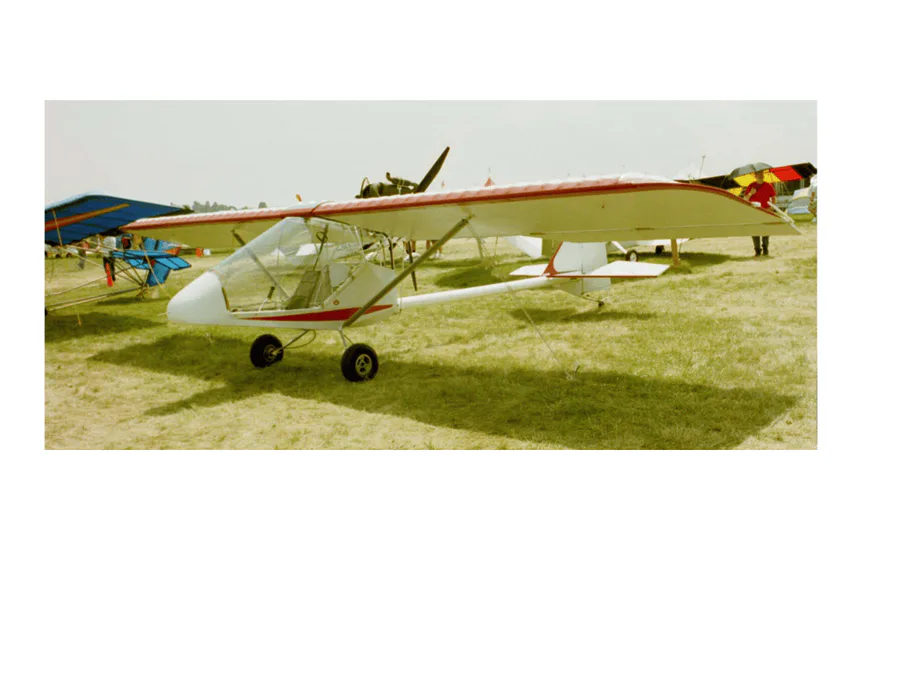
• High wing generates the most lift of the three wing locations
because airflow is continuous with minimal interruption
• Improved pilot downward visibility without wing obstruction
• Center of gravity is high
• Pusher engine avoids introducing turbulence over wing
High Wing
46
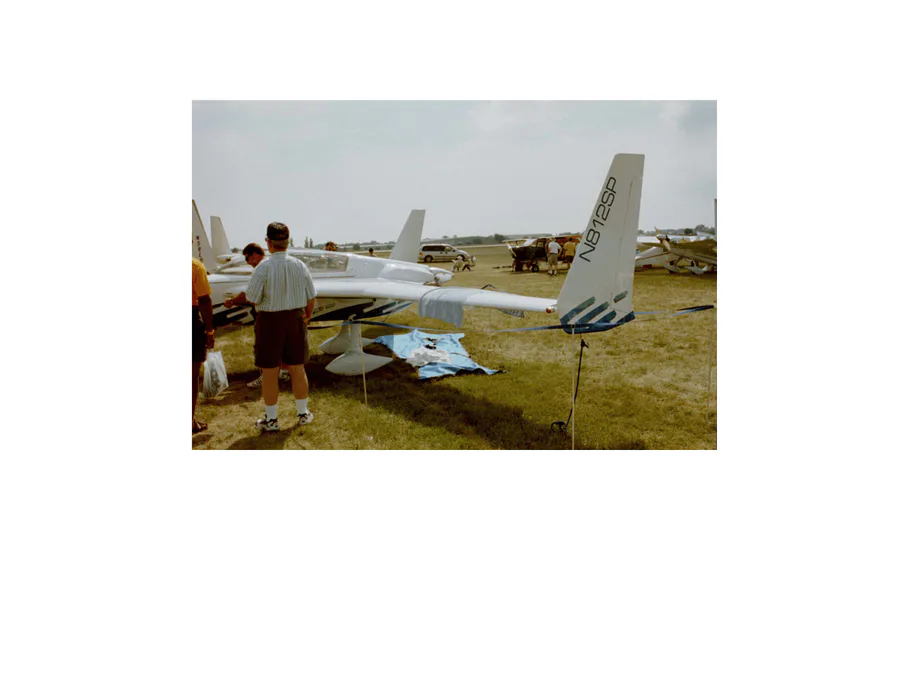
Mid Wing
• Mid wing generates the least lift of the three wing locations
47

Low Wing
• Low wing generates lift as a median of three wing locations
because airflow is almost continuous with some interruption
• Increased ground effect increases lift during takeoff and
landing because the wing airflow acts against the ground
• Limited pilot downward visibility because of wing obstruction
48


Wing Configuration
Biplane
Canard Wings
How will the wing configuration affect aircraft performance?
49

Multiple Wings – Biplane
• Increased wing area generates more lift
• Increased wing area generates more drag
50

Canard Wings
• Canard wings provides major wing surface area well
forward of the center of gravity
• Center of gravity being farther rearward improves pitch
control
51

Vertical Stabilizer
Twin vertical stabilizers
Triple vertical stabilizers
How will the vertical stabilizer affect aircraft performance?
V-Tail
52
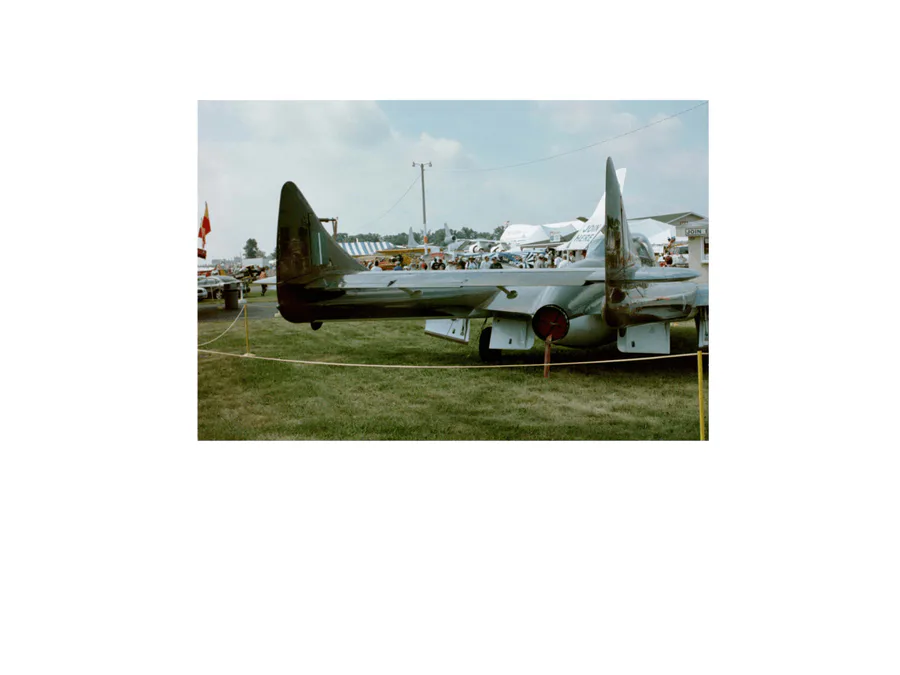
Twin Vertical Stabilizers
• Two vertical stabilizers improve yaw control
53

Triple Vertical Stabilizers
• Three vertical stabilizers improve yaw control
• Could be needed to compensate for the limitation of other
features
54

V-Tail
• Early versions of the design made it difficult for a pilot to
control yaw
• Note the relative percentage of wing that is flap versus
aileron.
55

Power Plant
Tractor power plant
Pusher power plant
How will the power plant affect aircraft performance?
Variable direction power plant
56

Tractor Power Plant
Engine
Propeller
57


Pusher Power Plant
Engine
Propeller
58

Variable Direction Power Plant
Exhaust smoke from
vertical thrust
59

Landing Gear
Oleo Strut
Floats
How will the landing gear affect aircraft performance?
Tail dragger
Tricycle
60

Landing Gear – Oleo Strut
Brakes
Tire
Rim
Oleo strut
Axle
61

Landing Gear – Floats
62

Conventional Gear vs. Tail-Dragger
Main Gear
(2 wheels)
Tail Wheel
63

Tricycle Gear
Main Gear
(2 wheels)
Nose Wheel
64
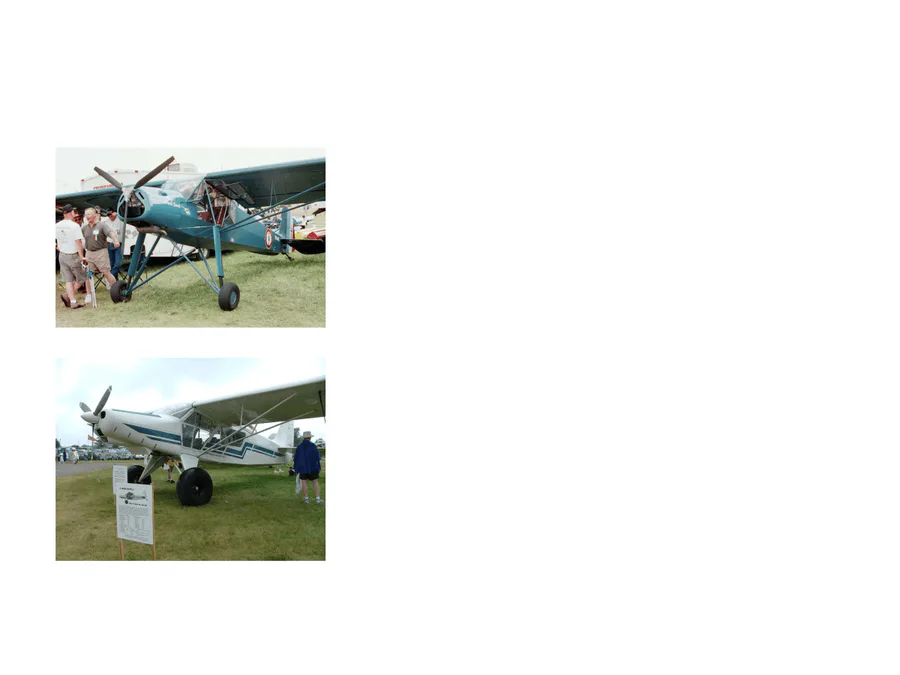
Rough field
How will the landing gear affect aircraft performance?
Specialized Landing Gear
Soft field
65

Rough Field Landing Gear
• Rough field landing gear has smaller wheels to allow large
shock absorbers
• Large shock absorbers
• Absorb impact of a rough terrain
• Propeller is above tall grass
66


Soft Field Landing Gear
• Soft field landing gear has large wheels to minimize sinking
into terrain
67


Fuselage size
How will the aircraft size affect aircraft performance?
Aircraft Size and Shape
Engine size
Specialized configuration
68

Aircraft Size
Lockheed C-5 Galaxy
69

Aircraft Size
70

Aircraft Size
Boeing 777 Engine Intake
71

Specialty Aircraft
72
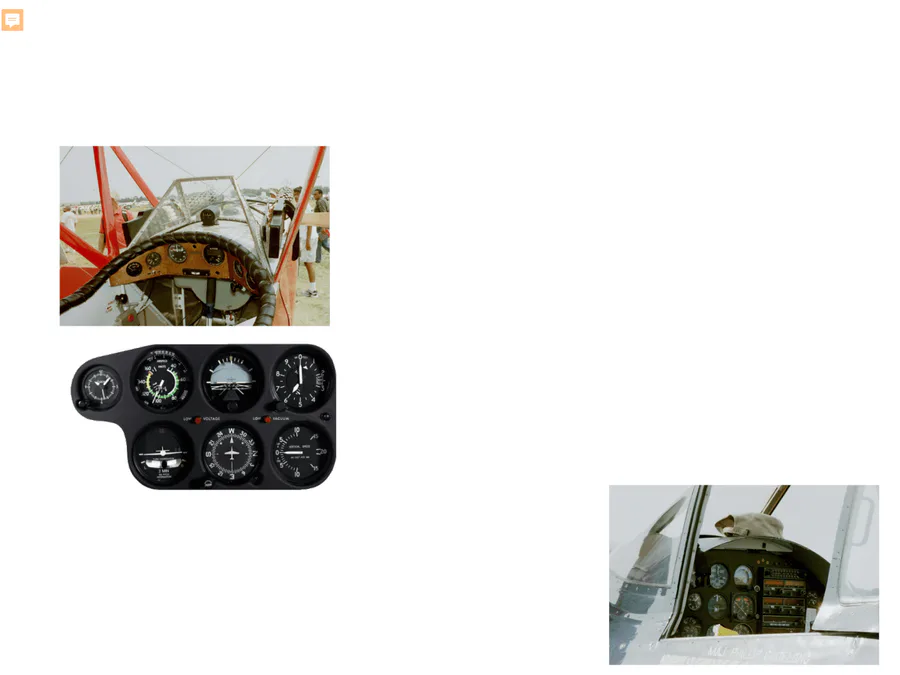
Simple instrument panel
How will the instrument panel affect aircraft performance?
Instrument Panel
General aviation instrument panel
General aviation instrument panel
Aircraft Control Surfaces and
Components
© 2011 Project Lead The Way, Inc.
Aerospace Engineering
Show answer
Auto Play
Slide 1 / 72
SLIDE
Similar Resources on Wayground

58 questions
Teks Persuasi
Presentation
•
11th Grade
58 questions
Organisation charts
Presentation
•
11th Grade
64 questions
INTRODUCTION TO HUMAN FACTOR
Presentation
•
Professional Development
68 questions
Evidence of Evolution
Presentation
•
10th Grade
67 questions
Good Etiquette
Presentation
•
KG - University
59 questions
Black Indigenous
Presentation
•
KG - 12th Grade
65 questions
Avionics Mod 8
Presentation
•
University
64 questions
9 TECH Hydraulics
Presentation
•
9th Grade
Popular Resources on Wayground
10 questions
Safety Day 2026 – Student Review

Quiz
•
9th Grade
21 questions
Continents and Oceans
Quiz
•
6th Grade
20 questions
Parts of Speech
Quiz
•
5th Grade
16 questions
Subject & Predicate
Quiz
•
5th Grade
25 questions
Multiplication Facts
Quiz
•
5th Grade
12 questions
Map Skills
Quiz
•
3rd Grade
22 questions
Continents and Oceans
Quiz
•
5th Grade
15 questions
Rounding Decimals
Quiz
•
5th Grade
