

Urbanization and WIn Lesson

Presentation
•
Science
•
9th Grade
•
Practice Problem
•
Easy
+11
Standards-aligned

Alfred Allen
Used 8+ times
FREE Resource
35 Slides • 6 Questions
1

My Class Expectations:
Join Quizizz
In the chat say hello and what is the last thing you threw away?
ROCK
SGB Block Schedule
10-29-2024
the BLOCK
Mr. Allen
Environmental
science
2
Open Ended
breakfast necessary or not
3

4


Urbanization
Tuesday, October 29
Unlock the
dm secret
question
5

6

CAMERA POLICY
Teachers will send a private message then verbal warning if a student’s camera is not on.
Continued non-camera use will result in moving up the discipline ladder.
First offense: Teacher conferences with student and documents in IC.
Second offense: Teacher conferences with student, contacts LC and documents in IC.
Third offense: Teacher conferences with student, contacts LC, sends over to academic
coach for support and documents in IC.
Fourth offense: Academic coach submits discipline referral to discipline AP
Please make sure to turn your camera on at the beginning of each class.
You can set it to private (only teacher sees) or public (everyone sees).
7
Multiple Choice
Which of these renewable energy sources does not use kinetic energy?
8

Urbanization
Kinetic energy is the energy an object has because of its motion
Solar energy is the radiation from the Sun capable of producing heat, causing chemical reactions, or generating electricity
Check it out in real time!
9

S
Safe
O
On Task
A
Awesome Attitude
R
Responsible
When students
attend class or
face to face
events with
other students,
they will...
Use teacher-approved tools &
websites.
Follow the GCA Dress Code.
Protect private information.
Use school-approved learning
devices.
Have a learning coach close by.
Use webcam as requested.
Ask questions as needed.
Follow teacher directions for using the
chat, microphone, & taking turns.
Remain in class until dismissed.
Move to appropriate break out rooms
when prompted.
Close extra tabs.
Find a quiet, distraction-free
workspace.
Use kind words and faces.
Respect others’ cultures, opinions, and
viewpoints.
Raise hands to answer questions &
wait to be called on.
Respond to private chats from
teachers & participate when
prompted.
Turn off microphones when entering
the room.
Communicate courteously &
respectfully with peers and staff.
Attend all required sessions.
Use their cameras, whiteboard tools,
chat & polling tools appropriately.
Contact Tech Support with computer
issues as needed.
Log in to Canvas/Jigsaw on time.
Ensure their microphones are
working, computers are charged, &
materials are ready.
When students
work
independently
or
asynchronously,
they will...
Use teacher-approved websites.
Use school-approved learning
devices.
Have a learning coach close by.
Stay on the assigned task.
Log into Canvas & access recordings,
notes, & resources.
Email teachers with questions.
Find a quiet, distraction-free
workspace.
Complete their own work.
Take their time & do their best on
assignments.
Use a greeting & signature in all
emails.
Respond to teacher emails.
Turn in all assignments on time.
Ask Learning Coaches for
assistance.
During
assessments,
students will...
Use teacher-approved websites.
Use school-approved learning
devices.
Have a learning coach close by.
Be on camera with full face in view.
Work on the assigned assessment.
Close other tabs & browsers.
Find a quiet, distraction-free
workspace.
Put forth their best effort.
Take their time.
Complete assessments
independently.
Answer all test questions without
outside help (LC, internet, etc.).
Submit assessments on time.
10


Standard
SEV4. Obtain, evaluate, and
communicate information to analyze
human impact on natural resources.
b. Design, evaluate, and refine
solutions to reduce human impact on
the environment including,
but not limited to, smog, ozone
depletion, urbanization, and ocean
acidification.
I can explain how urbanization
impacts the environment.
I can illustrate ways in which we
can help to lower our impact
through better city planning.
Learning Targets
11

How does urbanization impact the
environment?
What can we do to lessen our impact?
12


This Week
Exam Fri. 11/1
13

Where are you at with Ocean acidification?
I want to know more
I want to know what is
ocean acidification?
I want to know what
the difference between
carbon cycle in the
ocean compared to
everywhere else?
I want to understand
the effects on pH with
ocean acidification?
14
Open Ended
What do you know about ocean acidifcation and what do you wish to know about ocean acidification
15


16


17


18

Urbanization
Does each one increase or
decrease with urbanization?
increase
decrease
1. The amount of air pollution.
1. The level of noise.
1. The amount of trees and plants.
1. The numbers of wild animals.
1. The amount of food available for
wild animals.
1. The amount of living space.
1. Biodiversity
19
Match
Match the following
amount of air polution
amount of biodiversity
Movile cave
incinerate
using environmental friendly lightbulbs
increases
decreases
unique ecosytem
method for releasing greenhouse gas
conservation
increases
decreases
unique ecosytem
method for releasing greenhouse gas
conservation
20

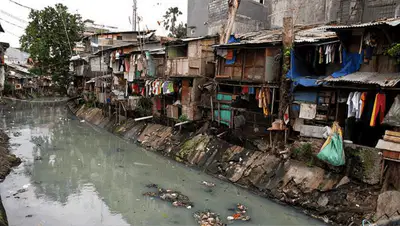
What goal(s) would need
to be
addressed
in this picture?
How could we do that?
●Cities are powerhouses of economic
growth—contributing about 60 % of global
GDP.
●They also account for about 70% of global
carbon emissions and over 60 % of
resource use.
●Rapid urbanization is resulting in a growing
number of slum dwellers, inadequate and
overburdened infrastructure and services
(such as waste collection and water and
sanitation systems, roads and transport),
worsening air pollution and unplanned
urban sprawl.
●-UN 2019 goals report
21

Understanding Smog:
Origins, Impact review, and
Solutions
22

Introduction to Smog
●Smog: A combination of smoke and fog
●Historical context: July 26, 1943, Los Angeles incident
●Origin of the term: Early 20th century in London and Glasgow
●Los Angeles smog: Unique yellowish color and chemical odor
●Key pollutants: Volatile Organic Compounds (VOCs) and nitrogen oxides
23

Causes and Formation of Smog
●Volatile Organic Compounds (VOCs):
●Natural sources: Plants
●Human activities: Solvents, paints
●Nitrogen oxides: Primarily from vehicle emissions
●Photochemical reaction: Pollutants react in sunlight
●Weather factors: Calm winds, sunny conditions
●Geographical influence: Cities in basins or surrounded by mountains
●Temperature inversion: Traps polluted air near the surface
24

Health and Environmental Impacts
●Health risks:
●Irritation to eyes, nose, and throat
●Exacerbation of respiratory conditions (asthma, bronchitis)
●Increased risks for vulnerable populations
●Potential birth defects
●Environmental effects:
●Crop damage and reduced agricultural yields
●Increased vulnerability to pests
●Global concern: Issues in coal-reliant countries (China, Poland)
●Ozone depletion: Connection to smog-forming pollutants
●Global warming: Relationship with greenhouse gases
25

Solutions and Future Outlook
●Vehicle emission regulations
●Shift towards mass transit systems
●Air filtration technologies:
●Personal air purifiers
●Large-scale urban air filtration projects
●Sustainable urban planning
●Renewable energy adoption
●International cooperation on air quality standards
●Continued research on smog formation and mitigation strategies
26

Large cities are usually warmer,
temperature wise, than more rural areas.
TRUE
FALSE
27

What could be done to combat the heat island effect seen here?
28

29

Poor air and water quality,not enough water, waste-disposal problems, and higher
energy consumption are problems in areas with increasing population density.
Higher population densities lead to more electricity usage and a higher number of
vehicles. Both of these cause air pollution and can impact human health. Large
amounts of uncollected waste can also create health hazards.
Because the soil is covered, urbanization can magnify the risk of environmental
hazards such as flooding. Pollution and physical barriers to root growth promote
loss of urban tree cover.
Animal populations are endangered by toxic substances, vehicles, and the loss of
habitat and food sources.
30
Multiple Choice
What impact increases river flow after a rainfall event
increased buildings cover watersheds and prevent infiltration into ground water
decreased buildings cover watersheds and prevent infiltration into ground water
increased buildings expose watersheds and allow infiltration into ground water
building cover and cement sidewalks do nothing to the water cycle
31

Now you do it!
Urbnization effects water ecosystems.
With a partner pick either fertilizer or
sewage waste.
Tell partner problem caused like car fluids
is toxic and directly kills life in the water.
Make sure to direct message me when your
done.
1. Questions on Monday’s lesson on
agriculture
1. Question on
water quality
1. Questions on Today’s lesson on
urbanization
32


class competion Session
Goblin challenge
r.
Go into the
modules for
Environmental
Science and
look at the page
mastery path for
your
sev3
Question 1
Question 2-5
What is energy resources
Question 5-10
Solutions to sustainable energy-writing prompt
33

Progress learning?
Khans academy
survey?
Idependent time?
34

Sign in - Google Accounts
You can open this webpage in a new tab.
35
36

Brain Break
See you in 5 min!
37
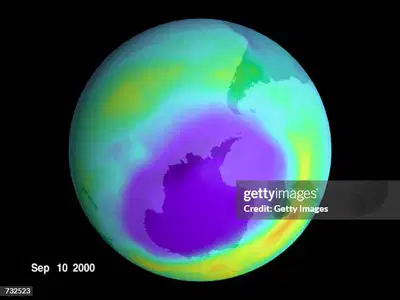
What you LEARNED
Today you will take 10 minutes to pick on of the Quizizz activities and share what you learned
🎉What is smog?
👍How can we be clean-Amsterdam
✅How can we be clean-China
Reducing the impact of urbanization
38
fantastic four-concept map?
progress learning?
submit one today
goal before class submit one today
independent work time
39
Poll
What did you learn today?
Urbanization causes damage to water ecosystems
Urbanization increases local temperatures
Urbanization reduces photosynthesis
Urbanization increases for quickeer access and convenience for humans
40

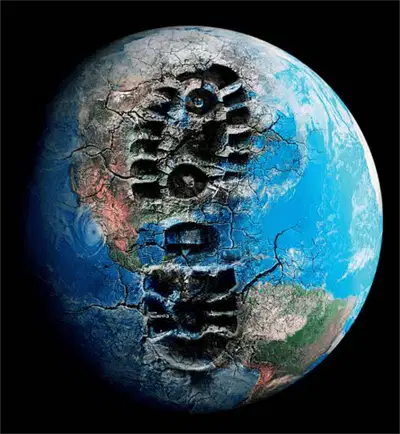

Keeping Track of
Human Impact
Human Impact
Farming the Desert
How to turn the desert
green
41
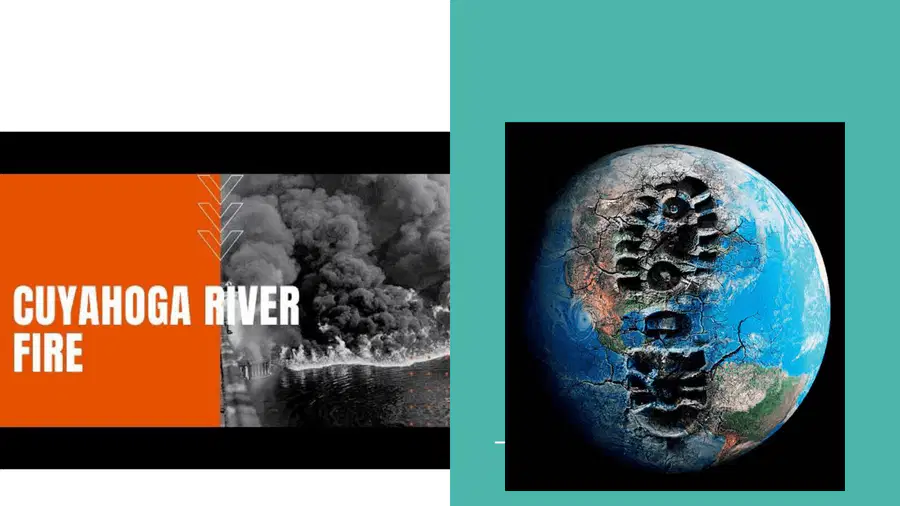
Keeping Track of
Human Impact
Human Impact
Water on Fire
My Class Expectations:
Join Quizizz
In the chat say hello and what is the last thing you threw away?
ROCK
SGB Block Schedule
10-29-2024
the BLOCK
Mr. Allen
Environmental
science
Show answer
Auto Play
Slide 1 / 41
SLIDE
Similar Resources on Wayground

37 questions
Unit 4 - DNA and RNA
Presentation
•
9th Grade
36 questions
8.2 Fluids
Presentation
•
9th - 10th Grade
39 questions
Atomic Structure
Presentation
•
8th Grade
38 questions
electromagnets
Presentation
•
9th Grade
35 questions
Forces
Presentation
•
8th Grade
38 questions
Periodic Table
Presentation
•
9th Grade
38 questions
Force and Motion
Presentation
•
8th Grade
37 questions
Human Impact Biology Lesson
Presentation
•
9th Grade
Popular Resources on Wayground
10 questions
How much do you know about our Portrait of an Eagle?

Quiz
•
10th Grade
10 questions
Fast Food Slogans
Quiz
•
6th - 8th Grade
21 questions
Continents and Oceans
Quiz
•
6th Grade
20 questions
Parts of Speech
Quiz
•
5th Grade
16 questions
Subject & Predicate
Quiz
•
5th Grade
25 questions
Multiplication Facts
Quiz
•
5th Grade
12 questions
Map Skills
Quiz
•
3rd Grade
22 questions
Continents and Oceans
Quiz
•
5th Grade
Discover more resources for Science
10 questions
Exploring Chemical and Physical Changes

Interactive video
•
6th - 10th Grade
20 questions
Atomic Structure
Quiz
•
9th Grade
10 questions
Decoding the Periodic Table of Elements
Interactive video
•
6th - 10th Grade
10 questions
Exploring the Periodic Table
Interactive video
•
6th - 10th Grade
22 questions
Periodic Table Review
Quiz
•
9th - 12th Grade
20 questions
Observation vs. Inference
Quiz
•
7th - 9th Grade
10 questions
Exploring the States of Matter
Interactive video
•
6th - 10th Grade
10 questions
Exploring Physical and Chemical Changes
Interactive video
•
6th - 10th Grade