History of Medical Terminology
Presentation
•
Other
•
9th Grade
•
Practice Problem
•
Medium
Selene Salazar
Used 71+ times
FREE Resource
12 Slides • 20 Questions
1

The Evolution of Medical
Terminology
A Journey Through Time
2
●Importance of Medical Terminology:
●Precise communication in medicine is
crucial for accurate diagnosis and
treatment.
●Universal understanding among
healthcare professionals ensures
effective collaboration and patient care.
●Definition: Medical terminology is the
specialized language used in medicine to
precisely describe the human body, medical
processes, illnesses, and medical
procedures.
3
Ancient Roots
●Overview of early medical practices:
● Healing rituals and herbal remedies were
common.
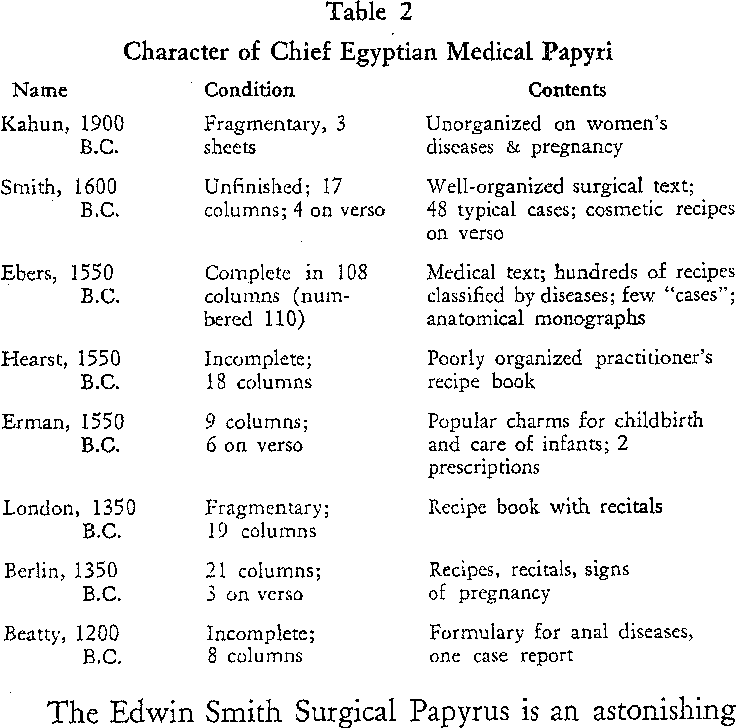
●Ancient civilizations like Mesopotamia and
Egypt laid foundations for medical
knowledge.
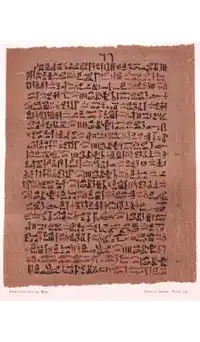
● Egyptian hieroglyphics and medical papyri:
Descriptions of medical conditions and Surgical
treatments.
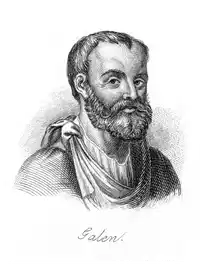
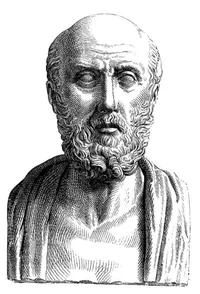
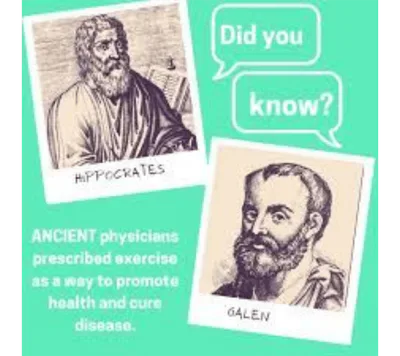
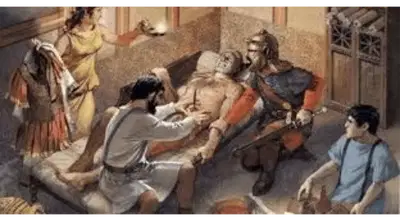
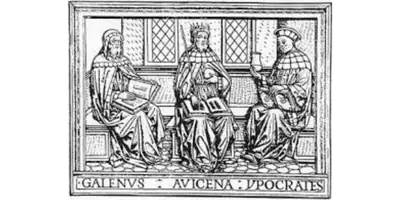
● Greek influence: Hippocrates and Galen
introduced systematic approaches to medicine
and established terminology still in use today.
4
Greek Contributions
● Greek terms in medical
language:
●"Gastr-" for stomach
●"Hemat-" for blood
●"Osteo-" for bone
● Greek physicians made
significant contributions to
anatomy, physiology, and
pathology, resulting in the
adoption of many Greek
terms in medical
terminology.
5
Multiple Choice
Which of the following was a common characteristic of early medical practices in ancient civilizations?
Reliance on surgical techniques
Use of healing rituals and herbal remedies
Absence of written medical records
Reliance on modern pharmaceuticals
6
Multiple Choice
What type of medical knowledge was preserved in Egyptian hieroglyphics and medical papyri?
Descriptions of surgical techniques/Treatments
Diagnosis of infectious diseases
Treatment of broken bones
Preservation techniques for organs
7
Multiple Choice
During the ancient era, which civilization had significant influence on medical terminology through scholars like Hippocrates and Galen?
Mesopotamia
Egypt
Greece
Rome
8
Multiple Choice
What were some examples of medical knowledge passed down from ancient civilizations?
Advanced surgical techniques
Use of herbal remedies and healing rituals
Written medical records
Modern pharmaceuticals
9
Roman Influence
●
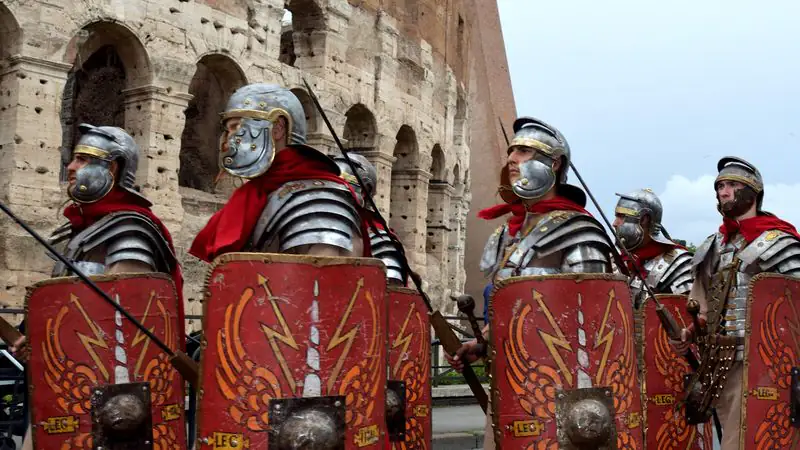
Roman expansion and medical
advancements:
●
The Roman Empire's vast reach
facilitated the spread of
medical text/knowledge.
●
Latin terminology adoption:
●
Examples include "Pulmo" for
lung and "Cor" for heart, which
are still used in modern
medical terminology.
*** 75% of all of all medical terms used are based on Greek & Latin words***
10
Multiple Select
What Percentage of Medical terms are based on Greek and Latin Origin?
10%
50%
75%
100%
11
Multiple Choice
How did the expansion of the Roman Empire contribute to the dissemination(spread) of medical knowledge?
Through the development of advanced surgical techniques
By establishing medical schools across conquered territories
By facilitating the translation and spread of medical texts
Through the introduction of innovative medical instruments
12
Multiple Choice
What role did Latin play in the development of medical terminology during the Roman era?
Latin was the primary language used for medical documentation
Latin terms were introduced to replace Greek terms in medical practice
Latin terms were widely adopted and are still used in modern medical terminology
Latin had minimal influence on medical terminology during this period
13
Medieval Medicine
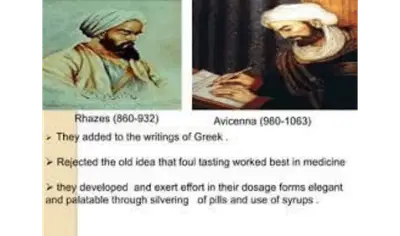
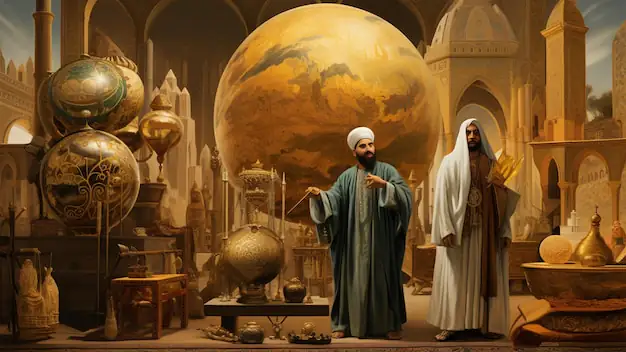
●Arabic contributions during the Islamic
Golden Age:
●Scholars like Avicenna and Rhazes
preserved and expanded upon
Greek and Roman medical texts.
●Translation of Greek and Roman texts:
●Arabic scholars translated these
works into Latin, preserving
medical knowledge during the
European Middle Ages.
●Introduction of Arabic terms:
●The "Al-" prefix and terms like "Qalb"
for heart enriched medieval medical
terminology.
14
Renaissance and the Birth of Modern Medicine
●Renaissance revival of classical learning:
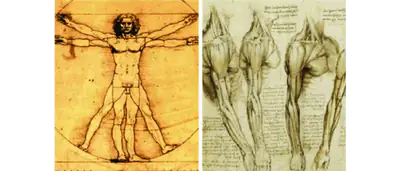
●Artists like Leonardo da Vinci
contributed to anatomical knowledge
through detailed drawings.
●Vesalius and the development of anatomy:
●Andreas Vesalius's groundbreaking
work on human anatomy challenged
traditional beliefs and led to the
development of modern anatomical
terminology.
●Influence on medical terminology:
●The Renaissance period introduced
many anatomical terms still in use
today.
Vitruvian man
Anatomical drawings of
the upper limb
●Drawings by Leonardo Da Vinci
Renaissance physician
who revolutionized
the study of
biology and the
practice of
medicine by his
careful description
of the anatomy of
the human body.
Andreas Vesalius
15
Multiple Choice
During the medieval era, which civilization made significant contributions to medical knowledge through scholars like Avicenna and Rhazes?
Ancient Greece
Islamic Caliphate
Renaissance Europe
Ancient Egypt
16
Multiple Choice
What was the role of Arabic scholars during the Islamic Golden Age in preserving and expanding medical knowledge?
They introduced Latin as the standard language for medical documentation.
They translated and expanded upon Greek and Roman medical texts.
They focused primarily on surgical innovations.
They developed new medical instruments.
17
Multiple Choice
Who was Andreas Vesalius and what was his contribution to medical knowledge during the Renaissance?
A Greek physician known for his contributions to anatomy
An Italian artist who produced detailed medical illustrations
A Flemish anatomist who challenged traditional beliefs with his anatomical studies
A Roman philosopher who wrote extensively on medical ethics
18
Multiple Choice
How did the Renaissance period influence the development of anatomical terminology?
By introducing standardized terminology for surgical procedures
Through the use of Latin and Greek to name anatomical structures
By emphasizing holistic approaches to medical treatment
Through the adoption of Arabic medical terminology
19
Multiple Choice
What impact did the work of Andreas Vesalius have on the understanding of human anatomy?
It confirmed ancient Greek beliefs about the human body.
It challenged traditional views and led to advancements in anatomical knowledge.
It had no significant impact on medical practices during the Renaissance.
It introduced new surgical techniques but had little influence on anatomical understanding.
20
18th - 19th Century
●Enlightenment era and scientific
revolution:
●Advancements in scientific
thinking and technology
transformed medicine.
●Standardization of medical
language:
●Efforts to standardize medical
terminology led to the
development of modern
medical dictionaries, ensuring
consistency and clarity in
communication among
healthcare professionals.
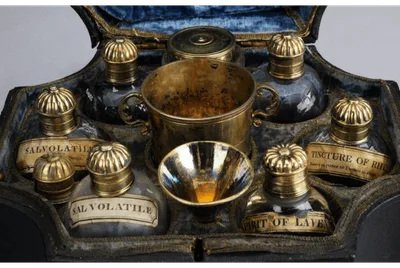
Inside an 18th century medicine chest
21
20th Century and Beyond
●Technological advancements and
specialization:
●Rapid technological progress, such
as imaging techniques and
laboratory diagnostics, introduced
new terms into medical terminology.
●Influence of genetics, biochemistry, and
pharmaceuticals:
●The fields of genetics, biochemistry,
and pharmacology contributed
numerous terms to medical
language, reflecting advancements
in these areas.
●Introduction of new terms:
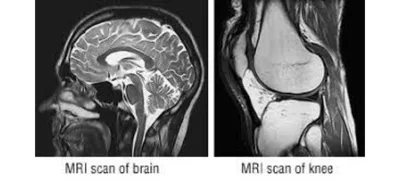
●Terms like "MRI," "DNA," and
"Antibiotics" became integral parts
of modern medical terminology.
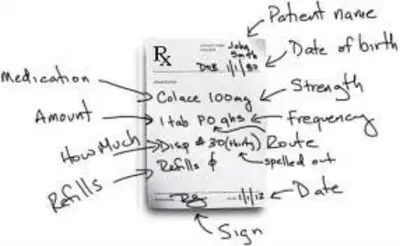
RX- MEDICAL ABBREVIATION MEANING
PRESCRIPTION
MRI- Magnetic resonance imaging
22
Multiple Choice
What was a significant development in medical language during the Enlightenment era and scientific revolution?
The decline of standardized medical terminology
The introduction of advanced surgical techniques
The standardization of medical language
The emphasis on herbal remedies over pharmaceuticals
23
Multiple Choice
Which of the following accurately describes the role of medical dictionaries during the 18th and 19th centuries?
They hindered the standardization of medical language.
They promoted the use of Latin as the primary language in medical practice.
They facilitated the standardization and dissemination of medical terminology.
They focused solely on surgical terminology.fghtyghrthtyhrthb
24
Multiple Choice
How have technological advancements influenced modern medical terminology?
They have led to a decrease in the complexity of medical language.
They have introduced new terms to describe medical procedures and equipment.
They have eliminated the need for medical terminology altogether.
They have resulted in the standardization of medical language across cultures.
25
Multiple Choice
Which fields have contributed to the expansion of medical language in the 20th and 21st centuries?
Genetics, biochemistry, and pharmacology
Physics, engineering, and astronomy
Literature, philosophy, and anthropology
Politics, economics, and sociology
26
Challenges and Future Trends
● Increasing complexity of medical terminology:
●
Advancements in medical science continually introduce new
terms, making medical language increasingly complex.
● Globalization and multicultural influences:
●
Global collaboration in healthcare introduces diverse
perspectives and influences on medical terminology.
● Integration of technology and artificial intelligence:
●
Emerging technologies and AI-driven healthcare solutions are
likely to shape the future of medical terminology.
by limiting communication among health professionals.
27
Multiple Choice
what is one challenge associated with the increasing complexity of medical terminology?
Limited communication among healthcare professionals
Difficulty in translating medical texts into multiple languages
Inability to adapt to technological advancements
Decreased precision in medical communication
28
Multiple Choice
How has globalization impacted the evolution of medical terminology?
By standardizing medical language worldwide
By promoting the use of regional dialects in medical practice
By hindering the dissemination of medical knowledge across cultures
By eliminating the need for translation of medical texts
29
Conclusion
●
Recap of the journey through medical terminology history:
●
From ancient civilizations to modern times, medical language has
evolved to reflect advancements in medical knowledge and
technology.
●
Importance of understanding medical language in modern healthcare:
●
Proficiency in medical terminology is essential for effective
communication, accurate diagnosis, and quality patient care.
●
Acknowledgment of ongoing evolution:
●
Medical terminology will continue to evolve as medical science
progresses, highlighting the dynamic nature of healthcare.
30
Multiple Choice
What is one key takeaway from the presentation regarding the evolution of medical terminology?
Medical terminology has remained static throughout history.
Medical terminology has evolved significantly, influenced by various civilizations and technological advancements.
Medical terminology has primarily been shaped by modern scientific discoveries.
Medical terminology has only recently become standardized.
31
Multiple Choice
How might understanding the history of medical terminology benefit healthcare professionals and patients?
It has no practical benefits and is merely of historical interest.
It allows healthcare professionals to communicate more effectively and accurately.
It increases healthcare costs due to unnecessary training.
It creates barriers to healthcare access for marginalized communities.effective
32
Conclusion Inquiry Question:
●How do you think understanding the history of medical terminology
can benefit healthcare professionals and patients alike?
The Evolution of Medical
Terminology
A Journey Through Time
Show answer
Auto Play
Slide 1 / 32
SLIDE

Similar Resources on Wayground
25 questions
Correlation Coefficient
Presentation
•
9th Grade
26 questions
Coordinating Conjunctions (fanboys)
Presentation
•
9th Grade
24 questions
Ecological Relationships Lesson
Presentation
•
9th Grade
22 questions
Understanding the Paycheck
Presentation
•
9th - 10th Grade
27 questions
Construction Plan Views
Presentation
•
9th Grade
27 questions
ICF 9 INTERNET
Presentation
•
9th Grade
23 questions
Introduction to Biomolecules
Presentation
•
9th Grade
25 questions
Simplifying Radicals Review
Presentation
•
9th Grade
Popular Resources on Wayground
15 questions
Grade 3 Simulation Assessment 1
Quiz
•
3rd Grade
22 questions
HCS Grade 4 Simulation Assessment_1 2526sy
Quiz
•
4th Grade
16 questions
Grade 3 Simulation Assessment 2
Quiz
•
3rd Grade
19 questions
HCS Grade 5 Simulation Assessment_1 2526sy
Quiz
•
5th Grade
17 questions
HCS Grade 4 Simulation Assessment_2 2526sy
Quiz
•
4th Grade
20 questions
Equivalent Fractions
Quiz
•
3rd Grade
24 questions
HCS Grade 5 Simulation Assessment_2 2526sy
Quiz
•
5th Grade
20 questions
Math Review
Quiz
•
3rd Grade
Discover more resources for Other
20 questions
Algebra 1 EOC Review 1
Quiz
•
9th Grade
20 questions
Graphing Inequalities on a Number Line
Quiz
•
6th - 9th Grade
20 questions
Earth Day Trivia
Quiz
•
9th - 12th Grade
10 questions
Earth Day Awareness and Impact
Interactive video
•
6th - 12th Grade
10 questions
Earth Day and Plastic Alternatives
Interactive video
•
5th - 10th Grade
5 questions
A.F/ST Quizizz Day 1
Quiz
•
9th - 12th Grade
100 questions
Biology EOC Review
Quiz
•
9th - 12th Grade
20 questions
Earth Day
Quiz
•
3rd - 12th Grade