Search Header Logo
PM REVIEW #1

PM REVIEW #1

Assessment

Presentation

Science

8th Grade

Hard

Created by

MARIA COUTO

FREE Resource

150 Slides • 33 Questions

1

media

2

media

3

media

4

media

5

A: The Rock Cycle!!!


The process of rocks changing from one type of rock to another

Main Concept: Any rock type can be changed 

into any of the other two and back again 

through the Rock Cycle depending on conditions


6

media

7

media

8

9

media

10

media

11

media

12

media

13

media

14

15

Multiple Choice

Question image

Which type of rock is formed when rocks are melted deep in the Earth and cool to form new rocks?

1

Igneous

2

Metamorphic

3

Sedimentary

4

Sandstone

16

Multiple Choice

Question image

What happens to sedimentary and metamorphic rocks when igneous rocks are formed?

1

They become ashes.

2

They form sediments.

3

They melt to become magma.

17

Multiple Choice

Weathering is

1

the movement of rocks

2

the breaking down of rocks

3

the falling of rocks

18

Multiple Choice

Erosion is

1

the falling of mud

2

the breaking down of rocks

3

the movement of rocks and soil

19

media

20

media

21

media

22

media

23

media

24

media

25

media

26

Multiple Choice

These Rocks are formed from Heat and Pressure

1

Metamorphic

2

Igneous

3

Sedimentary

27

Multiple Choice

These Rocks are formed from Magma and Lava

1

Metamorphic

2

Igneous

3

Sedimentary

28

Multiple Choice

In which type of rock might you see a fossil?

1

Marble

2

Igneous rock

3

Metamorphic rock

4

Sedimentary rock

29

media

30

media

31

media

32

media

33

media

34

media

35

media

36

media

37

media

38

media

39

media

40

Multiple Choice

Question image

What is number 4?

1

heat pressure

2

melting

3

weathering

4

cooling/crystallization

41

Multiple Choice

Question image

What is number 3?

1

heat pressure

2

melting

3

weathering

4

cooling/crystallization

42

Multiple Choice

Question image

What is number 2?

1

heat pressure

2

melting

3

weathering

4

cooling/crystallization

43

media

44

media

45

media

46

media

47

media

48

Multiple Choice

The two types of weathering are...

1

Slow and rapid

2

Mechanical (aka physical) and chemical

3

Biological and physical

4

Temporal and gravitational

49

Multiple Choice

What is weathering?
1
The process by which
water, ice, wind or gravity
moves fragments of rock
and soil.
2
The process by which
water, ice, wind or gravity
deposit rock sediments
and soil in a new place.
3
The breaking down of
Earth’s crust into smaller
and smaller pieces.

50

Multiple Choice

Which of the following is NOT a type of physical weathering?
1
burrowing plants
2
ice wedging
3
plant roots
4
acid rain

51

media

52

media

53

media

54

media

55

media

56

media

57

media

58

media

59

media

60

media

61

media

62

media

63

Multiple Choice

How does wind erosion occur?

1

By picking up and carrying debris that moves across the land along with the ice.

2

When raindrops hit the soil surface and displace soil particles, and when water flowing over the land surface moves soil particles.

3

It picks up small particles of sand/sediment and blasts large rocks with the sand/sediment, cutting and shaping the rock.

4

By direct action of gravity without a flowing medium (such as water or ice).

64

Match

Match the following...

Weathering

Erosion

Deposition

When rocks and land are broken down due to forces such as gravity, wind, water, and ice

When rocks and sediment are moved elsewhere by water, ice, wind, or gravity

When features are built up on Earth's surface by sediment, tectonic plates, or volcanoes

65

Multiple Choice

What is ice erosion?

1

the detachment and removal of soil material

2

process where soil, rocks, or minerals are worn away. It is strongest in areas with sparse vegetation, like the desert

3

glaciers moving over the landscape and carving out parts of the Earth

4

process that moves rocks and sediments downslope

66

media

67

media

68

media

69

media

70

media

71

media

72

media

73

media

74

media

75

media

76

media

77

media

78

media

79

media

80

media

81

media

82

media

83

media

84

Multiple Choice

Which of the following is the correct order of the Earth's layers moving inward to the center.

1

Crust

Mantle

Inner Core

Outer Core

2

Mantle

Outer Core

Inner Core

Crust

3

Inner Core

Outer Core

Crust

Mantle

4

Outer Core

Inner Core

Mantle

Crust

85

Multiple Choice

Question image

What layer of the Earth is labeled B?

1

inner core

2

outer core

3

mantle

4

crust

86

Multiple Choice

Question image

What layer of the Earth is labeled C?

1

inner core

2

outer core

3

mantle

4

crust

87

media

88

media

89

media

90

media

91

media

92

media

93

media

94

media

95

media

96

media

97

media

98

media

99

media

100

media

101

Multiple Choice

What is the force that causes continents to move?

1

conduction

2

convection

3

radiation

4

conveyor belts

102

Multiple Choice

Question image

What feature is at C?

1

Deep ocean trench

2

Mid ocean ridge

3

sea floor spreading

4

subduction

103

Multiple Choice

Question image

What is the process happening at R?

1

Deep ocean trench

2

mid ocean ridge

3

subduction

4

sea floor spreading

104

media

105

media

106

media

107

media

108

media

109

media

110

media

111

media

112

media

113

media

114

Multiple Choice

Which type of boundary is known for causing big earthquakes?
1
divergent
2
convergent
3
transform
4
subduction

115

Multiple Choice

Question image
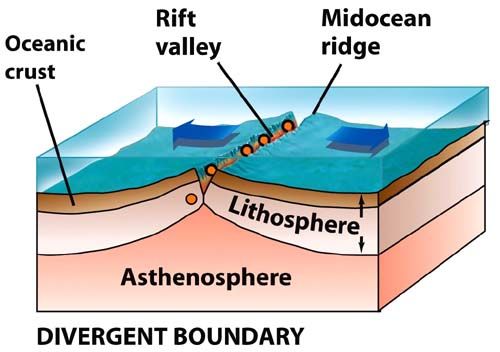
What kind of plate boundary is shown here?
1
divergent
2
convergent
3
transform
4
strike slip

116

Multiple Choice

Continental crust and continental crust come toward each other at a convergent plate boundary.  This will likely form...
1
a trench
2
mountains
3
volcano
4
mid-ocean ridge 

117

media

118

media

119

media

120

media

121

media

122

media

123

media

124

media

125

media

126

Multiple Choice

Question image

Even though cast fossils look like the original bone or shell, they are different because they:

1

contain empty space where the organism once was

2

preserve both hard and soft parts of the organism

3

are made of rock, minerals, and sediment

4

have skin, hair, and feathers

127

Multiple Choice

When bones are turned into stone, they are called:

1

petrified fossils

2

imprints

3

trace fossils

4

amber/resin

128

Multiple Choice

By studying fossil records scientists can make inferences about 
1
the diversity of plants and animals, past climates and geological events, and how organisms have evolved
2
the diversity of plants and animals, how different rocks form, and past volcanic eruptions
3
the simularities of plants and animals, how different rocks form and past volcanic eruptions
4
the similarities of plants and animals, past climates and geological events, how different rocks form

129

media

130

media

131

media

132

media

133

media

134

media

135

media

136

media

137

media

138

media

139

media

140

media

141

Fill in the Blank

Question image

Which layer is the oldest?

142

Fill in the Blank

Question image

Which layer is the youngest?

143

Multiple Choice

Carbon Dating can only be used on

1

non-living things

2

things that were once living

3

Things that are over 1 billion years old

4

Things that are at least 1 million years old.

144

media

145

media

146

media

147

media

148

media

149

media

150

media

151

media

152

media

153

media

154

media

155

media

156

media

157

media

158

media

159

media

160

media

161

media

162

media

163

media

164

media

165

media

166

media

167

media

168

media

169

media

170

media

171

media

172

media

173

media

174

media

175

media

176

media

177

media

178

media

179

media

180

Multiple Choice

List the layers of the atmosphere in order from Earth's surface to outer space.

1

stratosphere, thermosphere, troposphere, mesosphere, exosphere

2

troposphere, mesosphere, thermosphere, exosphere, stratosphere

3

troposphere, stratosphere, mesosphere, thermosphere, exosphere

4

thermosphere, troposphere, mesosphere, stratosphere, exosphere

181

Multiple Choice

What atmospheric layer contains ozone?

1

exosphere

2

stratosphere

3

mesosphere

4

troposphere

182

media

183

media
media

Show answer

Auto Play

Slide 1 / 183

SLIDE