

Untitled Lesson

Presentation
•
Computers
•
Professional Development
•
Practice Problem
•
Easy

Ahmed Mounaf
Used 1+ times
FREE Resource
24 Slides • 1 Question
1

Authors
AHMED MOUNAF MAHDI Prof. Dr. ASAAD SABAH HADI
College of Information Technology
University of Babylon
Linked Data-based Recommender System Using
Hybrid Semantic Similarity Measure
1
2
Word Cloud
ما هي البرامج التي تستخدمها والتي تحتوي على نظام توصية
3
Introduction
LOD is a community project aiming to provide free and
public data. LOD datasets are available on the web
under an open license in machine readable format
(RDF triples) and linked together with unique URIs
RDF(Resource Description Framework) offer a graph-
based
data
model
for
describing
resources
and
identifying relationships with other resources
Vast amount of RDF data have been published in
freely accessible datasets connected with each other
to form the so called LOD cloud.
2
4

Introduction (Cont.)
The knowledge encoded in LOD(Linked Open Data)
cloud can assist to tackle with problem when few or no
features can describe the items to be recommended
The main idea of the proposed system is designing a
Linked data-based recommendation system that use
semantic features extracted from two relevant datasets in
LOD.
3
5
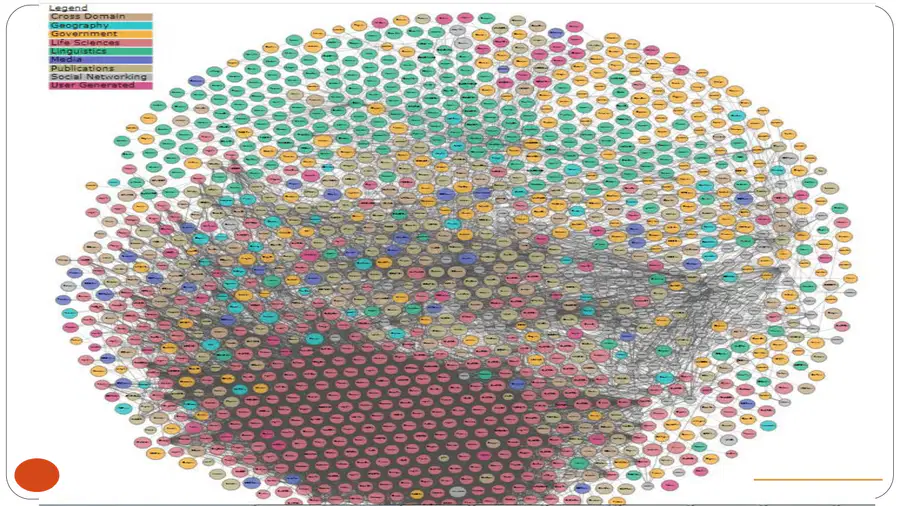
1301 datasets
with 16283 links May 2021
lod-cloud.net
4
6

Problem Statement (Cont.)
5
Most previous research depend on pure link-based similarity measures
which will degrade the accuracy of recommendation if there are
insufficient links between the resources even though they share many
features.
Furthermore, the values of the features in LOD cloud are stored as
literals and non-literal and some approaches consider the lexical content
such as the literals of the items to be as features of the items. However,
literals may not be properly formatted or have invalid values that affect
the quality of the selected features For example; the object value could
be a specific date like 01-01-1550^^xsd:date or string value like “16th
century”[5].
Some features such as; actor, genre, director or writer are missing in
one dataset and available in other.
However, sometimes the links between the same resources in two
datasets are missing and the generating of such links is necessary to
have all the features from the linked datasets.
7

Objectives
6
Design a Linked-data-based recommendation system that depends on the
Linked data and utilizes the transversal relations exist in LinkedMDB and
DBpedia datasets as well as the hierarchical structure exist in DBpedia in
order to find the candidate resources for the recommendations from movie
domain and other related domains (Book).
Propose an Extended LinkedMDB dataset that includes extra same as links
for fixing the missing links between the similar movies in LinkedMDB and
DBpedia using the Silk framework and also extra links from the movies to the
related books in BNB Library dataset will be included.
Employs Word Embedding to represent the item's non-literal features and
generate a vector for each resource, as well as FOAF vocabulary to represent
the user's preferences by analyzing the user's input and fetching the features
required from LinkedMDB and DBpedia.
Conduct a several experiments to evaluate the proposed system using offline
evaluation method with MovieLens 1M dataset and calculate the effectiveness
using Hit rate measure.
8
Methodology
7
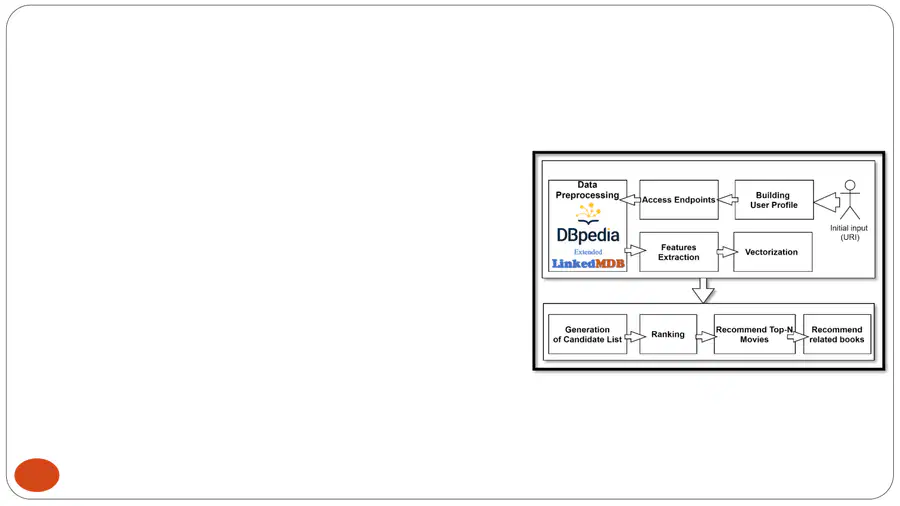
The proposed system is composed of six major phases
1.
Data Preprocessing
2.
Access Endpoints, Features
Extraction, and Vectorization
3.
Building a User Model
4.
Generation of Candidates List
5.
Calculation of Semantic Distance for
Ranking
6.
present Top-N items and related
books
9

Data Preprocessing - Datasets
8
LinkedMDB
DBpedia
The movies in these two datasets are interlinked with
SameAs relations
some cases when some movies are without interlinking
relations.
BNB Library dataset is used, which consists of
metadata about books and different kinds of
publications to recommend a related book from this
dataset.
10

Data Preprocessing - Interlinking
9
We use the Silk framework (Isele et al., 2010) to enrich the
LinkedMDB with more SameAs links to DBpedia.
If the movie's labels in the two datasets are exactly matched,
the URI of the movie in LinkedMDB will be linked to the URI of
the movie in DBpedia with SameAs relation.
Number of sameAs links to DBpedia is 30354
We generate 40142 links
11
10
The first step in this stage is extracting the features of the input
invoked by the user and create a file of interests for the user. The
second step is building a user profile based on FOAF vocabularies
and using the features extracted in the first step. Therefore, we will get a
profile that can be used in RS task, and queried in efficient way using
semantic query language (SPARQL).
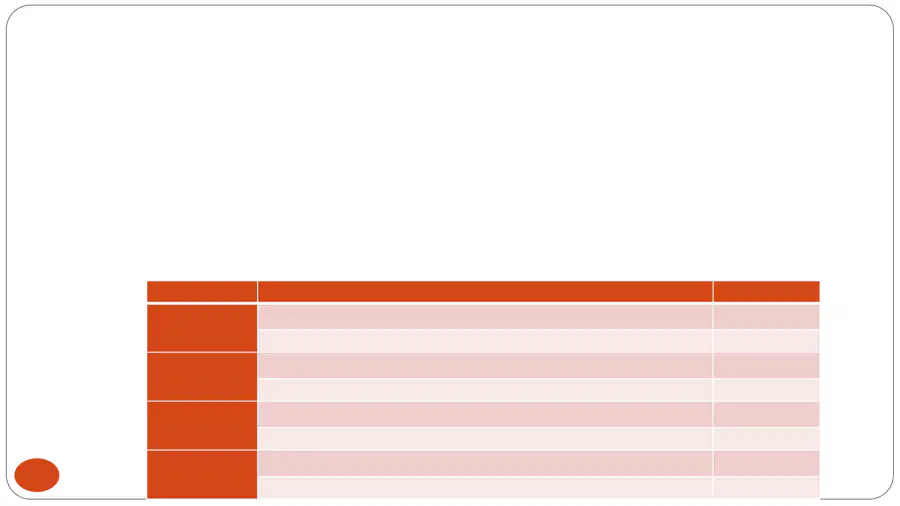
Examples of The Terminator movie features
Building a User Model
Feature Name
URI
Dataset
Actor /Starring
https://triplydb.com/Triply/linkedmdb/id/actor/13309
LinkedMDB
http://dbpedia.org/resource/Linda_Hamilton
DBpedia
Director
https://triplydb.com/Triply/linkedmdb/id/director/5617
LinkedMDB
http://dbpedia.org/resource/James_Cameron
DBpedia
Genre /Subject
https://triplydb.com/Triply/linkedmdb/id/film_genre/23
LinkedMDB
http://dbpedia.org/resource/Category:American_action_films
DBpedia
Writer
https://triplydb.com/Triply/linkedmdb/id/writer/8820
LinkedMDB
http://dbpedia.org/resource/James_Cameron
DBpedia
12
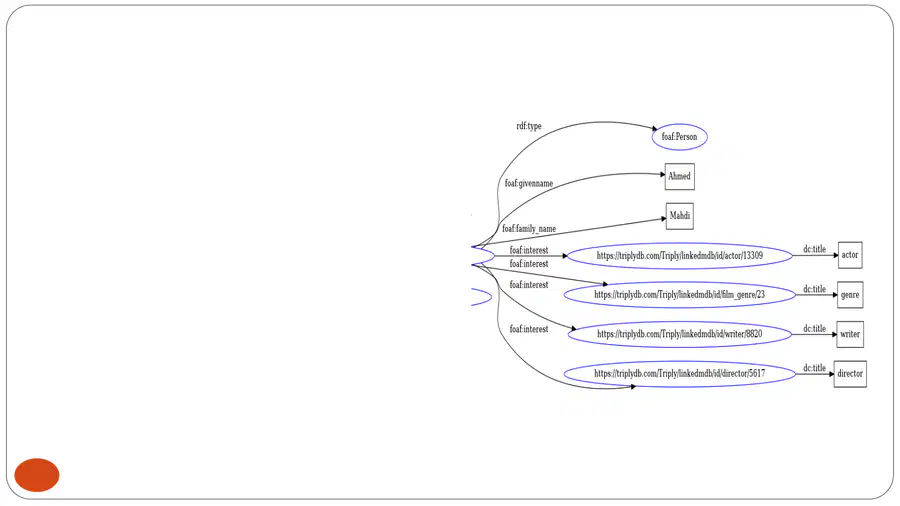
11
interest property, which is
considered as a social web
term in FOAF vocabularies,
in order to populate it with
the features extracted in the
previous
step
that
are
interested by the user.
Therefore, the output of this
step will be an RDF file that
can
be
used
by
the
recommendation
system
and query it using the same
known
query
language
(SPARQL).
Building a User Model
13
Data Preprocessing - Access Endpoints and Features Extraction
12
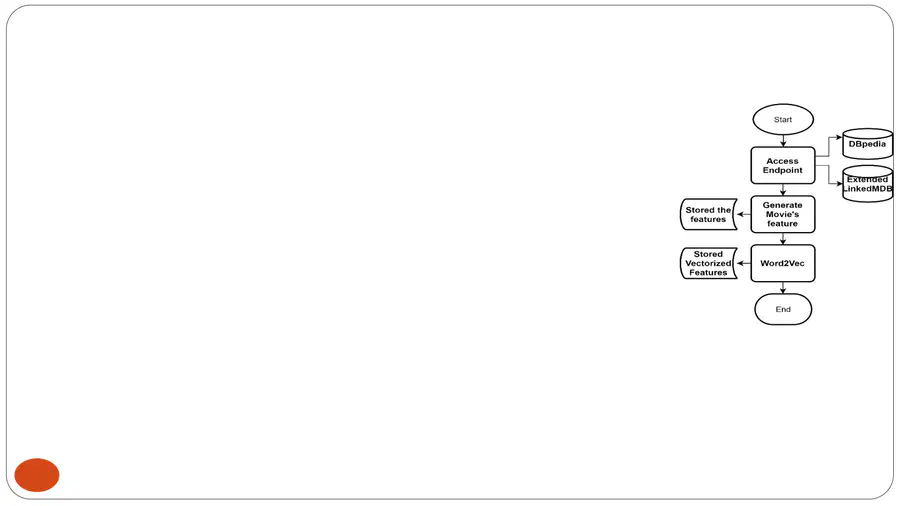
LinkedMDB has a dump file that we uploaded to
local Virtuoso Server in addition to, the resulted file
from interlinking process while we used remote
endpoint for DBpedia
SPARQL query on Extended LinkedMDB to get the
URIs of the movie from both datasets
extract all the features from both datasets
each movie will be represented by multi lines
the features include actors, genre, writer and director
URIs
14

The
features
of
the
resources
must
be
represented numerically to calculate the similarity.
To vectorize the features we utilized Word2Vec
which
uses
neural
network
to
learn
word
association.
13
Data Preprocessing - Vectorization
15
Word2Vec Algorithms Mikolov, Tomas; et al. (2013)
14
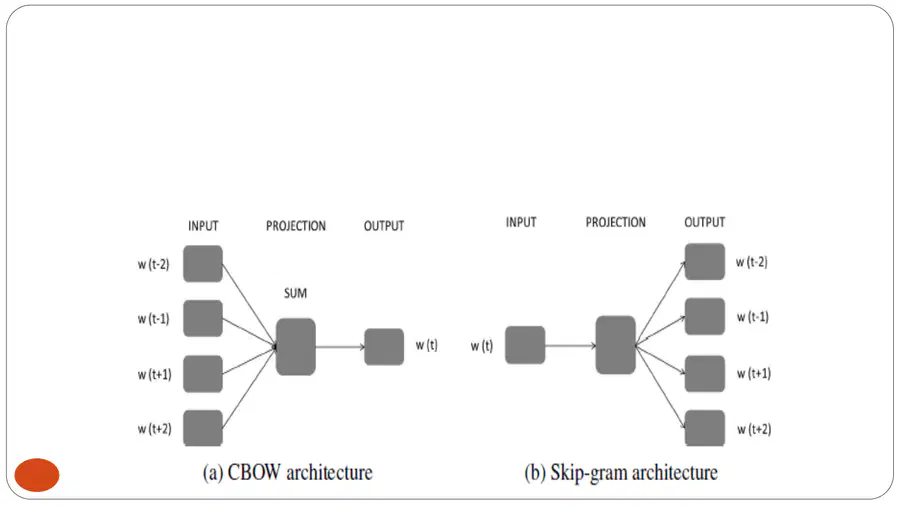
Word2vec is a particularly computationally-efficient two-
layer neural net model for learning word embeddings from
raw text.
There are two different algorithms, the Continuous Bag of-
Words model (CBOW) and the Skip-gram model.
In the CBOW model, the distributed representations of
context (or surrounding words) are combined to predict the
word in the middle.
While in the Skip-gram model, the distributed
representation of the input word is used to predict the
context.
CBOW is faster while skip-gram does a better job for
infrequent words.
16
Word2Vec Algorithms
15
Once the training is finished, all words are projected into a
lower-dimensional feature space, and semantically similar
words (or entities) are positioned close to each other.
17
Word2Vec Algorithms – hyper parameters
16
“hyper-parameter selection is a task specific decision”
(Mikilov et al., 2013)
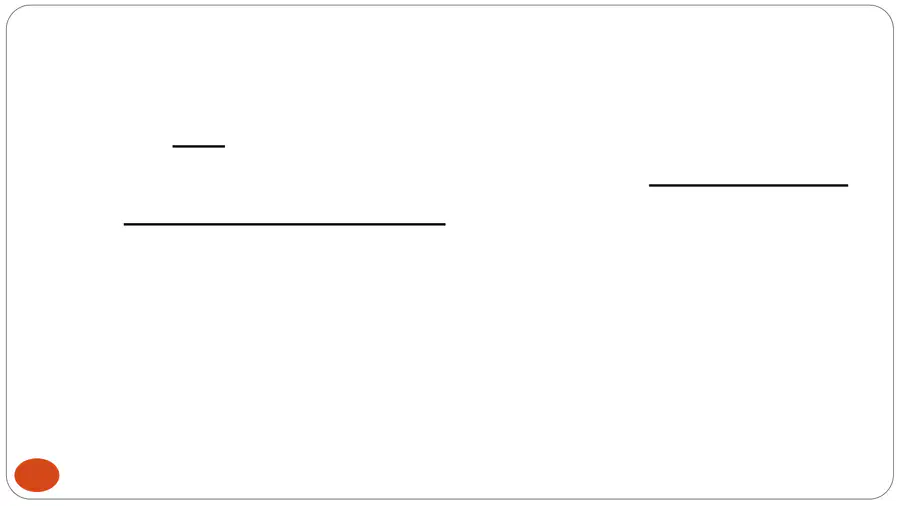
size: The number of dimensions of the embeddings
the default is 100.
We set this parameter to 50
window: The maximum distance between a target
word and words around the target word. The default
window is 5.
We set this parameter to 2
18
Recommendation Layer
The aim of this layer is to discover the related
resources to a given resource by analyzing the
semantic relationships.
Recommendation of movies that are linked
directly
Recommendation of movies that have common
direct or indirect categories.
Recommendation of items that are linked to the
same movie features.
17
19

Methodology- Ranking
This stage mainly ranks candidate resources
obtained in the previous layer, based on semantic
similarity measures. The candidate resources
are sorted according to values of a semantic
similarity measure, which measures the similarity
between the initial resource and each one of
these candidate resources.
18
20

Hybrid Semantic Similarity Measure
Linked Data Semantic Distance (LDSD)
Passant,2010
Cosine distance of vectors generated by
Word2vec algorithm is implemented
Simi,j = p * LDSDi,j+(1-p) * Cosi,j
A trial and error experiments are done by varying
the value of (p), which is the amount of impact of
each distance measure from 0 to 1
19
21
Evaluation
We use offline evaluation
leave one out protocol is used and the MovieLens
dataset is divided into a training and testing set
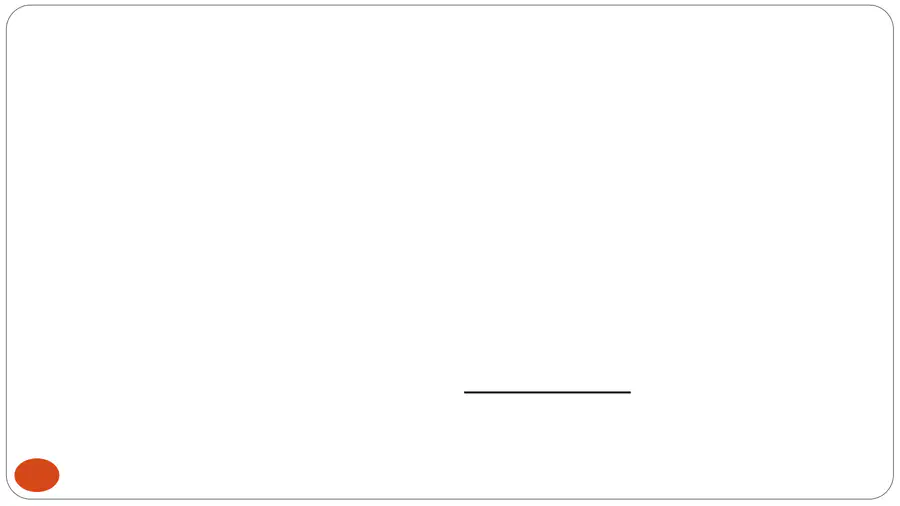
Hit Rate measure, the proportion of items in the test
set that appeared in the top-N recommended items
returned for each user
Hit rate=
𝑁𝑢𝑚𝑏𝑒𝑟 𝑜𝑓 ℎ𝑖𝑡𝑠
𝑛
20
22
Results
21
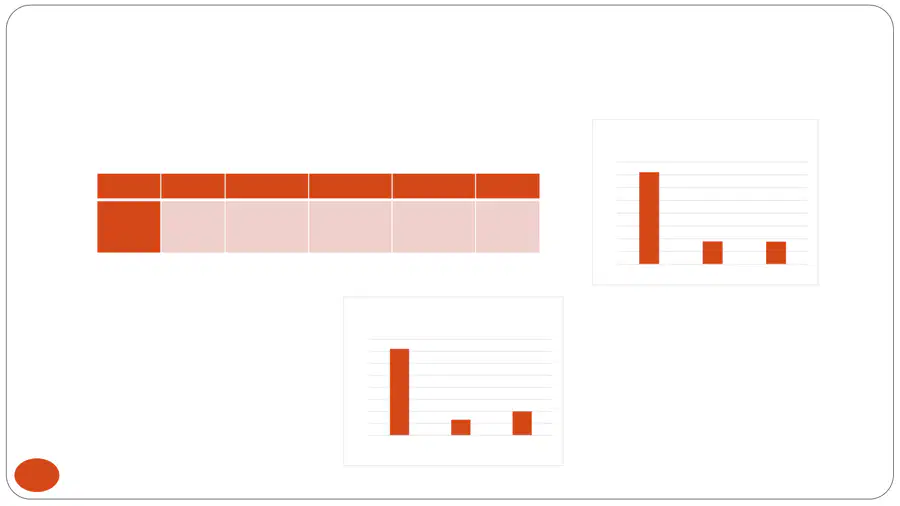
p=0
p=0.25
p=0.50
p=0.75
p=1
Hit
rate
0.20
0.70
0.179
0.177
0.13
Table. 1 Hit rate with different P values
0
0.1
0.2
0.3
0.4
0.5
0.6
0.7
0.8
P=0.25
P=0.50
P=0.75
Hit rate comparisons of the proposed
measure with different P values
0
0.1
0.2
0.3
0.4
0.5
0.6
0.7
0.8
Proposed
Measure
LDSD
Cos
Hit rate comparisons of LDSD,
cosine and the proposed measure
23

Conclusion & Future Works
22
This work contributes to overcome the common issues in recommendation system and
enhance the accuracy of recommendation results.
Firstly, An extended version of LinkedMDB dataset is proposed that includes extra SameAs
links to DBpedia. This will help other researchers in different kinds of applications who need
to utilize the features of the movies and to find the corresponding DBpedia URI from the
LinkedMDB URI.
Secondly, the proposed system utilized LOD and exploited two datasets, DBpedia and
LinkedMDB,
Thirdly, the system recommend items from other domain (books) that are related to the
recommended top-N movies.
Finally, the proposed approach combines LDSD with cosine measure to recommend top-N
movies to users and the presented results were better than using the LDSD or cosine
separately.
In addition, we have found that giving a higher probability to cosine measure over LDSD
can enhance the accuracy of the hit rate measure
Various experiments will be conducted with other evaluation metrics such as Diversity and
Novelty. Also, other datasets from other domains such as books or music will be used as a
future work.
24

References
23
1.A. Passant, "Measuring Semantic Distance on Linking Data and Using it for Resources Recommendations," in AAAI spring
symposium: linked data meets artificial intelligence, 2010, vol. 77, p. 123.
2.C. C. Aggarwal, "Knowledge-based recommender systems," in Recommender systems: Springer, 2016, pp. 167-197.
3.C. Figueroa et al., "Executing, Comparing, and Reusing Linked-Data-Based Recommendation Algorithms with the Allied
Framework," in Semantic Web Science and Real-World Applications: IGI Global, 2019, pp. 18-47.
4.C. Musto, P. Lops, M. de Gemmis, and G. Semeraro, "Semantics-aware Recommender Systems exploiting Linked Open Data and
graph-based features," Knowledge-Based Systems, vol. 136, pp. 1-14, 2017.
5.F. Komeiha, N. Cheniki, Y. Sam, A. Jaber, N. Messai, and T. Devogele, "LDS: Java Library for Linked Open Data Based Similarity
Measures," in 2020 IEEE/WIC/ACM International Joint Conference on Web Intelligence and Intelligent Agent Technology (WI-IAT),
2020: IEEE, pp. 476-481.
6.G. O. M. D. Silva, P. R. D. Souza, and F. A. Durão, "HSLD: a hybrid similarity measure for linked data resources," International
Journal of Metadata, Semantics and Ontologies, vol. 14, no. 1, pp. 16-25, 2020.
7.I. Vagliano, "Content Recommendation Through Linked Data," PhD, Computer and Control Engineering, Politecnico di Torino, 2017.
8.Isele, R., Jentzsch, A., & Bizer, C. (2010). Silk Server-Adding missing Links while consuming Linked Data. COLD, 665.
9.J. Rosati, P. Ristoski, T. Di Noia, R. d. Leone, and H. Paulheim, "RDF graph embeddings for content-based recommender systems,"
in CEUR workshop proceedings, 2016, vol. 1673: RWTH, pp. 23-30.
10. R. Meymandpour and J. G. Davis, "A semantic similarity measure for linked data: An information content-based approach,"
Knowledge-Based Systems, vol. 109, pp. 276-293, 2016.
11. S. Alfarhood, K. Labille, and S. Gauch, "PLDSD: propagated linked data semantic distance," in 2017 IEEE 26th International
Conference on Enabling Technologies: Infrastructure for Collaborative Enterprises (WETICE), 2017: IEEE, pp. 278-283.
12. S. Alfarhood, S. Gauch, and K. Labille, "Semantic Distance Spreading Across Entities in Linked Open Data," Information, vol. 10,
no. 1, p. 15, 2019.
13. T. Mikolov, K. Chen, G. Corrado, and J. Dean, "Efficient estimation of word representations in vector space," arXiv preprint
arXiv:1301.3781, 2013.
25

Thank You
24
Authors
AHMED MOUNAF MAHDI Prof. Dr. ASAAD SABAH HADI
College of Information Technology
University of Babylon
Linked Data-based Recommender System Using
Hybrid Semantic Similarity Measure
1
Show answer
Auto Play
Slide 1 / 25
SLIDE
Similar Resources on Wayground

20 questions
Leaves, Late, Downtime and Others alike
Presentation
•
Professional Development
20 questions
Agriculture, Retail, Manufacturing and Service Industries
Presentation
•
KG - University
16 questions
CSS
Presentation
•
Professional Development
20 questions
States of Matter Review
Presentation
•
3rd Grade
18 questions
B2 Past tenses
Presentation
•
Professional Development
19 questions
ITT Recorded Webinar Primary (2021): Interacting with adults/ Chat mode
Presentation
•
Professional Development
21 questions
Holiday Trivia
Presentation
•
Professional Development
20 questions
IPAD INTEGRATION - QUIZZIZ LESSON
Presentation
•
Professional Development
Popular Resources on Wayground
21 questions
Continents and Oceans

Quiz
•
6th Grade
20 questions
Parts of Speech
Quiz
•
5th Grade
16 questions
Subject & Predicate
Quiz
•
5th Grade
25 questions
Multiplication Facts
Quiz
•
5th Grade
12 questions
Map Skills
Quiz
•
3rd Grade
22 questions
Continents and Oceans
Quiz
•
5th Grade
15 questions
Rounding Decimals
Quiz
•
5th Grade
20 questions
Brand Labels
Quiz
•
5th - 12th Grade
Discover more resources for Computers
10 questions
How to Email your Teacher
Quiz
•
Professional Development
40 questions
Flags of the World
Quiz
•
KG - Professional Dev...
4 questions
Exit ticket for the end of class: Spotlight
Quiz
•
KG - Professional Dev...
20 questions
90s Cartoons
Quiz
•
Professional Development
20 questions
Block Buster Movies
Quiz
•
10th Grade - Professi...
10 questions
How to Email your Teacher
Quiz
•
Professional Development