

First Lesson

Presentation
•
Life Skills
•
University
•
Practice Problem
•
Easy

Conrad Taylor
Used 3+ times
FREE Resource
19 Slides • 4 Questions
1

2
Audio Response
What is your name and your hobbies?

3



Questioning strategies for
assessing learning
Martin Schelle-Hall
4
Video Response
Introduce yourself in 30s

5
Reorder
Reorder the following in seniority
Conrad
Louise
Mal
Petra
6

Aims of the workshop
LO1: Staff will be able to identify how effective they are at questioning through a
small self-assessment
LO2: Staff will be able to express the challenges they face when using questioning
techniques
LO3: Staff will be able to distinguish between a variety of questioning strategies
that are used to assess learning and pick one method to try in their own practice
7
Labeling
Label the human Body
Left Hand
Right Hand
Right Leg
Head
Neck
8



Challenges
What challenges did you face within your use of questioning?
9

Three important aspects when it comes to
questioning
1. Frequency: Check for understanding at leastthree times a lesson. Any questions? This doesn’t count as it is
too open ended and can’t be specifically measured.
2. Variety: Teachers should use enough different individual and whole group techniques to check
understanding.
3. Usefulness: Think about how useful the strategy is / what is the purpose of using that strategy (some
strategies will massively fail with specific groups and work extremely well with others)
10

DISCLAIMER
ALSO…..Extra reading around some of these methods
would be advised as we only have limited time today…..
Expectations and routines for learning are imperative when
taking on a new questioning technique. In addition, these
strategies may not work straight away and make take time
to implement
11

Turn and Talk
http://teachlikeachampion.com/blog/eric-snider-ins
talls-turn-talk-routine/
What is it?
This strategy permits all students to participate in discussion, rather than only
a few students participating in a class-wide discussion. All students are able to
process new learning while engaging in meaningful conversation with a
classmate (theteachertoolkit, 2018)
12



What is it?
In order to make engaged
participation the expectation,
call on students regardless of
whether they have raised their
hands. (Teachlikeachampion,
2011)
Link:
http://teachlikeachampionch4.blogspot.c
o.uk/p/technique-22-cold-call.html
Cold Call
13

Right is Right
Want more information (see link and QR code)
http://teachlikeachampion.com/blog/video-week-emily-badillos-ri
ght-right/
What is it?
The idea behind the technique that Doug Lemov labels as "right is right" is
that you only say the child is right when the entire answer you are looking for
is given.
14

Show Call
What is it?
In a Show Call, a teacher who has just asked students to work
independently for a certain amount of time Cold Calls students by taking
their paper and using a document camera to project their work for
discussion (Teachlikeachampion, 2014)
Document Camera + Cold Call = Show Call
Need more information see link and QR Code:
http://teachlikeachampion.com/blog/katie-mcnickles-show-call/
15


Class Dojo
What is it?
ClassDojo is a communication app for the classroom. It connects teachers, parents, and students who
use it to share photos, videos, and messages through the school day (ClassDojo, 2018).
See link: https://www.classdojo.com/
16

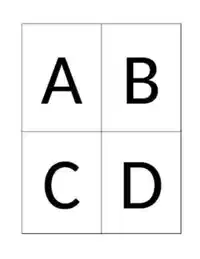

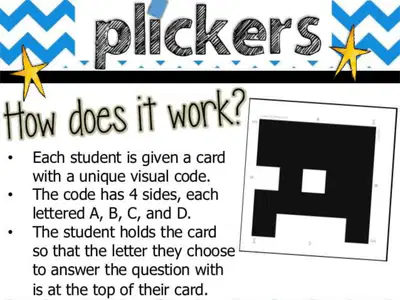
Hinge Questions
This is a brief item of formative
assessment which enables the
teacher to know whether it is
appropriate to move on, to briefly
recap, or completely reteach, a
concept before moving on
This is a SNAPSHOT
question which should
be answered within 2
minutes max and
interpreted within 30
secs.
It tends to be a closed question with
multiple answers
17

Coaching Triads
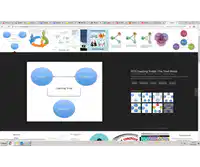
What is it?
Peer coaching - A coaching group comprises three students, who
each take a different role in turn: the coach, the coachee and the
observer. The tutor needs to provide a challenge for the students to
discuss.
Need more information see link and QR code:
https://pc3coachingtoolkit.pbworks.com/w/page/54101
472/The%20Triad%20Model
18



Mini whiteboards /
Whiteboards
What is it?
Using mini whiteboards / whiteboards!
Why?
It's a great way of keeping an entire class
actively involved in a lesson. It also
encourages peer learning and independent
learning skills.
https://sites.google.com/a/sheffcol.ac.u
k/tscpd/questioning
19

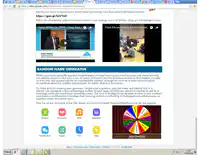
What is it?
Hoping this is obvious….
How do I use it?
Simply pose a question, spin the wheel and identify who is to answer. Use
alongside a bounce technique so that it's spun again and the next person is
required to add to or challenge what's previously been shared by a peer.
Why use it?
This kind of strategy forces students to listen to one another's contributions
and therefore it develops their learning as their own thinking is challenged
and reflected upon as questions move around the room.
Random Name Generator
Want more: See QR
code or link below
https://sites.google.com/a/sheffcol.ac.uk/tscpd/questioning
20


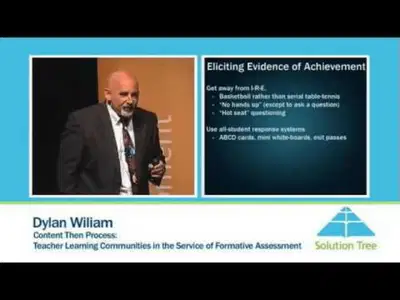
Pose, Pause, Pounce and Bounce
What is it?
Pose a question for your students
Pause to provide thinking time (slow down and provide enough!)
Pounce on a student for an answer
Bounce to another student for a comment (aim for basketball
rather than table tennis)
Want more information? (see QR code and link below)
https://sites.google.com/a/sheffcol.ac.uk/tscpd/que
stioning
https://www.teachertoolkit.co.uk/2011/11/04/pose-p
ause-bounce-pounce/
21

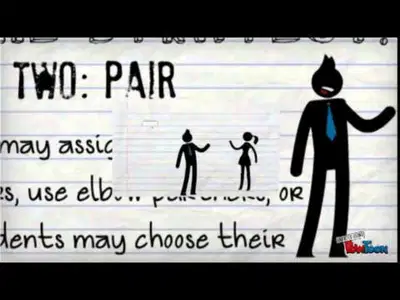
Think, Pair, Share
1. THINK- Students think independently about the question
that has been asked, forming ideas on their own.
2. PAIR - Students are grouped in pairs to discuss their
thoughts. This step allows students to articulate their ideas as
they use their prior knowledge and vocabulary to
communicate with each other. Students will also be able to
practice their speaking and listening skills as they learn to
respect multiple perspectives.
3. SHARE - Students share their responses with the entire
class. They will often become more comfortable and willing to
participate throughout the year when this strategy is
continually used in the classroom.
(https://ellstrategiesandmisconceptions3.weebly.com/strategy-
2---think-pair-share.html)
22


Present students with common or predictable
misconceptions about a concept you’re
covering. Ask questions around the area to
check their understanding.
Watch the video at 2min 8 seconds for example.
Addressing the misunderstanding
23

Plenary
Task:
Pick at least 1 strategy on your sheet (max 2)
Answer the questions alongside
Pick up an information sheet related to your chosen strategy
Need more information
https://sites.google.com/a/sheffcol.ac.uk/tscpd/questioning
Show answer
Auto Play
Slide 1 / 23
SLIDE
Similar Resources on Wayground

19 questions
Curriculum & Lifelong Learning
Presentation
•
University
18 questions
Social Emotional Learning: Respect
Presentation
•
KG - University
18 questions
Plants
Presentation
•
6th - 8th Grade
19 questions
simple present continuous tenses
Presentation
•
University
20 questions
BUDGETING
Presentation
•
University
16 questions
English at the airport
Presentation
•
University
16 questions
Present Simple or Progressive?
Presentation
•
University
Popular Resources on Wayground
21 questions
Continents and Oceans

Quiz
•
6th Grade
20 questions
Parts of Speech
Quiz
•
5th Grade
16 questions
Subject & Predicate
Quiz
•
5th Grade
25 questions
Multiplication Facts
Quiz
•
5th Grade
12 questions
Map Skills
Quiz
•
3rd Grade
22 questions
Continents and Oceans
Quiz
•
5th Grade
15 questions
Rounding Decimals
Quiz
•
5th Grade
20 questions
Brand Labels
Quiz
•
5th - 12th Grade
Discover more resources for Life Skills
20 questions
Disney Trivia
Quiz
•
University
10 questions
Spanish Greetings and Goodbyes!
Presentation
•
6th Grade - University
20 questions
Preterito vs. Imperfecto
Quiz
•
KG - University
15 questions
TOEFL Structure - TEST 2
Quiz
•
University
25 questions
Cell Transport
Quiz
•
KG - University
40 questions
Flags of the World
Quiz
•
KG - Professional Dev...
4 questions
Exit ticket for the end of class: Spotlight
Quiz
•
KG - Professional Dev...
12 questions
Hurricane or Tornado
Quiz
•
3rd Grade - University