Probability (Sample Space and Complement)
Presentation
•
Mathematics
•
6th - 8th Grade
•
Medium
+4
Standards-aligned
Gavin Young
Used 1+ times
FREE Resource
4 Slides • 23 Questions
1
Multiple Choice
2
Multiple Choice
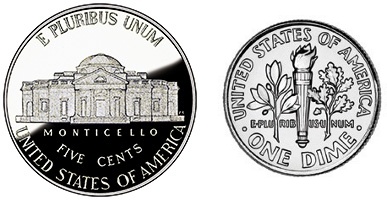
A bag contains 5 quarters, 2 dimes, and 4 pennies. What is the P(Quarter), or the probability of picking a quarter?
5-11
3
Explanation Slide...
4
5
Multiple Choice
Which shows the sample space for flipping two coins?
H = heads, T = tails
sample space includes all possible combinations
6
Multiple Choice
TW, CW, PW, MT, TS, PM
TW, TM, PC, CS, CW, PW
7
Multiple Choice
Three coins are tossed. Use the Sample Space provided. What's the probability of landing on the same side on all 3 coins? (Remember to simplify your answer).
⅛
1/4
⅓
⅞
8
Multiple Choice
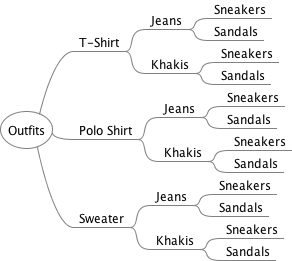
The sample space tree diagram for a team of three students is shown. What is the probability that the team would consist of at least2 girls? (Simplify your answer).
½
⅜
¾
⅙
9
Multiple Choice
10
Multiple Choice
11
Multiple Choice
12
Multiple Choice
13
Multiple Choice
14
Multiple Choice
15
Multiple Choice
16
Multiple Choice
17
Multiple Choice
18
Multiple Choice
Max is ordering a salad for lunch. He can choose one of chicken, tofu, hard-boiled eggs, or turkey to have on the salad. He can also pick one vegetable topping. The vegetable choices are sprouts, tomatoes, or olives. How many different combinations can Max create?
7 combinations
12 combinations
3 combinations
4 combinations
19
Multiple Choice
What is the probability of rolling two dice and getting 10?
1/12
1/10
1/9
5/36
20
21
Complement of an Event
The complement of an event is like the opposite of that event happening. Let's say the event is "It will rain tomorrow." The complement of this event would be "It will not rain tomorrow." So, if you add up the probability of an event happening and the probability of its complement happening, you always get 1.
22
Multiple Choice
A bag of candy contains 2 red, 4 yellow, and 4 green candies.
P(red or yellow) =
3/5
1/5
2/5
4/5
23
Multiple Choice
A bag of candy contains 2 red, 4 yellow, and 4 green candies.
P(NOT red or yellow) = The Complement
3/5
1/5
2/5
4/5
24
Multiple Choice
P(even) =
5/7
1/7
2/7
4/7
25
Multiple Choice
P(NOT even) = The Complement
5/7
1/7
2/7
4/7
26
Multiple Choice
There are 14 girls and 12 boys in a class.
P(boy) =
7/13
6/13
4/13
12/25
27
Multiple Choice
There are 14 girls and 12 boys in a class.
P(NOT boy) = The Complement
7/13
6/13
4/13
12/25
Show answer
Auto Play
Slide 1 / 27
MULTIPLE CHOICE

Similar Resources on Wayground
20 questions
Estimating Square Roots
Presentation
•
6th - 8th Grade
20 questions
Desmos Grade 7 - Unit 8 Review
Presentation
•
6th - 8th Grade
20 questions
Similar Figures, Dilations and Scale Factors
Presentation
•
6th - 8th Grade
20 questions
Classifying Quadrilaterals
Presentation
•
6th - 8th Grade
21 questions
Distributive Property Lesson
Presentation
•
6th - 8th Grade
21 questions
Measures of Center
Presentation
•
6th - 8th Grade
21 questions
Review 7.3-1 Ratios & Proportions
Presentation
•
6th - 8th Grade
19 questions
Angle Relationships
Presentation
•
6th - 8th Grade
Popular Resources on Wayground
19 questions
Naming Polygons
Quiz
•
3rd Grade
10 questions
Prime Factorization
Quiz
•
6th Grade
20 questions
Math Review
Quiz
•
3rd Grade
15 questions
Fast food
Quiz
•
7th Grade
20 questions
Main Idea and Details
Quiz
•
5th Grade
20 questions
Context Clues
Quiz
•
6th Grade
20 questions
Inferences
Quiz
•
4th Grade
19 questions
Classifying Quadrilaterals
Quiz
•
3rd Grade
Discover more resources for Mathematics
10 questions
Prime Factorization
Quiz
•
6th Grade
48 questions
8TH GRADE MATH FAST REVIEW
Quiz
•
8th Grade
20 questions
summer trivia
Quiz
•
8th Grade
14 questions
Volume of rectangular prisms
Quiz
•
7th Grade
20 questions
Math Review
Quiz
•
6th Grade
22 questions
Simple Probability
Quiz
•
7th Grade
23 questions
6th Grade Math Review
Quiz
•
6th Grade
21 questions
Math Review
Quiz
•
7th Grade