
Unit 10 Review Lesson

Presentation
•
Chemistry
•
10th Grade
•
Medium

LEANNA DAVIS
Used 1+ times
FREE Resource
5 Slides • 9 Questions
1

Unit 10
Mixed Practice
2

Chemical Reactions:
●Result in the formation of a new substance or substances that have different properties from the reactant(s).
●Can be illustrated using a chemical equation.
●Can either gain energy or lose energy.
●Any one of the following will be present during the reaction:
○New odor formed
○Color change
○Gas produced
○Light produced
○Temperature change
○Formation of a precipitate
■Precipitate = the solid formed when 2 liquids react
3
Multiple Choice
Which part of the equation are the reactants?
3Ca + N2 --> Ca3N2
3Ca
N2
Ca3N2
3Ca + N2
4
Multiple Choice
Which part of the eqation are the products?
2H2O --> 2H2 + O2
2H2O
2H2
O2
2H2 + O2
5

Law of Conservation of Matter (LCM)
●Matter cannot be created or destroyed, only changed.
●LCM is why we need to balance chemical equations
●LCM is why the total mass before the reaction needs to be equal to the total
mass after the reaction
6
Multiple Choice
Balance this equation:
_S2O --> _S2 + _O2
2, 2, 1
1, 2, 1
1, 1, 2
2, 1, 1
7
Multiple Choice
Balance this equation:
_N2 + _Cl2 --> _NCl3
1, 3, 2
2, 1, 3
1, 3, 1
2, 3, 2
8

Collision Theory
●Chemical reactions happen only when the conditions are right
●Collision Theory :
○Correct orientation (favorable collision geometry)
○Sufficient kinetic energy. = Activation Energy
Reaction Rate
●Can speed up or slow down the rate of the reaction
○Temperature
○Concentration (Molarity)
○Surface Area
○Nature of reactants
○Catalyst or Inhibitor
9
Multiple Choice
Which of the following will speed up a reaction?
Incease concentration
Lower the temperature
Add an inhibitor
Decrease surface area
10
Multiple Choice
Which of the following will slow down a reaction?
Incease concentration
Increase the temperature
Add an inhibitor
Increase surface area
11


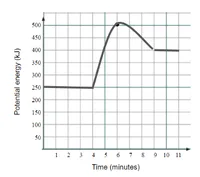
Potential Energy (PE) Diagram
●Shows how the energy changes as a chemical reaction takes place
●Energy lost
●Will feel warm to the touch
●Surroundings will heat up
●Have a -ΔH
●Energy gain
●Will feel cool to the touch
●Surroundings will cool down
●Have a +ΔH
12
Multiple Choice
An Exothermic reaction will...
Feel warm to the touch
Feel cool to the touch
Have a +ΔH
require energy
13
Multiple Choice
An endothermic reaction will...
Feel warm to the touch
Produce energy
Have a -ΔH
require energy
14
Multiple Choice
To form bonds energy is...
released
absorbed
not changed
Unit 10
Mixed Practice
Show answer
Auto Play
Slide 1 / 14
SLIDE
Similar Resources on Wayground

9 questions
Lewis Dot Structure Review and Puzzle Activity
Presentation
•
10th Grade
10 questions
Percent Composition and Chemical Formulas
Presentation
•
10th Grade
10 questions
Empirical Formula and Molecular Formula
Presentation
•
10th Grade
10 questions
Empirical
Presentation
•
10th Grade
10 questions
Empirical Formula of a Hydrate Calculation Lesson
Presentation
•
10th Grade
11 questions
Review Chapter 11 Day One
Presentation
•
10th Grade
14 questions
Moles and Molar Mass
Presentation
•
10th Grade
10 questions
Spanish Estar and prepositions with place
Presentation
•
10th Grade
Popular Resources on Wayground
10 questions
Safety Day 2026 – Student Review

Quiz
•
9th Grade
21 questions
Continents and Oceans
Quiz
•
6th Grade
20 questions
Parts of Speech
Quiz
•
5th Grade
16 questions
Subject & Predicate
Quiz
•
5th Grade
25 questions
Multiplication Facts
Quiz
•
5th Grade
12 questions
Map Skills
Quiz
•
3rd Grade
22 questions
Continents and Oceans
Quiz
•
5th Grade
15 questions
Rounding Decimals
Quiz
•
5th Grade
Discover more resources for Chemistry
20 questions
electron configurations and orbital notation
Quiz
•
9th - 12th Grade
25 questions
Writing and Naming Binary Ionic compounds
Quiz
•
10th Grade
20 questions
COUNTING ATOMS
Quiz
•
10th Grade
20 questions
Physical or Chemical Change/Phases
Quiz
•
8th Grade - University
15 questions
Periodicity Module Exam Practice Quiz
Quiz
•
9th - 12th Grade
20 questions
Naming Ionic Compounds
Quiz
•
10th Grade
45 questions
Chem Unit 3 Review
Quiz
•
10th Grade
16 questions
History of the Atomic Theory
Quiz
•
10th Grade