

photographing the scene

Presentation
•
Biology
•
10th Grade
•
Practice Problem
•
Hard
+7
Standards-aligned

Jeanine Redman
FREE Resource
12 Slides • 0 Questions
1




Give one example
of direct evidence
and one example
of circumstantial
evidence.
Do Now
Learning Target
I can demonstrate
the skills needed to
properly photograph
a crime scene.
Thursday
2/15
Science
2


Photographing The Crime
Scene Notes
Photographing The Crime
Scene Practice.
Agenda
Learning Target
I can demonstrate
the skills needed to
properly photograph
a crime scene.
Thursday
2/15
Science
Wrap-Up
In one sentence, summarize
what you
learned/accomplished today.
Then, rate your
understanding of the
Learning Target.
3
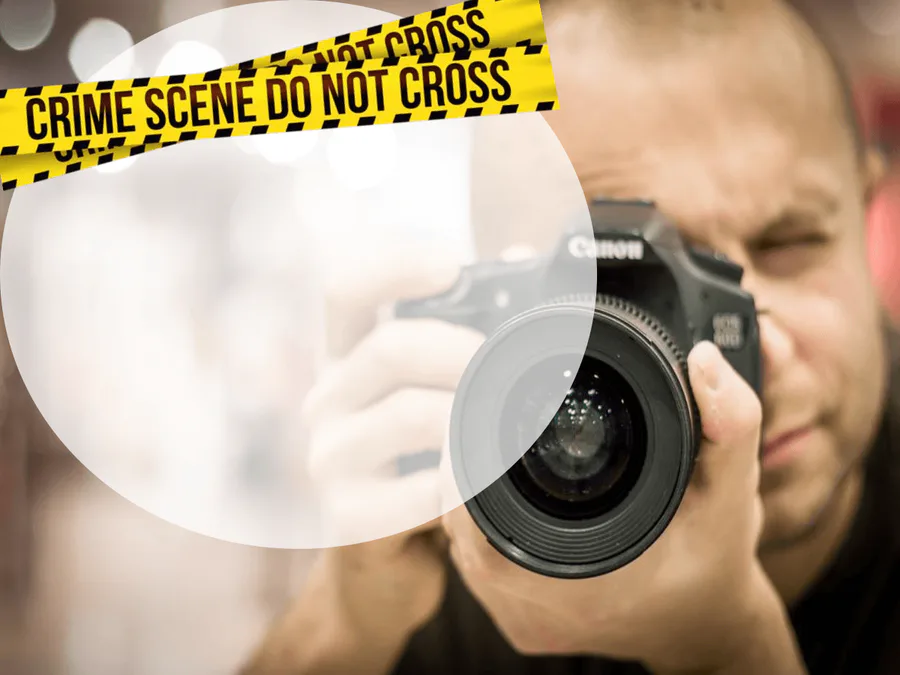
PHOTOGRAPHING
THE
CRIME SCENE
4


Recording the Scene
•Investigators must work against the clock to
document evidence.
•Factors such as location, weather, and time of day
may affect the time that investigators have at a
crime scene.
•Evidence must be preserved until it can be
photographed.
•Photographs are important, as they provide
documentation/reference and are required for
presentation at a trial.
5


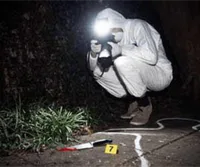

Recording the Scene
• The crime scene must remain
unaltered
• Exception: cases where injured people
need attention
• Sometimes accidents happen (ex.
Investigator kicks weapon and it moves
across the floor). In cases like this, a
fact should be noted in the report
• If objects are removed, positions
changed, or tampered with, the
evidence may not be admissible in
court
6


Recording the Scene
•Crime scenes should be photographed as
completely as possible.
•Photographs of the following should be made:
• Area in which the crime took place
• Adjacent areas to the crime scene
• Overview photographs
• Points of entry and exit
• Body (if applicable)
• Evidence
7


Recording the Scene
•Investigators must use proper technique when
photographing evidence
• A item of “scale” should be in the picture (ex. Ruler, quarter,
etc.)
• Each piece of evidence must be photographed at 3 different
angles
• Each angle should be photographed at 3 distances (close, mid
range, long shots)- 9 total photos minimum
•As physical evidence is discovered, the evidence is
photographed in an attempt to show its position and
location relative to the entire scene.
8


Oblique Lighting
•Sometimes, evidence is difficult to see and photograph.
•Oblique lighting can help investigators make this evidence
visible for photography.
•Oblique lighting uses a light source positioned at a low
angle.
•It is usually used to show detail by creating shadows on
the surface of the evidence.
•Oblique lighting is commonly used when photographing
impressions, tool marks and certain types of fingerprints.
9


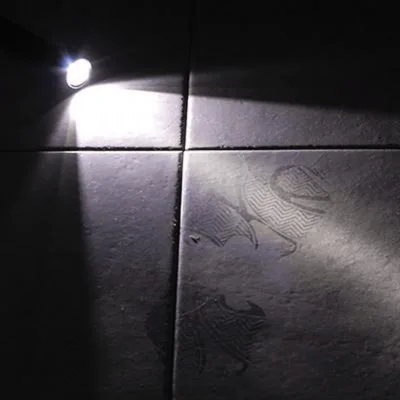


Oblique Lighting
Oblique lighting uses a light source positioned
at a low angle. A very low oblique angle of
lighting can be used to photograph dusty
footwear impressions and indented writing.
10


Oblique Lighting
11



We will now watch a short video over the basics of crime scene photography.
Video Link: https://youtu.be/phd2vbGw1LI
The Basics of Crime Scene
Photography
12


Practice Makes Perfect
• Today, you will practice your Forensic photography skills.
• There is evidence set up in and outside of the classroom.
• Each piece of evidence is marked with a numbered evidence
markers.
• Your job is to rotate through each piece of evidence taking
photographs according to the procedures outlined in the
lesson today.
• When finished, showcase 1 piece of evidence (9 total
photographs) in the form of a PicCollage, iMovie, InstaCollage,
or other multimedia source of your choosing.
Give one example
of direct evidence
and one example
of circumstantial
evidence.
Do Now
Learning Target
I can demonstrate
the skills needed to
properly photograph
a crime scene.
Thursday
2/15
Science
Show answer
Auto Play
Slide 1 / 12
SLIDE
Similar Resources on Wayground

8 questions
Vocab Intro to Evolution Unit
Presentation
•
9th Grade
11 questions
The Thief's Story
Presentation
•
10th Grade
12 questions
Logical Fallacies
Presentation
•
11th Grade
11 questions
Antigone Anticipation Guide
Presentation
•
10th Grade
10 questions
Claim/ Counterclaim/Rebuttal
Presentation
•
8th - 10th Grade
11 questions
Cells - Prokaryotes vs. Eukaryotes
Presentation
•
10th Grade
10 questions
Epidemiologists: chasing viruses
Presentation
•
10th - 11th Grade
9 questions
Civil peace
Presentation
•
10th Grade
Popular Resources on Wayground
6 questions
PRIDE Always and Everywhere
Presentation
•
12th Grade
20 questions
Lab Safety Quiz

Quiz
•
6th Grade
26 questions
KOR Review Kahoot Questions
Quiz
•
8th Grade
21 questions
Continents and Oceans
Quiz
•
6th Grade
12 questions
Unit Zero lesson 2 cafeteria
Presentation
•
9th - 12th Grade
20 questions
Parts of Speech
Quiz
•
5th Grade
10 questions
Riddles Riddles fun Riddles
Quiz
•
6th - 12th Grade
16 questions
Subject & Predicate
Quiz
•
5th Grade
Discover more resources for Biology
20 questions
Characteristics of Life
Quiz
•
9th - 10th Grade
20 questions
Scientific Method & Variables
Quiz
•
9th - 12th Grade
10 questions
Exploring the 4 Major Macromolecules and Their Functions

Interactive video
•
9th - 12th Grade
20 questions
Cell Transport
Quiz
•
9th - 12th Grade
20 questions
Characteristics of Life
Quiz
•
7th - 10th Grade
26 questions
Quiz Week 2 REVIEW (9/4/26)
Quiz
•
9th - 12th Grade
20 questions
Macromolecules
Quiz
•
10th Grade
12 questions
Enzymes
Presentation
•
9th - 10th Grade