

4.1 Quizizz PowerPoint Lesson

Presentation
•
Science
•
10th Grade
•
Practice Problem
•
Easy

T Greenleaf-Littsen
Used 2+ times
FREE Resource
13 Slides • 17 Questions
1

2

3
Open Ended
What did Demosritus call this particle?
4
Multiple Choice
Democritus believed that all matter consisted of extremely small particles that
could be divided into equal parts.
could be divided under certain circumstances.
could not be divided.
5

6
Multiple Select
Which of the following are part of John Dalton's theory on why elements join the same way?
*Select ALL that apply!
All elements are composed of atoms.
Compounds contain atoms of only one element.
All atoms of the same element have the same mass, and atoms of different elements have different masses.
Compounds contain atoms of more than one element.
In a particular compound, atoms of different elements always combine the same way.
7

8

9
Drag and Drop
10
Multiple Choice
Thomson used an __ to learn more about atoms.
electric current
microscope
telescope
11

12
Open Ended
Where does Rutherford's model put all of the positive charge?
13
Match
Match the following model of the atom with the scientist associated with it.
Dalton
"Billiard Ball"
Rutherford
Thomson
"Plum Pudding"
Dalton
"Billiard Ball"
Rutherford
Thomson
"Plum Pudding"
14

15
Match
Match the following:
Proton
Neutron
electron
positive charge
neutral or no charge
negative charge
positive charge
neutral or no charge
negative charge
16

17
Multiple Select
Which of the three subatomic particles have almost the same mass?
*Select ALL that apply
electron
proton
neutron
18
Multiple Choice
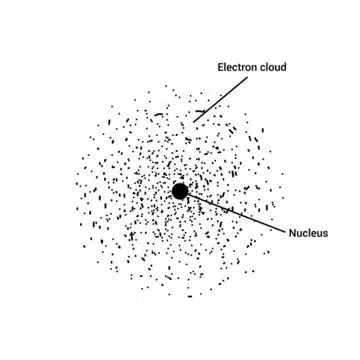
About how many electrons equals one proton in mass?
1000 times
2000 times
3000 times
4000 times
19

20
Multiple Choice
Which subatomic particle gives an element its identity?
neutron
proton
electron
21

22
Open Ended
Why are atoms neutral?
23
Open Ended
Atomic number of an element equals the number of ...?
24

25
Open Ended
Number of neutrons + number of protons =
26

27
Open Ended
Why do isotopes of an element have different mass numbers?
28
Multiple Choice
Isotopes have the SAME
atomic number.
mass number.
proton number.
electron number.
29

30
Match
Match the following
6 P
6 n
6 e
6 P
7 n
6 e
6 P
8 n
6 e
Carbon-12
Carbon-13
Carbon-14
Carbon-12
Carbon-13
Carbon-14
Show answer
Auto Play
Slide 1 / 30
SLIDE
Similar Resources on Wayground

27 questions
Covalent Nomenclature
Presentation
•
10th Grade
24 questions
Taxonomy and Classification
Presentation
•
11th Grade
19 questions
Plants
Presentation
•
10th Grade
22 questions
G6D: Cellular Transport
Presentation
•
10th Grade
24 questions
Types of Forces, Motion, and Net Force
Presentation
•
KG
22 questions
Dimensional Analysis
Presentation
•
10th Grade
26 questions
Exothermic and Endothermic Lesson
Presentation
•
10th Grade
23 questions
Down in the Deep
Presentation
•
10th Grade
Popular Resources on Wayground
10 questions
How much do you know about our Portrait of an Eagle?

Quiz
•
10th Grade
10 questions
Fast Food Slogans
Quiz
•
6th - 8th Grade
21 questions
Continents and Oceans
Quiz
•
6th Grade
20 questions
Parts of Speech
Quiz
•
5th Grade
16 questions
Subject & Predicate
Quiz
•
5th Grade
25 questions
Multiplication Facts
Quiz
•
5th Grade
12 questions
Map Skills
Quiz
•
3rd Grade
22 questions
Continents and Oceans
Quiz
•
5th Grade
Discover more resources for Science
10 questions
Exploring Chemical and Physical Changes

Interactive video
•
6th - 10th Grade
10 questions
Decoding the Periodic Table of Elements
Interactive video
•
6th - 10th Grade
10 questions
Exploring the Periodic Table
Interactive video
•
6th - 10th Grade
14 questions
Physical and Chemical Changes
Quiz
•
10th Grade
22 questions
Periodic Table Review
Quiz
•
9th - 12th Grade
10 questions
Exploring the States of Matter
Interactive video
•
6th - 10th Grade
10 questions
Exploring Physical and Chemical Changes
Interactive video
•
6th - 10th Grade
21 questions
Macromolecules and Enzymes Study Guide
Quiz
•
9th - 10th Grade