

Understanding States of Matter

Presentation
•
Science
•
8th Grade
•
Easy
+14
Standards-aligned

Brad McClaran
Used 20+ times
FREE Resource
14 Slides • 20 Questions
1
There are some slides that contain notes.
Copy the notes into your Notes section of your binder/notebook.
If you have already copied the notes in your binder/notebook, then use the slides with notes as review prior to answering questions.
Following the slides are questions related to the notes you have completed.
2
Solid
Solids have the least amount of energy of the states of matter.
3
Solid
Solids have the least amount of energy of the states of matter.
Slower moving particles than any other state of matter.
Vibrating in place
4
Solid
Solids have the least amount of energy of the states of matter.
Slower moving particles than any other state of matter.
Vibrating in place
Solid molecules are in fixed positions.
5
Solid
Solids have the least amount of energy of the states of matter.
Slower moving particles than any other state of matter.
Vibrating in place
Solid molecules are in fixed positions.
Solids have definite shape and definite volume.
Definite - meaning does not change
6
Drag and Drop
7
Drag and Drop
8
Drag and Drop
9
Multiple Choice

The molecules in the picture are tightly held together with little movement. They have definite shape and low energy. Therefore, the picture represents _________.
solid
liquid
gas
10
Multiple Choice
Particles in this state of matter are moving the slowest.
solid
gas
liquid
11
Liquid
Liquids have more energy than solids.
12
Liquid
Liquids have more energy than solids.
Liquid molecules can move past each other.
This allows liquids to flow easily.
13
Liquid
Liquids have more energy than solids.
Liquid molecules can move past each other.
This allows liquids to flow easily.
The shape of liquids is indefinite, but the volume is definite.
Definite - does not change
Indefinite - can change
14
Drag and Drop
15
Drag and Drop
16
Multiple Choice
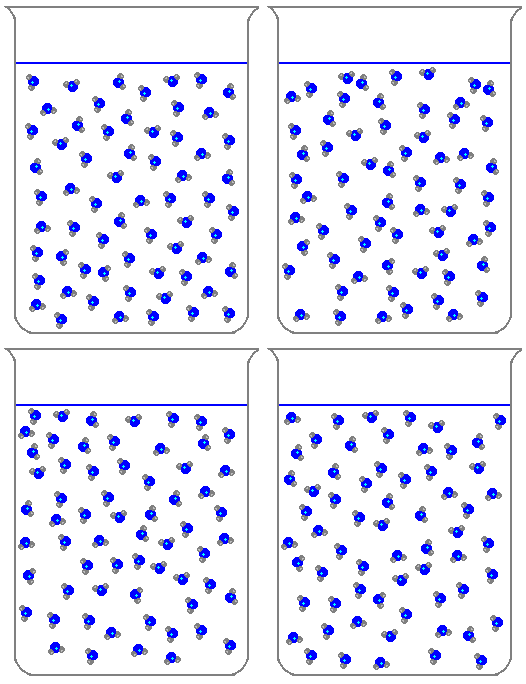
What state of matter does this picture show?
Gas
Solid
Liquid
17
Multiple Choice
State of matter that has a definite volume and an indefinite shape, taking the shape of its container. Therefore, it is a ______________.
solid
liquid
gas
18
Gas
Gases have higher energy than liquids and solids.
Higher energy results in faster, rapid moving particles.
19
Gas
Gases have higher energy than liquids and solids.
Higher energy results in faster, rapid moving particles.
Gas molecules will expand to fill a container.
Gas molecules will spread out to fill the space in which they are contained.
20
Gas
Gasses have higher energy than liquids and solids.
Higher energy results in faster, rapid moving particles.
Gas molecules will expand to fill a container.
Gas molecules will spread out to fill the space in which they are contained.
Gasses have indefinite shape and indefinite volume.
Indefinite - can change
21
Drag and Drop
22
Drag and Drop
23
Drag and Drop
24
Multiple Choice
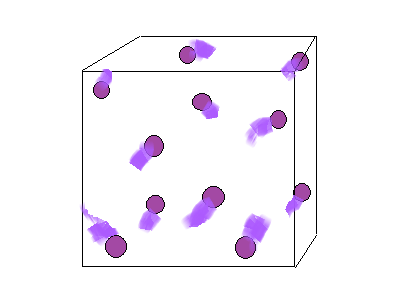
What state of matter does this picture show?
Liquid
Gas
Solid
Plasma
25
Multiple Choice
A state of matter that takes the shape of its container. Its particles are spaced widely.
Solid
Liquid
Gas
26
Multiple Choice
27
Shape and Volume of States of Matter
Solid
Shape: Definite
Volume: Definite
28
Shape and Volume of States of Matter
Solid
Shape: Definite
Volume: Definite
Liquid
Shape: Indefinite
Volume: Definite
29
Shape and Volume of States of Matter
Solid
Shape: Definite
Volume: Definite
Liquid
Shape: Indefinite
Volume: Definite
Gas
Shape: Indefinite
Volume: Indefinite
30
Reorder
Put each state in order from particles closest together to particles farthest apart.
Solid
Liquid
Gas
31
Multiple Choice
32
Multiple Choice
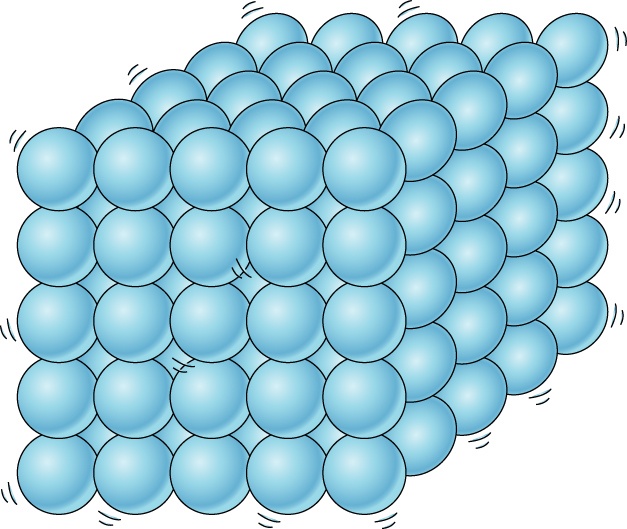
What state of matter?
Solid
Liquid
Gas
33
Multiple Choice
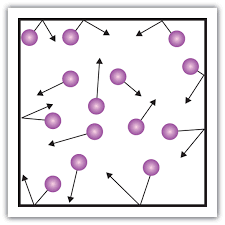
What state of matter?
Solid
Liquid
Gas
34
Multiple Choice
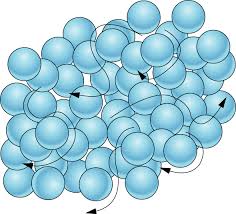
What state of matter?
Solid
Liquid
Gas
Plasma
There are some slides that contain notes.
Copy the notes into your Notes section of your binder/notebook.
If you have already copied the notes in your binder/notebook, then use the slides with notes as review prior to answering questions.
Following the slides are questions related to the notes you have completed.
Show answer
Auto Play
Slide 1 / 34
SLIDE
Similar Resources on Wayground

30 questions
Endothermic and Exothermic Reactions
Presentation
•
7th - 9th Grade
28 questions
Rock Cycle
Presentation
•
8th Grade
24 questions
Continental Drift and Plate Tectonics Lesson
Presentation
•
8th Grade
27 questions
Water Resources
Presentation
•
7th Grade
27 questions
Balanced and unbalanced forces
Presentation
•
7th Grade
27 questions
Atomic Structure 101
Presentation
•
8th Grade
29 questions
Waves
Presentation
•
8th Grade
26 questions
12/3 - Big Bang Theory
Presentation
•
8th Grade
Popular Resources on Wayground
10 questions
Safety Day 2026 – Student Review

Quiz
•
9th Grade
21 questions
Continents and Oceans
Quiz
•
6th Grade
20 questions
Parts of Speech
Quiz
•
5th Grade
16 questions
Subject & Predicate
Quiz
•
5th Grade
25 questions
Multiplication Facts
Quiz
•
5th Grade
12 questions
Map Skills
Quiz
•
3rd Grade
22 questions
Continents and Oceans
Quiz
•
5th Grade
15 questions
Rounding Decimals
Quiz
•
5th Grade
Discover more resources for Science
20 questions
Newton's Laws of Motion
Quiz
•
8th Grade
15 questions
potential and kinetic energy
Quiz
•
8th Grade
21 questions
Newton's Laws of Motion
Quiz
•
8th Grade
20 questions
Elements, Compounds and Mixtures
Quiz
•
8th Grade
10 questions
Exploring Chemical and Physical Changes

Interactive video
•
6th - 10th Grade
20 questions
Physical vs Chemical Changes
Quiz
•
8th Grade
20 questions
Conduction, convection, and Radiation Practice
Quiz
•
8th Grade
21 questions
Waves and Wave Properties
Quiz
•
6th - 8th Grade