Search Header Logo
Heat

Heat

Assessment

Presentation

English

Practice Problem

Hard

Created by

Jbryan Jbryan

FREE Resource

63 Slides • 51 Questions

1

What is energy?

The ability to cause change or do work.

media

2

Energy

  • Energy is the ability to do work

  • Work is being done whenever a force moves an object in the same direction as the for being applied

media

3

Types of Energy

-There are two types of energy​ Potential and Kinetic

- Energy changes from potential to kinetic, but is never destroyed or created

media

4

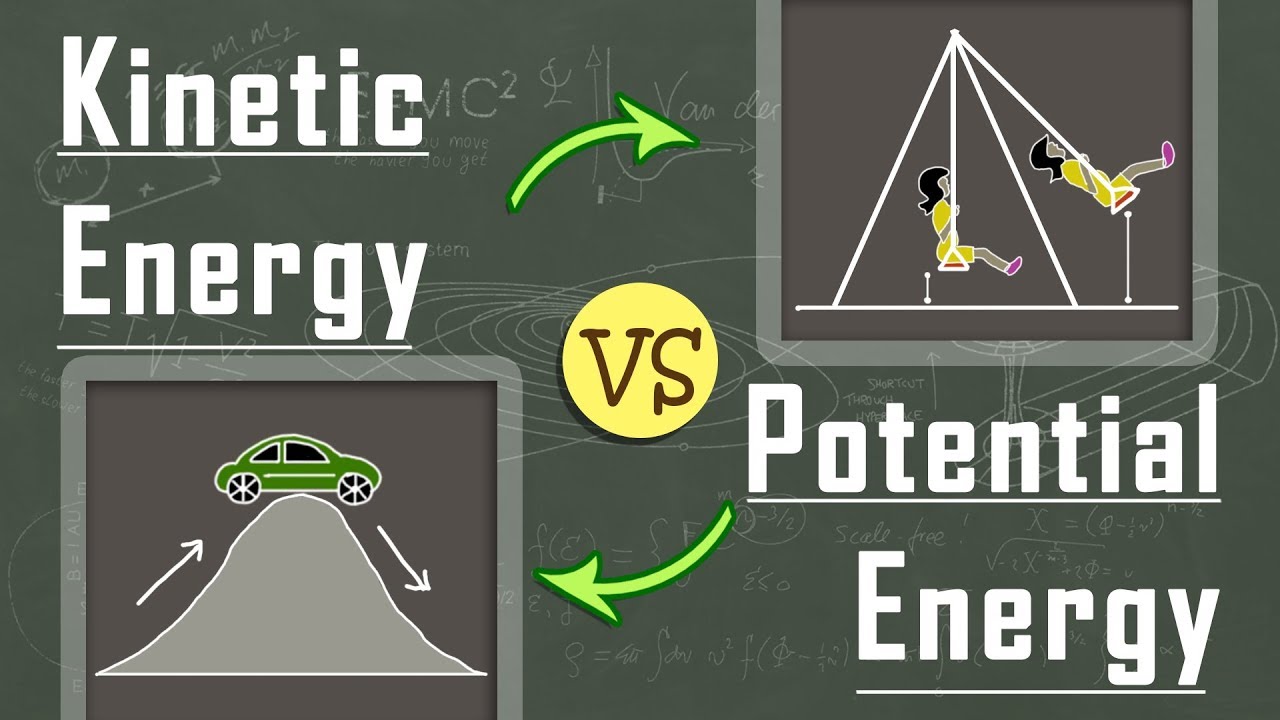
​Kinetic Energy

KE is the energy of motion

The amount of Kinetic energy is dependent on the mass and speed of an object.

media

5

​Potential Energy

​Stored energy

The energy of position

The amount of energy contained in an object at rest

media

6

Multiple Choice

Question image

The amount of force required to move an object is called

1

mechanical energy

2

work

3

kinetic energy

4

potential energy

7

Multiple Choice

Energy due to motion is ____________ energy. 
1
Potential 
2
Energy
3
Kinetic
4
Friction

8

Multiple Choice

Question image

Kinetic energy depends on

1

mass and height

2

height and speed

3

mass and speed

4

mass and force

9

Multiple Choice

The faster an object moves, the ________ kinetic energy it has. 
1
more
2
less
3
none of the above
4
all of the above 

10

Multiple Choice

__________ is stored energy. 
1
Potential
2
Kinetic
3
None of the above 
4
All of the above 

11

Multiple Choice

Question image

Potential energy depends on

1

mass and height

2

height and speed

3

mass and speed

4

height and force

12

Multiple Choice

Question image
What kind of energy is in a rock at the edge of a cliff?
1
Potential
2
Kinetic

13

Multiple Choice

Question image
What kind of energy is in a moving skateboard?
1
Potential
2
Kinetic

14

Multiple Choice

Question image
What kind of energy is in a person climbing a ladder?
1
Potential
2
Kinetic
3
Both

15

Multiple Choice

Question image
What kind of energy is in a stretched rubber band?
1
Potential
2
Kinetic

16

Multiple Choice

Question image
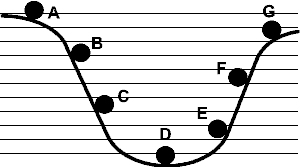
Which point has the most potential energy?
1
G
2
f
3
b
4
a

17

Multiple Choice

Question image
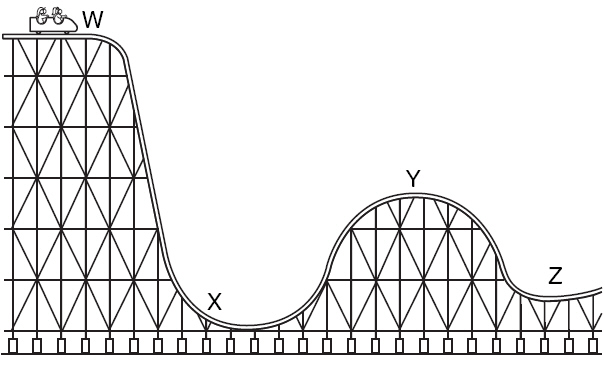
At which point is potential energy greatest?
1
W
2
X
3
Y
4
Z

18

Multiple Choice

Question image
At which point is kinetic energy greatest?
1
W
2
X
3
Y
4
Z

19

Multiple Choice

Question image
Which 2 letters have the most kinetic energy
1
W & Y
2
X & Z

20

Multiple Choice

Question image

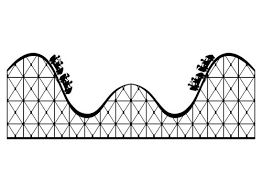
When a roller coaster is at the bottom of a hill it has

1

high potential energy

2

high kinetic energy

3

low kinetic energy

4

equal amounts of kinetic and potential energy

21

Heat Transfer

Heat flows from HOT to COLD. The bigger the temperature difference, the more heat moves.


BUT the heat needs a ride--either conduction through a solid (or unmoving fluid), convection through a moving gas or liquid, or radiation using visible or invisible light.


media

22

Multiple Choice

Question image

In heat transfer, heat always flows from the _______________ substance to the _______________ substance.

1

hotter to colder

2

colder to hotter

3

hotter to hotter

4

colder to colder

23

media
  • Energy is transferred in 3 ways

    • Radiation 

    • Convection 

    • Conduction

  • Why is heat transfer important? It affects our 

    • Temperature

    • Wind

    • Precipitation 

​Energy Transferred

24

media
  • Energy is transferred in 3 ways

    • Radiation 

    • Convection 

    • Conduction

  • Why is heat transfer important? It affects our 

    • Temperature

    • Wind

    • Precipitation 

​Energy Transferred

25

Multiple Choice

There are 3 primary types of heat transfer:

Conduction, Convection and Radiation.

1

True

2

False

26

Multiple Choice

True/False: heat transfer does not affect our weather (for example: temperature, wind, and precipitation)

1

False

2

True

27

media

28

METHODS OF HEAT TRANSFER

CONDUCTION

CONVECTION

RADIATION​

Heat Transfer​

29

Multiple Choice

Question image

Heating food in a microwave oven

1

CONDUCTION

2

CONVECTION

3

RADIATION

30

  1. Heating food in a microwave oven​

​RADIATION

31

Multiple Choice

Question image

The butter on top of the pancake melted.

1

RADIATION

2

CONDUCTION

3

CONVECTION

32

media

33

media

34

media

35

media

36

media

37

  1. The butter on top of the pancake melted.

​CONDUCTION

38

Multiple Choice

Question image

The butter on top of the pancake melted.

1

RADIATION

2

CONDUCTION

3

CONVECTION

39

media

40

Heat Transfer

HOT --> COLD!!!

media

41

Convection

media

42

Radiation

by electromagnetic (EM) waves.


*This is the ONLY method of heat transfer that does NOT require matter (can travel in space)!*

media

43

Convection

by the movement of a fluid (liquid or gas).


When a fluid is...

HEATED its particles SPEED UP and move APART,

making it LESS dense and RISE.


COOLED its particles SLOW DOWN and move TOGETHER,

making it MORE dense and SINK.


This creates a CONVECTION CURRENT

transferring heat throughout the fluid.

44

Conduction

through DIRECT CONTACT!


conductor: transfers heat well (metal)

insulator: does not transfer heat well (wood, plastic, etc.)

media

45

Multiple Select

Which of the following are good conductors? (select all that apply)

1

Copper

2

Plastic

3

Wood

4

Steel

46

Multiple Choice

Question image
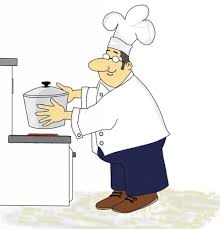
The man goes to take the hot pot off the stove with his bare hands.
1
conduction
2
convection
3
radiation

47

Multiple Choice

Question image
Walking on the warm sand sand with your bare feet.
1
conduction
2
convection
3
radiation

48

Multiple Choice

Question image
A group of friends gather around a fire to stay warm.
1
conduction
2
convection
3
radiation

49

Multiple Choice

Question image
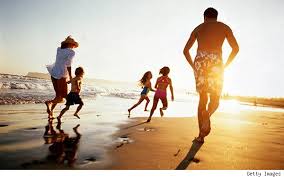
The sun shines down on this family as the play on the beach.
1
conduction
2
convection
3
radiation

50

Multiple Choice

Question image

Water vapor molecules rise into the air taking the heat with them. This is an example of_____________.

1

Convection

2

Conduction

3

Radiation

51

Multiple Choice

Question image

A raw egg begins to fry as it hits a heated frying pan

1

Convection

2

Conduction

3

Radiation

52

Multiple Choice

Question image

You feel the heat from a campfire

1

Convection

2

Conduction

3

Radiation

53

Multiple Choice

Question image

A spoon in a cup of hot soup becomes warmer

1

Convection

2

Conduction

3

Radiation

54

Multiple Choice

Hot coffee is stirred with a spoon; the spoon gets hot due to
1
conduction
2
convection
3
radiation

55

Multiple Choice

Heat from the Sun reaches Earth through which type of heat transfer?

1

Conduction

2

Radiation

3

Convection

4

All of the above

56

Multiple Choice

Which of the following describes Convection?

1

The transfer of heat through liquids and gases

2

The transfer of heat through electromagnetic waves (rays)

3

The transfer of heat between two objects in direct contact with one another

57

Multiple Choice

Which of the following describes Conduction?

1

The transfer of heat through liquids and gases

2

The transfer of heat through electromagnetic waves (rays)

3

The transfer of heat between two objects in direct contact with one another

58

Multiple Choice

Which of the following describes Radiation?

1

The transfer of heat through liquids and gases

2

The transfer of heat through electromagnetic waves (rays)

3

The transfer of heat between two objects in direct contact with one another

59

Multiple Choice

Question image

Boiling Water

1

Conduction

2

Convection

3

Radiation

60

Multiple Choice

Question image

Sun Bathing

1

Conduction

2

Convection

3

Radiation

61

Multiple Choice

Holding an ice cube in your hand is an example of .....

1

Convection

2

Conduction

3

Radiation

4

Temperature

62

Multiple Choice

Question image

A metal spoon in ice cream also gets cold due to

1

Radiation

2

Convection

3

Conduction

4

Magic

63

Multiple Choice

Question image

Which heat transfer explains formation of sea breeze during the day?

1

Radiation

2

Convection

3

Conduction

4

Insulation

64

Multiple Choice

Spagetti boiling in a pot of water

1

Conduction

2

Convection

3

Radiation

65

Multiple Choice

A heat lamp keeping food warm.

1

Conduction

2

Convection

3

Radiation

66

Multiple Choice

The heat from a lamp allows a lizard to remain warm. This is an example of which type of heat transfer?
1
radiation
2
conduction
3
convection
4
insulation

67

Renewable and Non-Renewable Energy Sources

68

Renewable vs Non Renewable

Energy resources that cannot be replaced. These resources will run out.

Energy resources that can be easily replaced.

These resources will not run out.

media

69

Renewable vs Non Renewable

Energy resources that cannot be replaced. These resources will run out.

Energy resources that can be easily replaced.

These resources will not run out.

media

70

media

Heat is a form of energy

All forms of matter contain heat energy. No matter if it is a volcano or an ice cube, it has some amount of heat.

71

Sources of Heat

By KRIS RIVERA

72

media

Heat is a form of energy

All forms of matter contain heat energy. No matter if it is a volcano or an ice cube, it has some amount of heat.

73

media

Sources of Heat

Heat energy is an essential form of energy in our day-to-day activities like cooking, heating, ironing, etc. An object or system from which heat energy is obtained is called a source of heat energy.

74

media

Sun

The closest star to Earth, it’s the source of all the heat and light that makes flowers bloom, songbirds croon, and sunbathers swoon. Life wouldn’t exist without it.

75

Multiple Choice

The heat and light from the sun supports life on earth.

1

TRUE

2

FALSE

76

media

Earth

The heat energy which is obtained from Earth is called geothermal energy. It can be found in hot water and rocks present underground. Heat is also found in the form of molten rocks and magma, deep inside the Earth's crust.

77

Multiple Choice

Heat is also present underground.

1

TRUE

2

FALSE

78

media

Burning Fuels

Burning of fuels provides heat energy. Fuel is an energy filled combustible substance, which when burnt generates energy. Wood, coal, kerosene, gasoline, petrol, diesel, oil, and charcoal are some common fuels.

79

Multiple Choice

Burning wood is a source of heat.

1

TRUE

2

FALSE

80

media

Electricity

Electric energy can be converted into heat energy. Iron, water heater, and induction cooker are some of the devices which convert electrical energy into heat energy.

81

Multiple Choice

Electrical appliances cannot produce heat.

1

TRUE

2

FALSE

82

Multiple Select

Which of the following is a source of heat?

1
2
3
4

83

Multiple Select

Our body is also producing heat. Which of the following can we do to produce heat?

1

rubbing our hands together

2

looking at the distance

3

breathing into our hands

4

pointing at the person far away from you

84

media

85

media

86

media

87

media

88

media

89

media

90

media

91

media

92

Multiple Choice

biomass is .....?

1

renewable

2

non-renewable

3

a fossil fuel

4

non of these

93

media

Biomass is a renewable energy source from organic matters like wood, manure, garbage. It is used as fuel. On burning Biomass , energy is released as heat that can be transformed further into electric energy or fuel.

what is biomass?

94

media
media
  • renewable energy source

  • ​Growing more crops takes in carbon dioxide. This can offset what is given out during burning. which is called carbon neutral.

​​advantages

  • Gases and smoke are released as the biomass fuel is burnt.

  • Lots of land is needed for growing the fuel crop.

​​disadvantages

95

Fill in the Blank

how much were you listening?

​Growing more crops takes in carbon dioxide. This can offset what is given out during burning. This is called.....?

96

media

Three Types of Geothermal Power Plants

97

media

Dry Steam Power Plant

  • ​Most common types of geothermal power plants

  • They work by piping hot steam from underground reservoirs directly into turbines from geothermal reservoirs, which power the generators to provide electricity.

  • After powering the turbines, the steam condenses into water and is piped back into the earth via the injection well.

98

media

Flash Steam Power Plant

  • They pump hot water, rather than steam, directly to the surface.

  • These flash steam plants pump hot water at a high pressure from below the earth into a “flash tank” on the surface. The flash tank is at a much lower temperature, causing the fluid to quickly “flash” into steam.

  • The steam produced powers the turbines. The steam is cooled and condenses into water, where it is pumped back into the ground through the injection well.

99

media

Binary Cycle Power Plant

  • The water or steam from below the earth never comes in direct contact with the turbines. Instead, water from geothermal reservoirs is pumped through a heat exchanger where it heats a second liquid—like isobutene (which boils at a lower temperature than water.)

  • This second liquid is heated into steam, which powers the turbines that drive a generator.

  • The hot water from the earth is recycled into the earth through the injection well, and the second liquid is recycled through the turbine and back into the heat exchanger where it can be used again

100

media

101

media

102

media

103

media

104

media

105

media

106

media

107

media

108

TYPES OF FOSSIL FUELS

  • ​Fossil fuels form from organisms that lived long ago. Those organisms were either plants that captured the energy of sunlight, or they were organisms that got energy by eating plants or organisms that ate plants. When organisms died, some of the energy stored in their bodies was changed into the energy of the fossil fuels.

  1. Coal is a solid fossil fuel. Until 1960, it was the world's primary energy source. At one time, it was the most common fuel used in the US. It was burned in power plants.

media

109

TYPES OF FOSSIL FUELS

  • Petroleum, also called crude oil or oil, is a liquid fossil fuel. It has been used for more than 5,000 years. The ancient Egyptians used it as a medicine for wounds and as a fuel in lamps. Today we use petroleum products such as gasoline, jet fuel, home-heating oil, and kerosene.

  • ​Natural gas, is a fossil fuel that is a mixture of gases. More than 2,000 years ago, the Chinese used bamboo poles to pipe natural gas from shallow wells. They burned the gas to heat large pans of seawater. As the water evaporated, the dissolved salt in the water remained.

media
media

110

USING FOSSIL FUELS

  • When fossil fuels burn, gases are produced. Some of these gases - called greenhouse gases - trap heat in the air. The result is called the greenhouse effect. Some scientists are concerned because as more greenhouse gases are produced, more heat is trapped. The extra heat might cause Earth to become warmer.

  • Acid precipitation - rain or snow that is more acidic than normal precipitation. ​

  • Burning fossil fuels also leads to smog, a brownish-yellowish haze that settles over some areas on sunny days. ​

111

Heat and its effects

Science class

media

112

HEAT is a form of ENERGY. It warms our bodies and cooks our food. The SUN 🌞 is a HEAT SOURCE. There are many other examples:

media

113

The Effects of Heat

  • The heat can AFFECT things in different ways :

  • TEMPERATURE: heat can make the substance hot.

  • EXPANDE: Heat makes a substance "bigger".

  • CHANCE STATE: heat makes ICE melt to liquid WATER, and WATER boil to STEAM.

  • Heat can make a substance REACT wit other substances.

media

114

media

What is energy?

The ability to cause change or do work.

media

Show answer

Auto Play

Slide 1 / 114

SLIDE