

Unit 3 Energy

Presentation
•
Physics
•
9th Grade
•
Easy
+5
Standards-aligned

Lux Claridge
Used 23+ times
FREE Resource
85 Slides • 21 Questions
1

What is Energy?
What are some
examples/sources
of energy?
Write your answer on the slip of paper provided
2


Introduction to Energy
EQ: How is energy defined
3


What is energy?
Ex: Match
●Where did the match get its energy?
●Let’s diagram the change in energy for the match in your
notes
4
Open Ended
What is Energy?
What are some examples/sources of energy?
5
Open Ended
Where did the match get its energy?
6


What is energy?
●Energy is the ability to cause change
7
8

Forms of Energy
2 Categories:
●Potential : Stored energy and the energy of position
(gravitational).
●Kinetic : The motion of waves, electrons, atoms,
molecules, and substances.
●SI unit for energy is the Joule, J
9
10


Potential Energy Types
●CHEMICAL ENERGY is the energy stored in the bonds of
atoms and molecules. Gasoline and a piece of pizza are
examples.
●NUCLEAR ENERGY is the energy stored in the nucleus of
an atom – the energy that holds the nucleus together. The
energy in the nucleus of a plutonium atom is an example.
11


Potential Energy Types
●ELASTIC ENERGY is energy stored in objects by the
application of force. Compressed springs and stretched
rubber bands are examples.
●GRAVITATIONAL POTENTIAL ENERGY is the energy of
place or position. A child at the top of a slide is an
example.
12


Gravitational Potential Energy
Equation:
GPE = mgh
An object’s gravitational potential energy increases as its
height increases.
13
Fill in the Blanks

A roller coaster car, 500 kg with its passengers, reaches the top of the first hill, 20 meters above the ground. (g = 9.8 m/s2) What is the GPE?
14


Kinetic Energy Types
●THERMAL ENERGY or heat is the internal energy in
substances – the vibration or movement of atoms and
molecules in substances. The heat from a fire is an
example.
●MOTION is the movement of a substance from one place
to another. Wind and moving water are examples.
15


Kinetic Energy Types
●SOUND is the movement of energy through substances
in longitudinal waves. Echoes and music are examples.
●ELECTRICAL ENERGY is the movement of electrons.
Lightning and electricity are examples.
16

Kinetic Energy Equation:
KE = ½ mv2
● v= velocity
● m= mass
● Remember: the SI unit for energy is the
joule, J
17
Fill in the Blanks

As the same roller coaster car (500 kg) starts
descending the hill, it speeds up.
What is the kinetic energy if the car
is speeding at 19 m/s?
18

Mechanical Energy = KE + PE
●Mechanical energy is the total amount of kinetic and
potential energy in a system
●Due to motion and position of an object
19


Let’s Markup Intro to Energy!
You can make your notes even better by marking
them up.
This means:
Highlighting new vocabulary words and key concepts
Underlining important details
Circling significant terms or equations
●We do this so that we can revisit our notes on a
new day and restart the curve of forgetting
20

Then write either the definition, an example, or a drawing in the larger box
Gravitational Potential Energy
Energy stored in an object when it is lifted above the ground
21
Let’s write 2 Questions for Intro to Energy
●Every notes must have 2 or
more questions
○You create these questions
●Costa’s Stems help to write great
questions

22
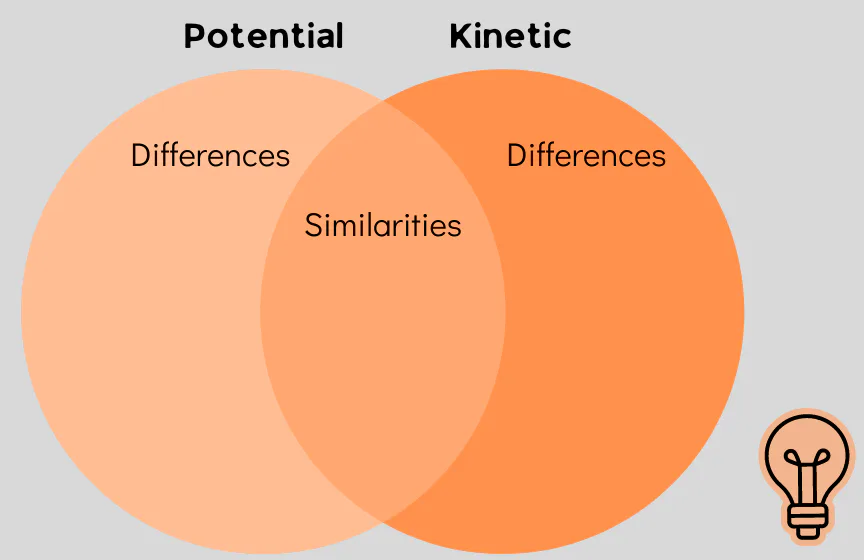
Answer in terms of what variables are used to calculate, examples, and the key factor that makes it potential or kinetic
23

Conservation of
Energy
EQ: Where does energy come from and where does it go?
24

Energy Conversions
Law of Conservation of Energy: Energy cannot be created or
destroyed, but it can change forms
Energy IN = Energy OUT
25


Falling Objects
Draw a diagram of the demonstration.
What kind of energy is in the ball before it falls?
What kind of energy is in the ball when it hits the ground?
What happens to GPE and KE?
26
Labeling
Label the ball's energy state:
All KE
Mostly GPE but some KE
All GPE
Half and half
27
Open Ended
What happens to the GPE and KE?
28


Projectile Motion
What is happening to the KE and
the GPE throughout the motion of
the ball?
A
B
C
29
Hotspot
At what point does the baseball have ALL gravitational potential energy?
30
Hotspot
At what point does the baseball have ALL kinetic energy?
31
Open Ended
What is happening to the KE and the GPE throughout the motion of the ball?
32


Swing
A
B
C
D
E
33
Drag and Drop

34
Multiple Choice

What energy/energies does point D have?
Grav. potential energy only
Grav. potential energy and kinetic energy
35
Multiple Choice

At point E, what energy or energies does the girl have?
Grav. potential energy only
Grav. potential energy and kinetic energy
36


Is energy always conserved?
Examples:
●What are the effects of friction?
37
38


●A summary condenses main ideas into your own words
●Summaries focus key points and connections between concepts
●A good summary is 3-5 sentences long
●A bad summary looks like “Today we learned about motion. It is
useful in learning everyday.”
Summarize Motion
39
Let’s Markup Conservation of Energy!
You can make your notes even better by marking
them up.
This means:
Highlighting new vocabulary words and key concepts
Underlining important details
Circling significant terms or equations
●We do this so that we can revisit our notes on a
new day and restart the curve of forgetting
40

A fable is a short story with animals as main characters. There is a moral or point and is 2 or 3 paragraphs.
Conservation of Energy Fable
Write a fable about Conservation of Energy
Include how energy transfers from one type to another
Use at least 5 vocabulary words from this or previous units
Include and underline the moral in the last paragraph
Word Bank
Potential Energy Kinetic Energy Sound Energy
Gravitational Energy Motion Energy Thermal Energy
Chemical Energy Thermal Energy Electrical Energy
Nuclear Energy Elastic Energy
Conservation of Energy
41

Energy Sources
EQ: Are some energy sources better
than others?
42

To fill these notes:
Go to Classroom and find the Energy Sources EdPuzzle. The
feedback from your answers will tell you how to fill out the
notes.
43

Nuclear Energy Source
●
There are two types of nuclear energy:
○Fission: Breaking bigger atoms like uranium into smaller atoms. We
dig up uranium from the ground.
○Fusion: Slamming two smaller atoms like hydrogen together to
create helium. Stars do this and we’re trying to copy it on Earth.
●
Both produce a lot of heat!
●Both are really clean (No CO2 produced) and great for the
environment.
●Fission, what we mainly use, produces nuclear waste
44

Geothermal Energy Source
●
Geo means “Earth” and thermal means “heat”
●
The Earth has a lot of leftover heat from when it formed and there is
a lot of radioactivity underground. These offer almost unlimited
energy sources.
●
We harness the heat by making water heat up. Either it turns a
turbine (electricity) or it radiates to warm a house.
●
It’s a clean and renewable energy source
●
It’s really expensive to set up and works in specific parts of the world
45

Work and Efficiency
EQ: Does energy always get converted to the form we want?
46

Efficiency
● Output work is always less than the input
work
● Friction takes a portion of the energy
47

Efficiency
● A perfect machine would be 100%
efficient...but that does not exist!
○ Cars = 15% efficient
○ Bicycles = 95% efficient
48

Efficiency Examples
A car starts with 1000 J worth of gasoline in the tank. The driver puts the pedal to the metal to get 150 J of kinetic energy. How efficient is the car’s engine?
Start by taking the energy leaving the system (kinetic energy) and divide it by the energy put into the system (gasoline chemical energy)
Hit enter
Multiply by 100 that gives you your percentage
49
Fill in the Blanks
A car starts with 1000 J worth of gasoline in the tank. The driver puts the pedal to the metal to get 150 J of kinetic energy. How efficient is the car’s engine?
Eff=WinWout x 100%
50
Fill in the Blanks
A bicyclist ate a 100 J sandwich before taking a ride through the park. They pedal and get 95 J of kinetic energy going.
What was the cyclist’s efficiency?
Eff=WinWout x 100%
51

Work
Work is a transfer of energy from one object to another by
applying a force some distance
W = F x d
Work = Force x Distance
Just like energy, work is measured in J
52

Kanye lifts the ball higher into the air. He applies a force upwards and the ball moves upwards, adding energy to the ball.
Work only happens when energy is added or removed
Kanye Shows Work
53

54
Fill in the Blanks
Alex and Taylor are helping a friend move into a new
apartment. They lift a box of books weighing 10 N from
the ground and placing it on a shelf 1.5 meters above the
ground. How much energy did friends transfer into the
books?
(Work = Force x Distance)
55
Fill in the Blanks
Alex lifts another 10 N box and walks forward 3 m. How much work did Alex do on the box?
Work = Force x Distance
56
Let’s write 2 Questions for Conservation of Energy
●Every notes must have 2 or
more questions
○You create these questions
●Costa’s Stems help to write great
questions
57

Thermal Energy
EQ: How is thermal energy
transferred?
58
Match
Match the following energies to their picture
A pot of water boiling
Hammer driving in a nail, makes it move
Electrons flowing through a lightbulb
A sun shining
A buffet
Thermal Energy
Mechanical Energy
Electrical Energy
Light Energy
Chemical Energy
Thermal Energy
Mechanical Energy
Electrical Energy
Light Energy
Chemical Energy
59
60
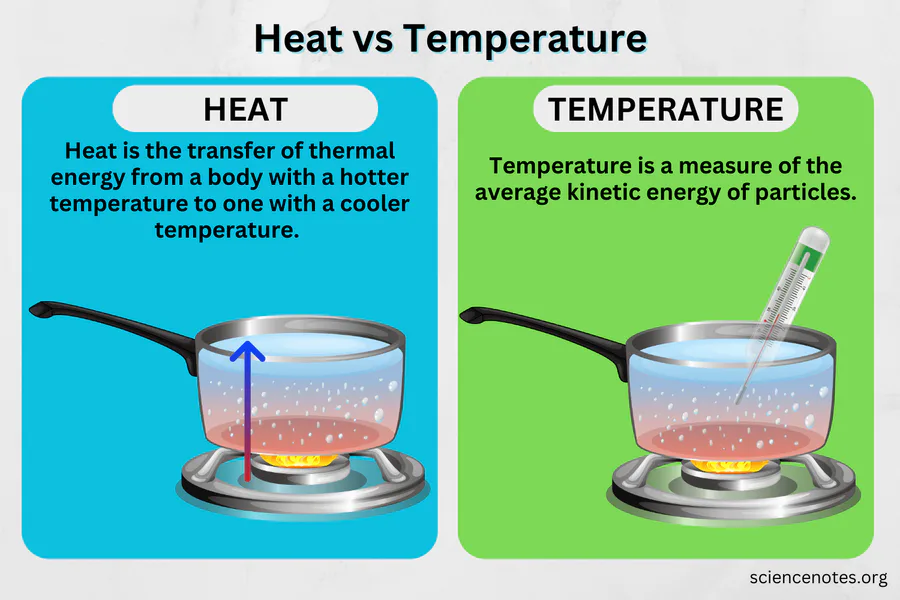
Temperature: related to the average kinetic energy of an objects atoms or molecules.
as the temperature increases the average speed of the particles in random motion increases
61
Thermal Energy: the sum of the kinetic energy and potential energy of all the atoms in an object
Thermal energy increases as temperature increases
At constant temperature, thermal energy increases if mass increases
62
Thermal energy that flows from something at a higher temperature to something at a lower temperature is called heat
Heat can be transferred in 3 different ways
63
Conduction is the transfer of thermal energy through matter by direct contact of particles
Kinetic Energy is transferred as particles collide
Solids, particularly metals, are good heat conductors
64

Ex: Heating up a metal spoon
Kinetic energy of particles near the hot water increase
Kinetic energy is transferred when these particles collide with their neighbors
Heat is transferred from one end to the other
Metals like copper, silver, & aluminum are among the best conductors
Conduction
65
The transfer of energy by the motion of heated particles in a fluid is called convection
Convection currents transfer thermal energy from warmer to cooler parts of a fluid
Convection currents transfer thermal energy from warmer to cooler parts of a fluid
Convection currents create rain forests and deserts over different regions of Earth
66

Ex: Lava lamp
As it rises, it loses heat by conduction to the cooler fluid around it
When it reaches the top, it has lost enough heat to become denser and sink to the bottom
The rising and falling action is convection
Convection
67
Radiation is energy transfer by electromagnetic waves (light waves)
Some radiation is absorbed and some is reflected when it strikes a material
The transfer of thermal energy by radiation is faster in a gas than in a liquid or solid
Materials that are light-colored reflect more radiant energy
Materials that are dark-colored absorb more radiant energy
68
Ex: The sun and certain room heaters blast us with infrared light. The air does not heat up as much but we feel a lot more warmth on our skin.

69
An Insulator is a material that does not let thermal energy flow through it easily
Gasses such as air usually make better insulators than liquids or solids
Double pane windows use an air gap to insulate

70
Match
Match the following
Radiation
Convection
Conduction
The transfer of heat by waves
Transfer of heat in gasses or liquids
Heat transfer through direct contact
The transfer of heat by waves
Transfer of heat in gasses or liquids
Heat transfer through direct contact
71
Categorize
The heat you feel when you touch a hot stove
Heat you feel when you put your hands above a fire
Heat we feel from the sun

A spoon in hot water

Bro heating under a lamp
The reason heat vents are usually placed on the floor of a home
Fiberglass in the walls of a house

Oven mitts

Dogs warming by the fire

Cat naps in the sun

The metal tea kettle heating up

The water boiling in the kettle
Heat transfer that occurs in a fluid, such as air or water
The reason why hot air rises and cold air sinks
The heat you feel when you hold a metal spoon that was in hot soup
The reason why metal is a good conductor of heat
Heat emitted by a light bulb
Heat transfer through electromagnetic waves
Spray foam insulation in an attic
Reflective foil insulation in a car windshield
Organize these heat transfers into the right categories
72
73
74

Specific Heat
EQ: Why do substances heat and cool at different rates?
75


Mini-Lab
● A conductometer has 5 different metals
● Candle wax is at the tip of each metal
● Heat is applied to the center
● How long does it take for each metal to melt
the wax?
76


Specific Heat
◼ Specific Heat: amount of heat needed to raise the
temperature of 1 kg or g of a material by 1 degree C or K
◼ Measured in J/(g˚ C)
◼ Ex: beach and ocean
◼ Water is a good coolant
▪ Cooling systems of engines
77

Comparing Specific Heats
● The higher the specific heat, the more energy
it takes to get the object to go up in
temperature
● The higher the specific heat, the cooler the
substance feels cooler
78

Comparing Specific heats
● Specific heat for sand: 0.290 J/g℃
● Specific heat for water: 4.186 J/g℃
● This is why the sand feels hot but the water
feels cool
79

Measuring Specific Heat
◼ When heat flows into an object and its temperature rises, the
change in temperature is positive.
◼ When heat flows out of an object and its temperature
decreases, the change in temperature is negative.
◼ A Calorimeter is used to measure specific heat.
80

Calculating Specific Heat
◼ Changes in thermal energy (J) can be calculated
as:
mass (kg) x change in temp (˚C) x specific heat (J/kg ˚C)
Q = m (Tf-Ti) C
81

Calculating specific heat
Q = m (Tf-Ti) C
Q = amount of energy
m = mass
ΔT = change in temperature (Tf - Ti)
C = specific heat of substance
82
Fill in the Blanks
The air in a living room has a mass of 60.0 kg and a specific Heat of 1,020 J/(kg C). What is the change in thermal energy of the air when it warms from 20 degrees to 25 degrees Celsius?
83
Fill in the Blanks
The mass of water in a mug is 0.15 kg. What is the thermal energy when the water is heated from 20 degrees to 40 degrees Celsius, if the specific Heat of water is 4,184 J/(kg C)?
84


Calorimeters
85

Plate Tectonics / Sea Floor
Spreading
EQ: How is sea floor spreading
related to heat transfers?
86

Continental Drift
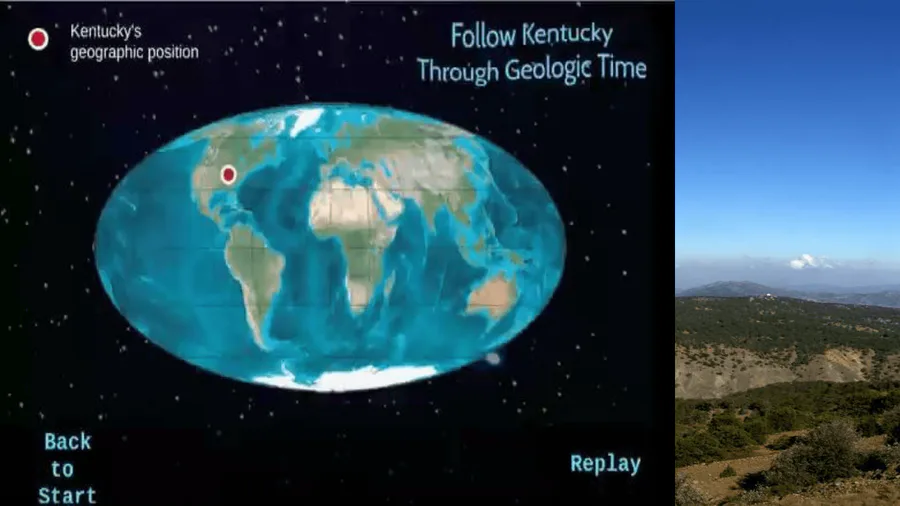
• Alfred Wegener proposed the idea of
continental driftin 1912.
• The Earth’s landmasses were once a single,
large supercontinent called Pangaea.
• Pangaea began to break up 250 million
years ago.
• Movement of the continents causes the
formation of mountain ranges.
87

88
89

90


Evidence of Continental Drift
• 1. The continents fit together like
pieces of a puzzle.
91


Evidence of Continental Drift
• 2. Fossils of a large reptile,
Mesosaurus, were found in South
America and the western coast of
Africa.
92


Evidence for Continental Drift
• 3. Rock formations are similar on some
continents. Mountain ranges appear to
continue from one continent to the
next.
93


Evidence for Continental Drift
• 4. Deposits from ancient glaciers are
found in Africa and South America.
94

Modern Evidence
• In 1947, scientists mapping the
Mid-Atlantic Ridge made two
discoveries:
• 1. Sediments near the ridge is thinner
and younger than sediments away from
the ridge.
95

96

Modern Evidence
• 2. The oldest rocks on the ocean floor
are 175 million years old, while the
oldest rocks on land are 3.8 billion
years old.
97

Sea-Floor Spreading
• In the 1950s, Harry Hess proposed the
cracks along the ridges were rifts.
• Rifts are places where magma rises and
cools, forming new sea-floor along the rift.
• Robert Dietz called the process sea-floor
spreading.
• Hess thought sea-floor spreading might
also move the continents.
98

99

Plate Tectonics
• Plate tectonics is the theory that
explains how and why the continents
move.
• Scientists have identified 15 major
tectonic plates.
100

101

Convection
• Magma in the mantle is heated,
becomes less dense, and rises.
• Magma then cools, and becomes more
dense, and falls.
• This process is called convection and
causes the plates to move.
102

103

Ridge Push
• Newly formed rock at the mid-ocean
ridge is warm and less dense than
older rock nearby.
• As rock cools, it sinks, and pulls away
from the ridge.
• This force is called ridge push.
104

105

Slab Pull
• As the lithospheremoves away from
the ridge, it cools and becomes dense.
• The lithosphere will sink into the
asthenosphere in a process called
subduction.
• As the leading edge of the plate sinks,
it pulls the rest of the plate with it.
106

What is Energy?
What are some
examples/sources
of energy?
Write your answer on the slip of paper provided
Show answer
Auto Play
Slide 1 / 106
SLIDE
Similar Resources on Wayground

100 questions
The Immune System
Presentation
•
9th Grade
104 questions
Rational Numbers and Operations on Rational Numbers
Presentation
•
7th Grade
102 questions
Simple Past - To be
Presentation
•
9th Grade
103 questions
Bài thuyết trình chưa có tiêu đề
Presentation
•
8th Grade
99 questions
Energy Review 3rd 9 weeks
Presentation
•
8th Grade
103 questions
Ecology Unit Test Prep
Presentation
•
9th - 10th Grade
106 questions
F3 FoodX3 L17
Presentation
•
8th Grade
105 questions
9.1 Photosynthesis & Plant Growth
Presentation
•
7th - 9th Grade
Popular Resources on Wayground
10 questions
Safety Day 2026 – Student Review

Quiz
•
9th Grade
21 questions
Continents and Oceans
Quiz
•
6th Grade
20 questions
Parts of Speech
Quiz
•
5th Grade
16 questions
Subject & Predicate
Quiz
•
5th Grade
25 questions
Multiplication Facts
Quiz
•
5th Grade
12 questions
Map Skills
Quiz
•
3rd Grade
22 questions
Continents and Oceans
Quiz
•
5th Grade
15 questions
Rounding Decimals
Quiz
•
5th Grade
Discover more resources for Physics
20 questions
Position vs. Time Graphs
Quiz
•
9th Grade
10 questions
Exit Check 5.1 - Forms of Energy
Quiz
•
9th Grade
11 questions
Electricity Explained

Interactive video
•
9th - 12th Grade
87 questions
25-26 Unit 1.2 Review - Radioactivity & Earth's Age
Quiz
•
8th - 10th Grade
18 questions
Quiz #8 Practice: Forces on an Incline
Quiz
•
9th Grade
25 questions
Newton's Laws of Motion
Quiz
•
9th Grade