

untitled

Presentation
•
•
Practice Problem
•
Medium

Eduardo Dorado
Used 1+ times
FREE Resource
57 Slides • 70 Questions
1
2
For example: I used to play soccer every weekend. (I don't play anymore because I don't have time)
But: I went jogging yesterday. (That's not a habit It only happened once.)
3
Multiple Choice
If I say: "I used to practice yoga"
That means that...
I only did it one time.
It was a habit.
4
Multiple Choice
If I say: "I went to London on holidays"
It means:
I went to London only one time.
I always go to London on holidays.
5
Multiple Choice
Choose the sentence that express a past habit.
I read a different book every week.
I read a book last week.
I used to read a book every week.
None are correct.
6
WE USE "USED TO" + THE VERB IN BASE FORM IN AFFIRMATIVE SENTENCES.
For example:
Karen used to go shopping every weekend.
My parents used to drive an old van.
7
Multiple Choice
Complete with the correct form of USED TO.
Carl _______ marathons when he was young.
use to running
used to ran
used to run
use to ran
8
Multiple Choice
Complete with the correct form of USED TO.
We _________ the guitar every Friday.
using to practice
use to practiced
used to practied
used to practice
9
We use "Didn't use to" + Verb in base form to express that an action wasn't part of a routine.
For example:
I didn't use to wake up early when I was a kid.
Sam didn't use to ride a bike to work.
10
Multiple Choice
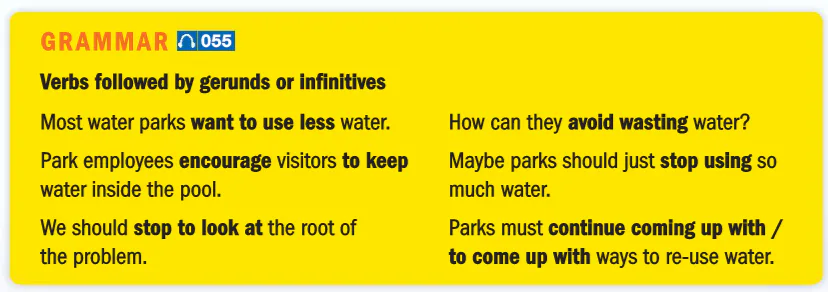
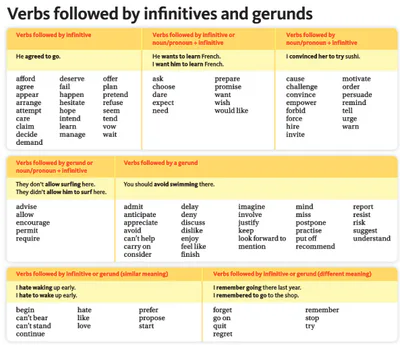
Complete with the correct form of USED TO.
Mike _________ vegetables.
didn't use to like
didn't used to like
didn't used to liked
don't used to like
11
Multiple Choice
Complete with the correct form of USED TO.
Jim __________ sports as a kid
not used to play
didn't use to play
didn't used to play
didn't used to played
12
We use DID + subject + USE TO + VERB in Base Form to ask if an action is a past habit.
For example:
Did you use to play video games as a kid?
Did Chris use to take the bus to school?
13
Multiple Choice
Complete with the correct form of USED TO.
______________ your cousins often?
You did use to see
Did you use to see
Did you used to see
Did you see
14
Multiple Choice
Complete with the correct form of USED TO.
Where ____________ to school?
Do you used to going
Did you used to go
Did you use to going
Did you use to go
15
Multiple Choice
Complete with the correct form of USED TO.
Kim __________ to Canada often.
used to travelling
use to travel
used to travel
using to travel
16
Multiple Choice
Complete with the correct form of USED TO.
Sophie ___________ meat as a kid.
don't used to
didn't use to
didn't used to
not used to
17
Multiple Choice
Complete with the correct form of USED TO.
Where ___________ for a drink, when you lived in New York?
you used to go
did you used to go
you did use to go
did you use to go
18
19

20

21

22

23

24

25

26
Multiple Choice
Which of the following sentences suggests the highest likelihood that the event will happen?
Leigh could go to the cinema.
Leigh wants to go to the cinema.
Leigh will go to the cinema.
Leigh might go to the cinema.
27
Multiple Choice
Which of the following sentences suggests the highest certainty?
I could wash the dishes.
I might wash the dishes.
I won't wash the dishes.
I should wash the dishes.
28
Multiple Choice
"Laura has a very bad cold; she can't go to work today or she might give everyone her germs."
Which of the following words are used to show modality? (the likelihood something will or won't happen.)
can't and might
go and give
can't and today
might and everyone
29
Multiple Choice
"Yasmin ________________ go on holiday."
Which word could you add to suggest that it is likely Yasmin will go on holiday?
mustn't
can't
will
might
30
Fill in the Blanks
Which word in this sentence is the modal verb?
"Jamil might become a famous actor."
Type one word in the blank :
Type answer...
31
Multiple Choice
Read the passage below:
"Africa is one of the most exciting continents to visit: the wildlife and the landscape are both so beautiful. You must go there before you die."
Which phrase uses modality to suggest that Africa is somewhere you have to visit?
"both so beautiful"
"you must go there"
"one of the most exciting continents"
"before you die"
32
Multiple Choice
Read the sentence below:
"Mohammed can't eat breakfast before work because he doesn't have time."
What does the word "can't" suggest? Choose the best fit answer from the options below.
We don't know if Mohammed will eat breakfast or not.
Mohammed never eats breakfast
Mohammed is likely to eat breakfast.
Mohammed is unlikely to eat breakfast.
33
by Gema Anahi Galindo Mendoza.

34
DEFINITION:

Express ability, possibility, permission, obligation, etc.
35
Modals are auxiliary verbs used to express ability, possibility, permission, obligation, etc.
Examples:
CAN, COULD, MAY, MIGHT, SHOULD, MUST, SHALL, WILL, WOULD


Semi-modals verbs are composed of two or more separate words ending with "to"
Examples:
HAVE TO, OUGHT TO, NEED TO, BE ABLE TO, USE TO, BE GOING TO
36
Could
Can
May
Must
PAST ABILITY, SUGGESTION, FUTURE POSSIBILITY

ABILITY, REQUEST,
PERMISSION, OFFERS
PERMISSION OR FUTURE POSSIBILITY
NECESSITY OR OBLIGATION
Ought to
ADVICE
37
Should
Shall
Will
Would
ADVICE OR UNCERTAIN PREDICTION
OFFER OR SUGGESTION
CERTAIN PREDICTION OR PROMISE
REQUEST, INVITATION OR MAKING ARRANGEMENTS.
Might
PRESENT OR FUTURE POSSIBILITY
38
39
Fill in the Blanks

I
Type answer...
40
Multiple Choice

"HAVE TO, OUGHT TO, NEED TO, BE ABLE TO, USE TO, BE GOING TO" belong to:
Modals
Semi-modals
41
Multiple Choice
I was really ____ that I didn't pass my last exam.
dissapointed
disappointing
disappoint
42
Multiple Choice
I'm reading a very ____ book.
interested
interesting
interest
43
Multiple Choice
The children were so ____ that they were going to the beach.
excited
exciting
excite
44
Multiple Choice
The robber was ____ when he saw the police.
terrified
terrifying
terrify
45
Multiple Choice
He is a very ____ person. He's travelled all over the world.
interested
interesting
interest
46
Multiple Choice
This is a ____ image of a ghost!
shocked
shocking
shock
47
Multiple Choice
Teenagers tend to get ____ when speaking in public.
embarrassed
embarrassing
embarrass
48
Multiple Choice
I was so ____ when I saw her there. She wasn't supposed to be there.
surprised
surprising
surprise
49
Multiple Choice
I am so ____! I wasn't able to sleep last night!
tired
tiring
tire
50
Multiple Choice
That car is ____!
amazed
amazing
amaze
51

52
What is your hobby?
What do you love doing?
Going to the beach? Playing video games? Hiking (walking)? Singing? Dancing?

53
Now, what if I ask you what you want to do every day?
Maybe you are learning to draw. Maybe all you want to do is to read comic books. Maybe you are planning to start your own business. Or maybe you will soon decide to travel the world!

54

55
Gerunds and infinitives are very common in the English language.
They can be used in many situations.
Sometimes you may use an infinitive and a gerund.
Sometimes you have to choose between the two, because using one may be completely wrong.
56
And knowing the difference between them and using them correctly are essential to speaking English properly, especially in business English settings.
57
An infinitive is the verb form that has “to” at the beginning. For example, “to do,” “to sleep,” “to love” and “to create.”
It is the simplest verb form that you have to modify to fit into sentences.
For example, “She sleeps” no longer contains the infinitive of the verb “to sleep.” Instead, it has been conjugated into the simple present third person form of the verb “to sleep”: sleeps.
Infinitives are easy!
58
A gerund is a noun made from a verb by adding -ing at the end.
E.g:
Playing tennis is fun
Don't confused it with a continuous form!
E.g:
I was playing tennis
I am watching the news
59

60
•I LIKE PLAYING FOOTBALL (VERB ING: GERUND) (REPEAT THE ACTION MANY TIMES)
•I LIKE TO PLAY FOOTBALL ( GENERAL)

61
It is hard to make dinner this late.
I came to the office to solve the mystery of the missing keys.
Ross decided to go home instead.
Do you need to do your laundry this weekend?
62
Verbs followed by a gerund or infinitive with little to no change in meaning
Example: It started to rain / it started raining

63
Select 5 verbs from the list Common verbs followed by a gerund
Select 5 verbs from the list Common verbs followed by an infinitive
Select 5 verbs from the list Common verbs followed by both
Create your own examples with each one of them.

65
Open Ended
What would you do in his situation?
66
Multiple Choice

1-Gerunds and infinitives can replace a noun in a sentence.
true
false
67
Multiple Choice

Circle the correct answer:
2- Gerunds can be used after all following verbs except :
enjoy
don't mind
avoid
would like
68
Multiple Choice

3-...............is the present participle (-ing) form of the verb, e.g., singing, dancing, running.
Infinitive
Gerund
69
Multiple Choice

4-.............= to + the base form of the verb, e.g., to sing, to dance, to run.
Gerund
Infinitive
70
Multiple Choice

5-I would like.............. (come) to the party with you.
coming
to come
71
Multiple Choice

6-He enjoys .......... (have) a bath in the evening.
having
to have
72
Multiple Choice

7-I am learning............. (speak) English.
speaking
to speak
73
Multiple Choice

Take a deep breath ...
74
Multiple Choice

8-Do you mind ..........(give) me a hand?
giving
to give
75
Multiple Choice

9-He decided............ (study) biology.
studying
to study
76
Multiple Choice

10-We discussed .............(go) to the cinema, but in the end we stayed at home.
going
to go
77
Multiple Choice
He demanded _____ to the manager
to speak
speaking
78
Fill in the Blanks
Complete the sentence: I miss
Type answer...
79
Multiple Choice
She waited _____ a drink.
buying
to buy
80
Multiple Choice
Admit, suggest, tolerate, try, understand, keep, like, love, miss, need, require, forget, allow, help.
These verbs must be followed by:
An infinitive
A gerund
81
Multiple Choice
Learn, agree, decide, demand, have, hope, refuse, try, ask, wish.
These verbs must be followed by:
A gerund
An infinitive
82
Multiple Select
I offered
To help
Helping
83
Job Interviews:
Situation: Simulate a job interview scenario where you need to describe your qualities and experiences.
Examples:
"I'm interested in this position because it's very challenging."
"I'm excited about the opportunity to work with your team."
"I'm experienced in handling customer inquiries."
"I'm confident about my ability to meet deadlines."
84
As the subject or object of a sentence
E.g: Running is good for your heart
85
After some verbs of like or dislike: like,love, enjoy, hate, can't stand, don't mind
E.g: I like studying english
Exception: would like
E.g: I'd like to study english more.
86
After prepositions: in,on,at,for, about,after,before,etc.
E.g: I am good at writing poems
E.g: I am interesting in studying science
Exception: to (if is not a phrasal verb)
E.g:
I need to do my homework
I'm looking forward to meeting you (phrasal verb)
87
Some common verbs that are followed by gerund are: avoid, enjoy, finish, hate, keep, like, love, don’t mind, prefer, recommend, spend time, stop, suggest, etc.
88
The negative form of the gerund is not + -ing.
He enjoys not having to wake up early at the weekends.
89
Some common verbs that are followed by gerund are: avoid, enjoy, finish, hate, keep, like, love, don’t mind, prefer, recommend, spend time, stop, suggest, etc.
90
Particle 'to' + base form of the verb
BE CAREFUL! 'to' is not a preposition in this case
E.g:
I want to study english
91

92

93
Restaurant Review:
Situation: Write a restaurant review using descriptive adjectives and verbs followed by gerunds or infinitives.
Examples:
"The food was delicious, and the service was outstanding."
"The atmosphere was relaxing, and the staff were friendly."
"I was disappointed with the portion sizes."
"I'm looking forward to trying more dishes next time."
94
B2.2
95
96
97
Fill in the Blanks
Complete the sentence, use the gerund or the infinitive of the verb in brackets.
This summer, I hope
98
Fill in the Blanks
Complete the sentence, use the gerund or the infinitive of the verb in brackets.
Although I can't wait
99
Fill in the Blanks
Complete the sentence, use the gerund or the infinitive of the verb in brackets.
I agree that parks should start
100
Fill in the Blanks
Complete the sentence, use the gerund or the infinitive of the verb in brackets.
Park designers should stop
101
Fill in the Blanks
Complete the sentence, use the gerund or the infinitive of the verb in brackets.
Park operators shouldn't stop
102
Fill in the Blanks
Complete the sentence, use the gerund or the infinitive of the verb in brackets.
... and
103
Fill in the Blanks
Complete the sentence, use the gerund or the infinitive of the verb in brackets.
Some parks even choose
104
Fill in the Blanks
Complete the sentence, use the gerund or the infinitive of the verb in brackets.
Of course, if you want
105
Fill in the Blanks
Complete the sentence, use the gerund or the infinitive of the verb in brackets.
... consider
106
Fill in the Blanks
Complete the sentence, use the gerund or the infinitive of the verb in brackets.
The swimmers invited me
107
Fill in the Blanks
Complete the sentence, use the gerund or the infinitive of the verb in brackets.
The girl stopped
108
Fill in the Blanks
Complete the sentence, use the gerund or the infinitive of the verb in brackets.
The fans stopped
109
Fill in the Blanks
Complete the sentence, use the gerund or the infinitive of the verb in brackets.
They are thinking of
110
Fill in the Blanks
Complete the sentence, use the gerund or the infinitive of the verb in brackets.
Don't forget
111

112
Open Ended
What do you call a bear with no teeth?
113
Open Ended
I don’t cry when you cut me, but you do. What am I?
114
Open Ended
I am always in front of you, but you can’t see me. What am I?
115
Open Ended
What’s tall when it’s young but short when it’s old?
116
Open Ended
What is orange, wears a green hat, and sounds like a parrot?
117

To identify WHAT are the RELATIVE PRONOUNS in order to give more information about people or things.
OBJECTIVE
118

119

WHAT ARE RELATIVE PRONOUNS?
Relative pronouns are words that are used to join to clauses.
The most common are:
who
whom
whose
which
that
Where
120
We use who in relative clauses to refer to people
The man who was driving the car was my uncle.
WHO
121
Who/Whom: Used to refer to people. "Who" is a subject, and "whom" is an object.
The author whom you criticized in your review has written a reply.
WHOM -WHO
122
Can be used to refer to both people and things. It is often used in place of "who" or "which."
The book that I'm reading is very interesting.
123
Used to refer to a place.
The store where I bought my shoes is now closed
WHERE
124
to indicate possession by people and animals.
The house, whose roof is red, is for sale.
WHOSE
125
to refer to animals and to things.
Spaghetti, which we eat at least twice a week, is one of my family’s favorite meals.
WHICH
126
Multiple Choice
My cousin works for a company _________ sells laptops.
where
whose
that
127
Multiple Choice
Which one refers to people?
what
where
who-whom
whose
Show answer
Auto Play
Slide 1 / 127
SLIDE
Similar Resources on Wayground

120 questions
The nature of business
Presentation
•
11th Grade
121 questions
Sp 2 5.1 Ser vs Estar & La Casa Lesson
Presentation
•
6th Grade - University
124 questions
Geopolitik Indonesia
Presentation
•
12th Grade
122 questions
Edmark
Presentation
•
KG
122 questions
Effective Instructional Design for VET Courses
Presentation
•
Professional Development
123 questions
Estrategias para Aprender Ingles en Linea
Presentation
•
Professional Development
121 questions
Zoey ACT Lock in
Presentation
•
11th Grade - University
124 questions
African Geography
Presentation
•
KG - University
Popular Resources on Wayground
10 questions
Safety Day 2026 – Student Review

Quiz
•
9th Grade
21 questions
Continents and Oceans
Quiz
•
6th Grade
20 questions
Parts of Speech
Quiz
•
5th Grade
16 questions
Subject & Predicate
Quiz
•
5th Grade
25 questions
Multiplication Facts
Quiz
•
5th Grade
12 questions
Map Skills
Quiz
•
3rd Grade
22 questions
Continents and Oceans
Quiz
•
5th Grade
15 questions
Rounding Decimals
Quiz
•
5th Grade
Discover more resources for
10 questions
Safety Day 2026 – Student Review
Quiz
•
9th Grade
21 questions
Continents and Oceans
Quiz
•
6th Grade
20 questions
Parts of Speech
Quiz
•
5th Grade
16 questions
Subject & Predicate
Quiz
•
5th Grade
25 questions
Multiplication Facts
Quiz
•
5th Grade
12 questions
Map Skills
Quiz
•
3rd Grade
22 questions
Continents and Oceans
Quiz
•
5th Grade
15 questions
Rounding Decimals
Quiz
•
5th Grade