Search Header Logo
STAAR Biology EOC Reporting Category 3

STAAR Biology EOC Reporting Category 3

Assessment

Presentation

Biology

9th Grade

Medium

NGSS
MS-LS4-2, MS-LS1-1, MS-LS4-4

+10

Standards-aligned

Created by

Amber Yancey

Used 21+ times

FREE Resource

24 Slides • 53 Questions

1

Multiple Choice

How does embryology support the Theory of Evolution?
1
It shows that they have a common ancestor because of their similarities.
2
         I'm not sure.
3
Animals change over time. 

2

media

3

Multiple Choice

The most recent ancestral form or species from which two different species evolved is known as ________________________.
1
a common ancestor.
2
an embryonic stage.
3
development.
4
evolution.

4

media

5

Multiple Choice

The fact that all organisms use DNA as their genetic code lends evidence to the conclusion that all organisms share ________________________.

1

a common ancestor.

2

an embryonic stage.

3

development.

4

evolution.

6

media

7

Multiple Choice

Question image
In stage one (top row) of these embryos, most of the embryos________
1
look very similar.
2
have very different features.
3
show different stages of development.
4
have only a tail if they are non-human.

8

media

9

Multiple Choice

Question image

The organisms on the right side of this chart appear to develop in a similar way. This suggests that the organism on the far right shares a _________________ with the organisms next to it compared to the organisms on the left.

1

more recent common ancestor

2

a coke and fries

3

an air pod

4

an uber

10

Multiple Choice

Natural selection is a key mechanism in the development of diversity among organisms.  A flock of migratory birds gets divided in a storm while headed for warmer climates. Half of the flock reached the warmer climate and half of the flock lands on a new island and stays.  Over time, members of the flock that settled on the island develop characteristics that increase their rate of survival on the island.  The population on the island eventually evolves into a different species than their ancestors.  

Which of the following patterns of evolution does this represent?

1

Divergent Evolution

2

Convergent Evolution

3

Coevolution

4

Parallel Evolution

11

Multiple Choice

Question image

This picture displays SIMILAR STRUCTURE, DIFFERENT FUNCTION. These are:

1

Fossils

2

Vestigial Structures

3

DNA

4

Homologous Structures

12

Multiple Choice

Natural selection is a key mechanism in the development of diversity among organisms.  Scientist Charles Darwin studied finches (birds) on the Galapagos Islands off of the coast of South America.  He discovered that more than a dozen species evolved from a single species of finch that first populated the Galapagos Islands.

Which of the following patterns of evolution does this represent?

1

Adaptive Radiation

2

Convergent Evolution

3

Coevolution

4

Extinction

13

Multiple Choice

Question image
The similarities of the bones in the diagram provide evidence that---
1
The organisms shown lived in the same natural envionrment
2
The organisms shown may have developed from a common ancestor
3
The organisms shown have the same genetic diseases
4
All vertebrate species have identical forelimbs

14

media

15

Multiple Choice

Question image
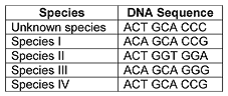
According to this data, the unknown bacterial species is most closely related to: 
1
Species I
2
Species II
3
Species III
4
Species IV

16

media

17

Multiple Choice

The appendix, tailbone, and wisdom teeth are all examples of what type of structure in humans?

1

Homologous

2

Analogous

3

Vestigial

4

Modern

18

media

19

Multiple Choice

_____________________are features present in modern organisms which are no longer in use.

1

DNA

2

Vestigial structures

3

Fossils

4

Homologous structures

20

Multiple Choice

Species in the fossil record can be documented to be in a period of stasis, or equilibrium. During stasis, the characteristic of the species may remain unchanged for thousands of years.

Which of the following best explains why stasis occurs?

1

The environment where the species population lived did not experience any environmental changes.

2

The environment where the species population lived changed but the species did not need to adapt to survive.

3

The populations of the species were well adapted to their environment and adaptations were not necessary for survival.

4

 The populations of the species were not well adapted to their environment and the organisms were continually adapting in order to survive.

21

Multiple Choice

A scientist is studying the DNA of three species. Species A and species B have DNA that is 97% similar. Species C and species A have DNA that is 95% similar. What can the scientist conclude?

1

Species B is equally related to both species A and species C

2

Species B has a closer evolutionary relationship with species C than it does with species A

3

Species A has a closer evolutionary relationship with species B than it does with species C.

4

Species A has a closer evolutionary relationship with species C than it does with species B.

22

Multiple Choice

The Cambrian Explosion was an event that scientists theorized occurred approximately 541 million years ago in the Cambrian period when most major animal phyla appeared in the fossil record.  It lasted for about 20 million years and resulted in the emergence of most known phyla today.  Before the Cambrian explosion, most organisms were simple and composed of individual cells.  Almost all present animal phyla known today appeared during this period and have had few structural changes.

Which of the following statements supports this theory?

1

All organisms that appeared during the Cambrian Explosion are still in existence today.

2

Once species appear in the fossil record the population will become stable, showing little evolutionary change for most of its geological history.

3

One-celled organisms developed into multicellular organisms due to environmental changes during the Cambrian Explosion.

4

Species that appeared during the Cambrian Explosion have no known common ancestor.

23

Multiple Choice

Snakes have tiny leg bones that are not used for movement. What type of inference do scientists make when they observe these types of structures, which are reduced in size and function?

1

Snakes have adaptations for walking if the environment changes.

2

Snakes share a common ancestor with animals that use legs for walking.

3

Snakes share a common ancestor with organisms that have no leg bones.

4

Snakes have the same DNA as organisms that have no leg bones.

24

Multiple Choice

Question image

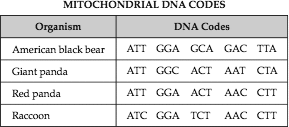
What conclusions can be made based on this table shown? Hint: The more DNA shared, the more closely the species are related.

1

the American black bear and the giant panda are most closely related

2

the giant panda and the red panda are most closely related

3

the red panda and the racoon are the most closely related

4

the giant panda and the racoon are most closely related

25

Multiple Choice

Question image
If an organism has a vestigial structure, that structure likely once had a function in a(n)
1
close relative
2
early ancestor
3
unrelated organism
4
embryological stage

26

Multiple Choice

This field of evolutionary science studies how climate and environment have impacted species anatomy and evolution.

1

Embryology

2

Biogeography

3

Microbiology

4

Speciology

27

Classification Taxonomy Review

Domains and Kingdoms

media

28

media

29

media

30

media

31

Multiple Choice

Which of the lists below has all of the levels of classification in the correct order?

1

Domain Kingdom class phylum genus order species family

2

Class Phylum Kingdom Species Family Order Genus

3

Kingdom Family Class Order Phylum Genus Species

4

Domain Kingdom Phylum Class Order Family Genus Species

32

Dichotomous Keys

  • dichotomous key is a tool that allows the user to determine the identity of items in the natural world, such as trees, wildflowers, mammals, reptiles, rocks, and fish. 

  • Keys consist of a series of choices that lead the user to the correct name of a given item.

media

33

media

34

media

35

Multiple Choice

What does "binomial nomenclature" literally translate to?

1

Two name naming system

2

Two part hybrid

3

Creature naming

36

Multiple Choice

What is taxonomy?

1

A two-word naming system for describing organisms

2

A classification system based on shared characteristics

3

A method of observing living organisms in their natural environment

4

A process for using radioactive elements to date fossils

37

media

38

Multiple Choice

Cells that have a true nucleus are called....
1
eukaryotes
2
prokaryotes
3
unicellular
4
multicellular

39

Multiple Choice

Cells that do not have a true nucleus are called....

1

eukaryote

2

prokaryote

3

unicellular

4

multicellular

40

media

41

media

42

media

43

media

44

Multiple Choice

Question image
Which domain is capable of living in extreme environments like hot springs, geysers, or very salty waters?
1
Bacteria
2
Archaea
3
Eukarya

45

Multiple Choice

Question image

Which domain includes all animals and plants?

1

Archaea

2

Eukarya

3

Bacteria

46

Multiple Choice

Question image

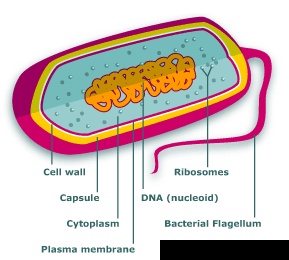
Which type of cell?

1

Prokaryote

2

Eukaryote

47

Multiple Choice

Which domain contains organisms that are unicellular, prokaryotic, and can cause strep throat or e. coli infections?

1

Eukarya

2

Archaea

3

Fungi

4

Bacteria

48

media

49

media

50

media

51

Multiple Choice

Question image

How are the two organisms to the right classified?

1

same kingdom, different species

2

same kingdom, same species

3

different kingdoms, same species

4

different kingdoms, different species

52

Multiple Choice

Question image

Which characteristics best describe the Plant Kingdom?

1

unicellular; eukaryote; autotroph

2

multicellular, prokaryote, autotroph

3

multicellular, eukaryote, autotroph

4

unicellular, prokaryote, heterotroph

53

Multiple Choice

Question image

Which characteristics best describe the Kingdom Fungi?

1

multicellular and unicellular, eukaryote, autotroph

2

multicellular and unicellular, prokaryote, heterotroph

3

multicellular, eukaryote, heterotoph

4

multicellular and unicellular, eukaryote, heterotroph

54

media

55

media

56

Multiple Select

Select all of the cell types that have DNA that is bound in a nuclear membrane.

1

animal cell

2

plant cell

3

prokaryotic cell

4

protist cell

57

Multiple Choice

Which organism has a body plan showing radial symmetry?

1
2
3
4

58

Multiple Choice

Which of the following is composed of multiple cells?

1

virus

2

bacterium

3

paramecium

4

plant

59

Multiple Choice

A scientist observes membrane-bound organelles in a cell. What kind of cell is it?

1

bacterium

2

virus

3

prokayote

4

eukaryote

60

Multiple Select

Select all of the following that belong to the domain Eukarya (Eukaryota).

1

protists

2

animals

3

bacteria

4

plants

5

thermophiles

61

Multiple Choice

Question image

Here is a table that shows the level of classification for a dog. What is the correct label for X?

1

Domain

2

Genus

3

Order

4

Phylum

62

Multiple Choice

Question image

Here is a table that shows the level of classification for a dog. What is the correct label for Y?

1

Domain

2

Genus

3

Order

4

Phylum

63

Multiple Choice

Question image

Here is a table that shows the level of classification for a dog. What is the correct label for Z?

1

Domain

2

Genus

3

Order

4

Phylum

64

Multiple Choice

How can you know that two organisms are two different species?

1

How they feed

2

Where they live

3

Their mating and reproducing abilities

4

When they are active

65

Multiple Select

Question image

Which of these animals listed are the MOST closely related?

(Select the two)

1

dog

2

lion

3

robin

4

swift fox

66

Multiple Choice

Which of these contain single-celled organisms?

1

birds

2

plants

3

fungi

4

animals

67

Multiple Choice

What is the goal of taxonomy?

1

to explain the differences between living organisms

2

to classify living organisms into groups

3

to predict the types of undiscovered organisms

4

to establish relationships of organisms and their habitats

68

Multiple Choice

Question image

Use the following to decide which tree this leaf belongs to:

1

Blue Atlas Cedar

2

Arizona Cypress

3

Southern Catalpa

4

Lilac Chaste Tree

69

Multiple Select

The scientific name for a human is Homo sapiens. Select the two levels of classification this name represents.

1

family

2

order

3

species

4

phylum

5

genus

70

Multiple Choice

Two organisms mate and produce infertile offspring (their babies can't have babies). What is the best explanation for their inability to reproduce?

1

The parents are of a different genus and a different species

2

The parents are of a different species, but the same genus

3

The parents are of the same genus and the same species

4

The parents are of the same speices, but different genus

71

Multiple Choice

Question image
1
2
3
4

72

Multiple Choice

Question image

Which characteristic places the king snake in a different class from the giant panda?

1

It is not a mammal

2

It does not have a spine

3

It eats other animals

4

It sheds its skin

73

Multiple Choice

How are organisms classified as Eukarya different from organisms classified as Archaea and Bacteria?

1

They are all multicellular

2

They all reproduce asexually

3

They all produce their own food

4

They all have membrane-bound nuclei

74

Multiple Choice

Question image
1

Phyla

2

Classes

3

Families

4

Domains

75

Multiple Choice

Organisms are classified into 3 domains: 1. Archaea 2. Bacteria 3. Eukarya

Organisms that live in extremely hot or acidic environments belong to:

1

1 only

2

2 only

3

1 and 2 only

4

1, 2, and 3

76

Multiple Choice

Question image
1

Organism 1

2

Organism 2

3

Organism 3

4

Organism 4

77

Multiple Choice

Question image

What is the correct scientific name for the organism in the table?

1

Reptilia testudines

2

Chordata reptilia

3

Emydidae terrapene

4

Terrapene carolina

How does embryology support the Theory of Evolution?
1
It shows that they have a common ancestor because of their similarities.
2
         I'm not sure.
3
Animals change over time. 

Show answer

Auto Play

Slide 1 / 77

MULTIPLE CHOICE