

Unit 11Digestive System

Presentation
•
Science
•
9th - 12th Grade
•
Practice Problem
•
Easy
+5
Standards-aligned

KAREN CAMARILLO-OLMOS
Used 1+ times
FREE Resource
17 Slides • 9 Questions
1

2

•4 functions of the
digestive system:
•1. Ingestion- taking in
food
•2. Propulsion-
movement of food
•3. Digestion &
absorption- breaking
down food & taking in
nutrients
•4. Egestion- elimination
of waste
3

1. Alimentary canal
(gastrointestinal tract)
• mouth
• pharynx
• esophagus
• stomach
• small intestine
• large intestine
2. Accessory organs
• teeth
• tongue
• salivary glands
• liver
• gall bladder
• pancreas
4

•All areas of the alimentary canal contain a
four-layer arrangement of tissues:
5

Mucosa
Submucosa
Contains glands, nerve fibers and blood vessels
-functions:
1. secreting mucus, digestive enzymes, & hormones
2. absorption of nutrients
3. protection from pathogens (lymphatic tissue)
Serosa
(visceral peritoneum)
-membrane that secretes a slippery, watery fluid
-reduces friction as digestive organs contract and move
Muscularis
Layer of muscle extending in two directions:
-circular layer
-longitudinal layer
6

•Teeth are accessory digestive organs.
•They are responsible for beginning the
mechanical digestion process
7

Incisors: Used for cutting
pieces of food
Canines (cuspids): tear
and pierce
Premolars (bicuspids):
used for crushing
Molars (tricuspids):
used for grinding
8

Enamel: hard, protects tooth
Dentin: calcified connective tissue
Pulp cavity: contains blood vessels and nerves
Gingivae (gum): provides seal around tooth
Cementum- covers the dentin in the root
Bone of jaw
artery
vein
9

•The digestive system has multiple
functions and is generally divided
into 2 portions: the alimentary
canal and the accessoryorgans.
Teeth begin the process of
mechanical digestion by tearing
and grinding food.
10
Multiple Select
What are some function of the digestive system?
Ingestion
Egestion
Enzyme release
Propulsion
release gastric juices
11
Multiple Choice
What are the two types of digestive systems?
12
Categorize
mouth
pharynx
esophagus
stomach
small intestine
large intestine
teeth
tongue
salivary glands
liver
gall bladder
pancreas
13
Match
Match the following
Incisors
Canines
Premolars
Molars
Chewing and Cutting
Tearing and Holding
Crushing and Grinding
Grinding and Crushing
Chewing and Cutting
Tearing and Holding
Crushing and Grinding
Grinding and Crushing
14
Reorder
Reorder the following from superficial to deep
sercosa
muscularis
submucosa
mucosa
15
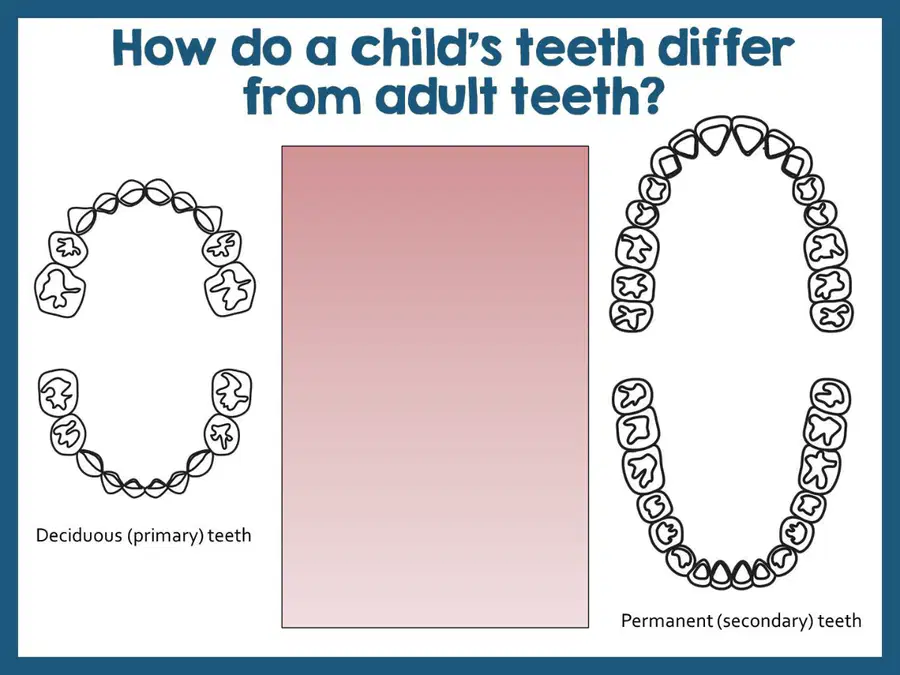
Toddlers have only 20
teeth, compared to an
adult’s 32.
The incisors come in
first (6-8 months)
followed by the canines
and molars.
Even after these teeth
are replaced with
permanent teeth,
molars come in during
teens and early
twenties.
16

•Salivary glands produce
saliva:
•99% water
•Mucus (lubricates food for
swallowing)
•Amylase (breaks down starch)
•Lysozymes (kills bacteria)
•Antibodies (mark foreign
invaders)
17

•Hard palate: forms the bony roof of the mouth
•Soft palate: forms the rest of the mouth
•Uvula: prevents swallowed food from entering the
nasal cavity
•Tongue: helps to push food down towards the
esophagus
18

•Deglutition
(swallowing) has
2 major phases:
•1. The buccal
phase
•2. The
pharyngeal-esopha
geal phase
19

•The buccal phase:
•After chewing
(mastication) and
being mixed with
saliva, the food lump
is called a bolus.
•It is forced into the
pharynx by the
tongue.
•This is a
consciously-controlle
d process.
20

•The
pharyngeal-esophage
al phase:
•A thin flap of skin
called the epiglottis
blocks the larynx
and the uvula blocks
the nasal cavity.
•This causes food to
travel to your
esophagus instead
of into your
respiratory system.
21

•The bolus is propelled down the
esophagus using waves of muscle
contractions.
•This process is called peristalsis.
•Peristalsis is involuntary and caused by the
parasympathetic nervous system rather
than gravity.
22

•Mastication forms a bolus in the
mouth, which is swallowed. After
deglutition, the bolus moves past
the epiglottis and down the
esophagus by involuntary
contractions called peristalsis.
23
Multiple Choice
What is peristalsis?
24
Multiple Choice
What is deglutition?
25
Open Ended
How do child's teeth differ from adult teeth?
26
Multiple Choice
Saliva contains
Show answer
Auto Play
Slide 1 / 26
SLIDE
Similar Resources on Wayground

20 questions
Forces Mastery Lesson 8.9A
Presentation
•
KG - University
21 questions
Dimensional Analysis
Presentation
•
10th - 12th Grade
19 questions
Comparative Anatomy
Presentation
•
8th - 12th Grade
21 questions
Periodic Trends
Presentation
•
9th - 12th Grade
23 questions
Forensics: Observation
Presentation
•
9th - 12th Grade
23 questions
Plastic Pollution Awareness
Presentation
•
KG - 12th Grade
21 questions
Climate Part 1: Spheres of the Earth
Presentation
•
9th - 12th Grade
19 questions
Ionic Compounds
Presentation
•
9th - 12th Grade
Popular Resources on Wayground
10 questions
HCS SCI 03 Summer School Assessment 1

Quiz
•
3rd Grade
15 questions
HCS SCI 05 Summer School Assessment 1 Review
Quiz
•
5th Grade
22 questions
Day 9 Equations and Inequalities Review
Quiz
•
9th Grade
10 questions
Writing and Identifying Ratios Practice
Quiz
•
5th - 6th Grade
7 questions
PYRAMID PERSPECTIVES part 1
Presentation
•
9th - 12th Grade
12 questions
Understanding the Fourth of July
Quiz
•
9th Grade
15 questions
Soccer World Cup Quiz Questions
Quiz
•
7th Grade