
Spanish Grammar Review

Presentation
•
World Languages
•
9th - 12th Grade
•
Easy

Anabelle Montilla-Bizoso
Used 2+ times
FREE Resource
38 Slides • 46 Questions
1
I can use advanced vocabulary and correct grammar structures to write complex sentences. |
2
a + el = al
de + el = del
3
Poll
¿Prefieres la comida ...?
de la casa
del restaurante
4
Multiple Choice
Fill in the blank correctly:
Necesito comprar el pan. Voy ...
a la tienda
al tienda
5
Multiple Choice
Fill in the blank correctly:
Tengo que comprar la leche. Voy ...
al supermercado
a la supermercado
6
Multiple Choice
Fill in the blank correctly:
Tengo mucho sueño. Acabo de volver ...
del trabajo
de la trabajo
7
Multiple Choice
Fill in the blank correctly:
Es mu cumpleaños. Recibí un regalo ...
del hermana de Pablo
de la hermana de Pablo
8
Poll
Puedes pasar tiempo con una persona famosa.
¿Prefieres conocer ...?
a un músico o actor famoso
a un político o escritor famoso
9
You use it when the direct object is a person. For example:
Yo conozco a Diego.
Nosotros vimos a Andrés.
Ella invitó a Julio a la fiesta.
Yo llamé a Catalina.
10
Poll
Puedes invitar a solo UNA persona a pasar la tarde contigo un sábado.
¿A quién invitas?
Invito a alguien en mi familia
Invito a alguien de la escuela
11
Multiple Choice
Translate the sentence correctly:
I looked for the keys.
Busqué las llaves.
Busqué a las llaves.
12
Multiple Choice
Translate the sentence correctly:
I looked for Sara.
Busqué Sara.
Busqué a Sara.
13
Multiple Choice
Translate the sentence correctly:
I know (I am familiar with) Madrid.
Conozco Madrid.
Conozco a Madrid.
14
Multiple Choice
Translate the sentence correctly:
I know Óscar.
Conozco a Óscar.
Conozco Óscar.
15
“El verbo Ser”: the verb “To be” in Spanish (I am, you are, he/she/it is, we are, you are, they are.) This is one of the most important Spanish lessons in any beginner Spanish course. Once you are able to get your head around your first Spanish verb and the way you have to conjugate it for each of the different people then you are well on your way to success. The verb “To be” is fundamental to English and Spanish. We use it all of the time.
16
The verb ser means “to be”. Just as “to be” has an irregular conjugation in English (I am, you are, he/she is…), the verb ser is very irregular in Spanish. Therefore, it is important that you memorize it! When you change the verb depending on the subject, like the example below, you are conjugating the verb. In Spanish to conjugate verbs, you will give them a different form for each of the six subject pronouns.
17
The English verb be has two translations in Spanish grammar: ser and estar. Ser is used to describe qualities and characteristics.
The verb estar describes temporary conditions or states, location.
18

19

20
Usage
The verb Ser is used to describe the following:
Identifying characteristics and physical appearance
Example:
Miguel y Angel son altos.
Yo soy responsable y talentosa.
Identity and permanent qualities (nationality, religion etc.)
Example:
Yo soy de Venezuela.
Mi amiga es mexicana.
Mi familia es católica.
21
Multiple Choice
Mis estudiantes de español _____ inteligentes .
es
son
somos
soy
22
Multiple Choice
Yo _____ paciente y organizado.
ser
somos
estar
soy
23
Poll
Do you like to conjugate ?
24
Usage
The verb Ser is used to describe the following:
Personal relationships.
Example:
La Sra. Fernández es mi maestra de español.
Julia es mi novia.
Information about day/date/season/time
Example:
Hoy es domingo.
Mañana es el quince de abril.
¿Qué hora es?
25
Multiple Choice
Mary y Elena ____ mis amigas.
son
es
somos
soy
26
Fill in the Blanks
Yo
27

28
Fill in the Blanks
¿Cómo se dice "I" en español?
Type answer...
29
Multiple Select
¿Cómo se dice "we" en español?
(both masculine and feminine)
Vosotros
Nosotros
Nosotras
30
Fill in the Blanks
¿Cómo se dice "tú" en inglés?
31
Fill in the Blanks
¿Cómo se dice "tú" en inglés?
32
Open Ended
What is the difference between "tú" and usted
33
Multiple Choice
La mujer esta en la tienda.
Present tense
Past tense
34
Poll
Como cambio la oracion "La mujer esta en la tienda" a tiempo pasado?"
La mujer estaba en la tienda.
La mujer esta en la tienda.
La mujer estaed en la tienda.
La mujer estaban en la tienda.
35
Multiple Choice
Yo ____ el director de la escuela por muchos años.
fui
era
fuimos
eran
36
the verbs ir and ser are irregular in the preterite.
Note that they have the SAME forms. You can determine the difference in meaning based on the CONTEXT of the sentence.
37


38
39
Fill in the Blanks
Yo
40
Fill in the Blanks
Mis amigos también
41
Fill in the Blanks
Nosotros
42
Fill in the Blanks
¿Tú también
43
Open Ended
¿Adónde fuiste en tus últimas* vacaciones? *last
44
Students will express what people like to do using the verb gustar.

45
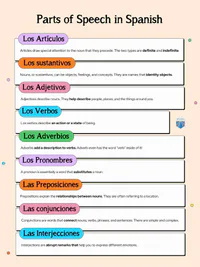
It is a word that expresses action or a state of being -- is, have, buys, talked, etc.
46
It is the basic form of a verb.
47
In English, you can tell that a verb is in the infinitive form because (most of the time) it will include the word to.

48
So, to turn any of these English verbs into an infinitve, you would just put the word "to" in front of it. Examples: to walk, to run, to play, etc.

49
hablar, comer, escribir
50
Here are some examples of Spanish infinitives. Notice what two letters they end with.

51
Multiple Choice
Which of the following words is not an infinitive?
aprender
pasar
escribir
estás
52
Ser is in the infinitive form. You have learned to conjugate ser. When you conjugate a verb, you change it to indicate who is doing the action. Now you've learned to say to be, I am, you are, he/she/it is, we are, y'all and they are. You learned to conjugate your first verb.
YAY!!!
53
With this lesson you are learning to say what people like and do not like to do. In Spanish, we use a conjugated form of the verb GUSTAR before a verb in the infinitive form to talk about what people like to do.
54

55
Multiple Choice
How do you think you would say "I like to be me," or "I like being me." in Spanish?
Me gusta ser yo.
Yo me gusta ser.
Yo me gusta ser yo.
56
Expressing emotions
By Ana Mujunen
57
Depending on what we say, in Spanish we might use the same equivalent TO BE, as in ESTAR, or TENER.
Estoy, tengo, tienes, estás...
In Spanish
In English we normally express the way we feel at a given moment using the verb TO BE
Example: I am hungry, she is angry.
Temporary feelings
Some text here about the topic of discussion
58
Multiple Choice
What verbs do we use in Spanish to describe temporary feelings or moods?
ser and estar
estar and tener
sentir
ser and ir
59
TENER: tengo, tienes, tiene, tenemos, tienen
This verb is used to express you "have" or hold an emotion or need. (then we use the name of the emotion: alegría, tristeza, hambre, etc.) Examples:
Tengo hambre, tenemos sueño, tienes sed, tiene miedo, tengo temor, tienes preocupación, tengo angustia, tiene pereza.
Some text here about the topic of discussion
60
Multiple Choice
She is thirsty
ella es sed
es con sed
tiene sed
está sed
61
Multiple Choice
he is lazy today
tiene pereza
es pereza
está pereza
perezoso
62
Multiple Choice
We are sleepy
somos sueño
tenemos sueño
tenemos dormir
tengo sueño
63
Using ESTAR: estoy, estás, está, estamos, están
When we use ESTAR, it means that the emotion is expressed as an adjective, in English it would end with an [ed] as in excited, alarmed, captivated, bored, worried... in Spanish they end with ado, ada.
In Spanish they it looks like this:
Estoy enamorado
Está emocionada
Estamos preocupados
Subject | Subject
Some text here about the topic of discussion
64
Multiple Choice
I am in love
tengo enamor
está enamorado
estoy en amor
estoy enamorada
65
Multiple Choice
We are tired
tengo cansado
estamos cansados
tenemos cansar
estamos tristes
66
Other common adjectives for emotions
feliz, triste, enfermo/a, mal, bien, más o menos, mejor, peor
These are words that normally express emotions or states of wellness.
mejor= better
peor= worse
más o menos= so so
Subject | Subject
Some text here about the topic of discussion
67
Multiple Choice
¿Estás mejor?
Are you ok?
Are you feeling better?
Is she better?
Are you worse?
68
Multiple Choice
I am feeling worse
Soy peor
Estoy mal
Soy malo
Estoy peor
69

70
71
Are used to identify specific (known) items
translate into the word "the" in English
have singular and plural forms
72
el, la, los, las

73
Are used with masculine and feminine nouns
Follow the rules of agreement in Spanish
74
All nouns and articles must agree with each other in gender and in number
In most cases... the letter the noun ends with determines its gender and whether the masculine article or the feminine article is used
Let's do some practice and see how you do
75
Most nouns that end in the letter -o are masculine and get the masculine article
Most nouns that end in the letter -a are feminine and get the feminine article
There are exceptions to the rules, however...don't worry about them right away! :-)
76
Fill in the Blanks

the house =
77
Fill in the Blanks
the boy =
78
Fill in the Blanks

the computer =
79
Fill in the Blanks

the notebook =
80
Follow the same rules as the definite articles
Translate into the words "a", "an", or "some" in English
Refer to an indefinite (unknown or uncertain) number of items
81
Fill in the Blanks
a house =
Type answer...
82
Fill in the Blanks
a boy =
83
Lastly, Spanish often feels like it is backwards for English speakers. En inglés, when you have a noun and adjective right next to each other in a sentence, the adjective is first, and the noun is second - short boy or old woman.
En español, the noun comes first - chico bajo (boy short) or mujer vieja (woman old).
You gettin' this?
84
Multiple Choice
el _____ _____
chico serio
serio chico
I can use advanced vocabulary and correct grammar structures to write complex sentences. |
Show answer
Auto Play
Slide 1 / 84
SLIDE
Similar Resources on Wayground

80 questions
2526 SESSION 3:Ang Mahiyaing Manok
Presentation
•
KG
82 questions
Marugoto A1 Daftar Kata
Presentation
•
9th - 12th Grade
80 questions
sound
Presentation
•
9th - 12th Grade
80 questions
PROGRESIONES 3º ESO
Presentation
•
9th - 12th Grade
79 questions
ORM_L1 Pages_6_7 Vocabulary
Presentation
•
9th - 12th Grade
82 questions
O-net m.6
Presentation
•
9th - 12th Grade
77 questions
LEVEL 6c: Sports Betting
Presentation
•
9th - 12th Grade
81 questions
Measures of Central Tendency
Presentation
•
10th - 12th Grade
Popular Resources on Wayground
10 questions
Safety Day 2026 – Student Review

Quiz
•
9th Grade
21 questions
Continents and Oceans
Quiz
•
6th Grade
20 questions
Parts of Speech
Quiz
•
5th Grade
16 questions
Subject & Predicate
Quiz
•
5th Grade
25 questions
Multiplication Facts
Quiz
•
5th Grade
12 questions
Map Skills
Quiz
•
3rd Grade
22 questions
Continents and Oceans
Quiz
•
5th Grade
15 questions
Rounding Decimals
Quiz
•
5th Grade
Discover more resources for World Languages
20 questions
REGULAR Present tense verbs
Quiz
•
8th - 9th Grade
21 questions
Los paises hispanohablantes y sus capitales
Quiz
•
12th Grade
20 questions
Ser vs Estar
Quiz
•
9th Grade
21 questions
Spanish speaking countries and capitals
Quiz
•
9th Grade
20 questions
Preterite vs. Imperfect
Quiz
•
10th Grade
20 questions
Present tense stem-changing verbs
Quiz
•
9th Grade
20 questions
Ser vs. Estar
Quiz
•
10th Grade
45 questions
Ser vs Estar
Quiz
•
9th Grade