

Laws of Motion

Presentation
•
Physics
•
10th Grade
•
Medium

Nandini TS
Used 17+ times
FREE Resource
10 Slides • 11 Questions
1
Inertia:
The inherent property of a body
to resist any change
in its state o f rest or the state of uniform motion,
unless it is influenced upon
by an external unbalanced force, is known as ‘inertia’.
Inertia depends on mass of the object.

2
Types of Inertia:
Inertia of rest
Inertia of motion
Inertia of direction of motion
3

The
resistance of a body to
change its state of rest is
called inertia of rest.
Inertia of Rest:
4

The
resistance of a body to
change its state of motion is
called inertia of motion.
Inertia of Motion:
5

The resistance of a body to
change its state of direction of motion is
called inertia of direction.
Inertia of direction of motion:
6
Multiple Choice
When a moving bus comes to a stop, passengers feel a jerk.
This is the consequence of ____
Inertia of motion
Inertia of rest
Inertia of direction
7
Multiple Choice
Inertia depends on ______
Velocity
Speed
Distance
Mass
8
Multiple Choice
An object at rest stays at rest and an object in motion stays in motion with the same speed and in the same direction unless acted upon by a(n) ____________________.
unbalanced force
inertia
mass
balanced force
9
Multiple Choice
Seat belt is needed for safety purpose in a vehicle. What is the use of the seat belt?
To increase the effect of inertia
To reduce the effect of inertia
To increase the effect of momentum
To decrease the effect of momentum
10
Every body continues to be in its
state of rest or the state of uniform motion
along a straight line
unless,
it is acted upon by some external force.
Newton's First Law:
11

Like parallel forces:
Two or more forces of
equal or unequal magnitude acting along the same direction, parallel to each other called like parallel forces.
Types of forces:
12

Unlike parallel forces:
Two or more forces of
equal or unequal magnitude acting along opposite direction, parallel to each other called unlike parallel forces.
Types of forces:
13

The combined effect of the multiple forces is termed as ‘resultant force’
Parallel forces are acting in the same direction:
Fnet = F1 + F2
Parallel unequal forces are acting in opposite directions:
Fnet = F1 – F2 (if F1 > F2)
Fnet = F2 – F1 (if F2 > F1)
Fnet is directed along the greater force.
Parallel equal forces are acting in opposite directions in the same line of action (F1 = F2)
Fnet = 0 since (F1 = F2)
Resultant Force:
14
Multiple Choice

15
Multiple Choice
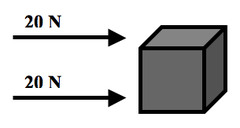
What is the resultant force?
40 N, Left
0 N, Balanced
400 N, Right
40 N, Right
16
Multiple Choice

What is the resultant force?
400 N, Up
400 N, Down
800 N, Up
800 N, Down
17
Multiple Choice

18
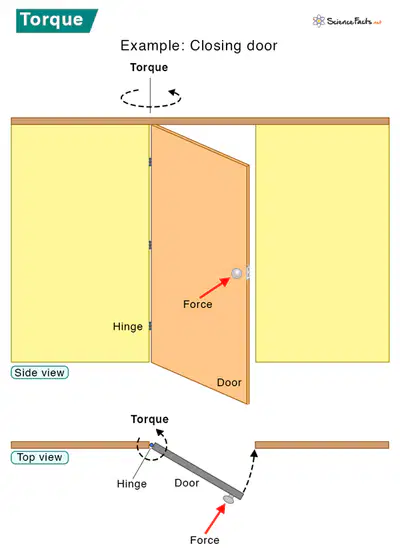
The rotating or turning effect of a force about a fixed point or fixed axis is called moment of the force or torque (τ).
It is measured by the product
of the force (F) and the perpendicular distance (d) between the fixed point or the fixed axis and the line of action of the force.
τ = F × d
Unit: Nm
Moment of the force:
19
Multiple Choice
What is the Unit for Torque
Nm
N
W
J
20
Multiple Choice
21
Multiple Choice
Inertia:
The inherent property of a body
to resist any change
in its state o f rest or the state of uniform motion,
unless it is influenced upon
by an external unbalanced force, is known as ‘inertia’.
Inertia depends on mass of the object.
Show answer
Auto Play
Slide 1 / 21
SLIDE
Similar Resources on Wayground

16 questions
Sex-linked traits
Presentation
•
10th Grade
15 questions
Revising
Presentation
•
10th Grade
17 questions
Alcohol
Presentation
•
10th Grade
17 questions
Imperialism in India
Presentation
•
10th Grade
14 questions
Who or Whom?
Presentation
•
10th Grade
15 questions
Velocity Time Graphs
Presentation
•
10th Grade
18 questions
Measuring mass
Presentation
•
9th - 10th Grade
16 questions
Position time Graphs, Distance and Displacement
Presentation
•
9th - 10th Grade
Popular Resources on Wayground
10 questions
How much do you know about our Portrait of an Eagle?

Quiz
•
10th Grade
10 questions
Fast Food Slogans
Quiz
•
6th - 8th Grade
21 questions
Continents and Oceans
Quiz
•
6th Grade
20 questions
Parts of Speech
Quiz
•
5th Grade
16 questions
Subject & Predicate
Quiz
•
5th Grade
25 questions
Multiplication Facts
Quiz
•
5th Grade
12 questions
Map Skills
Quiz
•
3rd Grade
22 questions
Continents and Oceans
Quiz
•
5th Grade