

Health Risks for Astronauts

Presentation
•
Other
•
9th - 12th Grade
•
Practice Problem
•
Medium

Shaneikiah Verel
Used 3+ times
FREE Resource
30 Slides • 18 Questions
1


2
Open Ended
Astronauts face 5 major challenges when living and traveling in space. Predict 3 of those challenges.
3

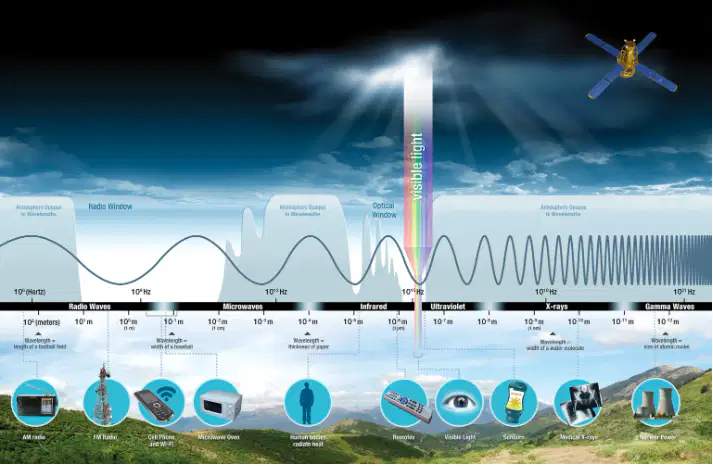
Space Radiation
NASA’s Human Research Program has pinpointed five hazards that astronauts will encounter on
their journeys. These include space radiation, isolation and confinement, distance from Earth,
gravity (and the lack of it), and closed or hostile environments. Scroll down to learn details
involving each hazard.
However, these hazards do not stand alone. They can feed off one another and exacerbate effects
on the human body, which are being studied using ground-based analogs, laboratories, and the
International Space Station.
4
Multiple Choice
"However, these hazards do not stand alone. They can feed off one another and exacerbate effects on the human body," What does exacerbate probably mean?
lessen
increase
decrease
ruin
5
Multiple Choice
Which of the following is NOT a hazard to astronauts living and travelling in space?
digestion issues
radiation
loneliness
weak gravity
6


7


8
9
Match
Match the following
types of radiation
dangerous radiation
dangers of radiation
source of space radiation
can be harmed by radiation
7
Gamma Ray, X-ray
damages cell DNA
super novas
human body, spacecraft
7
Gamma Ray, X-ray
damages cell DNA
super novas
human body, spacecraft
10

While people protect their eyes from the sun’s radiation during a solar eclipse, NASA’s space radiation experts are working to
protect the whole human body from radiation in space. Space radiation is dangerous and one of the primary health risks for
astronauts.
11

Space Radiation Vids
https://www.nasa.gov/hrp/radiation/space-radiation-miniseries/
12
Open Ended
How is NASA preparing to keep astronauts safe against radiation?
13
14
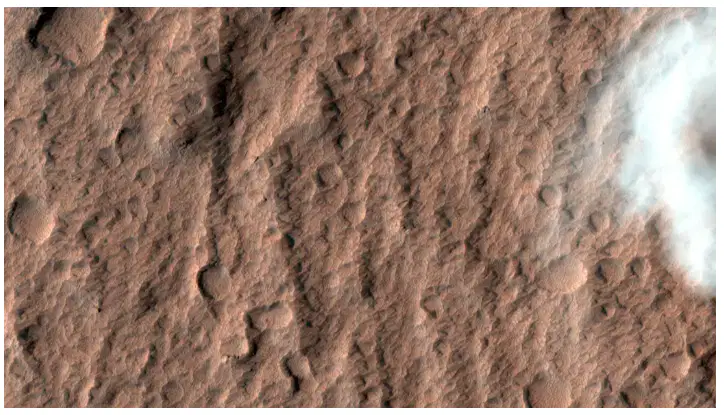
Lunar dust exposure has not been a hazard since the 1972 Apollo missions. Data collected at that time has provided insight and many years of research. Due to the unique properties of lunar dust (and other celestial bodies), there is a possibility that exposure could lead to serious health effects (e.g., respiratory, cardiopulmonary, ocular, or dermal harm) to the crew or impact crew performance during celestial body missions.
15
Multiple Select
Space dust can affect which organs (select all that apply)
eyes
teeth
lungs
heart
16


17

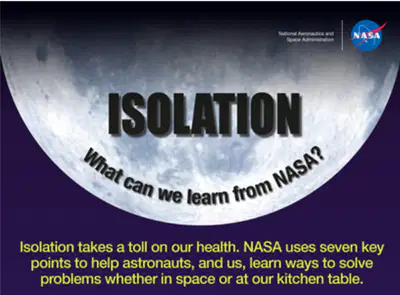
On Earth, we have the luxury of picking up our cell phones and instantly being connected with nearly
everything and everyone around us. On a trip to Mars, astronauts will be more isolated and confined than
we can imagine. Sleep loss, circadian desynchronization, and work overload compound this issue and may
lead to decreased performance, adverse health outcomes, and compromised mission objectives.
To address this hazard, experts are developing methods for monitoring behavioral health and
adapting/refining various tools and technologies for use in the spaceflight environment to detect and treat
early risk factors. Research is also being conducted in workload and performance, light therapy for
circadian alignment, phase shifting and alertness.
18

19
20


21

Hazard Distance from Earth
Mars is, on average, 140 million miles from Earth. Rather than a three-day lunar trip, astronauts
bound for Mars would be leaving our planet for roughly three years.
Given this distance, planning and self-sufficiency will be essential to successful missions to Mars.
Facing a communication delay of up to 20 minutes one way, the possibility of equipment failures or
medical emergencies, and a critical need to ration food and supplies, astronauts must be capable
of confronting an array of situations with minimal support from teams on Earth
22
Match
Match the following
Distance to Mars
lag time on phone calls
length of trip to Mars
140,000,000 miles
20min
3 years
140,000,000 miles
20min
3 years
23

24
Open Ended
How is NASA preparing now to deal with keeping the team alive so far from home?
25

26

Gravity
Astronauts will encounter three different gravity fields on a Mars mission. On the six-month trek
between the planets, crews will be weightless. While living and working on Mars, crews will be in
approximately one-third of Earth’s gravity. Finally, upon returning home, crews will have to readapt
to Earth’s gravity.
Switching from one gravity field to another is trickier than it sounds. The transition affects spatial
orientation, head-eye and hand-eye coordination, balance, and locomotion, with some crew
members experiencing space motion sickness.
27

Landing a spacecraft on Mars could be challenging as astronauts adjust to the gravity field of
another celestial body. When shifting from weightlessness to gravity, astronauts may even
experience lightheadedness and fainting.
28
Multiple Choice
Which of the following is not affected by moving from one gravity field to another?
hand-eye coordination
balance
locomotion (movement)
mental focus
29

Without the continuous load of Earth’s gravity, weight-bearing bones lose on average 1% to 1.5% of mineral density per month during spaceflight. Water and other fluids in the body shift upward to the head, which may put pressure on the eyes and cause vision problems. If preventive measures are not implemented, crews may experience an increased risk of developing kidney stones due to dehydration and increased excretion of calcium from their bones.
30
Math Response
If astronauts can lose about 1.5% of bone density per month while in space, then what percent of bone density will they lose in 3 years?
31

Gravity
https://youtu.be/f3-96ZbY5NA
32
Open Ended
How is NASA planning to combat the risks of low gravity on astronauts' bodies?
33


34

The ecosystem inside a spacecraft plays a big role in the daily life of an astronaut in space.
Microbes can change characteristics in space, and micro-organisms that naturally live on the human body are
transferred more easily from person to person in closed habitats, such as the space station. Stress hormone levels
can elevate and the immune system can alter, which could lead to increased susceptibility to allergies or other
illnesses. More research is needed into whether these changes pose serious risks to astronauts.
Beyond the effects of the environment on the immune system, every inch and detail of living and working quarters
must be carefully considered and designed. No one wants their house to be too hot, too cold, cramped, crowded,
loud, or poorly lit, and no one would enjoy working and living in such a habitat in space either.
35
Multiple Choice
What can cause astronauts to succumb to allergies in space?
microbes
allergies
stress leves
unclean water
36

Environment
37
Open Ended
How is NASA planning to create the perfect ecosystem for astronauts?
38
39
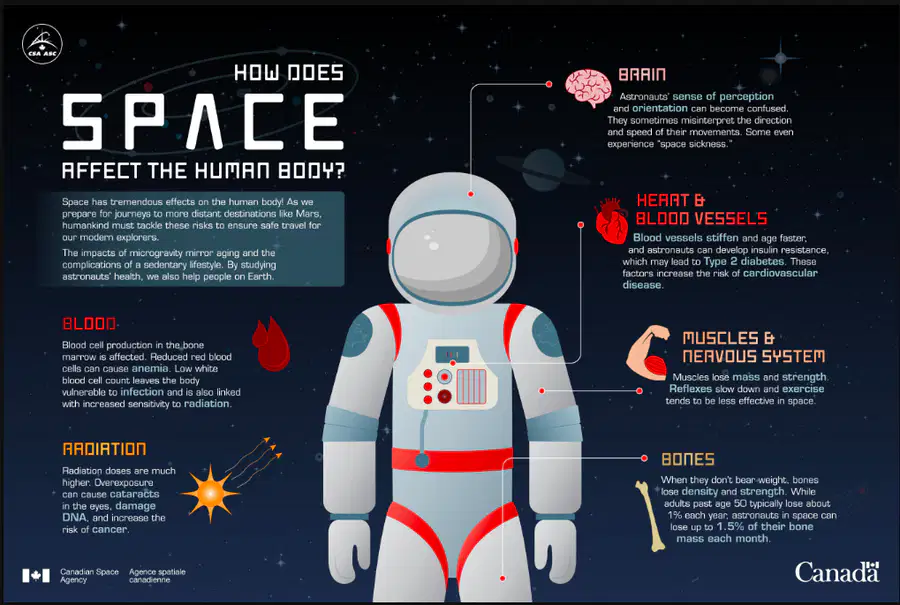
Match
Match the following
anemia and infection
muscles
brain
bones
low red blood / white blood cell count
slow reflexes and weakness
loss of perception and orientation
lose density and strength
low red blood / white blood cell count
slow reflexes and weakness
loss of perception and orientation
lose density and strength
40
41
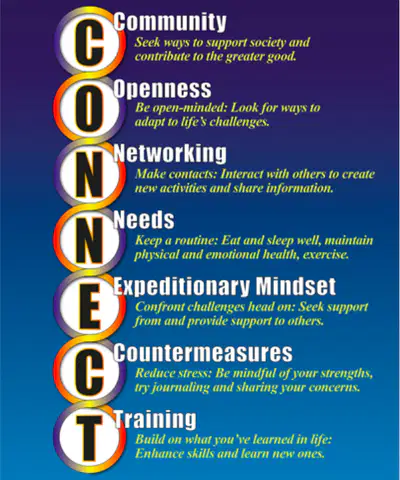
Open Ended
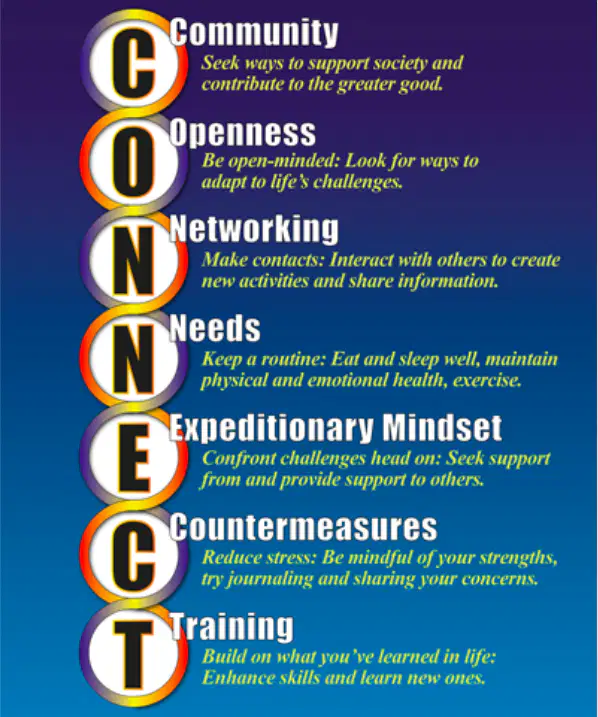
What is one way you could apply one of these suggestions in your life?
42
43
44
Multiple Choice
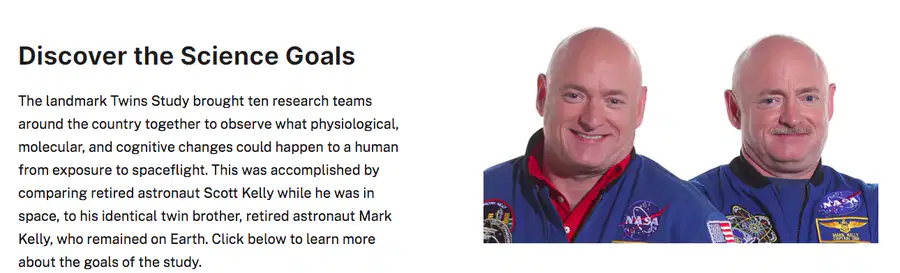
Why would NASA want to use identical twins for a study on how space affects the body?
they will react the same way
they are both astronauts
they have the same genetic makeup
they will help science and our space mission
45
46
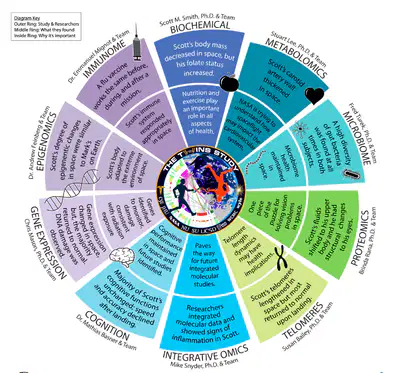
47
Match
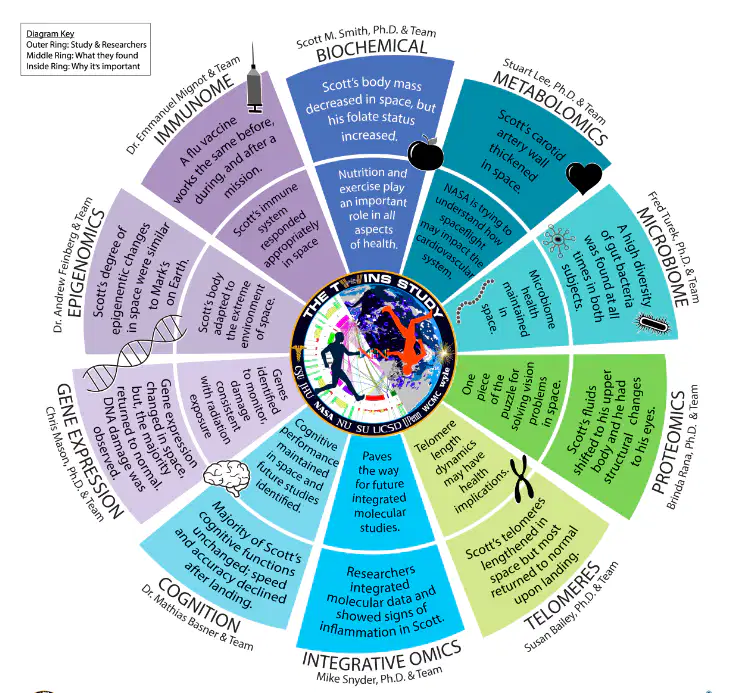
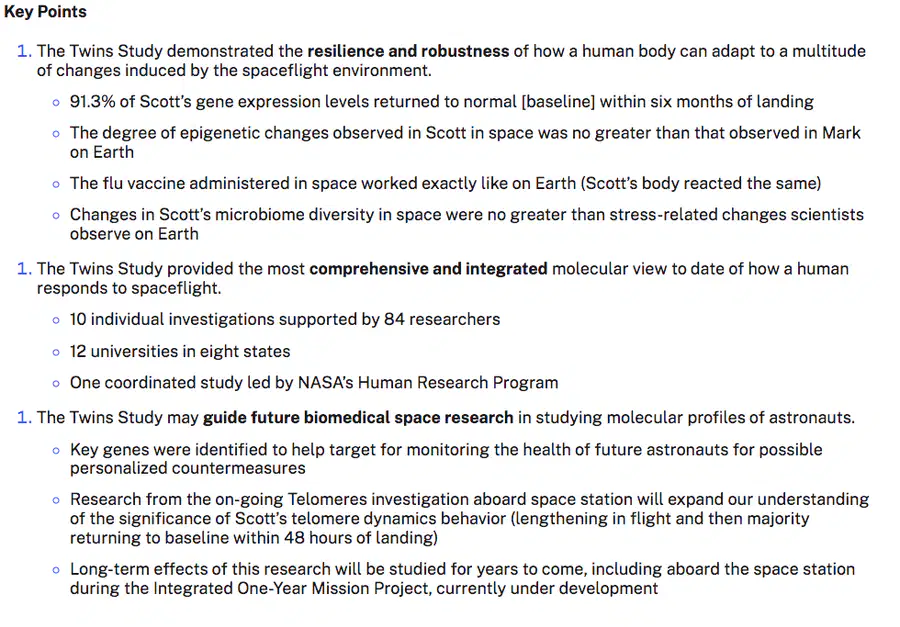
Match the following
telomeres
carotid artery
microbiome
speed and accuracy
immune system
increased in length
thickened
remained the same
decreased upon return to Earth
functioned similarly as on Earth
increased in length
thickened
remained the same
decreased upon return to Earth
functioned similarly as on Earth
48
Multiple Select
What are the most relevant obstacles to long-duration human missions?Select all that apply
radiation
isolation
distance from Earth
gravity changes
hostile environments
Show answer
Auto Play
Slide 1 / 48
SLIDE
Similar Resources on Wayground

44 questions
Figurative Language & Songs: Personification, Similes, Metaphors
Presentation
•
9th - 12th Grade
42 questions
Pickleball Basics
Presentation
•
9th - 12th Grade
48 questions
Domain 1 Lesson 1
Presentation
•
9th - 12th Grade
43 questions
Day 2 2026 Semester 2
Presentation
•
9th - 12th Grade
45 questions
Rhetorical Devices
Presentation
•
9th - 12th Grade
41 questions
Chp 13 Purchasing a Car Lesson
Presentation
•
9th - 12th Grade
41 questions
Mental Health
Presentation
•
9th - 12th Grade
43 questions
Graphs and Graphing
Presentation
•
9th - 12th Grade
Popular Resources on Wayground
10 questions
How much do you know about our Portrait of an Eagle?

Quiz
•
10th Grade
10 questions
Fast Food Slogans
Quiz
•
6th - 8th Grade
21 questions
Continents and Oceans
Quiz
•
6th Grade
20 questions
Parts of Speech
Quiz
•
5th Grade
16 questions
Subject & Predicate
Quiz
•
5th Grade
25 questions
Multiplication Facts
Quiz
•
5th Grade
12 questions
Map Skills
Quiz
•
3rd Grade
22 questions
Continents and Oceans
Quiz
•
5th Grade
Discover more resources for Other
10 questions
How much do you know about our Portrait of an Eagle?
Quiz
•
10th Grade
20 questions
Brand Labels
Quiz
•
5th - 12th Grade
20 questions
Characteristics of Life
Quiz
•
9th - 10th Grade
20 questions
REGULAR Present tense verbs
Quiz
•
8th - 9th Grade
20 questions
Graphing Inequalities on a Number Line
Quiz
•
6th - 9th Grade
10 questions
Translating Algebraic Expressions
Quiz
•
9th Grade
10 questions
Exploring the 4 Major Macromolecules and Their Functions

Interactive video
•
9th - 12th Grade
20 questions
Cell organelles and functions
Quiz
•
10th Grade