

M6 Phy 1stSem Finals Section 1,2 thermal eq , defining heat

Presentation
•
Physics
•
12th Grade
•
Practice Problem
•
Hard

Lady Alias
Used 7+ times
FREE Resource
45 Slides • 26 Questions
1
2

3
Objectives:
Relate temperature to the kinetic energy of atoms and molecules.
Describe the changes in the temperatures of two objects reaching thermal equilibrium.
Identify the various temperature scales, and convert from one scale to another.
4
5
Temperature is proportional to the kinetic energy of atoms and molecules.
The temperature of a substance is proportional to the average kinetic energy of particles in the substance. A substance’s temperature increases as a direct result of added energy being distributed among the particles of the substance.

Temperature is a measure of the average kinetic energy of the particles in a substance.
6

7
8
Internal energy is the energy of a substance due to both the random motions of its particles and the potential energy that results from the distances and alignments between the particles.
The energies associated with atomic motion are referred to as internal energy, which is proportional to the substance’s temperature (assuming no phase change).
For an ideal gas, the internal energy depends only on the temperature of the gas. For nonideal gases, as well as for liquids and solids, other properties contribute to the internal energy.
The symbol U stands for internal energy, and ∆U stands for a change in internal energy.
9
10
11
Thermal equilibrium is the state in which two bodies in physical contact with each other have identical temperatures. Thermal equilibrium is the basis for measuring temperature with thermometers. By placing a thermometer in contact with an object and waiting until the column of liquid in the thermometer stops rising or falling, you can find the temperature of the object.

12
Matter expands as its temperature increases.
Increasing the temperature of a gas at constant pressure causes the volume of the gas to increase. This increase occurs not only for gases, but also for liquids and solids. In general, if the temperature of a substance increases, so does its volume. This phenomenon is known as thermal expansion.
Different substances undergo different amounts of expansion for a given temperature change. The thermal expansion characteristics of a material are indicated by a quantity called the coefficient of volume expansion. Gases have the largest values for this coefficient. Liquids have much smaller values.
13
Temperature units depend on the scale used.
The temperature scales most widely used today are the Fahrenheit, Celsius, and Kelvin scales.


14

The graph shows the relationship of pressure versus temperature for an ideal gas at a constant volume. The graph shows that as the temperature of the gas goes down, so does its pressure. If the temperature could drop to -273.15°C, the gas's pressure would be zero. This temperature is called 0.00 K on the Kelvin.
15

16
What are the equivalent Celsius and Kelvin temperatures of 50.0°F?

17
Activity
The lowest outdoor temperature ever recorded on Earth is −128.6°F, recorded at Vostok Station, Antarctica, in 1983. What is this temperature on the following:
1.Celsius scale
2.Kelvin scale
18
Multiple Choice
The temperature of a substance is __________ to the average kinetic energy of particles in the substance.
not proportional
direct
proportional
none of these
19
Multiple Choice
A substance’s temperature increases as a direct result of added _______ being distributed among the particles of the substance.
energy
temperature
thermal equilibrium
none of these
20
Multiple Choice
___________ is the state in which two bodies in physical contact with each other have identical temperatures.
energy
temperature
thermal equilibrium
none of these
21
Multiple Choice
Increasing the temperature of a gas at constant pressure causes the _______ of the gas to increase.
energy
temperature
pressure
volume
22
Multiple Choice
In general, if the temperature of a substance increases, so does its volume. What phenomenon is this?
Thermal expansion
Volume expansion
pressure
volume
23
Multiple Choice
The thermal expansion characteristics of a material are indicated by a quantity called _________.
thermal expansion
volume expansion
coefficient of volume expansion.
volume
24
Multiple Choice
It is the energy of a substance due to both the random motions of its particles and to the potential energy that results from the distances and alignments between the particles.
Internal Energy
Kinetic Energy
Ideal gas
volume
25
Multiple Choice
What is the symbol used for internal energy?
K
I
U
IE
26
Heat
27
Objectives:
Explain heat as the energy transferred between substances that are at different temperatures.
Relate heat and temperature change on the macroscopic level to particle motion on the microscopic level.
Apply the principle of energy conservation to calculate changes in potential, kinetic, and internal energy.
28

As the bottle of juice cools down, the water’s temperature goes up a little until both the juice and water reach the same temperature. Energy moves from the juice to the water because they start at different temperatures. This movement of energy is called heat.
What happens when you immerse a warm fruit juice bottle in a container of ice water?
29
30
Heat is the energy transferred between objects because of a difference in their temperatures.

31
Energy is transferred between substances as heat. From a macroscopic viewpoint, energy transferred as heat tends to move from an object at a higher temperature to an object at a lower temperature.

Transfer of Particles’ Kinetic Energy as Heat Energy is transferred as heat from the higher-energy particles to lower-energy particles (a). The net energy transferred is zero when thermal equilibrium is reached (b).
32
The transfer of energy as heat alters an object’s temperature.
Thermal equilibrium happens when two objects at the same temperature exchange energy equally, so no net energy is transferred between them. This shows the difference between temperature and heat: temperature measures the energy in an object, while heat is the energy that moves from one object to another due to a temperature difference. When there’s no temperature difference, no heat is transferred. The bigger the temperature difference between two objects, the faster the energy transfers as heat.

33
Heat is measured in units of energy. Before scientists understood heat as energy, different units were developed to measure it, and many are still in use today. However, all heat units can be converted to joules, the standard unit of energy. Like other forms of energy (e.g., PE for potential energy), heat is represented by the symbol Q.

34

35

36
37

38

39

40

41

42

43
44

45

46

47

48

49

50

51

52

53
54
Multiple Select
Heat flow happens in three different ways, which are through
conduction
convection
radiation
boiling
55
Multiple Choice
The process of heat transfer from hotter regions to colder regions through a solid medium
conduction
convection
radiation
56
Multiple Choice
Heat is transferred by the movement of fluid (liquid and gas) from hotter regions to colder regions.
conduction
convection
radiation
57
Multiple Choice
The formation of land breeze and sea breeze are examples of a
conduction process
convection process
radiation process
58
Multiple Choice
During the day, we will have
sea breeze
land breeze
59
Multiple Choice
During sea breeze,
the wind move from sea to land
the wind move from land to sea
60
Multiple Choice
During land breeze,
the wind move from sea to land
the wind move from land to sea
61
Multiple Choice
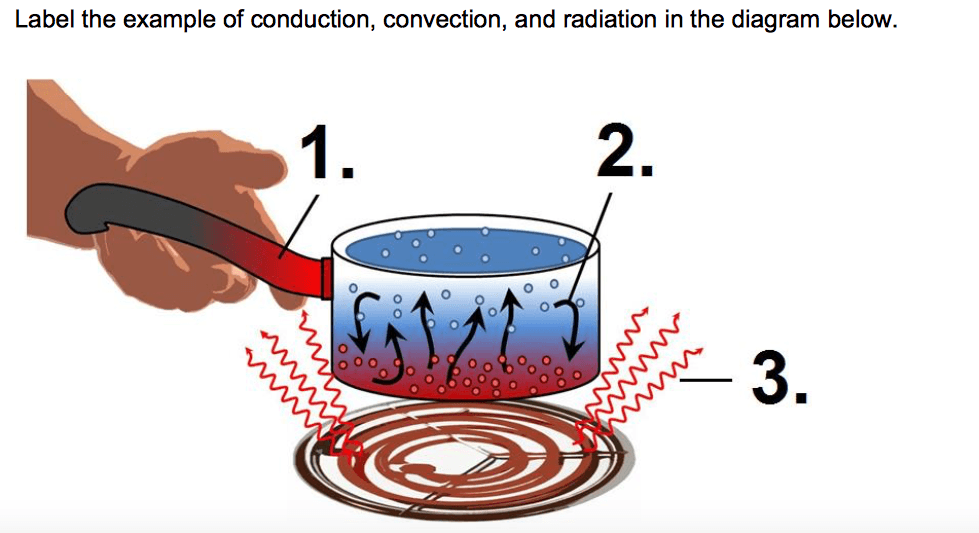
What type of thermal energy transfer is number 1 pointing to?
Convection
Conduction
Radiation
Insulation
62
Multiple Choice

What type of thermal energy transfer is number 2 pointing to?
Convection
Conduction
Radiation
Insulation
63
Multiple Choice

What type of thermal energy transfer is number 3 pointing to?
Convection
Conduction
Radiation
Insulation
64
Multiple Choice
The condition where two substances in physical contact with each other exchange no heat energy. They are said to be the same temperature.
Thermal Energy
Cooler to Warmer
Energy Transfer
Thermal Equilibrium
65
Multiple Choice
66
Multiple Choice
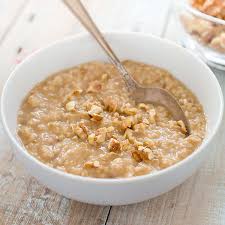
You leave your cold spoon in a hot bowl of oatmeal. What happens after an hour?
The temperature of both the oatmeal and the spoon stay the same
The spoon and the oatmeal become the same temperature
Only the temperature of the oatmeal will change
Only the temperature of the spoon will change
67
Multiple Choice
If you burn your hand on the handle of a hot pot, heat was transferred to your skin by
conduction
convection
radiation
equilibrium
68
Multiple Choice
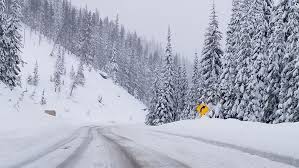
You are walking to school and find a metal earring in the snow. You take the cold earring inside and place it on your desk. What will happen after a while?
The earring will be colder than the desk
The earring and the desk will be colder than room temperature
The desk will be colder than room temperature
Both the earring and the desk will be at room temperature
69
Multiple Choice
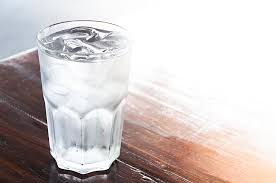
Johnny put ice in his water. Which idea do you think best explains why the water got cold?
The coldness from the ice moved into the water
The coldness and the heat moved back and forth until the water cooled off.
The heat from the water moved into the ice.
The water does not cool of
70
Multiple Choice
71
Multiple Choice

Show answer
Auto Play
Slide 1 / 71
SLIDE
Similar Resources on Wayground

67 questions
Types of Lover
Presentation
•
12th Grade
68 questions
TOPIC 2 QUIZ REVIEW
Presentation
•
KG
65 questions
Nervous System Review
Presentation
•
12th Grade
61 questions
Collision Theory and Reaction Rate
Presentation
•
12th Grade
68 questions
Cell Membranes - Transport
Presentation
•
12th Grade
70 questions
Unit 4 level 3
Presentation
•
University
64 questions
Env. Sci Notes - Earth's Resources
Presentation
•
12th Grade
Popular Resources on Wayground
10 questions
Safety Day 2026 – Student Review

Quiz
•
9th Grade
21 questions
Continents and Oceans
Quiz
•
6th Grade
20 questions
Parts of Speech
Quiz
•
5th Grade
16 questions
Subject & Predicate
Quiz
•
5th Grade
25 questions
Multiplication Facts
Quiz
•
5th Grade
12 questions
Map Skills
Quiz
•
3rd Grade
22 questions
Continents and Oceans
Quiz
•
5th Grade
15 questions
Rounding Decimals
Quiz
•
5th Grade
