
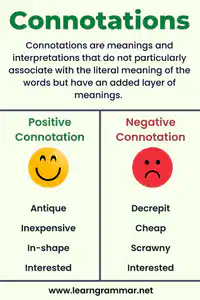
Mini-teaching

Presentation
•
English
•
9th - 12th Grade
•
Practice Problem
•
Easy
+9
Standards-aligned

Julie Cheng
Used 1+ times
FREE Resource
17 Slides • 3 Questions
1
What you hear may be more than what it means.

Let's see what people really want to convey.
2
Multiple Select
What are they doing?
Greeting a friend
Meeting a boss
Commenting on something
3
Multiple Choice
(Ross finds out Joey and Rachel are dating.) What does Ross saying "I am fine" mean?
Ross is feeling confused.
4
Multiple Choice
What does Scarlet Witch saying "I am fine" mean?
She is feeling truly good.
She is shocked but tries to calm down.
She is angry about the situation
She is too tired to say anything.
5
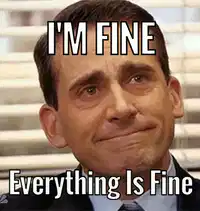
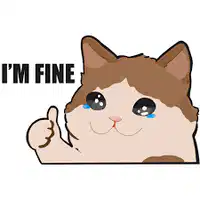

"I am fine/good" can have various meanings.
1. Response to greetings:
A:How are you?
B: I'm fine, you?
2. Polite decline or avoidance:
A:Would you like some more dessert?
B: I am fine, thank you. Everything was delicious.
3. Hiding emotions (frustration):
A: Why are you so quiet? Is something wrong?
B: I am fine. Just leave me alone for a while.
6
Connotations (or Implications) |
Connotations: perceptions or feelings a word conveys, which are distinct from the actual meaning of the words.
Implications: suggesting something without clearly saying it.
Why do we need to learn this?
- Scenario 1:
Leader: Alright, let’s discuss some new strategies for improving our project workflows. We need innovative ideas to streamline our processes.
Coworker (John): I have an idea! What if we implement a new weekly report system? Each department can submit a detailed report on their progress every Friday. It will help us keep track of everything and improve our productivity.
(The room goes silent. Some team members exchange knowing glances.)
You: Interesting. 🤨
Coworker (Sarah): Yes, John, just like the LAST THREE TIMES we tried it.
What do you think about John's idea?

7
Connotations (or Implications) |
Connotations: perceptions or feelings a word conveys, which are distinct from the actual meaning of the words.
Implications: suggesting something without clearly saying it.
Why do we need to learn this?
- Scenario 1:
Leader: Alright, let’s discuss some new strategies for improving our project workflows. We need innovative ideas to streamline our processes.
Coworker (John): I have an idea! What if we implement a new weekly report system? Each department can submit a detailed report on their progress every Friday. It will help us keep track of everything and improve our productivity.
(The room goes silent. Some team members exchange knowing glances.)
You: Interesting. 🤨
Coworker (Sarah): Yes, John, just like the LAST THREE TIMES we tried it.
What do you think about John's idea?
It's a great idea.
It's not gonna work.
8
Connotations (or Implications) |
Connotations: perceptions or feelings a word conveys, which are distinct from the actual meaning of the words.
Implications: suggesting something without clearly saying it.
Why do we need to learn this?
- Scenario 1:
Leader: Alright, let’s discuss some new strategies for improving our project workflows. We need innovative ideas to streamline our processes.
Coworker (John): I have an idea! What if we implement a new weekly report system? Each department can submit a detailed report on their progress every Friday. It will help us keep track of everything and improve our productivity.
(The room goes silent. Some team members exchange knowing glances.)
You: Interesting. 🤨
Sarah: Yes, John, just like the LAST THREE TIMES we tried it.
What do you think about John's idea?
It's a great idea.
It's not gonna work.
9
Connotations (or Implications) |
Connotations: perceptions or feelings a word conveys, which are distinct from the actual meaning of the words.
Implications: suggesting something without clearly saying it.
Why do we need to learn this?
- Scenario 2 : If you were a waiter
Waiter(You): Would you like some more water?
Customer: I am good, thank you.
What should you do?
fill the cup up
say thank you and leave
10
Connotations (or Implications) |
Connotations: perceptions or feelings a word conveys, which are distinct from the actual meaning of the words.
Implications: suggesting something without clearly saying it.
Why do we need to learn this?
- Scenario 2: If you were a waiter
Waiter(You): Would you like some more water?
Customer: I am good, thank you.
What should you do?
fill the cup up
say thank you and leave
11
The connotation of "I am fine/good"
The customer’s response typically means he or she does not need more water.
He or she is politely declining your offer without explicitly saying "no."
Why do we need to learn connotations (implications)?
12
The connotation of "I am fine/good"
The customer’s response typically means he or she does not need more water.
He or she is politely declining your offer without explicitly saying "no."
Why do we need to learn connotations (implications)?
We should give a proper response
1. to show politeness and professionalism
2. to avoid misunderstandings
3. to enhance communication skills
13
So how can we get the connotations?
1. Context: the location & the relationships between the speakers
2. Tone of voice: emotions & urgency of the speakers
3. Non-verbal expressions: body language & facial expressions
4. Cultural norms: the use of indirect language
5. Previous interactions: recalling previous interactions to understand one's typical communication style
6. Asking follow-up questions/responses
14
Task 1 | Practice
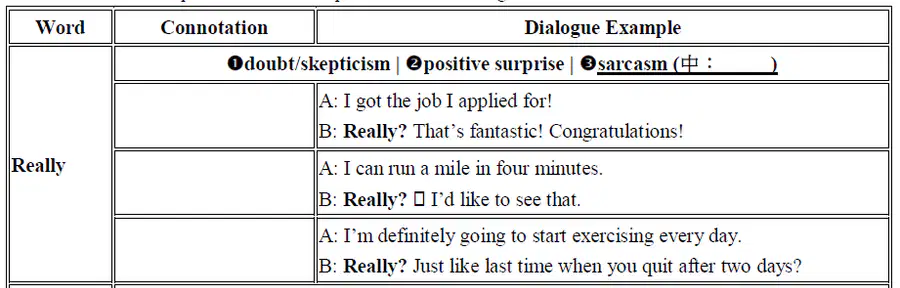
Match the following usage of the words with the correct connotations.
Infer the relationships between the two speakers for each dialogue.
1.1 really | fine | whatever
1.2 Here you are. | I'll think about it. | Can we talk?
15
16
positive surprise
諷刺
doubt/skepticism
sarcasm
17

acceptance/
agreement
a lack of
preference
hidden frustration
a lack of
preference
irritation
a sense of
reluctant acceptance
18
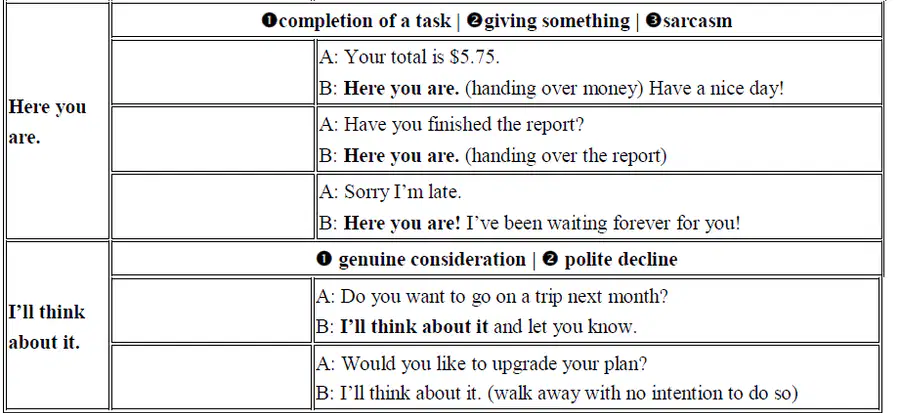
giving something
completion of
a task
sarcasm
genuine
consideration
polite decline
19
Task 2 | Role play
Pair up (or get into a group of 3). Choose one scenario below.
Come up with a dialogue with a least 2 turns taking.
Later, I will invite one group to demonstrate their work.
Scenario 1:
Context: A hateful colleague inviting you to lunch.
Roles: You, a hateful colleague, (another friendly colleague)
Scenario 2:
Context: A salesperson offering an upgrade.
Roles: You, (your kid,) salesperson
Scenario 3:
Context: You and your sister have a conflict about the choice of the dinner.
Roles: You, your sister, (Mother)
20
Something you need to notice:
Ensure you fully understand the context in which an expression is used to avoid misinterpreting or misusing them.
Consider your audience's expectations, sensitivities, and cultural differences.
Your use of connotations might impact the conversation or relationship. Try to know how to react or respond properly so as to achieve the communicative goals and build clear and respectful communication.
What you hear may be more than what it means.
Let's see what people really want to convey.
Show answer
Auto Play
Slide 1 / 20
SLIDE
Similar Resources on Wayground

11 questions
Commas with Conjunctions and Introductory Elements
Presentation
•
9th - 12th Grade
16 questions
Action Verbs vs Linking Verbs
Presentation
•
9th - 12th Grade
19 questions
Main Idea Lesson & Practice
Presentation
•
9th - 12th Grade
16 questions
Informational/Nonfiction Text Structures Practice
Presentation
•
9th - 12th Grade
13 questions
Conflict
Presentation
•
9th - 12th Grade
15 questions
Discourse markers
Presentation
•
10th - 12th Grade
17 questions
1984 Intro
Presentation
•
9th - 12th Grade
11 questions
Revising & Editing
Presentation
•
9th - 12th Grade
Popular Resources on Wayground
19 questions
Naming Polygons

Quiz
•
3rd Grade
10 questions
Prime Factorization
Quiz
•
6th Grade
20 questions
Math Review
Quiz
•
3rd Grade
15 questions
Fast food
Quiz
•
7th Grade
20 questions
Main Idea and Details
Quiz
•
5th Grade
20 questions
Context Clues
Quiz
•
6th Grade
20 questions
Inferences
Quiz
•
4th Grade
19 questions
Classifying Quadrilaterals
Quiz
•
3rd Grade
Discover more resources for English
50 questions
ELA EOG Prep 7th Grade
Quiz
•
KG - University
20 questions
Figurative Language Review
Quiz
•
10th Grade
45 questions
LOTF Chapters 1-12 Quiz
Quiz
•
8th - 11th Grade
37 questions
Hunger Games 1-27
Quiz
•
5th - 12th Grade
19 questions
The Giver 1-23
Quiz
•
10th Grade
10 questions
Mastering the 50 States and Their Capitals

Interactive video
•
6th - 10th Grade
23 questions
Story Elements and Plot Review
Presentation
•
5th - 9th Grade
10 questions
Context Clues Review
Quiz
•
9th Grade