

Biomolecules Day 1 (Carb vs. Lipids)

Presentation
•
Biology
•
9th Grade
•
Practice Problem
•
Medium
Standards-aligned

Alton St.Rose
Used 22+ times
FREE Resource
19 Slides • 10 Questions
1
Identify and describe the function of two out of four biomolecules necessary to life and their importance; Carbohydrates and Lipids.
Research and explain how the functions of the two biomolecules relate.
I Will:
Student to Teacher
Relate the functions of different types of biomolecules, including carbohydrates, lipids, proteins, and nucleic acids, to the structure and function of a cell. 5A
We will:
Teacher to student.
What are we learning today?
Unit 2: Building Blocks of Cells & Viruses
2


Monomer vs. Polymer
• Many carbon-based molecules are made of many small subunits bonded together.
– Monomers are the individual subunits.
– Polymers are made of many monomers.

3
Quickly! - Write this down
How could understanding carbohydrate use help athletes plan their meals before competitions?
How can you compare the function of lipids in cells to the function of a winter coat for humans?
This is our EXIT TICKET!

4


Characteristics of Carbon
Include:
Carbon forms: strong and stable bonds.
Carbon can form bonds with other
___________ as well as a variety of
____________ such as
______________________
_________________.
carbon atoms
other elements
oxygen, hydrogen, nitrogen,
sulfur and phosphorus
Carbon can form chains
that are almost unlimited
in size. Carbon can form
chains or rings.
5


Macromolecules
Many of the molecules in
living cells are so ______
that they are known as
_______________. This
means “______________”.
large
macromolecules
giant molecules
Macromolecules
are made from
thousands of
smaller
molecules.
The four groups of organic compounds
found in living things are:
Carbohydrates
Lipids
Proteins
Nucleic Acids
6
Multiple Choice
What is a monomer?
A large molecule made up of smaller units
A building block of biomolecules
A type of carbohydrate
A source of energy
7
Multiple Choice
What are the four groups of Macromolecules found in living things?
Carbohydrates, Lipids, Proteins, Nucleic Acids
Carbohydrates, Lupedic Acids, Proteins, Nucleus
Carbohydrates, Lip Lips, Protein Acids, Nucleic Carbon
Carbohydrate Acids, Lipid Acids, Protein Acids, Nucleic Acids
8


Characteristics of Carbohydrates
These compounds are made up of
___________________________
in a ratio of _____.
carbon, hydrogen and oxygen
1:2:1
Look at the top picture. Count the
number of carbon atoms you see.
Now count the number of hydrogen
atoms you see.
Finally, count the number of oxygen atom
you see. What is the formula? C6H12O6
C6H12O6
C6H12O6
Now do the same thing for the bottom
picture.
9


Examples of carbohydrates are:
sugars, starches, and celluloses.
The carbohydrates are
known as the “quick
energy” foods
because they are very
quickly converted to
energy by the cells.

10


There are two main functions of carbohydrates:
Living things use carbohydrates as
their main source of energy.
Some plants and animals use
carbohydrates for structural
purposes. (Cell Walls)
The smaller molecules that make up the
carbohydrates are…...
…..simple sugars such as glucose.

11

Carbon-Based Molecules
Can you pronounce this word? --- "Saccharides" = Sugar.
• Carbohydrates are made of carbon, hydrogen, and
oxygen.
– Carbohydrates include
sugars and starches.
– Monosaccharides are
simple sugars.
– Polysaccharides include
starches, cellulose, and
glycogen.

12


The
Sugars
Carbohydrates are classified according to …
…the number of sugar molecules they contain.
Monosaccharides
Disaccharides
Polysaccharides
Monosaccharides
contain only one
molecule of sugar.
Disaccharides are composed of 2 molecules of sugar
bonded together.
Polysaccharides are
composed of many molecules of sugar bonded together.
13

Three Common Polysaccharides
Starch
Only found in plants.
This is the way
that plants store
excess glucose.
Many, many
molecules of glucose are bonded together to form starch.
Only found in animals.
This is the way that animals store
excess glucose.
The liver bonds
together many, many molecules of glucose to form glycogen.
Cellulose is the stringy,
fibrous material found in the cell wall of plants.
It gives strength to
the plant cell wall.
Cellulose is the major component of wood and paper.
Glycogen
Cellulose


14
Multiple Select
What do carbohydrates mainly provide for cells? Choose two answers!
Long-term energy
Structural support
Fast source of energy
Insulation
Muscles
15
Multiple Choice
Which food is high in carbohydrates?
Olive oil
Bread
Butter
Meat
16
Multiple Choice

17


Carbon-Based Molecules
• Carbohydrates can be broken down to provide
energy for cells.
• Some carbohydrates are part of cell structure.
Polymer (starch)
Starch is a polymer of
glucose monomers that
often has a branched
structure.
Polymer (cellulose)
Cellulose is a polymer
of glucose monomers
that has a straight, rigid
structure
monomer

18


Lipids
Examples of lipids are fats,
oils, and waxes.
These compounds are generally
not soluble in water.
Lipids contain the elements ______,
___________________, but not in the
_____ ratio seen in the sugars.
carbon
hydrogen and oxygen
1:2:1
There are two building blocks of
lipids: fatty acids and glycerol
19


A lipid has: one molecule of glycerol and three fatty acid tails.
Circle and label the glycerol molecule in each of the above drawings.
glycerol
glycerol
Label the three fatty acid tails in each drawing.
<-fatty->
acid
<-fatty->
acid
<-fatty->
acid

20

Uses of Lipids
They are used to store energy for a long time
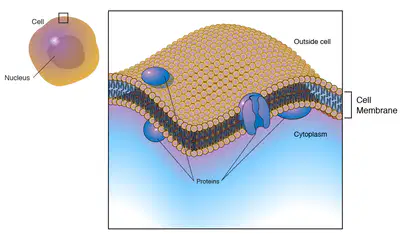
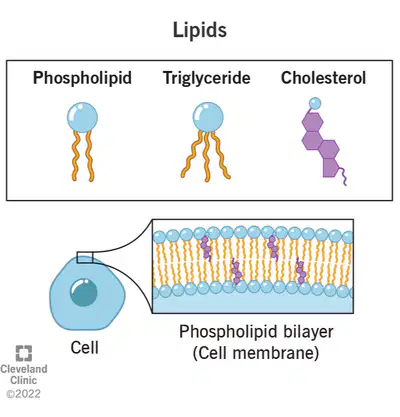
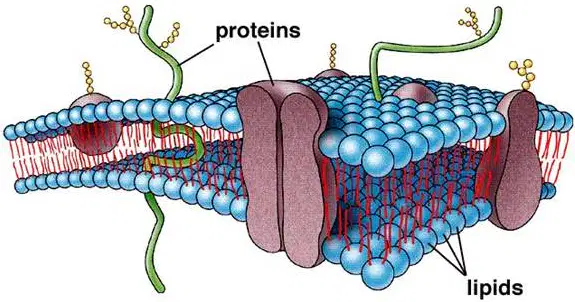
They are an important part of the cell membrane. They help let things in and out of the cell.
They form waterproof coverings on feathers, fruits, leaves, etc.
They cushion and insulate the internal organs.

21


Carbon-Based Molecules
• Lipids have several different functions.
– broken down as a source of long-term energy
– make up cell membranes
– used to make hormones

22

23
Multiple Choice
What are lipids primarily known for?
Serving as building blocks of proteins
Providing genetic information
Forming cell membranes
Quick energy supply
24
Multiple Choice
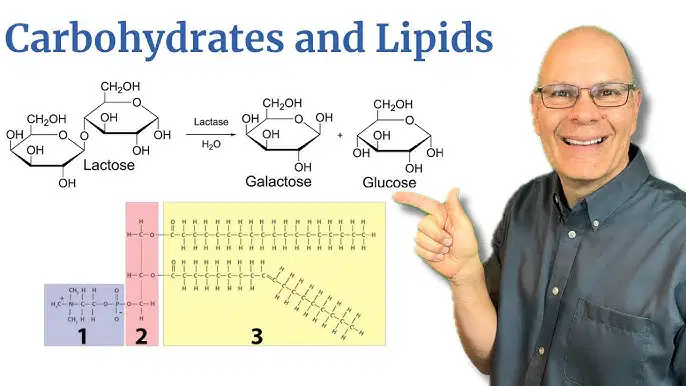
What is a difference between a carbohydrate and a lipid?
Carbon, Hydrogen, Oxygen (CHO)
Carbon, Hydrogen, Oxygen (CHO) Ratio
Used for Energy
They have monomers
25
Bonus Round!

Who is REALLY understanding this new material?

26
Drag and Drop
27
Dropdown
28
Match
Match the following
Polymer
Structural Cell Walls
Insulation
Polysaccharides
Lipids
Many monomers
Carbohydrate function
Lipid Function
Polysaccharides
Lipids
Many monomers
Carbohydrate function
Lipid Function
29
Answer these questions now.
Because I know about carbohydrate use, athletes eat foods like ____________ before their competition because __________
The function of a lipid is comparable to the function of a winter coat because they both ___________
This is our EXIT TICKET!
Identify and describe the function of two out of four biomolecules necessary to life and their importance; Carbohydrates and Lipids.
Research and explain how the functions of the two biomolecules relate.
I Will:
Student to Teacher
Relate the functions of different types of biomolecules, including carbohydrates, lipids, proteins, and nucleic acids, to the structure and function of a cell. 5A
We will:
Teacher to student.
What are we learning today?
Unit 2: Building Blocks of Cells & Viruses
Show answer
Auto Play
Slide 1 / 29
SLIDE
Similar Resources on Wayground

25 questions
Human Body Systems Pt 2
Presentation
•
9th Grade
21 questions
Cell Transport - Diffusion
Presentation
•
9th - 10th Grade
20 questions
Biology EOC Category 4 Review
Presentation
•
9th Grade
23 questions
Cell Cycle
Presentation
•
10th Grade
23 questions
Unicellular Organisms
Presentation
•
9th Grade
21 questions
Plant & Flower Anatomy
Presentation
•
9th Grade
21 questions
6G: Meiosis
Presentation
•
9th Grade
Popular Resources on Wayground
24 questions
PBIS-HGMS Day 10

Quiz
•
6th - 8th Grade
10 questions
HCS SCI 03 Summer School Review 3
Quiz
•
3rd Grade
11 questions
Home Scope
Quiz
•
7th - 8th Grade
15 questions
HCS SCI 05 Summer School Assessment 3 Review
Quiz
•
5th Grade
35 questions
Lufkin Road Middle School Student Handbook & Policies Assessment
Quiz
•
7th Grade
18 questions
Geo 11.3 Area of Circles and Sectors
Quiz
•
9th - 11th Grade