

The Sensory sysems -

Presentation
•
Biology
•
8th Grade
•
Medium

Mai Phuong
Used 2+ times
FREE Resource
40 Slides • 12 Questions
1


Sensory systems
20 August, 2024
2
Draw
Give a check mark in the matrix for the senses that are used in each of the activities listed.
3

LESSON OBJECTIVES
1. Define the sensory nervous system and describe
the various types of receptors.
2. Summarize the common sensory systems relating
each to the type of receptor involved and basic
neural pathway.
4
Multiple Choice

Transmits nerve impulses; a neuron
sensory receptor
nerve cell
brain
behavior
stimulus
5

6

THE SENSORY NERVOUS SYSTEM
A sensory system is the part of the
nervous system that detects and
processes information from the
environment.
consists of sensory neurons,
interneurons, and parts of the brain
involved in sensory perception
7


THE SENSORY NERVOUS SYSTEM
Common sensory systems are those
for vision, hearing, touch/pressure,
temperature, taste, smell, and
balance.
8
Multiple Choice
An organ with nerve endings that responds to stimulation
sensory receptor
nerve cell
brain
behavior
stimulus
9

Parts of the brain are responsible for different senses
10


Stimuli - ( Stimulus - singular )
Stimulus: A stimulus is anything in the environment that causes a response or reaction
in an organism. It can be something you see, hear, smell, taste, or touch.
Touching a Hot Stove: When you accidentally touch a hot stove,
you quickly pull your hand away. The heat is the stimulus, and
pulling your hand away is the response.
Hearing a Loud Noise: If you hear a loud noise, you might jump or
feel startled. The loud noise is the stimulus, and your reaction
(jumping or feeling startled) is the response.
Smelling Food: If you smell delicious food, your mouth might start to
water. The smell of the food is the stimulus, and your mouth
watering is the response.
Smell can strongly elicit memories (olfactory memory)
11


SENSORY RECEPTORS
Sensory systems can detect
type, intensity, location, and
duration of stimuli.
Different types of sensory
neurons have different
sensory receptors that
respond to different kinds of
stimuli.
12


SENSORY RECEPTORS
The nervous system detects changes in our
environment (known as stimuli) through cells called
receptors.
When receptors detect certain stimuli, they
signal to the central nervous system (CNS)
through initiating an electrical impulse through
a neuron (nerve cell).
13

14
Multiple Choice

What receptor allows you to see a rainbow?
Photoreceptor
Thermoreceptor
Mechanoreceptor
Gravitonreceptor
15
Multiple Choice

What is a thermoreceptor?
Responds to body position
Responds to changes in temperature
Responds to physical forces including touch and pressure
Responds to squirrels running outside
16
Multiple Choice

Which receptor helps you hear your favorite band?
Mechanoreceptor
Band eceptor
Thermoreceptor
hearingreceptor
17
Multiple Choice

What receptor indicates change in body positions? (Hint: helps us with balance, walking, dancing, etc.)
Geogravity receptors
Proprioreceptors
Chemoreceptors
Photoreceptors
18
Multiple Choice
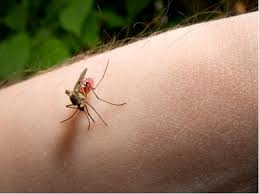
"You feel a mosquito biting your arm". This is because you have ....................... in your skin.
Thermoreceptors
Photoreceptors
Mechanoreceptors
Electroreceptors
19


MECHANORECEPTORS
Mechanoreceptors detect mechanical forces.
● touch
● Pressure
● Vibration
● Pain
● Sound Hair Cells in the Inner Ear:
These specialized mechanoreceptors are located
in the cochlea of the inner ear. They detect sound
waves (vibrations in the air) and convert them into
electrical signals that are sent to the brain,
allowing us to hear.
20


Touch receptors
21


22


23


24


Your inner ear has two tasks: Making it
possible for you to hear and helping you
keep your balance.
25


Semicircular canals help
maintain balance.
Semicircular canals
contain fluid and hair
cells.
26
Multiple Choice
The sense of equilibrium is maintained by the:
Cochlea
Semicircular canals
Olfactory epithelium
Retina
27

The hair cells is
mechanoreceptors
which sent to the
brain
28

CHEMORECEPTORS
Chemoreceptors detect
chemical stimuli:
● Smell (Odors are molecules in the air bind to these receptors,
sending signals to the brain that are interpreted as specific odors.)
● Taste (Sweet,Sour, Salty, Bitter, Umami (savory or meaty taste)
● Oxygen concentration (changes in the
levels of oxygen (O₂), carbon dioxide (CO₂), and the pH (acidity) of the blood.)
● Pain ( These receptors can detect certain chemicals
that come in contact with the skin, such as acids or toxins,
which might cause a sensation like burning or itching )
29
Multiple Choice
Which of the following is a primary taste sensation?
Sour
Bitter
Umami
All of the above
30


PHOTORECEPTORs
Photoreceptorsare specialized cells in the retina of the eye detect light,
allowing us to perceive images, colors, and the intensity of light.
31


32
Multiple Choice
The receptor cells responsible for vision are called:
Olfactory cells
Rods and cones
Taste buds
Hair cells
33


The iris is the colored part of the eye that surrounds
the pupil
the iris is a muscle that plays a crucial role in controlling the
amount of light that enters the eye by changing the size of
pupil
34


Iris relaxes (
dilate )
=> letting
more light
Iris contracts
=> letting less
light
35


Light travel through clear structure called the lenses.
The retina is an area at the back of the eye that has
photoreceptors
Photoreceptors includes:
●
Rod-cells : detect shapes
and low levels of light.
They are important for
night vision
●
Cone cells: detect colors
and function best in bright
light
36
Multiple Choice
The transparent, biconvex structure that focuses light on the retina is the:
Cornea
Lens
Iris
Sclera
37


Focusing light
The curved
shapes change
the direction of
light and focus it
onto the retina.
38


If the corneas or lenses are not curved exactly right, the
eyes will have trouble focusing image.
39


THERMORECEPTORS
Thermoreceptors detect varying temperature.
● body temperature
● pain
40


NOCICEPTORS
Nociceptors detect potentially damaging stimuli.
● temperature
● pressure
● chemical
41


Location: Nociceptors are found throughout the body, including the skin, joints,
muscles, bones, and internal organs. They are particularly abundant in areas where
injury is more likely to occur.
●
Mechanical Nociceptors: Respond
to physical damage, such as cutting or
pressure.
●
Thermal Nociceptors: Respond to
extreme temperatures, either hot or
cold.
●
Chemical Nociceptors: Respond to
chemicals, which may be released by
damaged tissues or present in harmful
substances.
42


2. How Nociceptors Work
●Detection of Pain:When a harmful stimulus (like a burn or a cut) occurs, nociceptors detect it and
generate electrical signals.
●Transmission to the Brain:These signals are then transmitted through nerve fibers to the spinal cord
and up to the brain.
●Pain Perception:The brain processes these signals and interprets them as pain, allowing you to recognize and
respond to the injury (e.g., pulling your hand away from a hot surface).
43


SENSORY SYSTEMS
VISUAL SYSTEM
Two types of photoreceptors in the eye detect visible light.
1. Rods are stimulated at
low levels of light and
detect shapes.
2. Cones are stimulated by
different wavelengths of
light and detect color.
44

VISUAL SYSTEM
Information is sent through the optic
nerve to the occipital lobe of the brain.
45

AUDITORY SYSTEM
Hair cells in the cochlea of the inner ear
are mechanoreceptors that are
stimulated by vibrations caused by
sound waves.
Information is sent through the auditory
nerve to the temporal lobe of the brain.
46


SOMATOSENSORY SYSTEM
The somatosensory system detects
changes at the surface or inside the
body.
● mechanoreceptors,
chemoreceptors, thermoreceptors,
and nociceptors all over the body
Information about touch and pain is
processed in the parietal lobe of the brain.
47


GUSTATORY SYSTEM
Chemoreceptors located in taste buds in
the mouth detect information about flavors.
Information is
sent to the frontal
lobe of the brain
by multiple
nerves.
48


OLFACTORY SYSTEM
Chemoreceptors in the nasal cavity detect
odors and information is received by the
olfactory bulb.
Multiple parts of the brain, including the
frontal lobe, process the information.
49


VESTIBULAR SYSTEM
Mechanoreceptors in the semicircular
canals of the inner ear detect balance and
rotational movements.
Information about balance is sent to the multiple
parts of the cerebellum and cerebrum by the
vestibular nerve.
50

51

ADDITIONAL RESOURCES
AumSum - How do ears help with balancing?
AumSum - Taste Buds
AumSum - How can we smell things?
Bozeman Science - Sensory System
52


Sensory systems
20 August, 2024
Show answer
Auto Play
Slide 1 / 52
SLIDE
Similar Resources on Wayground

49 questions
Cells & Microscope- TK
Presentation
•
8th Grade
47 questions
Chemical reactions and equations
Presentation
•
8th Grade
47 questions
Elkhorn History Images
Presentation
•
KG
46 questions
Homeostasis & Feedback
Presentation
•
9th Grade
44 questions
EOC Biology Review 2 - Cell Cycle & Biomolecules
Presentation
•
9th Grade
50 questions
Water Properties Review
Presentation
•
8th Grade
50 questions
American revolution
Presentation
•
8th Grade
50 questions
Louisiana Purchase and Lewis & Clark Expedition
Presentation
•
8th Grade
Popular Resources on Wayground
10 questions
Safety Day 2026 – Student Review

Quiz
•
9th Grade
21 questions
Continents and Oceans
Quiz
•
6th Grade
20 questions
Parts of Speech
Quiz
•
5th Grade
16 questions
Subject & Predicate
Quiz
•
5th Grade
25 questions
Multiplication Facts
Quiz
•
5th Grade
12 questions
Map Skills
Quiz
•
3rd Grade
22 questions
Continents and Oceans
Quiz
•
5th Grade
15 questions
Rounding Decimals
Quiz
•
5th Grade
Discover more resources for Biology
10 questions
Exploring the Phases of Mitosis and Cell Division

Interactive video
•
6th - 10th Grade
10 questions
Exploring Evidence of Evolution
Interactive video
•
6th - 10th Grade
10 questions
Exploring Cell Membrane Transport Mechanisms
Interactive video
•
6th - 10th Grade
5 questions
Q2W1- DNA MINI QUIZ 2024
Quiz
•
8th Grade
16 questions
Photosynthesis and Cellular Respiration
Quiz
•
8th Grade
16 questions
Cellular Respiration
Quiz
•
7th - 8th Grade
10 questions
Comparing Prokaryotic and Eukaryotic Cells
Interactive video
•
6th - 10th Grade
61 questions
Genetics
Quiz
•
6th - 8th Grade