9Science
Presentation
•
Science
•
9th Grade
•
Medium

Chiara Simmons-Bliss
Used 1+ times
FREE Resource
10 Slides • 37 Questions
1
Reflection and Refraction Review
2
3
4
5
6
Index of Refraction
1 on the index is equal to no bending at all....light travels straight through a vacuum.
The higher the index of refraction the more the light bends
7
Types of lenses
Concave Lens
Convex Lens
8
Concave Lens
"caves in" on either side of lens
thinner in the middle than at the edges
The parallel light rays enter and then exit angled away from one another never meeting at a focal point
Like a Convex Mirror it produces only virtual images
9
Convex Lens
Thicker in the center than the edges
As parallel light rays enter the lens they exit at an angle so they meet at a focal point
If the object is between the focal point and the lens then a virtual image is produced
If the object is beyond the focal point then a real image is produced.
10
11
Multiple Choice
Light refracts when:
It changes speed
It changes from a particle to a wave
Its density changes
It encounters a solid object
12
Multiple Choice
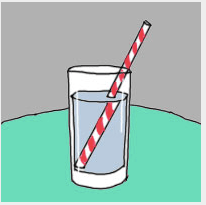
Why does the straw appear to be bent?
light is reflected
light is absorbed
light is turned
light is refracted
13
Multiple Choice
What do we call a material that light can travel through?
air
water
medium
pathway
14
Multiple Choice
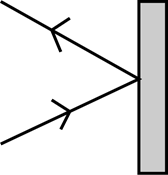
In the illustration, the light ray striking the object is-
15
Multiple Choice
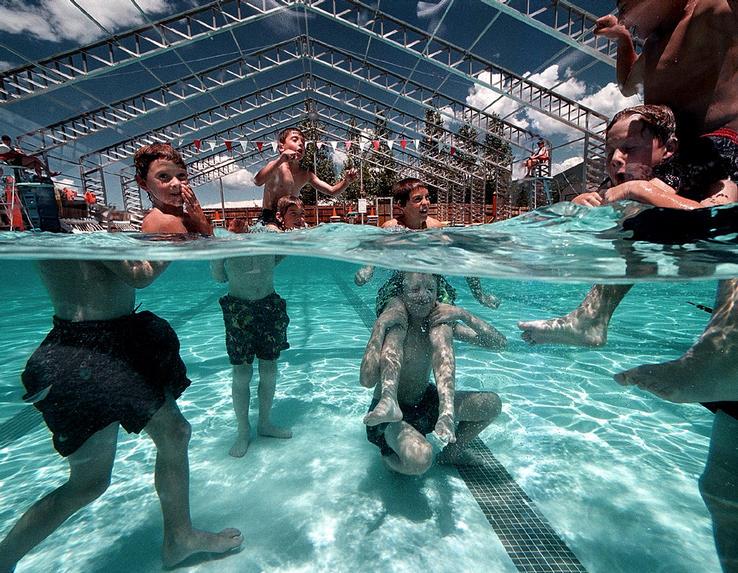
16
Multiple Choice
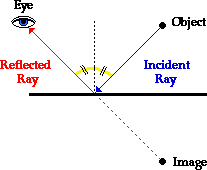
What is the angle of reflection equal to?
The angle of refraction
The angle of incidence
The angle of absorption
The angle of light
17
Multiple Choice
What might explain why light travels in a straight line?
If there is nothing to interfere with light waves, they should travel in a straight line.
Light waves will always travel in a straight line, even if they come into contact with another object.
Light waves don't travel in a straight line.
Light waves travel in a straight line because sound waves travel in a straight line.
18
Multiple Choice
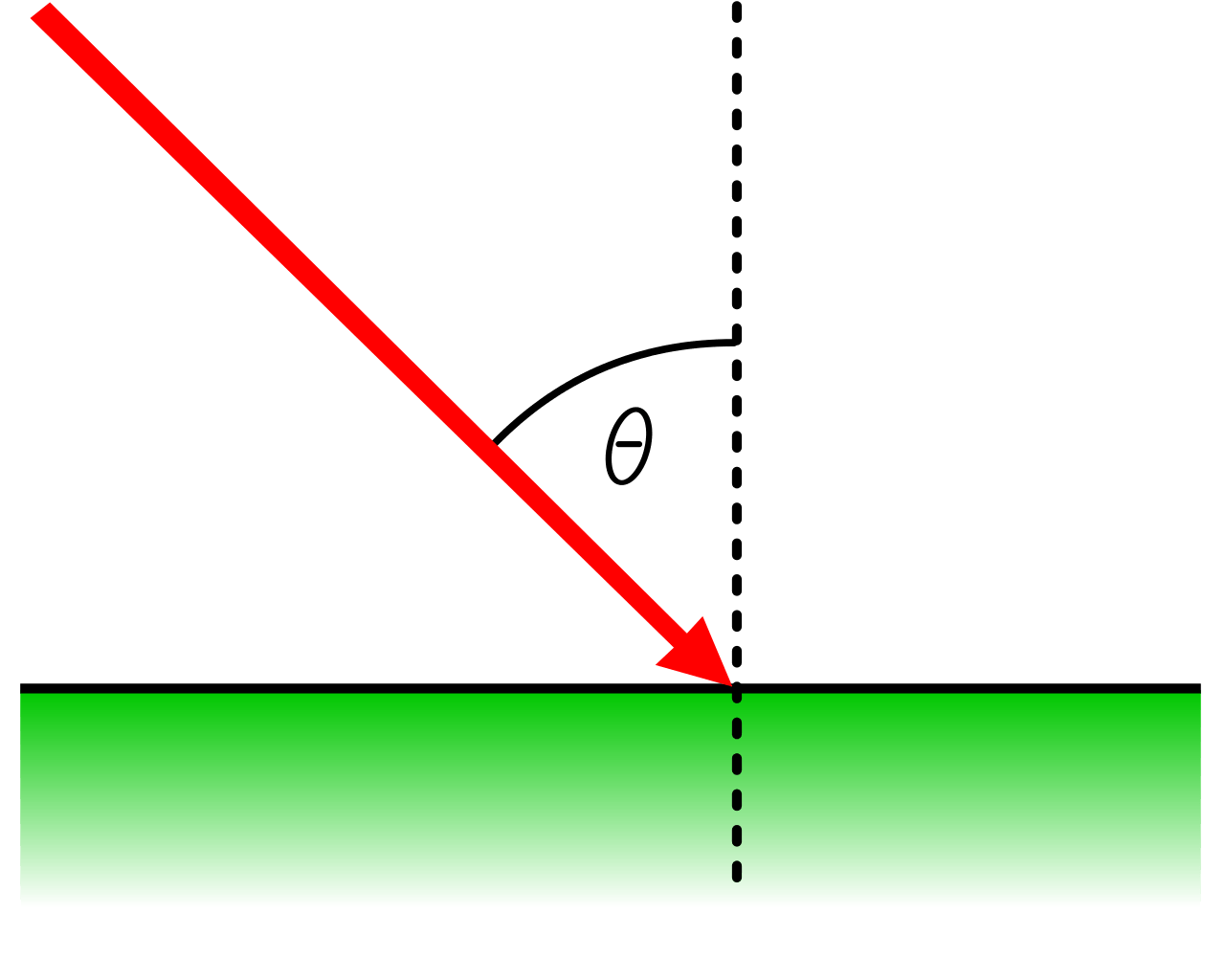
What is the angle of incidence?
The angle at which light bends in water.
The angle at which light hits a surface.
The angle at which light is absorbed by an object.
The angle at which light bounces off a surface.
19
Multiple Choice
20
Multiple Choice
What is the angle of reflection (θr) in the image?
56o
90o
124o
34o
21
Multiple Choice
22
Multiple Choice
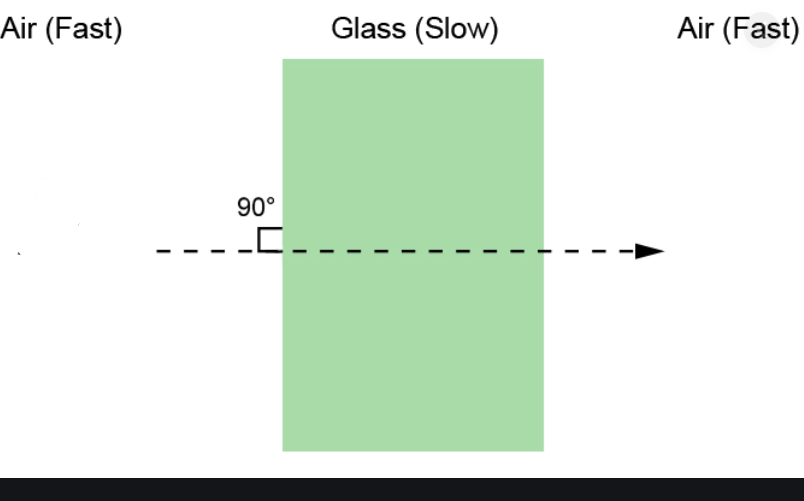
A beam of light bends when it passes from air into water, and more when it passes from water into glass. What can you conclude from this fact?
Air is denser than glass
Water is denser than glass
Glass is denser than water
Air is denser than water
23
Multiple Choice
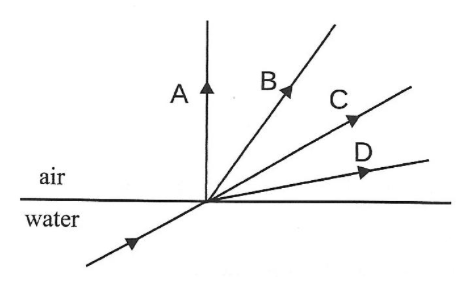
A light ray is incident from water to air. Which of the refracted rays is correct?
A
B
C
D
24
Multiple Choice
25
Multiple Choice
The line 90 degress through the refracting or reflecting surface is called?
Medium
Normal
Incidence
Reflection
26
Multiple Choice
The incident ray is the light ray leaving the light source. The angle of ______________ correlates with the incident ray.
Incidence
Reflection
Refraction
Normal
27
Multiple Choice
Objects that reflect well are
Matte surfaces
Smooth, shiny surfaces
Dark coloured surfaces
Medium coloured surfaces
28
Multiple Choice
The law of reflection states that
Angle of incidence = Angle of reflection
Angle of incidence = Angle of incidence
Angle of reflection = Angle of translucence
Angle of reflection = Angle of reflection
29
Multiple Choice
A concave mirror
Curves inwards
Curves outwards
Curves sideways
Curves in multiple directions
30
Multiple Choice
A convex mirror
Curves inwards
Curves outwards
Curves sideways
Curves in multiple directions
31
Multiple Choice
The angle of reflection is
90 degrees
55 degrees
45 degrees
135 degrees
32
Multiple Choice
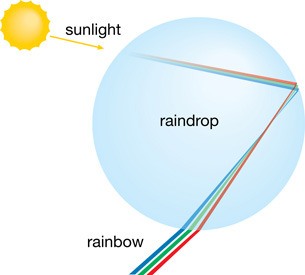
Refraction is
The bending of light as it passes through the one substance at an angle
A light beam shone in one end of an optical fibre and totally internally reflected at the other end
The bending of light as it passes from one substance to another at an angle
A type of convex object used in everyday life
33
Multiple Choice
The light we can see forms which part of the electromagnetic spectrum?
Infrared
Ultraviolet
Visible
Radio
34
Multiple Choice
In which medium will light travel the slowest?
ruby
diamond
vegetable oil
air
35
Open Ended
If light moved from air into a diamond, what would happen to the speed of light?
36
Multiple Choice
When the refracted light ray bends towards the normal, is it moving faster or slower in the new medium?
Faster
Slower
37
Multiple Choice
Describe what happens to the speed of light as it moves from the glass into air.
speeds up
slows down
remains constant
38
Multiple Choice
Refraction is when light...
Bounces
Transmits
Bends
Absorbs
39
Multiple Choice
Reflection is when light...
Bends
Bounces
Absorbs
transmits
40
Multiple Choice
41
Multiple Choice
What are three things that can happen when light hits an object?
Regular, Diffuse, Obtuse
Reflection, Refraction, and Absorption
Concave, Convex, Plane
42
Open Ended
If you friend was away today and still didn't understand Reflection and Refraction, summarise it for them in an Instagram message:
(Make sure you include the key definitions of both and possibly even an example to help them out!)
43
Dropdown
44
Drag and Drop
45
Drag and Drop
46
Dropdown
47
Dropdown
Reflection and Refraction Review
Show answer
Auto Play
Slide 1 / 47
SLIDE

Similar Resources on Wayground
42 questions
linear transformations
Presentation
•
9th Grade
42 questions
Water Use
Presentation
•
9th Grade
41 questions
Earth/Space Review 3-Sun+moon+Earth
Presentation
•
8th Grade
45 questions
Life Cycle of a Star
Presentation
•
KG - 8th Grade
40 questions
Respiratory System
Presentation
•
9th Grade
44 questions
Evolution and Adaptation
Presentation
•
8th Grade
42 questions
East Asia
Presentation
•
9th Grade
42 questions
Magnitude of Stars - Connection
Presentation
•
9th Grade
Popular Resources on Wayground
10 questions
HCS SCI 03 Summer School Review 4
Quiz
•
3rd Grade
11 questions
HSMS - Standard Response Protocol
Quiz
•
6th - 8th Grade
16 questions
1.1-1.2 Quiz Review
Quiz
•
9th - 12th Grade
12 questions
Exponent Expressions
Quiz
•
6th Grade
20 questions
Adding and Subtracting Integers
Quiz
•
6th - 7th Grade
11 questions
Northeast States
Quiz
•
3rd - 4th Grade
10 questions
Characterization
Quiz
•
3rd - 7th Grade
10 questions
Common Denominators
Quiz
•
5th Grade