Search Header Logo
Chapter 2 Notes - Chemistry of Life

Chapter 2 Notes - Chemistry of Life

Assessment

Presentation

Biology

University

Hard

Created by

Emily Schaefer

Used 3+ times

FREE Resource

54 Slides • 36 Questions

1

media

2

media

3

media

4

media

5

media

6

media

7

media

8

media

9

media

10

media

11

media

12

media

13

media

14

media

15

media

16

media

17

media

18

media

19

media

20

media

21

Multiple Choice

The attractive force that holds two atoms of a compound together.

1

Chemical Bonds

2

Magnetism

3

Gravity

4

Weak Force

22

Multiple Choice

A substance that cannot be further broken down into other substances

1

Element

2

Compound

3

Molecule

4

Plasma

23

Multiple Choice

What bond results from two atoms gaining/losing electrons?

1

Ionic Bond

2

Covalent Bond

3

Hydrogen Bond

4

Van der Waals Interactions

24

Multiple Choice

The bond that results from the sharing of a pair of electrons by two atoms.

1

Hydrogen Bonds

2

Ionic Bond

3

Van der Waals Interactions

4

Covalent Bond

25

Multiple Choice

What is the strongest chemical bond?

1

Van der Waals Interactions

2

Covalent Bond

3

Ionic Bond

4

Hydrogen Bond

26

Multiple Choice

Which of these is an example of an inorganic compound?

1

Carbohydrates

2

Lipids

3

Water

4

Nucleic Acids

27

media

28

media

29

media

30

media

31

media

32

media

33

media

34

media

35

media

36

Multiple Choice

A substance that minimizes changes in the concentration of H+ and OH- in a solution.

1

Inorganic Compounds

2

Buffers

3

Organic Compounds

4

Bases

37

Multiple Choice

A measure of the relative concentrations of H+ and OH- ions. It determines the acidity and alkalinity of substances.

1

Bases

2

pH scale

3

Acids

4

Buffers

38

Multiple Choice

A compound that dissociates in water into hydrogen ions and negatively charged ions.

1

Base

2

Acid

3

Buffer

4

Organic Compounds

39

media

40

media

41

media

42

media

43

media

44

media

45

media

46

Multiple Choice

An example of a polysaccharide is:

1

starch

2

meat

3

fruit

4

protein

47

Multiple Choice

Chemically, lactose is a:

1

monosaccharide

2

disaccharide

3

dextrose

4

polysaccharide

48

Multiple Choice

What is the polysaccharide used by animals to store glucose?

1

glycogen

2

fructose

3

starch

4

cellulose

49

media

50

media

51

media

52

media

53

media

54

media

55

media

56

Multiple Choice

Saturated fats are __________ at room temperature.

1

liquid

2

solid

57

Multiple Choice

The characteristic that all lipids have in common is----
1
made of lots of double bonds
2
acidic when mixed with water
3
no high energy content
4
do not dissolve in water

58

Multiple Choice

Question image
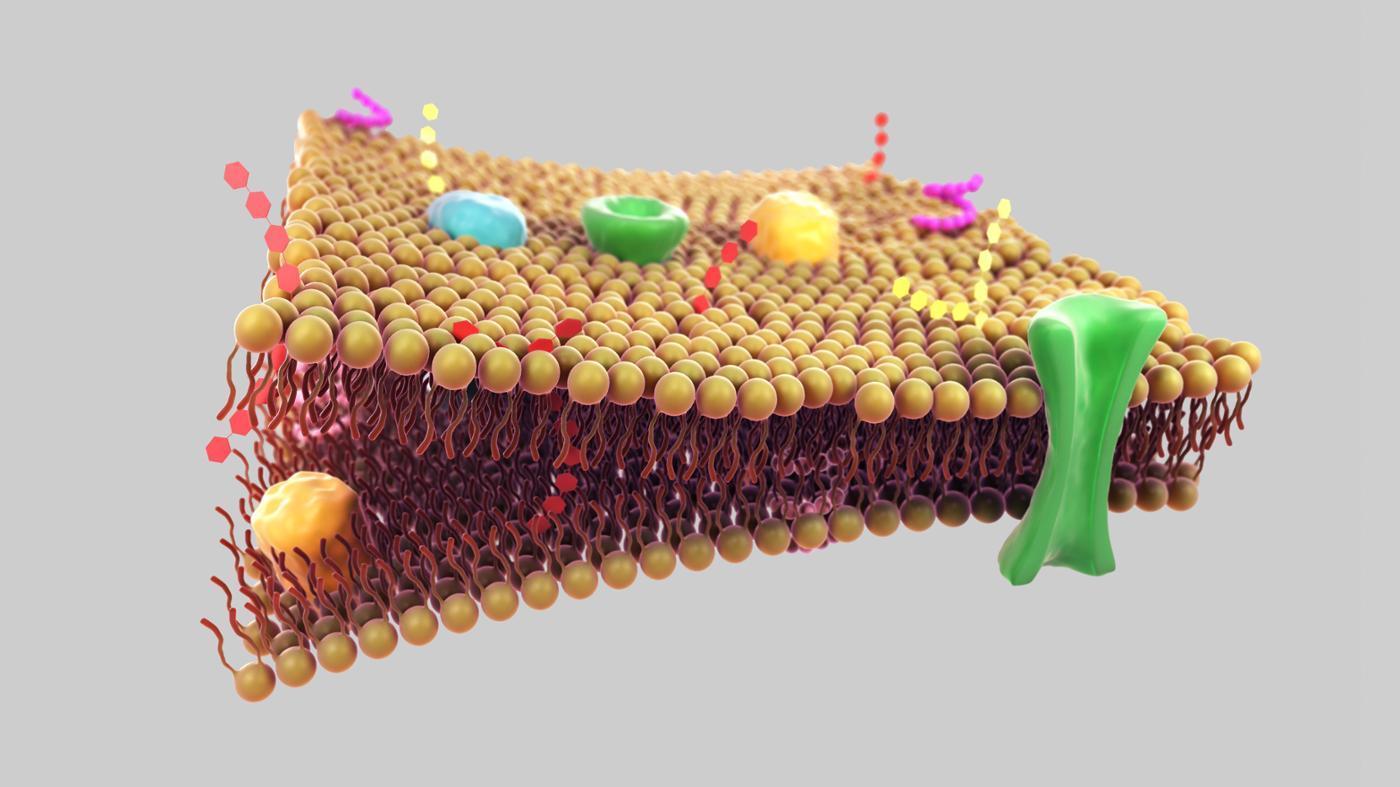
The phospholipid bilayer comprises what part of the cell?
1
cytoplasm
2
cell membrane
3
cytoskeleton
4
nuclear membrane

59

Multiple Choice

Which is not one of the three classes of lipids?

1

Phospholipids

2

Sterols

3

Amino Acids

4

Triglycerides

60

Multiple Choice

A ______________ is composed of a phosphate and glycerol head and 2 fatty acid chain tails. 
1
phospholipid 
2
Carbohydrate
3
Cholesterol 
4
Protein 

61

Multiple Choice

"Water Loving"
1
Hydrophobic
2
Hydrophilic 
3
Hydroelectric 
4
Hydroloric

62

Multiple Choice

"Water Fearing" 
1
Hydrophobic
2
Hydrophilic 
3
Hydroelectric 
4
Hydroloric

63

Multiple Choice

Question image
1

protein

2

nucleic acid

3

lipid (steroid)

4

carbohydrate

64

Multiple Choice

Which of these is a lipid?

1

Cellulose

2

rRNA

3

Enzyme

4

Steroid

65

media

66

media

67

media

68

media

69

media

70

Multiple Choice

Not all amino acids have to be supplied by food. This is true because:

1

not all necessary amino acids are found in food.

2

hormones furnish the missing amino acids

3

the liver is able to manufacture some amino acids from others

4

the liver is able to manufacture some amino acids from fatty acids

71

Multiple Choice

All of the follow are roles of proteins in the body, EXCEPT:

1

Fluid Balance Regulators

2

Enzymes

3

Hormones

4

Building blocks for body structures

5

Primary cell membrane component

72

Multiple Choice

When proteins are exposed to heat, acid, base, or mechanical disruption and lose their shape

1

Acidification

2

Denaturation

3

Transamination

4

Disruption

73

Multiple Choice

Amino acids linked together in a linear chain is what level of structure?

1

Primary

2

Secondary

3

Tertiary

4

Quaternary

74

Multiple Choice

What is the monomer of a protein?

1

Amino acid

2

Phospholipid

3

Nucleotide

4

Simple sugars

75

media

76

media

77

media

78

media

79

media

80

Multiple Choice

What is the monomer of nucleic acids?

1

Amino acids

2

Phosphate groups

3

Ribose or deoxyribose sugars

4

Nitrogenous bases

5

Nucleotides

81

Multiple Select

Which of the following are components of a nucleotide? Select all that apply!

1

A pentose sugar

2

A phosphate group

3

A nitrogenous base

4

A carboxyl group

5

A ribose sugar

82

Multiple Choice

Which of the following nitrogenous bases are NOT found in RNA?

1

Uracil

2

Thymine

3

Guanine

4

Adenine

5

Cytosine

83

Multiple Choice

RNA is usually

1

Single stranded

2

Double stranded

3

Triple stranded

4

All of these

84

Multiple Choice

Aside from DNA being double-stranded and RNA being single-stranded, which of these is another difference between DNA and RNA?

1

For Phosphate, DNA has PO4 while RNA has PO3

2

For sugar, DNA has deoxyribose while RNA has ribose

3

DNA is a nucleic acid while RNA is a protein

4

DNA's building blocks are nucleotides while RNA's are amino acids.

85

Multiple Choice

Which of these biomolecules are ideal for long-term energy storage?

1

Carbohydrates

2

Fats

3

Proteins

4

Nucleic Acids

86

Multiple Choice

These are substances needed by living organisms in small amounts.

1

Heavy Metals

2

Noble Gases

3

Major Elements

4

Trace Elements

87

Multiple Choice

Which of these biomolecules are composed of amino acids?

1

Nucleic acids

2

Proteins

3

Carbohydrates

4

Lipids

88

Multiple Choice

In which of the four biomolecules does DNA and RNA belong to?

1

Proteins

2

Carbohydrates

3

Nucleic Acids

4

Lipids

89

Multiple Choice

The most abundant out of the four major classes of biomolecules.

1

Carbohydrates

2

Lipids

3

Proteins

4

Nucleic Acids

90

media
media

Show answer

Auto Play

Slide 1 / 90

SLIDE