

TAXONOMY

Presentation
•
•
Practice Problem
•
Easy

morenike darasimi
Used 3+ times
FREE Resource
17 Slides • 4 Questions
1

Unit 10 - Taxonomy
2

Taxonomy and Classification - overview
Taxonomy is the science of classifying things, especially living things.
We are going to look at:
●form of scientific names of living things
●the 8 levels of classification of living things
●characteristics of Domains and Kingdoms, the two biggest categories
●the use of dichotomous keys to determine species
3


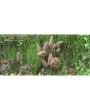


The Big Idea - Classification
Humans are curious and like to talk about the other living things in the world
around us, so we have always given names to these animals and plants (and other
things).
Sometimes, it is even necessary to communicate to other people in a very specific
way about these organisms.
“What kind of snake did you see in the garden?”
“I need you to get me some oregano to put in the soup I’m making.”
“They live over the mountain in the big grove of sweetgum trees.”
“That plant over there is poison ivy -- stay out of it!”
4
Open Ended
What are some potential problems with naming species? Why is it important to be s
5


Problems with naming
1. Sometimes different people in different
places call the same thing by different names.
Blazing Star
Gayfeather
Button Snakeroot
2. Sometimes people call a variety of different
things by the same name.
6
7


The solution
This system was invented and popularized by the Swedish
botanist and naturalist, Carl Linnaeus. He was one of the
most influential and successful scientists of the 18th
Century.
He even renamed himself to sound fancier and more
“sciency.”
Carl von Linné → Carl Linnaeus
Today, while we still use common names (e.g. red-tailed hawk, petunia, hen-of-the-forest)
in everyday life, we also have internationally accepted, unique names for every single
living thing. We call these scientific names.
8


How scientific names work --
The names always have two parts, so it is referred to as binomial
nomenclature (“two word naming”). The words are “latinized” with
suffixes that are like latin words.
1.The Genus -- this part is always Capitalized
2.
The specific epithet -- this part is never capitalized
●Together, they make up the scientific name of a species.
●The species scientific name is always in italics (or
underlined)
ex) Blue Jay -- Genus is Cyanocitta, species epithet is cristata; the
species name is Cyanocitta cristata (Cyanocitta cristata)
ex) Groundhog -- Genus is Marmota, species epithet is monax; the
species name is Marmota monax (Marmota monax)
9
Multiple Choice
Choose the correct form of the scientific name of the species black bear
Ursus Americanus
Ursus Americanus
Ursus Americanus
Ursus americianus
10


Grouping species
● Species nearly
always belong in
other identifiable
groups.
● Historically, this was
done using physical
characteristics.
● Now, genetic
similarity (DNA) is
predominantly used.
11


Levels of Classification of living things
There are eight major levels of classification: Domain,
Kingdom, Phylum, Class, Order, Family, Genus, and
Species.
The are many different mnemonics (memory aides) to
help remember these different levels, like this one:
Dumb King Phillip cut
open five green snakes
Dumb
King
Phillip
cut
open
five
green
snakes
12


Levels of Classification of living things
Each higher (larger, broader, more comprehensive)
level contains numerous groups of the next lower
level
examples:
● a Phylum contains many classes
● An Order contains many families
● A family contains many genera (plural of
genus).
13


Domains -- the most basic divisions
Based on basic cellular biochemistry
3 Domains (includes all of life)
Bacteria
Archaea
Eukarya
(humans are Eukarya -- we have complex
cells with a nucleus and organelles)
14

Kingdoms
The second biggest division
This has changed over time as scientists have learned more about the diversity,
genetics, and biochemistry of organisms.
Linnaeus originally put everything in two kingdoms -- animals and plants
We currently have 6 Kingdoms
protists
plants
bacteria
fungi
archaea
Animals
15
Open Ended
Name the three domains
16

Characteristics of Domains and Kingdoms
3 Domains
6 Kingdoms
Characteristics
Examples
Archaea
Archaea
single-celled, lacks nucleus, live in harsh envir.
methanogens, extreme
thermophiles
Bacteria
Bacteria
single-celled, lacks nucleus, ubiquitous
(everywhere)
E. coli, Salmonella,
Streptococcus pyogenes
Eukarya
Animals
multicellular, nucleus, organelles, ingest food,
no cell wall, movement
corals, sponges, worms,
insects, reptiles, birds,
mammals
Plants
multicellular, nucleus, organelles, photosynthetic
ferns, mosses, trees,
grasses
Fungi
mostly multicellular, absorb their food, cell walls,
mushrooms, molds,
mildews, yeasts
Protists
mostly single-celled, most in water, diverse
ways of getting energy
amoeba, paramecia,
diatoms, Euglena
17


How much biomass is there of each Kingdom?
note: Animals make up the smallest fraction of life of all the Kingdoms.
There is 29 times more mass of bacteria than all the animals (including
people) put together.
18
Open Ended

Using the image name the different types of organisms. Ex: producer, primary consumer etc...
19

Using tools to determine species
The most common method of determining what species something is to use what is
called a dichotomous key.
This is a series of questions about an organism, each with two possible answers.
Gradually, if you answer each question carefully and correctly, the dichotomous key
leads you to your answer -- what the scientific name of the species is that you are
looking at.
20
21


Example of a dichotomous key -- you have a vertebrate animal
that you want to know what kind it is (what Class is it?)
START here
If a vertebrate had:
no fur
no feathers
external fertilization
no gills in adults
Then, it would be an
amphibian.
Unit 10 - Taxonomy
Show answer
Auto Play
Slide 1 / 21
SLIDE
Similar Resources on Wayground

16 questions
Treaty of Versailles
Presentation
•
9th Grade
16 questions
Animal Cells
Presentation
•
5th - 6th Grade
16 questions
Special Segments in Triangles
Presentation
•
8th - 11th Grade
16 questions
Dimensions of Wellness
Presentation
•
8th - 10th Grade
16 questions
Some, Any & No
Presentation
•
7th - 12th Grade
16 questions
Rocks and the Rock Cycle
Presentation
•
5th Grade
16 questions
Adjectives and Adverbs
Presentation
•
9th - 10th Grade
16 questions
Fraction Decimal Percent Conversions Lesson & Practice
Presentation
•
6th Grade
Popular Resources on Wayground
10 questions
Safety Day 2026 – Student Review

Quiz
•
9th Grade
21 questions
Continents and Oceans
Quiz
•
6th Grade
20 questions
Parts of Speech
Quiz
•
5th Grade
16 questions
Subject & Predicate
Quiz
•
5th Grade
25 questions
Multiplication Facts
Quiz
•
5th Grade
12 questions
Map Skills
Quiz
•
3rd Grade
22 questions
Continents and Oceans
Quiz
•
5th Grade
15 questions
Rounding Decimals
Quiz
•
5th Grade
Discover more resources for
10 questions
Safety Day 2026 – Student Review
Quiz
•
9th Grade
21 questions
Continents and Oceans
Quiz
•
6th Grade
20 questions
Parts of Speech
Quiz
•
5th Grade
16 questions
Subject & Predicate
Quiz
•
5th Grade
25 questions
Multiplication Facts
Quiz
•
5th Grade
12 questions
Map Skills
Quiz
•
3rd Grade
22 questions
Continents and Oceans
Quiz
•
5th Grade
15 questions
Rounding Decimals
Quiz
•
5th Grade