Search Header Logo
Macromolecules Notes

Macromolecules Notes

Assessment

Presentation

Biology

10th Grade

Medium

NGSS
HS-LS1-6, HS-LS1-1, MS-LS1-7

+1

Standards-aligned

Created by

Erica Armstrong Baz

Used 5+ times

FREE Resource

12 Slides • 13 Questions

1

media

2

media

3

media

4

media

5

Multiple Choice

Important to the structural integrity of plant cells, this is the single most popular polysaccharide in the world.
1
Starch
2
Glycogen
3
Cellulose
4
Chitin

6

Multiple Choice

Carbohydrates are composed of Carbon, Hydrogen and Oxygen

1

True

2

False

7

Multiple Choice

A polymer: or many units of a carbohydrate is

1

monosaccharide

2

polysaccharide

3

fruit

4

lipid

8

media

9

media

10

media

11

Multiple Choice

Question image

Fats and oils: a major source of food providing long term energy and other functions.

1

Sugars

2

Carbohydrates

3

Lipids

4

Proteins

12

Multiple Choice

Question image

A hydrocarbon chain that is sometimes considered to be a monomer of lipids.

1

Fatty Acids

2

Nucleic Acids

3

Proteins

4

Lipids

13

Multiple Choice

Question image
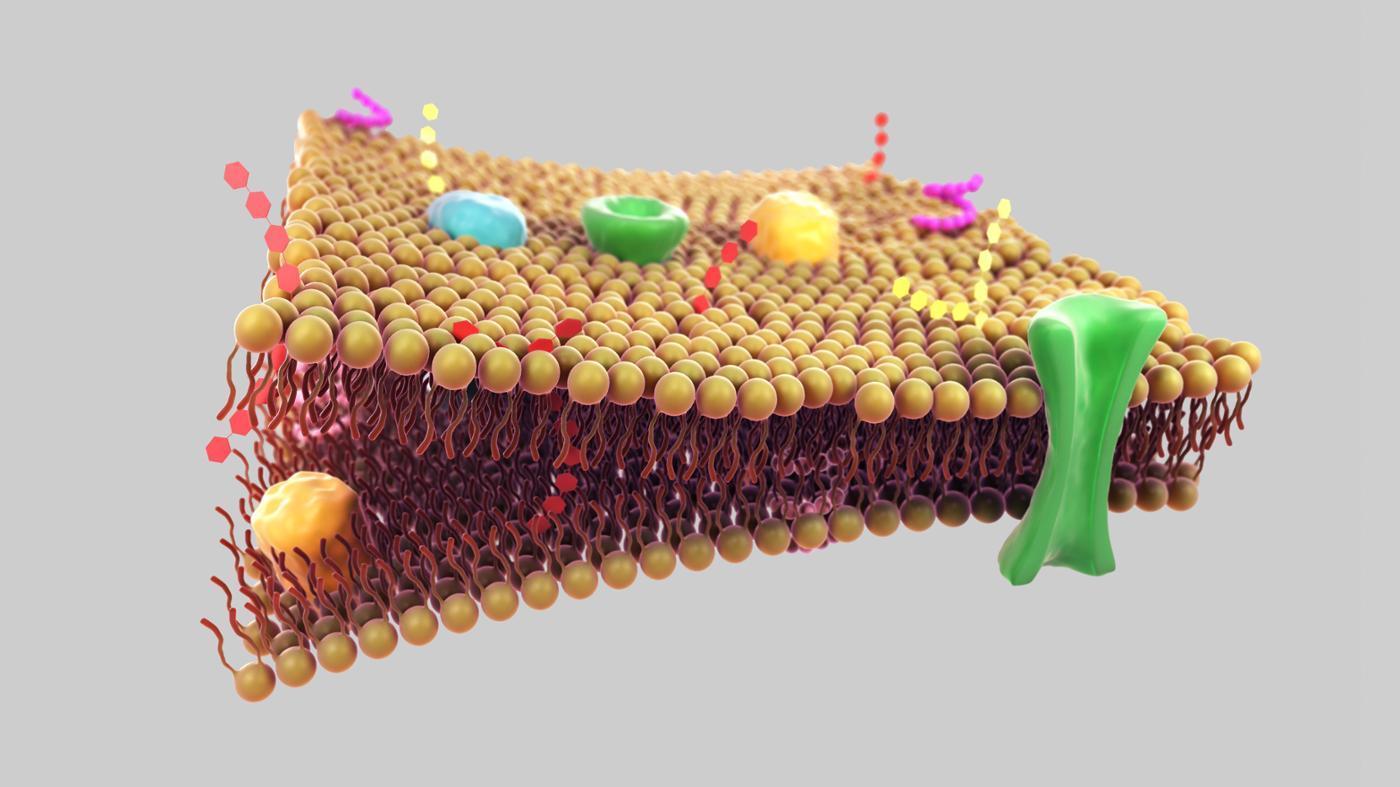
The phospholipid bilayer comprises what part of the cell?
1
cytoplasm
2
cell membrane
3
cytoskeleton
4
nuclear membrane

14

media

15

media

16

media

17

Multiple Choice

What does an enzyme do?

1

slows down chemical reactions

2

speeds up chemical reactions

3

increases the temperature of the reaction

18

Multiple Choice

Through dehydration synthesis two or more amino acids are linked together by

1

a ionic bond

2

a polar covalent bond

3

a nonpolar covalent bond

4

peptide bond

19

Multiple Choice

All of the following are roles of proteins EXCEPT

1

Act as enzymes

2

Give cells/organisms structure

3

Provide a short-term source of energy

4

Protection against disease

20

media

21

media

22

Multiple Choice

All organic compounds contain the element
1
carbon
2
nitrogen
3
phosphorus
4
sulfur

23

Multiple Choice

Question image
The monomer, building block, of DNA and RNA; made up of a sugar, phosphate, and nitrogenous base
1
Amino Acid
2
Fatty Acid
3
Nucleotide
4
Monosaccharide

24

Multiple Choice

The three elements that make up most of all 4 types of macromolecules
1
Water, Oxygen, & Hydrogen
2
Carbon, Hydrogen, & Oxygen
3
Nitrogen, Hydrogen, & Oxygen
4
Nitrogen, Phosphorus, & Sulfur

25

Multiple Choice

Question image
Which macromolecule is this?
1
carbohydrate
2
lipid
3
protein
4
nucleic acid
media

Show answer

Auto Play

Slide 1 / 25

SLIDE