

2.2.4 Patterns

Presentation
•
Science
•
8th Grade
•
Practice Problem
•
Easy
+17
Standards-aligned

Megan Horvat
Used 8+ times
FREE Resource
11 Slides • 8 Questions
1
Patterns

2.2.4
2
Draw
Before we start class, feel free to take some time to color in the chameleon!
3
Objectives
Learners can:
describe population patterns that occur annually
describe population patterns that occur daily
evaluate how changes in the environment impact behavior patterns
4
population
trend
Prerequisite Vocab
diurnal
hibernate
migrate
nocturnal
New Vocab
Vocabulary
5


organisms that are active during the daytime
Diurnal
enter a state of inactivity
Hibernate
move from one place to a different place, typically over long distances
Migrate
organisms that are active during the nighttime
Nocturnal
6

Migrating is the movement from one place to a different place, typically over long distances. Migration behavior is usually the result of changes in the environment—for example, cooler temperatures or the availability of food.
Migration
7
Open Ended
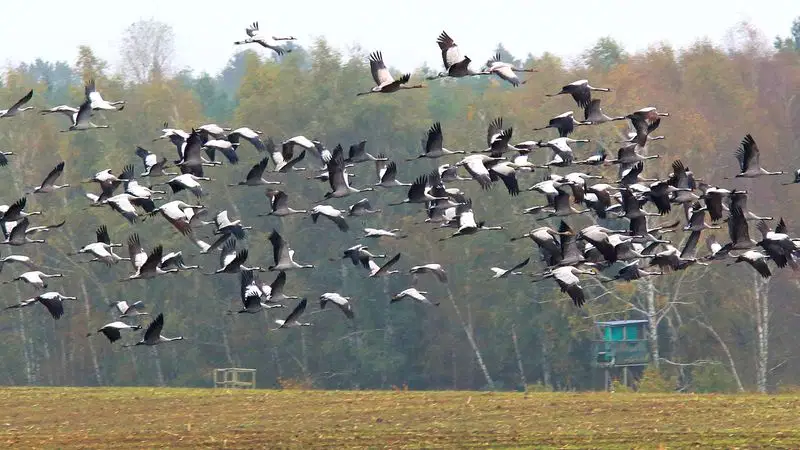
What animals that you know of migrate?
8

They can be found across most of North America, as well as South America and even parts of Europe. One unique thing about this species of butterfly is its annual migration south in the fall as it heads toward southern California and Mexico.
They can travel in groups of up to thousands and often travel as far as 2,500 miles. The journey takes so long that the migration takes between three and five generations of butterflies, with each generation moving closer to the final destination.
Monarch Butterflies
9


Humpback whales migrate from breeding grounds near the equator to feeding grounds near the poles.
Humpback Whale
Every seven years, salmon migrate from the ocean to freshwater rivers to lay eggs and reproduce.
Salmon
Sea turtles are charismatic ocean wanderers that make incredible open sea migrations to feed, mature, and lay eggs.
Sea Turtles
10
Multiple Select
Which of the following conditions would most likely trigger migration behavior?
temperatures becoming colder
food supply diminishing
predator population increasing
ideal climate conditions
11

When an organism hibernates, it maintains a state of inactivity. An animal will rely on stored fat to survive during the time of inactivity. Hibernation allows organisms to survive cold weather conditions when they may not usually be able to find necessary resources such as food.
Hibernation
12


During true hibernation, it is difficult for an animal to wake up. To survive during this time, animals will build up a lot of fat.
Hibernation
Torpor is a type of deep sleep that many bears experience during winter. During this sleep, body processes do not slow down very much. Their temperature also remains about the same as usual.
Torpor
13
Multiple Choice
What advantage does hibernation provide for the species that follow this pattern?
Hibernation allows the animal to survive during times of limited food supply.
Hibernation prepares animals to be active during the night when temperatures are cooler.
Hibernation allows animals to rest before they go hunting and foraging for food.
Hibernation allows animals to easily watch for predators and react quickly to threats.
14
Open Ended

What animals that you know of are nocturnal?
15


Diurnal animals and plants are those that are active during the daytime. Many birds, mammals, and reptiles are considered diurnal. Plants that bloom during the day are deemed diurnal, such as a sunflower.
Dirunal
Nocturnal plants and animals are active during the nighttime. Nocturnal organisms often have specialized senses to survive during times with little light. Nocturnal plants will usually bloom in the evenings to be pollinated by nocturnal animals such as fruit bats.
Nocturnal
16
Categorize
The large Japanese field mouse is active during the night when most predatory birds sleep.
Chimpanzees rely on sunlight to gather food and interact with other chimpanzees.
Lions often hunt in the early morning or late afternoon when it is cooler.
Raccoons often forage for food in urban areas when there are less people out to avoid being seen
Match the daily pattern type with the description of the animal that exhibits that pattern.
17
18
Multiple Choice
Which of the following inputs is the primary factor that controls circadian rhythms?
hunger
light
temperature
hormones
19
Categorize
hibernation
migration
diurnal
nocturnal
Drag the following terms based on whether they represent an organism's patterns that occur daily or yearly.
Patterns
2.2.4
Show answer
Auto Play
Slide 1 / 19
SLIDE
Similar Resources on Wayground

15 questions
Magnets
Presentation
•
8th Grade
15 questions
Weathering, Erosion & Deposition
Presentation
•
8th Grade
16 questions
Newton's First Law of Motion...
Presentation
•
8th Grade
12 questions
Thermal Energy
Presentation
•
8th Grade
16 questions
8.7 c tides
Presentation
•
8th Grade
11 questions
Charles's & Boyle's Laws
Presentation
•
8th Grade
16 questions
Cluster 1 Day 2: Nature of Science
Presentation
•
8th Grade
12 questions
Interdependence and Competition
Presentation
•
7th - 8th Grade
Popular Resources on Wayground
10 questions
HCS SCI 03 Summer School Assessment 1

Quiz
•
3rd Grade
15 questions
HCS SCI 05 Summer School Assessment 1 Review
Quiz
•
5th Grade
22 questions
Day 9 Equations and Inequalities Review
Quiz
•
9th Grade
10 questions
Writing and Identifying Ratios Practice
Quiz
•
5th - 6th Grade
7 questions
PYRAMID PERSPECTIVES part 1
Presentation
•
9th - 12th Grade
12 questions
Understanding the Fourth of July
Quiz
•
9th Grade
15 questions
Soccer World Cup Quiz Questions
Quiz
•
7th Grade