Search Header Logo
E2 Unit 9.3 Atmospheric motions

E2 Unit 9.3 Atmospheric motions

Assessment

Presentation

Geography

12th Grade

Practice Problem

Medium

Created by

Miss vchow

Used 5+ times

FREE Resource

86 Slides • 13 Questions

1

media

2

media

3

media

4

media

5

media

6

Multiple Choice

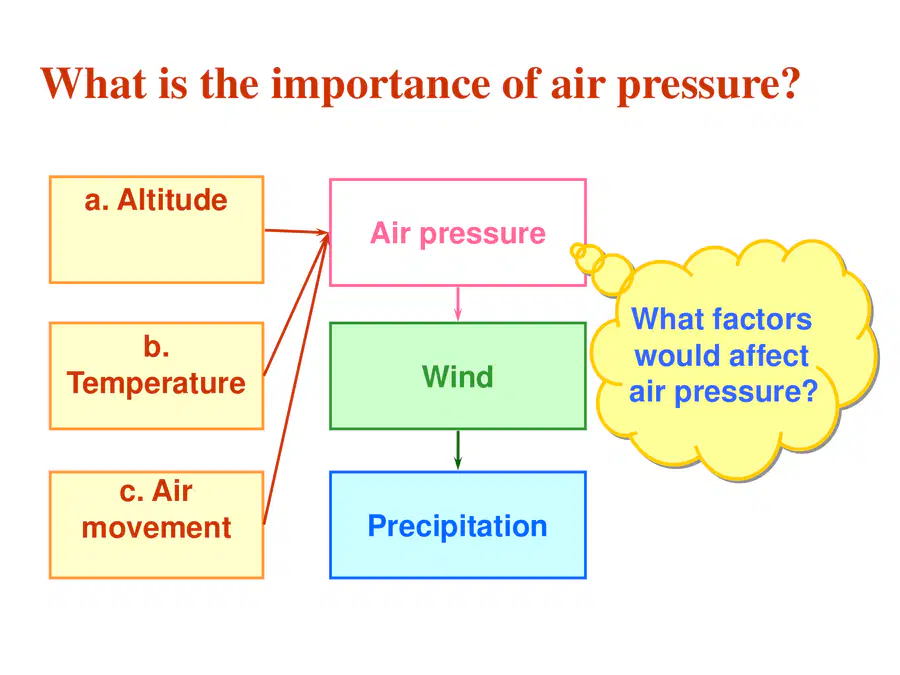
It is because the air density in higher altitude (at the top of mountain) is

1

higher.

2

lower.

7

Multiple Choice

With lower density of air in higher altitude, the air pressure is

1

higher.

2

lower.

8

Draw

How does altitude relate to air pressure?

Circle the graph best describes the relationship.

9

media

10

Multiple Choice

What will happen when air is heated up?

1

It expands and rises.

2

It cools and contracts.

11

Multiple Choice

When air is heated and rises, the air pressure near to the ground level is

1

higher.

2

lower

12

Draw

How does temperature relate to air pressure?

Circle the graph best describes the relationship.

13

media

14

media

15

Multiple Choice

p.9 1998 CE Q26

1

A

2

B

3

C

4

D

16

Multiple Choice

p.21 2008 CE Q27

1

A

2

B

3

C

4

D

17

Multiple Choice

p.24 2009 CE Q43

1

A

2

B

3

C

4

D

18

media

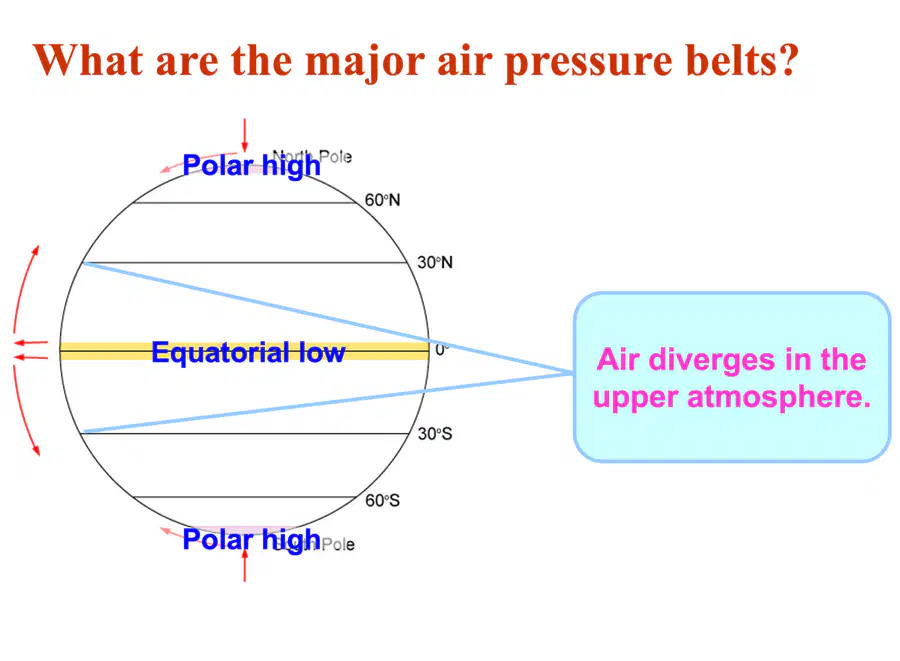
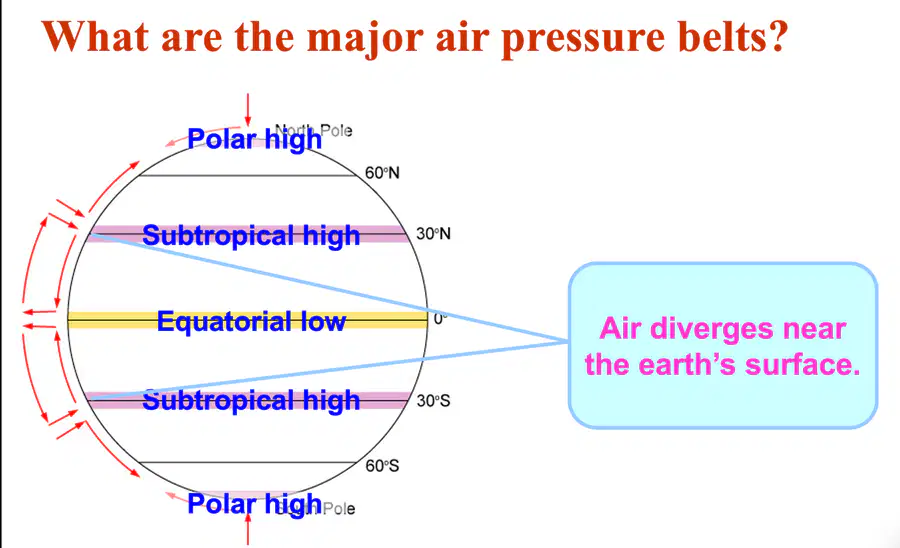
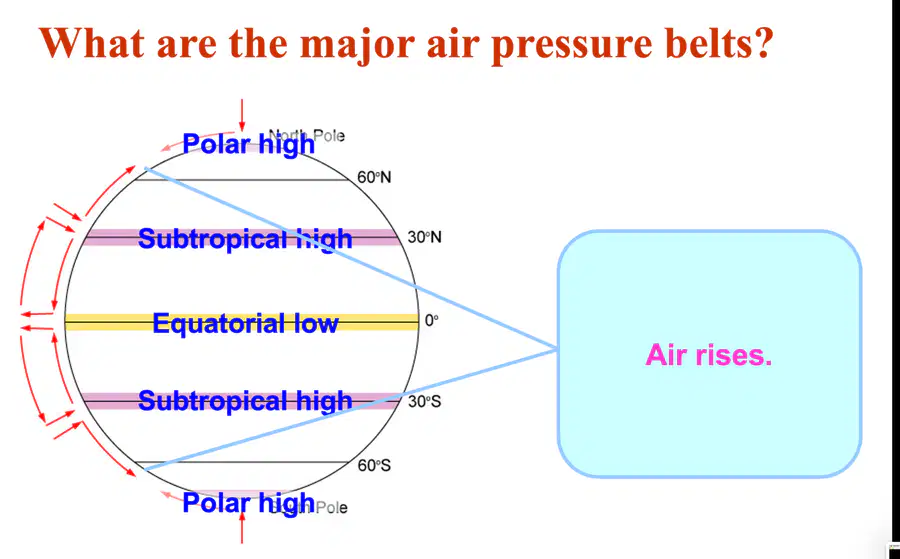
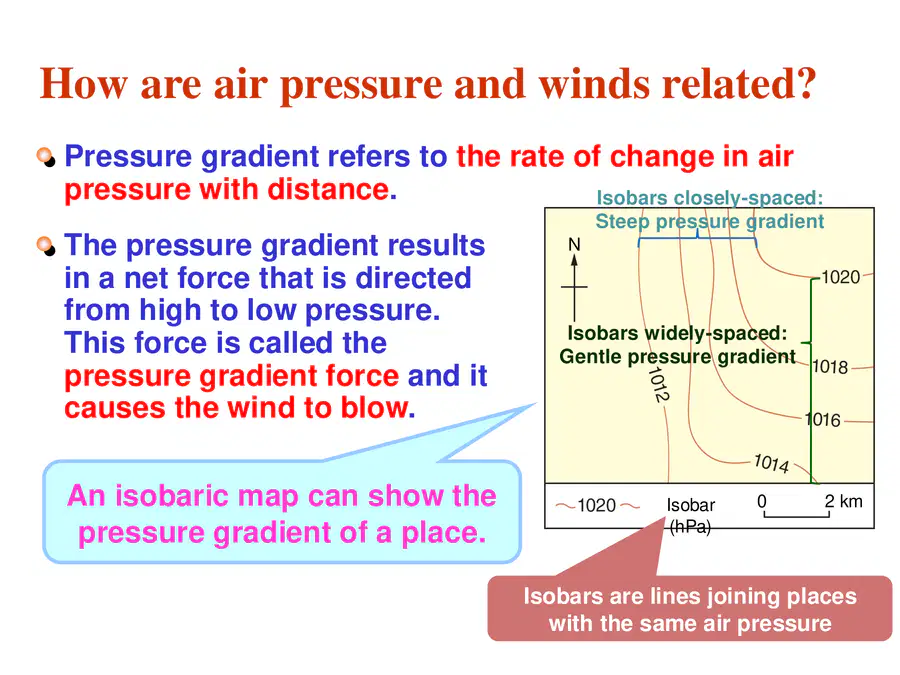
What are the major pressure belts? How do they form?​

19

media

How temperature and air movement affect the formation of pressure belts?

20

media

21

media

22

media

23

media

24

media

25

media

​part of it converges and strengthens equatorial low.

26

media

27

media

28

media

29

media

30

media

31

32

Refer to p.14

​How do pressure belts shift in summer and winter?

33

34

media

35

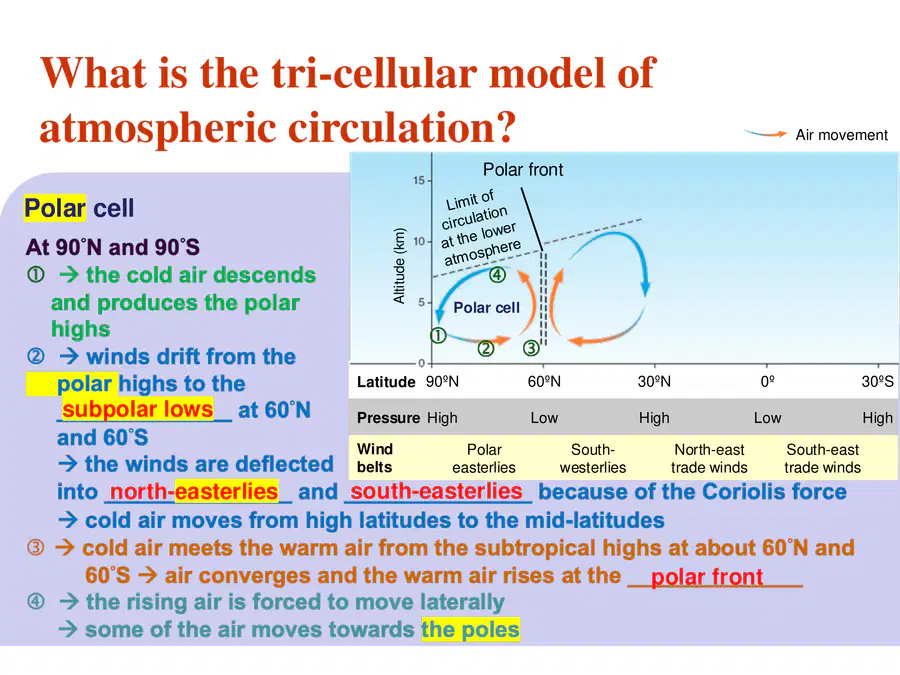
Formation of planetary wind system


Refer to p.13 again, show how wind moves between the pressure belts.

36

media

37

38

media

39

media

40

media

41

media

42

media

43

media

44

media

45

media

46

media

47

media

48

media

49

media

50

media

51

media

52

media

53

media

54

media

55

media

56

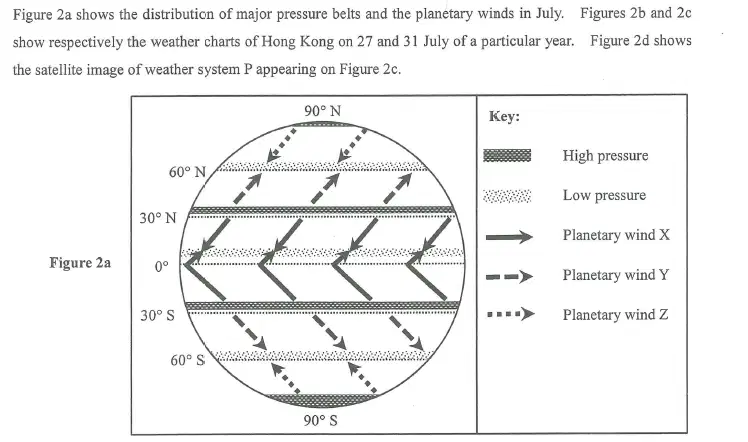
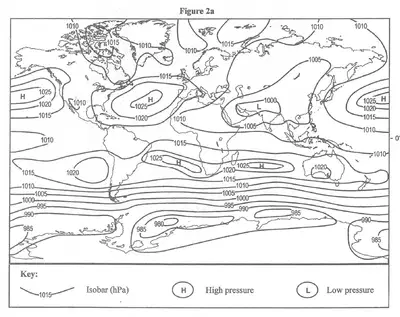
2020 DBQ

57

media

58

Multiple Choice

What is X?

1

trade wind

2

westerlies

3

polar easterlies

59

Multiple Choice

What is Y?

1

trade wind

2

westerlies

3

polar easterlies

60

Explain the formation of wind X.

61

  1. Trade winds are formed when winds blow from _______ to _____.

  2. They form _________ trade winds in the northern hemisphere.

  3. And _______ trade winds in the southern hemisphere.

  4. However, under C__________ F_________, they turn into ________ trade wind after crossing the equator.

  5. It is because winds deflected to the _________ of their path of motion in the _________ hemisphere.

62

  1. Trade winds are formed when winds blow from subtropical high to equatorial low.

  2. They form NE trade winds in the northern hemisphere.

  3. And SE trade winds in the southern hemisphere.

  4. However, under coriolis force, they turn into SW trade wind after crossing the equator.

  5. It is because winds deflected to the right of their path of motion in the northern hemisphere.

63

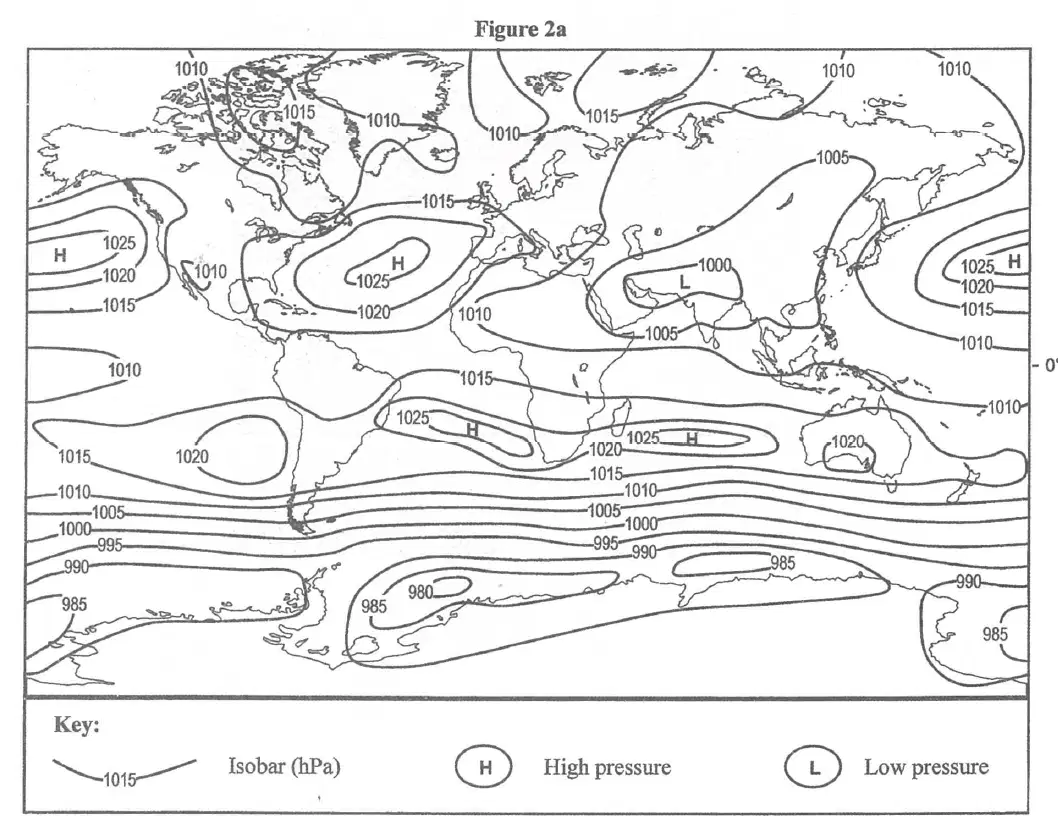
2016 DBQ

64

media

​In which season is the Northern Hemisphere?

65

Multiple Choice

Question image

In which season is the Northern Hemisphere?

[Think of at least one reason to explain]

1

Spring

2

Summer

3

Autumn

4

Winter

66

Open Ended

Question image

In which season is the Northern Hemisphere?

[Explain your answer with one reason]

67

media

68

media

69

media

70

media

71

media

72

media

73

media

74

media

75

media

76

media

77

media

78

media

79

media

80

media

81

media

82

media

83

media

84

media

85

media

86

media

87

media

88

media

89

media

90

media

91

media

92

media

93

media

94

media

95

media

96

media

97

media

98

media

99

media
media

Show answer

Auto Play

Slide 1 / 99

SLIDE