

Untitled lesson

Presentation
•
Science
•
4th Grade
•
Practice Problem
•
Hard

Amanda Cooper
FREE Resource
48 Slides • 0 Questions
1


Students: please start the bell work located on
your desks. This is not optional.
Level Zero, please!
While you’re working, I will check off answers.
Let's move quickly.
2

Students: please open chromebook and get headsets ready to go while
Mrs. Scalzo gives instruction.
Level Zero, please!
3


Snippet-
4


Objective: I will understandhow animal limbs
help them survive.
DOL: Given 5 questions, I will investigate how
the limbs of various animal species help them
survive by identifying how many limbs, and
explain the difference of locomotion due to force.
Answering with 100% accuracy.
Popcorn-Look at your legs! How do they help
you?
5


WA-How and why do
animals move around?
6


Whiteboard+WA
4 facts of tails
7


Think-
Pair-Synonym
for Limbs.
In biology, limbs refer to the arms, legs, wings, or fins of an
organism that help with movement or interaction with their
environment. Limbs are also sometimes called appendages or
extremities.
For example, in humans and other mammals, arms
and legs are considered limbs. Birds use their wings, which are
modified limbs, to fly, while fish use their fins for swimming.
Limbs are highly adapted to different functions depending on the
organism. In some animals, like monkeys, limbs are used for
climbing trees, while in others, like horses, they are built for
running. Even insects have limbs, which they use for walking,
crawling, or jumping. These appendages help organisms move,
find food, and protect themselves in various environments.
8


Turn and Talk-
9


Whiteboard-How many limbs?
10


Show -How many legs?
11


Millions of years ago the ancestors of snakes were lizards, part of a
group of animals called reptiles. Over time, these lizards began
moving differently, depending less on their legs. Today’s snakes use
their abdominal muscle (the muscles located under your stomach) to
move across the ground, to grip things, and to climb. They are still in
the reptile family.
We can even SEE evidence of evolution on the bodies of some
snakes. They are called vestigial legs, tiny leg-like hooks that no
longer serve a purpose on the snake’s body, but show where the
snake’s legs used to be. They are proof that snakes once had legs!
SCR-
How have some of the
structures of snakes evolved over time
and what are vestigial legs?
12


Some of the
structures of snakes evolved over time
by loosing their leg and now having
vestigial legs, which are small-tiny legs
In the text it states that, “We can even
SEE evidence of evolution on the bodies
of some snakes. They are called vestigial
legs, tiny leg-like hooks that no longer
serve a purpose on the snake’s body”
This explains that is why they slither on
their stomach due to no legs.
E-Extend your thinking!!
13


Aerofoil:
The air
moves faster
over the top
of the wing
and slower
over the
bottom,
creating
lift.
Turn and Talk- How does aerofoil allow birds to fly?
14


Think-Pair-Share
Do you think birds
would be able to
fly with more than
two legs?
15


16


Can you walk like a giraffe?
17

Annotate-Structure of Insect Legs
Each insect leg has three main parts: the femur, tibia, and tarsus. The femur is the thick, strong part of the leg, similar to our thigh bone. The
tibia is long and slender, like our shin, and the tarsus is like the insect’s foot, often ending in tiny claws. Together, these parts help insects move
in many different ways. Adaptations of Insect Legs-Different insects have legs adapted to help them survive in their environments. For
example:
1.Jumping Legs: Grasshoppers and crickets have powerful hind legs with large femurs that allow them to jump great distances. This
helps them escape from predators quickly.
2.Digging Legs: Mole crickets have front legs that are strong and shaped like shovels. These specialized legs help them dig through the
soil to create tunnels and search for food.
3.Running Legs: Cockroaches have long, slender legs that help them run fast. Their legs are built for speed, making them some of the
fastest insects on the ground.
4.Swimming Legs: Water beetles have flattened, paddle-like legs that work like oars, helping them swim efficiently in water. These legs
allow them to move swiftly through ponds and streams.
5.Grasping Legs: Praying mantises have front legs with sharp spines that help them grab and hold onto their prey. These legs act like a
set of deadly scissors that are perfect for catching other insects.
How Insect Legs Help Them Survive
The adaptations in insect legs are crucial for their survival. Whether it’s jumping away from danger, running fast, swimming in water, or digging
underground, an insect’s legs play a vital role in how it interacts with the world around it. These specialized legs allow insects to thrive in
different environments, from the driest deserts to the wettest swamps.
So, the next time you see an insect, take a closer look at its legs. You might be surprised by how perfectly they are designed to help the insect
live its life!
18


Whiteboard+Pair-
How do the different types
of insect legs help insects
survive in their specific
environments?
19


20


Annotate-Modes of Locomotion: Walking/Running, Swimming, and Flying
Animals move in different ways depending on their body structures and environments. The three main modes of
locomotion are walking/running, swimming, and flying. Each mode helps animals navigate their surroundings and
find food, escape predators, and survive.
Walking/Running Walking and running are modes of locomotion that involve moving on land. Animals like
humans, dogs, and insects use their legs to walk or run. Walking is slower and steady, while running is faster and
involves a quicker, more powerful movement of the legs. This mode is useful for getting around on solid ground
and is common among animals with legs.
Swimming Swimming is the movement through water. Animals like fish, whales, and ducks use their fins, flippers,
or webbed feet to propel themselves forward. Swimming often involves moving limbs in a coordinated motion to
push against the water. This mode is essential for animals that live in water or need to find food, escape
predators, or migrate long distances through Flying.
Flying is the ability to move through the air using wings. Birds, bats, and many insects use flying as their primary
mode of locomotion. Wings flap up and down or glide through the air, allowing the animal to lift off the ground and
move quickly from place to place. Flying helps animals reach high places, escape predators, and cover long
distances in search of food or a better habitat. water.
21


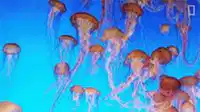


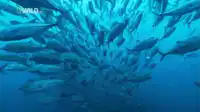


Locomotion-Define
Movement in Water
Movement on land
Movement through the air
Complete Chart- What is locomotion?
22


Turn and Talk-.
How does a pushing force allow animals
to walk?
23


Whiteboard-
Movement, or the ability to move, from place to place
is known as:
a.
Freedom
b.
Flight
c.
Locomotion
d.
Swimming
24


Turn and Talk-I Spy Penguins limb adaptations!
25


WA
26

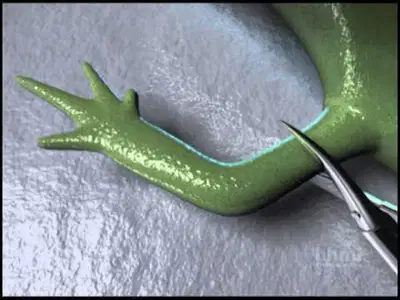

Think-Write-Share-
How can the Newt regrow its limbs?
27


Pause
Describe how one animal’s limbs are
adapted to its needs.
Transfer over! DOL time!
28

DOL!!!!
1. Clear off working space.
2. Stay quiet
3. Wait patiently while I grade.
29


30

31

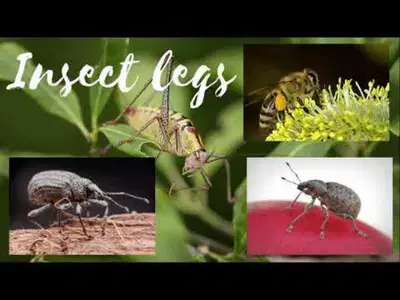

Whiteboard+Pair- How would you describe insect legs? Students only need to watch a
minute of the video.
32

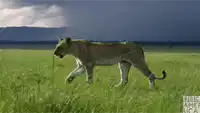


WA-There are three main modes
of locomotion:
● Walking/Running
● Swimming
● Flying
33

How do animals move
around?
34


All of these are examples of
locomotion adaptations,
which as we explore, will
answer the big question!
35


Share:Write on your response card.
Adaptations are ________________.
What are adaptations?
36

Adaptations?
Features or behaviors that
help an organism better
survive in their habitat.
37


Locomotion
How animals
move from place
to place.
38


Write down three
types of
locomotion you
observed.
39

Share:Mix-Pair-Share. Find someone in another
part of the room and share with them. (Don’t forget
your notes!)
40


Walking/running:
● Feet, hooves, paws, on the end of legs
● Putting force on a surface to propel the
animal.
● Pick up, set down, push, repeat...
41


Swimming:
● Fins or flippers sticking out of the
animal’s body..
● Putting a pushing force on the water.
● Side to side or up and down.
42


Share:Turn and talk. Share with your partner.
What is different about how these
animals swim? What is similar?
43


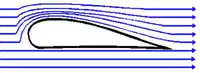
Flying:
● 2 or 4 wings sticking out of the animal’s body.
● Applying pushing and lifting forces on the
air.
● Aerofoil shape.
44


Other:
● Slithering.
● Climbing.
● Gliding
● Combination.
45


Group Work:
Work with your table group to compare
and contrast the locomotor adaptations
you saw today. Be ready to share!
46

47


48

Students: please start the bell work located on
your desks. This is not optional.
Level Zero, please!
While you’re working, I will check off answers.
Let's move quickly.
Show answer
Auto Play
Slide 1 / 48
SLIDE
Similar Resources on Wayground

41 questions
Effects of Force on Objects
Presentation
•
4th Grade
40 questions
Concordância verbal
Presentation
•
KG
41 questions
Untitled Lesson
Presentation
•
KG
44 questions
Life Science Review
Presentation
•
4th Grade
43 questions
Major Organs of the Body
Presentation
•
4th Grade
40 questions
Ocean Review
Presentation
•
4th Grade
44 questions
Science Lesson 12.05
Presentation
•
4th Grade
44 questions
Plants and Animals Habitats
Presentation
•
4th Grade
Popular Resources on Wayground
10 questions
Safety Day 2026 – Student Review

Quiz
•
9th Grade
21 questions
Continents and Oceans
Quiz
•
6th Grade
20 questions
Parts of Speech
Quiz
•
5th Grade
16 questions
Subject & Predicate
Quiz
•
5th Grade
25 questions
Multiplication Facts
Quiz
•
5th Grade
12 questions
Map Skills
Quiz
•
3rd Grade
22 questions
Continents and Oceans
Quiz
•
5th Grade
15 questions
Rounding Decimals
Quiz
•
5th Grade
Discover more resources for Science
10 questions
Mixtures and Solutions
Quiz
•
4th Grade
10 questions
Identifying Physical and Chemical Changes

Interactive video
•
1st - 5th Grade
13 questions
Reflect, refract, and absorb
Quiz
•
3rd - 5th Grade
15 questions
Weathering and Erosion
Interactive video
•
4th Grade
14 questions
Scientific Method
Quiz
•
3rd - 5th Grade
11 questions
Force and Motion
Quiz
•
4th Grade
30 questions
Unit 2 Energy Resources
Quiz
•
4th Grade
15 questions
Mixtures and Solutions
Quiz
•
4th Grade