
Unit 305 Session 5 PT4 (solid materials)

Presentation
•
Other
•
Professional Development
•
Easy

Plumbers Cymoedd
Used 5+ times
FREE Resource
10 Slides • 10 Questions
1
Solid materials are made up of many molecules.
How these molecules are arranged and how they behave under certain conditions will determine their properties.
● strength – tensile, compressive and shear
● ductility
● malleability
● hardness
● conductivity – heat and electricity.
These properties are:
2
Open Ended
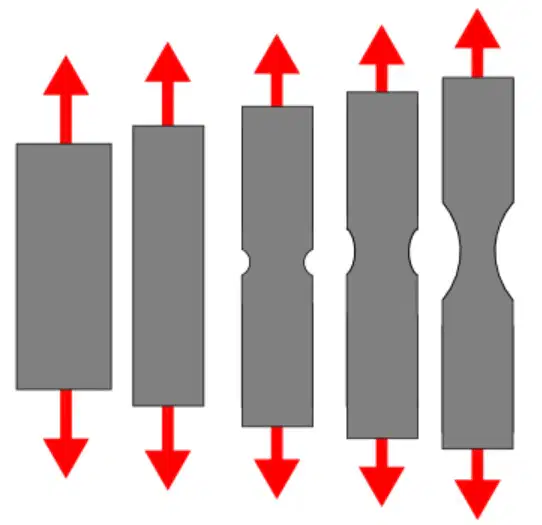
What do you think Tensile strength means?
3
Tensile strength
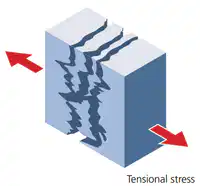
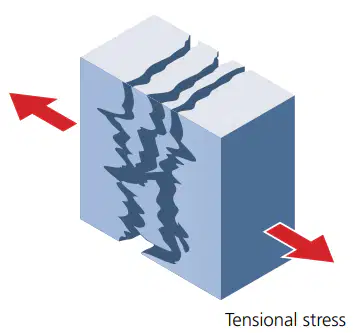
Is a measure of how well or badly it reacts to being pulled or stretched until it breaks.
Some materials, such as plastics, will stretch or elongate before breaking; others, such as metals, will also deform in a similar way but not by as much, and hard materials such as concrete and brick will not deform at all but will simply snap.
4
5
Poll
Which of these do you think would need high tensile strength?
Steel cables holding a Lift in a buil
A steel beam bridge
6
7
Open Ended
What do you think compressive strength means?
8
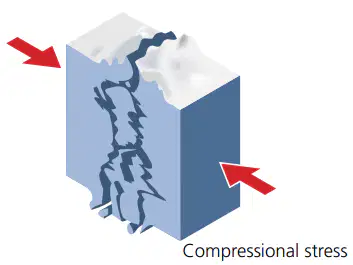
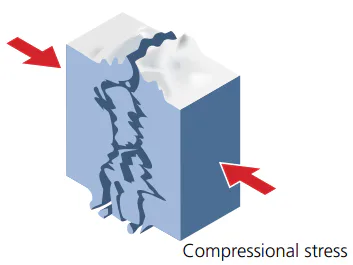
Compressive strength is the maximum stress a material can sustain when being crushed.
Hard materials, such as concrete or cast iron, will shatter under compressive stress, while others, like plastics and some metals, may distort in shape.

9
Poll
Which of these do you think would need high compressive strength?
Steel cables holding a Lift in a buil
A steel beam bridge
10
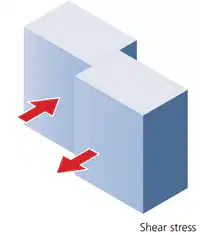
Shear strength is the stress state caused by a pair of opposing forces acting along parallel lines of a material. for example, cutting paper with scissors or ripping a substance apart.
11

12
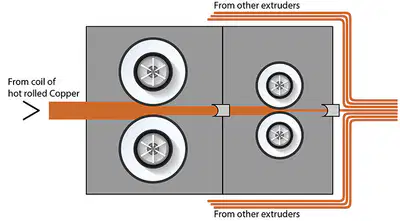
Ductility is a mechanical property that describes by how much solid materials can be pulled, pushed, stretched and deformed without breaking.
13
14

Malleability can be defined as the property of a material, usually a metal, to be deformed by compressive strength without fracturing.
If a metal can be hammered, rolled or pressed into various shapes without cracking or breaking, it is said to be malleable.
15
Multiple Choice
What is compressive strength?
The maximum stress a material can sustain when being stretched.
The maximum stress a material can sustain when being crushed.
The stress caused by sliding faces of the material relative to one another.
The ability of a material to return to its original shape after deformation.
16
Multiple Choice
Which of the following materials is likely to shatter under compressive stress?
Plastic
Rubber
Concrete
Aluminium
17
Multiple Choice
What is shear strength?
The stress state caused by a pair of opposing forces acting along parallel lines of action through the material.
The maximum stress a material can sustain when being crushed.
The ability of a material to be stretched without breaking.
The stress caused by compressive forces.
18
Multiple Choice
Which of the following is an example of shear strength?
Crushing a can
Cutting paper with scissors
Stretching a rubber band
Compressing a spring
19
Multiple Choice
What does ductility describe?
The ability of a material to shatter under stress.
The ability of a material to be pulled, pushed, stretched, and deformed without breaking.
The ability of a material to resist compressive forces.
The ability of a material to conduct electricity.
20
Multiple Choice
Which material property is crucial for applications requiring materials to be stretched into wires?
Compressive strength
Shear strength
Ductility
Hardness
Solid materials are made up of many molecules.
How these molecules are arranged and how they behave under certain conditions will determine their properties.
● strength – tensile, compressive and shear
● ductility
● malleability
● hardness
● conductivity – heat and electricity.
These properties are:
Show answer
Auto Play
Slide 1 / 20
SLIDE
Similar Resources on Wayground

15 questions
Research methodlology
Presentation
•
University
10 questions
Vigostky
Presentation
•
Professional Development
15 questions
Magnets
Presentation
•
KG
15 questions
The Most Amazing Structure On Earth
Presentation
•
Professional Development
13 questions
Tecnología educativa en la actualidad
Presentation
•
University
14 questions
Refuerzo comprensión de lectura parte 1
Presentation
•
Professional Development
13 questions
Inspection Readiness
Presentation
•
Professional Development
11 questions
CONOCIMIENTOS SISTEMAS COSTITUTIVOS CIMENTACIONES
Presentation
•
Professional Development
Popular Resources on Wayground
10 questions
Safety Day 2026 – Student Review

Quiz
•
9th Grade
21 questions
Continents and Oceans
Quiz
•
6th Grade
20 questions
Parts of Speech
Quiz
•
5th Grade
16 questions
Subject & Predicate
Quiz
•
5th Grade
25 questions
Multiplication Facts
Quiz
•
5th Grade
12 questions
Map Skills
Quiz
•
3rd Grade
22 questions
Continents and Oceans
Quiz
•
5th Grade
15 questions
Rounding Decimals
Quiz
•
5th Grade