

Electric Circuits Day 1

Presentation
•
Science
•
7th Grade
•
Practice Problem
•
Medium
+3
Standards-aligned

Boaz Rottet
Used 7+ times
FREE Resource
10 Slides • 3 Questions
1
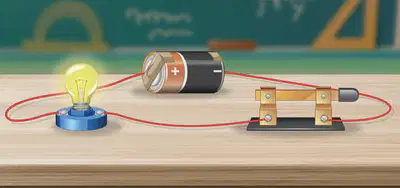
Learners can:
relate energy transfer to an electrical circuit
explain why electrical conductors are necessary in an electric circuit
Vocabulary: electrical circuit, electric charge, load, power
2
Draw
Draw the thing that you are most excited to do this weekend!
3
Open up your electricity and magnetism kits, and try to get a light or a fan to turn on!
We are going to be working with them more extensively on Monday and Tuesday, but I would like everyone to get a light or a fan to turn on so that we can be all set for Tuesday!
When you get it, you can turn your camera on and show the rest of your classmates how you did it!
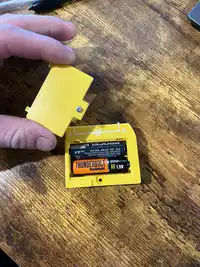
***Remember, if you have not opened your power block yet, you will need to borrow the screwdriver in your microscope box to open it up! ***
4
Draw
Draw or explain how you think electricity enters this home!
5
Consider the electric lines leading to homes in this picture. Consider the following questions.
What is the purpose of the electrical lines?
What happens to the electricity once it enters the homes?
How does electricity get to your devices when you turn them on?
In today's lesson, you will learn what the electrical wires running down the street on poles have to do with circuits. You will also learn the essential parts of an electrical circuit. Continue on to learn more.
Let's visit Tim and Moby for some help!
Engage

6
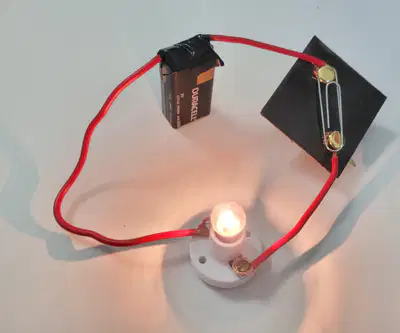
An electrical circuit is a path that allows electric current to flow around a loop. Your home contains many electrical circuits, including:
inside your computer;
controlling the lights; and
connected to electrical outlets.
Can you see any circuits in your house right now??
Electrical Circuits
7
Everything in your home that uses electricity contains electrical circuits. Appliances that plug into an outlet, such as the refrigerator, connect to a large electrical circuit that exists in the walls of your home. Your home circuit connects to a large circuit that runs from the power company around the homes in your neighborhood.



8
Fun Fact: I caught this catfish right at Three Mile Island!
Does anyone know what almost happened at Three Mile Island?



9
Power
Power refers to the rate at which an electrical circuit transfers energy. Scientists measure power using watts (W).
Microelectronic circuits in devices like smartphones are designed to operate with minimal power consumption, leveraging advanced semiconductor technologies. This is critical not only for energy efficiency but also for extending battery life and enhancing the performance of portable electronic devices.
Other circuits, such as high-tension electrical lines that carry energy to cities, provide a lot of power.
Your home contains many electrical circuits, which allow electric current to flow. These circuits can carry varying amounts of energy, to provide power.
Let's check out this video
10
Multiple Select
What are the three components required to create a circuit?
Power Source
Conductor
Load
Insulator
11

Note that electrical circuits form a closed loop. The electric current does not have a set beginning or end point. Electrons flow continuously through the circuit in a loop.
12
An electrician is someone who installs and maintains electrical circuits for a living. Many trades, such as an electrician, are among the fastest-growing job types in the United States.
Brief Description
Detailed Description / Salary
Note that there are two main ways to become an electrician:
technical school
apprenticeship
Career Spotlight - Electrician


13
Have a great weekend! We are off Monday!!!!!! Make sure to bring your Electricity and Magnetism Kits to class with you. We will be working with it on Tuesday!

Learners can:
relate energy transfer to an electrical circuit
explain why electrical conductors are necessary in an electric circuit
Vocabulary: electrical circuit, electric charge, load, power
Show answer
Auto Play
Slide 1 / 13
SLIDE
Similar Resources on Wayground

12 questions
Carbon Cycle
Presentation
•
7th Grade
10 questions
Sedimentary Rock
Presentation
•
6th Grade
9 questions
Muscles and Roots
Presentation
•
6th Grade
10 questions
Chemical Reactions
Presentation
•
7th Grade
8 questions
Chemistry Review
Presentation
•
7th Grade
8 questions
plant cell
Presentation
•
7th Grade
11 questions
Severe Weather
Presentation
•
7th Grade
11 questions
Cells
Presentation
•
7th Grade
Popular Resources on Wayground
10 questions
How much do you know about our Portrait of an Eagle?

Quiz
•
10th Grade
10 questions
Fast Food Slogans
Quiz
•
6th - 8th Grade
21 questions
Continents and Oceans
Quiz
•
6th Grade
20 questions
Parts of Speech
Quiz
•
5th Grade
16 questions
Subject & Predicate
Quiz
•
5th Grade
25 questions
Multiplication Facts
Quiz
•
5th Grade
12 questions
Map Skills
Quiz
•
3rd Grade
22 questions
Continents and Oceans
Quiz
•
5th Grade
Discover more resources for Science
17 questions
7.6D Aqueous Solutions
Quiz
•
7th Grade
20 questions
Claim, Evidence and Reasoning (CER)
Quiz
•
6th - 8th Grade
18 questions
Counting Atoms
Quiz
•
7th - 8th Grade
10 questions
Exploring Chemical and Physical Changes

Interactive video
•
6th - 10th Grade
20 questions
Food Chains & Food Webs
Quiz
•
5th - 7th Grade
10 questions
Decoding the Periodic Table of Elements
Interactive video
•
6th - 10th Grade
16 questions
Photosynthesis and Cellular Respiration Review
Quiz
•
7th Grade
10 questions
Exploring the Periodic Table
Interactive video
•
6th - 10th Grade