
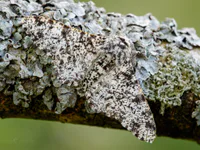
Natural Selection
Presentation
•
Biology
•
9th Grade
•
Medium
+2
Standards-aligned
Karla Duncan
Used 14+ times
FREE Resource
2 Slides • 12 Questions
1
2
3
Open Ended
Describe what occurred to the peppered moth population over time? What event influenced this change?
4
Multiple Choice
Some organisms of a population of birds are born with extra-long beaks instead of a normal sized beak.
Gene Flow
Natural Selection
Genetic Drift
Mutation
5
Multiple Choice
A certain type of plant can produce blue or yellow flowers. During a fire, many yellow flowers are destroyed and now since blue is the dominant trait, the plant reproduces offspring that produce only blue flowers.
Non-Random Mating
Gene Flow
Mutation
Genetic Drift
6
Multiple Choice
A chemical spill causes the offspring of ladybugs to have blue dots instead of black dots.
Natural Selection
Genetic Drift
Mutation
Gene Flow
7
Multiple Choice
During a hurricane, a population of beetles almost gets completely wiped out. The only beetles that survived were lucky that they were in their nest at the time of the hurricane and had enough food to survive.
Natural selection
Genetic Drift
Gene Flow
Non-Random Mating
8
Multiple Choice
After a long time in isolation, Island fruit flies and mainland fruit flies meet. They do not produce viable eggs due to genetic differences. The flies have resulted in two seperate lineages due to:
Gene Pool
Genetic Drift
Gene Frequency
Speciation
9
Multiple Choice
10
Multiple Choice
Genetic diversity is decreased through this process.
Gene Flow
Genetic Drift
11
Multiple Choice
Some scientists suggest that the mass extinction of dinosaurs resulted from sudden global weather changes caused by the impact of an asteroid on Earth. This event most likely promoted the evolution of new species of animals. What concept is best supported by these ideas?
Punctuated equilibrium
Use and disuse
Gradualism
Convergent evolution
12
Multiple Choice
13
Multiple Choice
In a habitat there are red bugs and green bugs. The birds prefer the taste of the red bugs, so soon there are many green bugs and few red bugs. The green bugs reproduce and make more green bugs and eventually there are no more red bugs
Genetic Drift
Natural Selection
Gene Flow
Mutation
14
Multiple Choice
A certain type of plant can produce blue or yellow flowers. During a fire, many yellow flowers are destroyed and now since blue is the dominant trait, the plant reproduces offspring that produce only blue flowers.
Non-Random Mating
Gene Flow
Mutation
Genetic Drift
Show answer
Auto Play
Slide 1 / 14
SLIDE

Similar Resources on Wayground
12 questions
Life at the Molecular and Cellular Level
Presentation
•
9th - 10th Grade
13 questions
Gene regulation and mutation
Presentation
•
9th Grade
12 questions
Unit 4 Bio Genetics and Variation
Presentation
•
9th Grade
10 questions
Microorganisms, Flow of Matter, Pyramid Short
Presentation
•
9th Grade
10 questions
Carbon and Nitrogen
Presentation
•
9th Grade
12 questions
Energy Flow
Presentation
•
9th - 10th Grade
14 questions
DNA!
Presentation
•
9th Grade
12 questions
Molecular and Cellular Biology Part 2
Presentation
•
9th - 10th Grade
Popular Resources on Wayground
20 questions
"What is the question asking??" Grades 3-5
Quiz
•
1st - 5th Grade
20 questions
“What is the question asking??” Grades 6-8
Quiz
•
6th - 8th Grade
10 questions
Fire Safety Quiz
Quiz
•
12th Grade
20 questions
Equivalent Fractions
Quiz
•
3rd Grade
34 questions
STAAR Review 6th - 8th grade Reading Part 1
Quiz
•
6th - 8th Grade
20 questions
“What is the question asking??” English I-II
Quiz
•
9th - 12th Grade
20 questions
Main Idea and Details
Quiz
•
5th Grade
47 questions
8th Grade Reading STAAR Ultimate Review!
Quiz
•
8th Grade
Discover more resources for Biology
24 questions
BIOLOGY STAAR REVIEW
Quiz
•
9th Grade
30 questions
Biology STAAR Review #3
Quiz
•
9th Grade
16 questions
AP Biology: Unit 1 Review (CED)
Quiz
•
9th - 12th Grade
50 questions
Biology EOC Review
Quiz
•
9th Grade
25 questions
photosynthesis and cellular respiration
Quiz
•
9th Grade
20 questions
AP Biology: Unit 3 Review (CED)
Quiz
•
9th - 12th Grade
20 questions
Enzymes
Quiz
•
9th Grade
20 questions
Food Chains and Food Webs
Quiz
•
7th - 12th Grade