
Cycle 2, Lesson 2 Vocabulary - Poetry

Presentation
•
English
•
10th Grade
•
Practice Problem
•
Hard
Standards-aligned

Jennifer O'Gorman
Used 1+ times
FREE Resource
8 Slides • 0 Questions
1

Literally: A hymn is a song of praise or worship, often sung in religious services. For example, "The congregation sang a hymn during the Sunday service."
Figuratively: A hymn can symbolize a tribute or expression of admiration for something. For example, "The book is a hymn to the beauty of nature."
hymn
2

Literally: A garland is a physical object, typically a string or wreath made of flowers, leaves, or other materials, used for decoration. For example, "The bride wore a garland of roses in her hair."
Figuratively: A garland can symbolize honor, celebration, or recognition. For example, "The poet was awarded a garland of praise for his work."
garland
3

Literally: To exalt means to raise someone or something to a higher rank or position, or to praise someone or something highly. For example, "The king was exalted to the throne."
Figuratively: To exalt can mean to glorify or elevate in terms of importance or admiration. For example, "The poem exalts the virtues of courage and honor."
exalts
4

Literally: Herakles is a hero from Greek mythology, known for his incredible strength and for completing the Twelve Labors, a series of tasks that were seemingly impossible. For example, "Herakles is famous for slaying the Nemean Lion as one of his Twelve Labors."
Figuratively: Herakles can symbolize immense strength, perseverance, and the ability to overcome great challenges. For example, "The athlete's performance was Herculean, reminiscent of Herakles' legendary feats."
Herakles
5

Literally: A sacred precinct is a designated area, often within a temple or religious site, that is considered holy and set apart for worship or religious activities. For example, "The sacred precinct of the temple was reserved for priests and rituals."
Figuratively: A sacred precinct can symbolize a place or space that is highly valued, respected, or revered, often beyond its physical boundaries. For example, "The library was a sacred precinct for the scholar, a place of quiet reflection and study."
sacred precinct
6

Literally: An altar is a table or flat-topped structure used in religious ceremonies for offerings, sacrifices, or other rituals. For example, "The priest placed the sacred objects on the altar during the ceremony."
Figuratively: An altar can symbolize a place or point of dedication, sacrifice, or reverence. For example, "She laid her dreams on the altar of family duty, putting their needs before her own."
alter
7

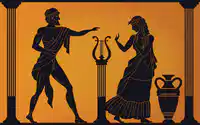
Literally: A lyre is a stringed musical instrument from ancient Greece, similar to a small harp, used in classical antiquity. For example, "The musician played a beautiful melody on the lyre."
Figuratively: A lyre can symbolize artistic inspiration, poetry, or the arts in general, often evoking a sense of classical beauty and creativity. For example, "The poet's words were like the strings of a lyre, resonating with timeless beauty."
lyre
8

Literally: The Muses are the nine goddesses from Greek mythology who preside over the arts and sciences. Each Muse is associated with a specific domain, such as epic poetry, history, or music. For example, "Calliope is the Muse of epic poetry."
Figuratively: Muses can symbolize sources of inspiration, especially in the arts and literature. For example, "The artist found his muse in the beauty of nature, which inspired his greatest works."
Muses
Literally: A hymn is a song of praise or worship, often sung in religious services. For example, "The congregation sang a hymn during the Sunday service."
Figuratively: A hymn can symbolize a tribute or expression of admiration for something. For example, "The book is a hymn to the beauty of nature."
hymn
Show answer
Auto Play
Slide 1 / 8
SLIDE
Similar Resources on Wayground

6 questions
Traditions
Presentation
•
10th Grade
6 questions
EducationSC
Presentation
•
10th Grade
7 questions
Macbeth Act 2 Scene 1
Presentation
•
10th Grade
7 questions
Verbal and Non Verbal Techniques in Public Speaking
Presentation
•
10th Grade
8 questions
Semicolons
Presentation
•
10th Grade
6 questions
Conclusion - Writing Bootcamp
Presentation
•
9th - 10th Grade
7 questions
Adjective Order
Presentation
•
10th Grade
6 questions
Vocabulary May 6
Presentation
•
5th Grade
Popular Resources on Wayground
21 questions
Continents and Oceans

Quiz
•
6th Grade
20 questions
Parts of Speech
Quiz
•
5th Grade
16 questions
Subject & Predicate
Quiz
•
5th Grade
25 questions
Multiplication Facts
Quiz
•
5th Grade
12 questions
Map Skills
Quiz
•
3rd Grade
22 questions
Continents and Oceans
Quiz
•
5th Grade
15 questions
Rounding Decimals
Quiz
•
5th Grade
20 questions
Brand Labels
Quiz
•
5th - 12th Grade
Discover more resources for English
20 questions
Context clues
Quiz
•
10th Grade
10 questions
Exploring the Role of Setting in Storytelling

Interactive video
•
6th - 10th Grade
15 questions
Adjectives!
Quiz
•
10th Grade
10 questions
Identifying Common and Proper Nouns
Interactive video
•
6th - 10th Grade
18 questions
10th Logical Fallacies
Presentation
•
9th - 12th Grade
10 questions
Citing Text Evidence in the RACE Strategy
Interactive video
•
6th - 10th Grade
10 questions
Identifying Themes in Poetry
Interactive video
•
6th - 10th Grade
20 questions
Subject Verb Agreement
Quiz
•
10th Grade