

U4 L10

Presentation
•
English
•
5th Grade
•
Medium
+6
Standards-aligned

Stefany Ramirez
Used 2+ times
FREE Resource
30 Slides • 22 Questions
1


Lesson Objectives
LO: I am learning to use figurative
language to determine author’s purpose in
fiction and poetry and to find connections
between texts (5.6E, 5.10, 5.9B)
SC: I can
● Find connections between texts
● Determine the author’s purpose
● Explain use of figurative language in
poetry
2

GRAMMAR CONNECTION
Writing sentences
revise and edit
3
Multiple Choice
(8) I sat on my front step. (9) I looked across the street.
I sat on my front step looked across the street.
4
Multiple Choice
This means he can go to the mal, and whenever he wants.
5
Open Ended

Write a short sentences using these homonyms
1. Night
2. Knight
6
Multiple Choice
What change, if any, is needed in the sentence above?
capitalize the m in mother
7
Multiple Choice
I want to add more detail after sentence 1. Which sentence could BEST follow sentence 1?
8

Poetry
9

10

11
Multiple Choice
How many stanzas are in the poem?
1
2
6
12

13

14

15

16
Multiple Choice
What is the refrain?
Down from the hills and over the snow
Toboggan! Toboggan! Toboggan!
Down from the hills with our senses lost
17
FIGURATIVE LANGUAGE
IDIOM
SIMILE
HYPERBOLE
ALLITERATION
METAPHOR
PERSONIFICATION
ONOMATOPOEIA

18
Simile

19
Hyperbole

20
Alliteration
Alliteration is the repetition of the beginning sounds of neighboring words.
Examples:
- Liz loves lions.
- Walter wondered where Wendy was.
- Josh jumps joyously.
21
Metaphor

22
Personification

23
Onomatopoeia

24
Oxymoron
two contradictory terms used together.

25
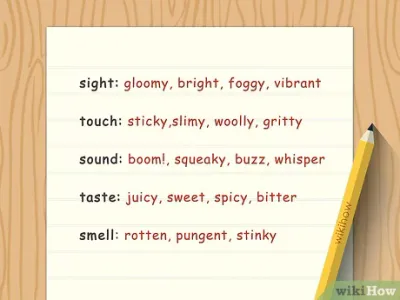
Imagery
is language used by poets, novelists and other writers to create images in the mind of the reader
26
Multiple Choice
I can run like a cheetah!
Simile
Metaphor
Personification
Onomatopoeia
27
Multiple Choice
Mrs. Braiden is a rock star!
Onomatopoeia
Metaphor
Simile
Personification
28
Multiple Choice
My alarm clock screams at me every morning at 6:00 A.M.
Metaphor
Personification
Onomatopoeia
Simile
29
Multiple Choice
The bee buzzed in my ear and scared me.
onomatopoeia
Simile
Metaphor
Personification
30
Multiple Choice
The bird hurled insults at me because I was too close to her nest.
Metaphor
Simile
Personification
Onomatopoeia
31

Lesson 9
Vocabulary
32


Moors
“This is a true story of
Dona Melisendra, wife of
Don Gaiferos, on the
occasion of her rescue
from the prison in which
the Moors had her in
Spain, “ the boy said.
noun
Muslims who invaded and
conquered parts of Spain in the
Middle Ages
33


monumental
The confusion was
monumental.
adjective
great or extreme
34


brocade
In a big hall
decorated with
silk and brocade,
six ladies helped
him take off his
armor.
noun
a type of fabric or cloth with
raised designs in gold or
silver thread
35


clergyman
There was a
solemn-looking
clergyman with
the Duke and
Duchess in the
dining room.
noun
a church leader who
performs religious services
36


laughingstock
Stop roaming around,
being everybody’s
laughing stock!
noun
a person regarded as very
foolish and ridiculous
37

Don Quixote and the Master Puppeteer
Don Quixote rode with a noble quest,
With rusty armor and old lance pressed.
He thought himself brave, a knight so bold,
4 Chasing windmills, or giants, he told.
Along came Peter, the puppeteer wise,
With strings and wood, a world in disguise.
He made knights and dragons with nimble hands,
8 In a world of puppets and magic lands.
“Come watch my show!” said Peter with cheer,
"Brave knights and monsters will soon appear!"
Don Quixote gasped, "A battle, you say?"
12 He raised his lance, eager to join the play.
So Peter danced his puppets around,
While Don Quixote fought, bound to the ground.
Both laughed in the end, side by side they’d be,
16 Two dreamers lost in brave fantasy.

38
Multiple Choice
"Don Quixote rode with a noble quest,
With rusty armor and old lance pressed."
These lines help the reader understand..
Don Quixote is not a real knight because his equipment is old
Don Quixote is a fool
39
Multiple Choice

What is most likely the reason the author included lines 9-12?
40
Multiple Choice
While Don Quixote fought, bound to the ground.
Both laughed in the end, side by side they’d be,
Two dreamers lost in brave fantasy.
Why does the author include these lines?
To emphasize the anger of their actions.
To illustrate the friendliness and shared joy of the characters.
41
Multiple Choice
Don Quixote and the Master Puppeteer
Don Quixote rode with a noble quest,
With rusty armor and old lance pressed.
He thought himself brave, a knight so bold,
Chasing windmills, or giants, he told.
Along came Peter, the puppeteer wise,
With strings and wood, a world in disguise.
He made knights and dragons with nimble hands,
In a world of puppets and magic lands.
“Come watch my show!” said Peter with cheer,
"Brave knights and monsters will soon appear!"
Don Quixote gasped, "A battle, you say?"
He raised his lance, eager to join the play.
So Peter danced his puppets around,
While Don Quixote fought, bound to the ground.
Both laughed in the end, side by side they’d be,
Two dreamers lost in brave fantasy.
What is the best summary for the poem?
Don Quixote defeats a real giant in a fierce battle and Peter is upset because Don Quixote has ruined his show
42


Reading
Purpose for
Reading
Read to find further
evidence of Don
Quixote’s idealistic and
quixotic character traits,
as compared to
Sancho’s more realistic
character trait.
43


Why does the author include the simile?


44
Multiple Choice

Why does the author include the simile "his eyes were as big as saucers?"
45


Why was the figurative language "there was a blast of drums and trumpets" included?

Why is the imagery included?
46
Multiple Choice

Why was the figurative language "there was a blast of drums and trumpets" included?
It indicate that the puppet show is about to begin
47
Multiple Choice

Why is the imagery included?
To demonstrate that Don Quixote is a perfectly reasonable person
To demonstrate that everything happened in his head
To demonstrate how Don Quixote has ruined the puppets
To demonstrate how Don Quixote saved the princess
48


Who does Don Quixote think is
tricking him?
Who was Master Peter in
reality?

Why is personification used here?
49
Multiple Choice

Why was personification used in this sentence? "the eyes of his imagination"
To attribute human-like qualities to his wild imagination, enhancing imagery.
50
Multiple Select

How was the poem different from the book? select 2
In the poem, the puppet does not have a monkey while in the book, the puppet master does have a monkey
In the poem, the puppet master finds Don Quixote funny when he interupts the play while in the book, the puppet master cries when Don Quixote interrupts
In the poem, the puppet master finds Don Quixote crazy when he interupts the play while in the book, the puppet master cries when Don Quixote interrupts
In the poem, the puppet master is not a real puppet master while in the book, the puppet master is real
51
Multiple Choice
How was the poem the same as the book? select 1
In both the poem and book, Don Quixote interrupts the show
In both the poem and book, Don Quixote fights the puppet master
In both the poem and book, the monkey runs away
In both the poem and book, Gines is the puppeteer
52
exit ticket
Lesson Objectives
LO: I am learning to use figurative
language to determine author’s purpose in
fiction and poetry and to find connections
between texts (5.6E, 5.10, 5.9B)
SC: I can
● Find connections between texts
● Determine the author’s purpose
● Explain use of figurative language in
poetry
Show answer
Auto Play
Slide 1 / 52
SLIDE
Similar Resources on Wayground

46 questions
Preposition
Presentation
•
5th Grade
45 questions
Earth Science Review
Presentation
•
5th Grade
47 questions
M1 W2 L6
Presentation
•
5th Grade
47 questions
Ever/never
Presentation
•
5th Grade
46 questions
Ancient Civilizations vocabulary and Past tenses
Presentation
•
5th Grade
46 questions
1. INTER QUANTIFIERS
Presentation
•
5th Grade
48 questions
Wit and Wisdom M1 L9-12
Presentation
•
5th Grade
45 questions
Unit 1 Test Review
Presentation
•
5th Grade
Popular Resources on Wayground
20 questions
STAAR Review Quiz #3

Quiz
•
8th Grade
20 questions
Equivalent Fractions
Quiz
•
3rd Grade
6 questions
Marshmallow Farm Quiz
Quiz
•
2nd - 5th Grade
20 questions
Main Idea and Details
Quiz
•
5th Grade
20 questions
Context Clues
Quiz
•
6th Grade
20 questions
Inferences
Quiz
•
4th Grade
19 questions
Classifying Quadrilaterals
Quiz
•
3rd Grade
12 questions
What makes Nebraska's government unique?
Quiz
•
4th - 5th Grade
Discover more resources for English
20 questions
Main Idea and Details
Quiz
•
5th Grade
12 questions
Figurative Language Review

Interactive video
•
5th Grade
20 questions
Poetry
Quiz
•
5th Grade
10 questions
Summarizing
Quiz
•
3rd - 5th Grade
14 questions
Commas, Commas, Commas
Quiz
•
5th Grade
20 questions
Character perspective, theme, summarize, author's purpose
Quiz
•
5th Grade
50 questions
ELAR Review / STAAR practice
Quiz
•
4th - 6th Grade
21 questions
Figurative language review
Quiz
•
5th Grade