

Intro to Business Lesson 4.2.2

Presentation
•
Business
•
9th - 12th Grade
•
Easy

Angela Balch
Used 4+ times
FREE Resource
9 Slides • 8 Questions
1

Intro to Business
Unit 4: Business Success
Topic 2: The Success of Business
2
Competitor- businesses that sell similar goods or services.
3
Open Ended
What is a competitor?
4
Competitors are businesses that sell similar goods or services.
5
Open Ended
What factors help you decide whether you want to buy something or not?
6



While determing whether or not to buy something, price is generally a key factor in making the decision.
How Much Does it Cost?
The distance of the product or service from the customer tends to be the biggest factor in determining if the customer will been shop there to begin with.
How Close is it to the Customer?
Preferring one of the product's features or style over the other drives many purchasing choices.
How Much Does the Consumer Like it Over the Other Options?
7
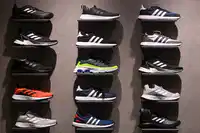

When a company gets customer loyalty, it gains a customer for life.
How Much Does the Consumer Like or Prefer that Company?
Convenience for how easy it is to buy makes the purchase more likely to happen. Is it quick? Is it close? Can you order it online?
Is it More Convenient to Buy?
It will always come down to whether the customer actually wants it or needs it.
Does the Consumer Really Want It or Need It?

8
Match
Match the scenario with the buying question that helped determine the purchase.
Even though jeans are really cheap at this store, the consumer prefers to always buy Levi's because they fit them the best.
Walmart has the cheapest prices but the consumer would need to take two different buses to get there. Target is just a short 5 minute walk down the street, so they will go there instead.
The consumer has always gotten their eyeshadow from L'Oréal but they really love the bolder colors being sold from this other display so they are going to get some of those instead!
How much does the consumer like or pref
How close is it to the consumer?
How much does the consumer like it over
How much does the consumer like or pref
How close is it to the consumer?
How much does the consumer like it over
9
Competitors have a tendency to replicate ideas from one another.
This is because companies notice what is selling and what people want.
Copying ideas works because customers tend to want more than just one option for many markets.
10
Lego's Competition
When Lego blocks were first invented, they were extremely popular toys. Lego vowed that any Lego block, sold now or in the future, would be able to connect together. This decision made it a toy that all families could invest in for their children.
They obtained legal patents to help protect themselves from competitors copying them until the 1990s.
https://ccalms.blob.core.windows.net/production/153824/d4ba6943-96f4-4ebe-9fb4-a20d3a46ffff-20230217160245373-The_History_of_LEGOs_(HD_1080_-_WEB_(H264_4000)).mp4
The legal protection of the block design expiring in 1978 and the other court battles that followed meant that Lego picked up more direct competition with the building block itself.
TYCO and Mega Blocks were two companies that jumped at this opportunity to finally copy what Lego was doing and sell their own building bricks.
11
Categorize
TYCO and Mega Blocks could now make blocks that can connect to Lego blocks.
Any competing toy company could make similar building blocks when its legal protection expired.
New companies are emerging that create building block toys similar to Lego.
3D printing technology allows anyone to create custom Lego-compatible blocks.
Online marketplaces enable the sale of unlicensed Lego-compatible products.
Other brands are marketing their products as compatible with Lego blocks.
Changes in copyright laws could allow more companies to produce similar toys.
Social media influencers promote alternative building block brands over Lego.
TYCO and Mega Blocks forced Lego to stop making blocks altogether.
TYCO and Mega Blocks stole the name Lego for their own toy blocks.
Determine if the following were a threat to Lego or not a threat to Lego from its competitors TYCO and Mega Blocks in the 1990s.
12
The 1990s were another troubling time for Lego because competitors grew to include more than just other brick builders. The 90s were a time when the popular arcade games of the 80s were finally able to be played at home with video game systems. This helped cause chaos up until the early 2000s for Lego.
Jorgen Vig Knudstorp was a consultant hired by Lego in the 2000s to help figure out where Lego had gone wrong, what its competitors were doing, and what could be done to save the company. Watch the following video to learn more.
https://ccalms.blob.core.windows.net/production/153824/f544eca5-fce3-4671-b89d-5da90b9c156b-20230217154801820-Inside_the_Storm_-_Lego_(2_4)_(SD_Small_-_WEB_MBL_(H264_900))_1.mp4
13
Multiple Choice
True or False
Lego's biggest mistake in the 90's was not expanding it's products and services enough.
True
False
14
Multiple Choice
Based on the video clip, Lego saw video games in the 90s as a threat to its market share and this caused Lego to lose sales
True
False
15
Multiple Choice
Which of the following must be true in order for two businesses to be considered competitors?
They have to be in the same market of products or services.
They have to be located in the same city.
They have to both be brands recognized by everyone.
16
Next Class: Wednesday, 4/15/26
Lesson 4.2.3-Assignment: Create Solutions for Lego
17
Poll
How well did you understand today's lesson?
Intro to Business
Unit 4: Business Success
Topic 2: The Success of Business
Show answer
Auto Play
Slide 1 / 17
SLIDE
Similar Resources on Wayground

12 questions
Ecological Succession
Presentation
•
9th - 12th Grade
12 questions
Solving Logarithmic Equations
Presentation
•
9th - 12th Grade
12 questions
Asymptotes
Presentation
•
9th - 12th Grade
12 questions
Tragedy of the Commons
Presentation
•
9th - 12th Grade
12 questions
Trigonometric Ratios
Presentation
•
9th - 12th Grade
13 questions
Hacking
Presentation
•
9th - 12th Grade
13 questions
Ilmu Pengetahuan Alam
Presentation
•
KG
12 questions
Market Segmentation Lesson
Presentation
•
9th - 12th Grade
Popular Resources on Wayground
10 questions
Safety Day 2026 – Student Review

Quiz
•
9th Grade
21 questions
Continents and Oceans
Quiz
•
6th Grade
20 questions
Parts of Speech
Quiz
•
5th Grade
16 questions
Subject & Predicate
Quiz
•
5th Grade
25 questions
Multiplication Facts
Quiz
•
5th Grade
12 questions
Map Skills
Quiz
•
3rd Grade
22 questions
Continents and Oceans
Quiz
•
5th Grade
15 questions
Rounding Decimals
Quiz
•
5th Grade
Discover more resources for Business
13 questions
BizInnovator Startup - Experience and Overview
Quiz
•
9th - 12th Grade
6 questions
Business of Retail - Chapter 4 The Retail Profit Model
Quiz
•
12th Grade
21 questions
UNIT 1-3 Review
Quiz
•
10th Grade
35 questions
Economics & Supply/Demand Review
Quiz
•
10th Grade
10 questions
BizInnovator Startup - What's Your Problem
Quiz
•
9th - 12th Grade