

Cell Transport

Presentation
•
Science
•
6th Grade
•
Medium
Standards-aligned

Ken Balcom
Used 15+ times
FREE Resource
10 Slides • 23 Questions
1


Transport through the cell Membrane
The cell membrane is a selectively
permeable membrane- like a castle
wall it allows some things in but keeps
others out.
The cell membrane acts like a
fence...some small things can move
through freely, larger things need to be
brought in
2
Multiple Choice
3
Multiple Choice
4
Multiple Choice
when some molecules can cross the membrane while others cannot.
5


Transport through the cell Membrane
Transport without energy or Passive Transport:
Diffusion - tiny particles like oxygen can move through the gaps in
the cell membrane...the molecules generally move to spread out
evenly
Facilitated Diffusion - just like regular diffusion but molecules move
from high to low concentration by sliding through gap created by
proteins in the cell membrane
6


Diffusion
Key idea – The main way that small molecules
move across the cell membrane
Diffusion – is a type of passive transport process of molecules moving from an
area of high concentration to an area of lower concentration until they spread out evenly
7


Diffusion
What causes Diffusion?
- Diffusion is always
happening as molecules
push and bump against
each other in an effort to spread out evenly.
- Moves from high to Low concentration!!
Diffusion of Oxygen
Example: Oxygen in the blood is higher then in a
cell so the oxygen moves into the cell by
diffusing to an area of lower concentration, the
opposite happens as the blood circulates back to the lungs.
8
Multiple Choice
Diffusion & Facilitated Diffusion are both __________ transport.
Passive
Active
Easy
Free
9
Multiple Choice
Passive Transport is the movement of particles across the membrane from an area of [ ___ ] to an area of [ ___ ]
high to low
low to high
low to low
high to high
10
Multiple Choice
Passive Transport uses ____ energy
no
a lot of
a little bit of
some
11
Multiple Choice
An example of diffusion is
CO2 and O2 exchange in the lungs
Glucose transport
Na+ / K+ Pumps
Exocytosis
12
Multiple Choice
What is the movement of particles with the concentration gradient using protein "helpers"?
diffusion
facilitated diffusion
active transport
enzymatic reactions
13
Multiple Choice
An example of facilitated diffusion is
CO2 and O2 exchange in the lungs
Glucose transport
Na+ / K+ Pumps
Endocytosis
14
Multiple Choice
Facilitated diffusion needs what to get particles from one side of the membrane to the other?
a membrane-spanning protein
a surface protein
a phospholipid
a carbohydrate
15


Osmosis
Osmosis - The diffusion of water across
a selectively permeable membrane
Key Idea – because cells cannot function
properly without adequate water, many cellular process depend on osmosis
16


Osmosis
Osmosis and Diffusion
- water spreading from high concentration
to low concentration
Effects of Osmosis
- Effects the size of
cells based on available
water
17
Multiple Choice
18
Multiple Choice
19


Active transport
Passive transport – movement of molecules
that does not require energy
Active transport – movement across the cell
membrane that requires energy
20


4.
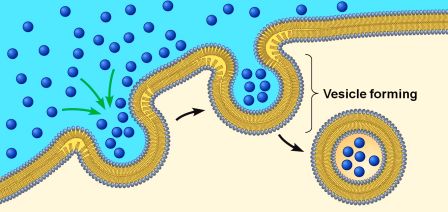
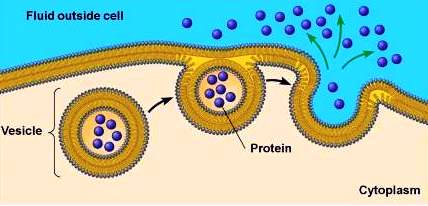
Transport through the cell Membrane Transport Using Energy:
Active transport or moving things into the cell that requires energy
with protein is on method of getting resources into the cell...this
occurs when moving things from a low concentration to a high (like moving things uphill)
Two other types of energy required transport are: endocytosis
(moving large particles into the cell) and ectocytosis (moving large particles out of the cell)
21
Multiple Choice
22
Multiple Choice
23
Multiple Choice
24
Multiple Choice
25


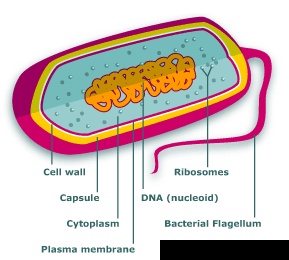
Prokaryotes
The prokaryotes are a group of organisms that lack a
cell nucleus or any other membrane-bound
organelles. There are 2 groups Archaea and Bacteria.
26


Eukaryotes
The presence of a nucleus defines eukaryotes. All species
of large complex organisms are eukaryotes, including animals, plants and fungi, although most species of eukaryote are protist microorganisms.
27
Multiple Choice
What type of cell has a nucleus?
eukaryotic
prokaryotic
neither
both
28
Multiple Choice
Plants and animal cells are examples of ___ cells
prokaryotic cells
eukaryotic cells
both eukaryotic and prokaryotic
neither
29
Multiple Choice
Prokaryotes do NOT have....
membrane bound organelles
DNA or RNA
Cell membrane
Life
30
Multiple Choice
Bacteria are considered what?
Eukaryotes
Prokaryotes
31
Multiple Choice

32
Multiple Choice
33
Multiple Choice
Transport through the cell Membrane
The cell membrane is a selectively
permeable membrane- like a castle
wall it allows some things in but keeps
others out.
The cell membrane acts like a
fence...some small things can move
through freely, larger things need to be
brought in
Show answer
Auto Play
Slide 1 / 33
SLIDE
Similar Resources on Wayground

26 questions
Asteroids, Comets, Meteoroids, and Craters
Presentation
•
6th Grade
28 questions
RFMS Science: Symbiosis & Predation Lesson 2022
Presentation
•
6th Grade
26 questions
LAB SAFETY RULES
Presentation
•
6th Grade
29 questions
Gravity & Space Exploration
Presentation
•
6th Grade
29 questions
Parts of the Eye
Presentation
•
6th Grade
29 questions
Invasive Species Lesson
Presentation
•
6th Grade
29 questions
RFMS Science: Food Chains & Webs Lesson 2022
Presentation
•
6th Grade
26 questions
Deposition
Presentation
•
6th Grade
Popular Resources on Wayground
10 questions
How much do you know about our Portrait of an Eagle?

Quiz
•
10th Grade
10 questions
Fast Food Slogans
Quiz
•
6th - 8th Grade
21 questions
Continents and Oceans
Quiz
•
6th Grade
20 questions
Parts of Speech
Quiz
•
5th Grade
16 questions
Subject & Predicate
Quiz
•
5th Grade
25 questions
Multiplication Facts
Quiz
•
5th Grade
12 questions
Map Skills
Quiz
•
3rd Grade
22 questions
Continents and Oceans
Quiz
•
5th Grade
Discover more resources for Science
10 questions
6.6D - Relative Density Review
Quiz
•
6th Grade
20 questions
Claim, Evidence and Reasoning (CER)
Quiz
•
6th - 8th Grade
20 questions
Density
Quiz
•
6th Grade
10 questions
Exploring Chemical and Physical Changes

Interactive video
•
6th - 10th Grade
20 questions
Food Chains & Food Webs
Quiz
•
5th - 7th Grade
18 questions
Interpreting Distance/Time Graphs
Quiz
•
6th Grade
10 questions
Decoding the Periodic Table of Elements
Interactive video
•
6th - 10th Grade
15 questions
Potential and Kinetic Energy
Quiz
•
6th Grade