

GRAVITY IN THE SS KEYNOTES

Presentation
•
Science
•
6th - 8th Grade
•
Easy
+1
Standards-aligned

Ruby Lopez
Used 2+ times
FREE Resource
11 Slides • 10 Questions
1

Gravity and Motion in
the Solar System
TEKS 7.9B
KEY IDEAS
•What is gravity?
•What factors affect gravity?
•How does gravity affect orbital motion?
Words to Know
inertia
Copyright © Savvas Learning Company LLC. All Rights Reserved. Savvas is not responsible for any modifications made by end users to the content posted in its original format.
2

Copyright © Savvas Learning Company LLC. All Rights Reserved. Savvas is not responsible for any modifications made by end users to the content posted in its original format.
What is gravity? continued
The scientist Isaac Newton is
believed to have studied gravity
after observing apples fall from a
tree to the ground. Gravity is a
non-contact force of attraction
between any two objects.
From his observations of gravity
on Earth, Newton proposed that
gravity also controlled movements
of objects in the solar system,
including the moon and Earth.
Photo credit: Pictorial Press Ltd/Alamy Stock Photo
3

Copyright © Savvas Learning Company LLC. All Rights Reserved. Savvas is not responsible for any modifications made by end users to the content posted in its original format.
Gravity Answers
Explain Complete each sentence using the correct term from the
word bank. Not every term will be used.
Word Bank
orbit
push
1. Newton, with other scientists, determined that all
objects in the universe
attract
each other.
2. This force, which does not require objects to be in
contact, is called
gravity
3. Newton’s theory states that this force governs
the
motion
of objects in the solar system.
4

Copyright © Savvas Learning Company LLC. All Rights Reserved. Savvas is not responsible for any modifications made by end users to the content posted in its original format.
What factors affect gravity? continued
The force of gravity between two objects depends on the
mass of the objects and the distance between them.
The force of gravity increases
when the masses of the objects
increase, and it decreases
when the masses decrease.
The force of gravity increases
when the distance between objects
decreases, and it decreases when
the distance increases.
5

Copyright © Savvas Learning Company LLC. All Rights Reserved. Savvas is not responsible for any modifications made by end users to the content posted in its original format.
Factors Affecting Gravity
Use Models A classmate develops a model using different
marbles to show how mass and distance affect gravity. Use an
X next to identify the pair of objects with the greatest
gravitational force and an O next to the pair with the least
gravitational force.
Photo credit: Sandeep Gore/Shutterstock
6

Copyright © Savvas Learning Company LLC. All Rights Reserved. Savvas is not responsible for any modifications made by end users to the content posted in its original format.
Factors Affecting Gravity Answers
Use Models A classmate develops a model using different
marbles to show how mass and distance affect gravity. Write an
X next to the pair of objects with the greatest gravitational force
and an O next to the pair with the least gravitational force.
X
O
Photo credit: Sandeep Gore/Shutterstock
7

Copyright © Savvas Learning Company LLC. All Rights Reserved. Savvas is not responsible for any modifications made by end users to the content posted in its original format.
How does gravity affect orbital motion?
8

Copyright © Savvas Learning Company LLC. All Rights Reserved. Savvas is not responsible for any modifications made by end users to the content posted in its original format.
How does gravity affect orbital motion?
continued
Inertia is the tendency of an object to resist a change in
motion unless acted upon by a force.
Gravity is the force that governs the motion of solar system
objects. Inertia and gravity interact to keep all the solar
system objects in orbit.
9

Copyright © Savvas Learning Company LLC. All Rights Reserved. Savvas is not responsible for any modifications made by end users to the content posted in its original format.
Orbital Motion
Evaluate Rewrite each false statement so that it is true.
1. Orbital motion is governed only by gravity.
2. An object in motion will usually change its motion.
3. The moon’s inertia makes it tend to move toward Earth.
10

Copyright © Savvas Learning Company LLC. All Rights Reserved. Savvas is not responsible for any modifications made by end users to the content posted in its original format.
Orbital Motion Answers
Evaluate Rewrite each false statement so that it is true.
1. Orbital motion is governed only by gravity.
Orbital motion is governed by gravity and inertia.
2. An object in motion will usually change its motion.
An object in motion resists a change in motion.
3. The moon’s inertia makes it tend to move toward Earth.
The moon’s inertia makes it tend to move away from Earth.
11

Copyright © Savvas Learning Company LLC. All Rights Reserved. Savvas is not responsible for any modifications made by end users to the content posted in its original format.
Exit Ticket
Choose one of the following ways to
describe how gravity governs the
motions of solar system objects.
1.
Write a script for a short video that
explains why Earth orbits the sun.
2.
Draw a diagram with labels and
captions that explains why Earth
orbits the sun.
12
Multiple Choice
13
Multiple Choice
14
Multiple Choice
15
Multiple Choice
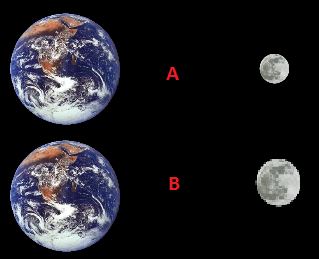
16
Multiple Choice
What is the definition of Gravity?
the force that resists the sliding motion of two surfaces that are touching
the force of attraction that pulls objects towards each other because of their masses
the speed and the direction of a moving object
the force that pushes perpendicular to the object's surface
17
Multiple Choice
Gravitational force differs based on two things.
It increases with increasing ___________.
It decreases with increasing __________ .
mass
distance
distance
mass
orbit
displacement
displacement
orbit
18
Multiple Choice
List the inner planets.
Jupiter, Saturn, Uranus, and Neptune
Mercury, Venus, Earth, Jupiter
Mercury, Venus, Earth, and Mars.
Venus, Earth, Mars, Saturn
19
Multiple Choice
The outer planets are
Jupiter, Saturn, Uranus, and Neptune
Mercury, Venus, Earth, and Mars
Jupiter, Saturn, Mars, Neptune
Mercury, Jupiter, Uranus, Saturn
20
Multiple Choice

Imagine, just for a moment, the sun's gravity suddenly disappeared! What do you think would happen to our beloved Earth?
Earth would take a leisurely stroll and DRIFT INTO SPACE
Earth would continue to ORBIT the sun as if nothing happened
Earth would shrink and become SMALLER
Earth would get all friendly and move CLOSER TO OTHER PLANETS
21
Multiple Choice
An object's gravity depends on the SIZE of the object.
True
False
Gravity and Motion in
the Solar System
TEKS 7.9B
KEY IDEAS
•What is gravity?
•What factors affect gravity?
•How does gravity affect orbital motion?
Words to Know
inertia
Copyright © Savvas Learning Company LLC. All Rights Reserved. Savvas is not responsible for any modifications made by end users to the content posted in its original format.
Show answer
Auto Play
Slide 1 / 21
SLIDE
Similar Resources on Wayground

15 questions
Weight & Mass Review
Presentation
•
6th - 8th Grade
15 questions
Science Laboratory Safety
Presentation
•
6th - 8th Grade
15 questions
Kinetic Theory of Matter
Presentation
•
6th - 8th Grade
15 questions
Change of Seasons
Presentation
•
6th - 8th Grade
15 questions
Food Webs and Chains
Presentation
•
6th - 8th Grade
16 questions
Counting Atoms
Presentation
•
6th - 8th Grade
16 questions
The Scientific Method
Presentation
•
6th - 8th Grade
16 questions
The Scientific Method
Presentation
•
6th - 8th Grade
Popular Resources on Wayground
19 questions
Naming Polygons

Quiz
•
3rd Grade
10 questions
Prime Factorization
Quiz
•
6th Grade
20 questions
Math Review
Quiz
•
3rd Grade
15 questions
Fast food
Quiz
•
7th Grade
20 questions
Main Idea and Details
Quiz
•
5th Grade
20 questions
Context Clues
Quiz
•
6th Grade
20 questions
Inferences
Quiz
•
4th Grade
19 questions
Classifying Quadrilaterals
Quiz
•
3rd Grade
Discover more resources for Science
16 questions
Interactions within Ecosystems
Presentation
•
6th - 8th Grade
12 questions
PS.8.1.2, PS.8.1.3, PS.8.1.5 Review
Quiz
•
8th Grade
20 questions
Rocks and The Rock Cycle
Quiz
•
6th Grade
20 questions
Moon Phases and Eclipses
Quiz
•
6th - 8th Grade
16 questions
Photosynthesis and Cellular Respiration Review
Quiz
•
7th Grade
20 questions
Human Body Systems
Quiz
•
6th Grade
22 questions
6th & 8th Grade Science Material SOL Review
Quiz
•
6th - 8th Grade
15 questions
Punnett Squares
Quiz
•
6th Grade