

Progression 202 Lesson 1

Presentation
•
Science
•
Professional Development
•
Practice Problem
•
Hard

Mitchell Whatley
FREE Resource
12 Slides • 0 Questions
1


Copyright © 2023 City and Guilds of London Institute. All rights reserved.
1 of 14
Progression in
Construction and BSE (Level 2)
PowerPoint
presentation
Unit 202: Changing practices over time
PowerPoint 2: 20th century evolution of construction
practices
2


Copyright © 2023 City and Guilds of London Institute. All rights reserved.
2 of 14
Progression in
Construction and BSE (Level 2)
Aim: To explore materials used in post-1919 construction
Objectives
• Differentiate between locally sourced and imported materials.
• Examine the impact of transport on material choices.
• Assess the choice of materials in relations to building importance.
• Describe the role key materials have had on the scale and speed of
construction and cost effectiveness.
• Identify the key characteristics of key materials used in industry.
• Explore the role of DPC/DPM in the construction of post-1919
construction.
3


Copyright © 2023 City and Guilds of London Institute. All rights reserved.
3 of 14
Progression in
Construction and BSE (Level 2)
Sources of materials for Welsh construction
Locally sourced materials include:
•Welsh slate
•stone
•timber
•cob.
The use of both locally sourced and imported materials in Welsh
construction reflects a balance between using available resources and
accessing materials from other regions to meet specific requirements.
Local materials were valued for their accessibility, cost-effectiveness,
and connection to the Welsh landscape, while imported materials
provided opportunities for innovation, variety and meeting specialised
needs.
4


Copyright © 2023 City and Guilds of London Institute. All rights reserved.
4 of 14
Progression in
Construction and BSE (Level 2)
Influence of transport on materials used in construction
• The
developments
in
transport
throughout
history
have
had
a
significant influence on the supply of materials used in the Welsh
construction industry.
• These advancements have not only improved the accessibility and
availability of materials but have also influenced the types of materials
used.
• They have improved accessibility, expanded the range of available
materials and facilitated the importation of materials from distant
locations.
• The availability and variety of materials have contributed to the
diversity of construction projects in Wales, enabling the industry to
meet different design and functional requirements.
5


Copyright © 2023 City and Guilds of London Institute. All rights reserved.
5 of 14
Progression in
Construction and BSE (Level 2)
Material choice and building prestige
The choice of materials was influenced by the status of the building and
the social hierarchy of the time.
The materials used in construction were a visual representation of the
wealth, prestige and social standing of the building owner or occupant
and were often influenced by factors such as:
• social status
• architectural styles
• availability of resources
• the historical period in which the building was constructed.
The status associated with specific materials evolved over time.
6




Copyright © 2023 City and Guilds of London Institute. All rights reserved.
6 of 14
Progression in
Construction and BSE (Level 2)
Material choice and building prestige: stone
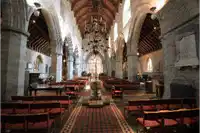
Stone has long been associated with grandeur, durability and prestige.
Buildings constructed with high-quality stone were often considered
symbols of wealth and status.
Stone not only provided aesthetic appeal but also conveyed a sense of
permanence and solidity.
Caerphilly
Castle
St David's
Cathedral
Brecon
Cathedral
7


Copyright © 2023 City and Guilds of London Institute. All rights reserved.
7 of 14
Progression in
Construction and BSE (Level 2)
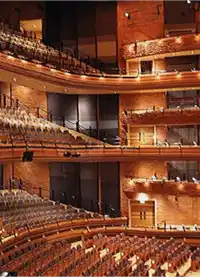
Material choice and building prestige: timber
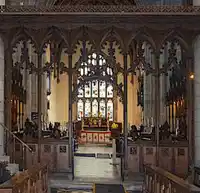
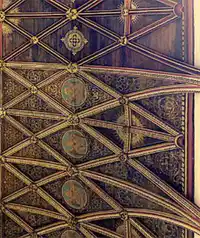
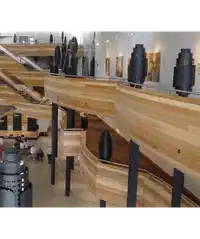
Timber in construction varied based on the availability of resources and
architectural styles.
Nave and vault in Cathedral Church of St Deiniol
Millennium Centre Cardiff
Photographs by Jacqueline Banerjee, available at https://victorianweb.org/art/architecture/scott/44.html
Photograph by Stephen Boisvert (CC BY 2.0),
available at
https://www.artsprofessional.co.uk/news/equalit
y-diversity-and-social-justice-must-follow-crisis-
says-arts-council
The quality and intricacy of timberwork, such as exposed beams and
decorative carvings, showed the status and wealth of the building.
Photograph by Tony Hisgett (CC BY
2.0), available at
https://commons.wikimedia.org/wiki/File:
Inside_Donald_Gordon_Theatre,_Wales
_Millennium_Centre.jpg
8




Copyright © 2023 City and Guilds of London Institute. All rights reserved.
8 of 14
Progression in
Construction and BSE (Level 2)
Material choice and building prestige: stained glass
Stained glass windows were prominent in historic and religious buildings,
showcasing the wealth and influence of owners or patrons.
Crafted with skill and resources, they served both functional and
symbolic roles, while allowing light inside and portraying religious or
heraldic imagery.
Photograph by Colin Price,
available at
https://victorianweb.org/art/st
ainedglass/oconnor/6.html
9



Copyright © 2023 City and Guilds of London Institute. All rights reserved.
9 of 14
Progression in
Construction and BSE (Level 2)
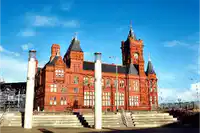
Material choice and building prestige: brick
Brick can reflect a building's status based on craftsmanship and
architectural style. In Georgian and Victorian architecture, high-quality
bricks were used for grand townhouses and public buildings, showcasing
elegance and prosperity.
Pier Head Building, Cardiff
Tredegar House, Newport
10


Copyright © 2023 City and Guilds of London Institute. All rights reserved.
10 of 14
Progression in
Construction and BSE (Level 2)
Material choice and building prestige
• Elaborate stained glass windows, high-quality stone, intricate timber
detailing and well-crafted brickwork were all indicators of wealth,
craftsmanship and architectural significance.
• These materials not only provided structural integrity but also conveyed
a sense of prestige, durability and aesthetic appeal, contributing to the
overall status and perception of the building.
11


Copyright © 2023 City and Guilds of London Institute. All rights reserved.
11 of 14
Progression in
Construction and BSE (Level 2)
Material innovations in construction
• Materials such as cement, glass and steel have played significant roles
in the construction industry in the UK since 1919.
• These materials have revolutionised construction methods, enabling
faster, more cost-effective and durable building processes.
• Collectively, these material innovations (cement, glass and steel) have
had a transformative impact on the scale, speed, cost-effectiveness,
and durability of construction in the UK since 1919.
• Their innovations have enabled the construction of larger, faster and
more
cost-effective
buildings,
while
ensuring
durability
and
sustainability.
• These materials have not only transformed construction practices but
have also contributed to the architectural landscape of the country.
12


Copyright © 2023 City and Guilds of London Institute. All rights reserved.
12 of 14
Progression in
Construction and BSE (Level 2)
Material innovations in construction
Scale of construction: The availability and advancements in these
materials have facilitated the construction of larger and taller structures.
The combination of steel frameworks, reinforced concrete and glass
facades has enabled the creation of monumental projects that were
previously unimaginable.
Speed of construction: The use of cement, steel and glass has
significantly accelerated the construction process. Prefabricated steel
components, reinforced concrete and modular glass panels can be
manufactured off-site, reducing on-site construction time. This has
allowed for faster project completion, meeting the growing demands for
housing, commercial buildings and infrastructure.
Copyright © 2023 City and Guilds of London Institute. All rights reserved.
1 of 14
Progression in
Construction and BSE (Level 2)
PowerPoint
presentation
Unit 202: Changing practices over time
PowerPoint 2: 20th century evolution of construction
practices
Show answer
Auto Play
Slide 1 / 12
SLIDE
Similar Resources on Wayground

6 questions
Electromagnetic and Magnets
Presentation
•
KG - Professional Dev...
11 questions
Ice Breaking
Presentation
•
Professional Development
11 questions
Changes in Matter Review
Presentation
•
6th - 8th Grade
10 questions
Monthly Far 5 jun 25
Presentation
•
Professional Development
7 questions
Gravity and Friction
Presentation
•
KG - Professional Dev...
7 questions
Food Mall - Induction Module 1
Presentation
•
KG - University
6 questions
the Megalodon
Presentation
•
Professional Development
6 questions
Life Cycle of the Stars
Presentation
•
9th - 12th Grade
Popular Resources on Wayground
20 questions
Math Review

Quiz
•
3rd Grade
15 questions
Fast food
Quiz
•
7th Grade
20 questions
Context Clues
Quiz
•
6th Grade
20 questions
Inferences
Quiz
•
4th Grade
19 questions
Classifying Quadrilaterals
Quiz
•
3rd Grade
20 questions
Figurative Language Review
Quiz
•
6th Grade
20 questions
Equivalent Fractions
Quiz
•
3rd Grade
10 questions
Identify Fractions, Mixed Numbers & Improper Fractions
Quiz
•
3rd - 4th Grade
Discover more resources for Science
20 questions
Guess The App
Quiz
•
KG - Professional Dev...
10 questions
Food Quiz
Quiz
•
Professional Development
11 questions
NFL Football logos
Quiz
•
KG - Professional Dev...
19 questions
Minecraft
Quiz
•
6th Grade - Professio...
20 questions
Block Buster Movies
Quiz
•
10th Grade - Professi...
40 questions
Flags of the World
Quiz
•
KG - Professional Dev...
23 questions
super heros
Quiz
•
KG - Professional Dev...
11 questions
SOCCER PLAYERS AND TEAMS
Quiz
•
KG - Professional Dev...