

WPC Quiz 2: Alt. Assignment (Gas Laws)

Interactive Video
•
Science
•
6th - 10th Grade
•
Practice Problem
•
Hard
+2
Standards-aligned

Lisa Anderson
FREE Resource
7 questions
Show all answers
1.
SLIDE QUESTION
30 sec • Ungraded
Tags
NGSS.MS-ESS1-1
NGSS.MS-ESS1-2
NGSS.MS-ESS2-4
NGSS.MS-ESS2-5
NGSS.MS-ESS2-6
2.
MULTIPLE CHOICE QUESTION
5 mins • 1 pt
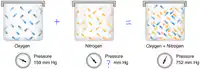
A mixture of Oxygen and Nitrogen gas has a pressure of 752 mm Hg. If Oxygen has a partial pressure of 159 mm Hg what is the partial pressure of Nitrogen?
P1 + P2 = PTotal
911 mm Hg
732 mm Hg
593 mm Hg
3.
SLIDE QUESTION
30 sec • Ungraded
Tags
NGSS.MS-ESS1-1
NGSS.MS-ESS1-2
NGSS.MS-ESS2-4
NGSS.MS-ESS2-5
NGSS.MS-ESS2-6
4.
MULTIPLE CHOICE QUESTION
5 mins • 1 pt
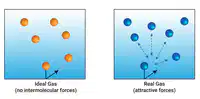
Select the statement that is NOT true about an Ideal Gas?
Particles have no volume.
Particles attract and repel each other.
Particles have elastic collisions
5.
MULTIPLE CHOICE QUESTION
5 mins • 1 pt
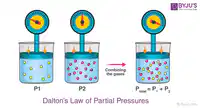
How do we find the Total Pressure of a mixed gas?
Add the partial pressure of each gas.
Subtract the partial pressure of each gas
Divide P1 by P2
6.
MULTIPLE CHOICE QUESTION
5 mins • 1 pt
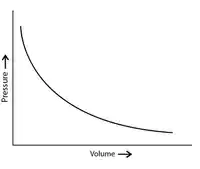
PV=nRT
When using the ideal gas law, we know that volume and pressure are inversely proportional to one another. If this is true, increasing the volume of a gas will cause the pressure to _______.
remain the same
increase
decrease
7.
MULTIPLE CHOICE QUESTION
10 mins • 1 pt
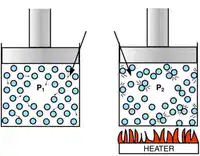
When a 25 L cylinder containing 10.0 moles of oxygen is heated to 150 K, what is the pressure inside?
Use the ideal gas law: PV=nRT
P = ? V = 25 L n = 10.0 moles R = 8.31L-kPa/mol-K T = 150 K
498.6 kPa
3116.2 kPa
13.85 kPa
Answer explanation
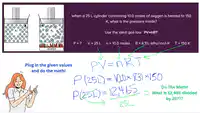
Access all questions and much more by creating a free account
Create resources
Host any resource
Get auto-graded reports

Continue with Google

Continue with Email

Continue with Microsoft
or continue with

%20(1).png)
Apple

Others
By signing up, you agree to our Terms of Service & Privacy Policy
Already have an account?


