
Thurs.11/21/24.

Presentation
•
Science
•
4th Grade
•
Practice Problem
•
Hard
+6
Standards-aligned

Jamie Jackson
Used 9+ times
FREE Resource
24 Slides • 0 Questions
1


4th Grade Science
Patterns on Earth
Lesson 7
Thursday
November 21, 2024
2

2
Do Now
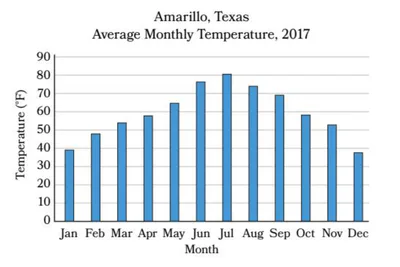
1. What was the average monthly temperature for
the month of July? ___________
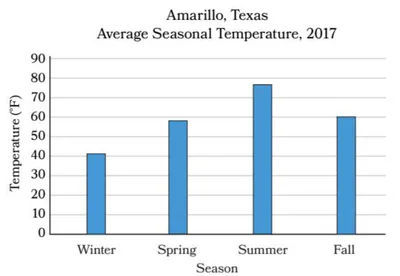
2. What was the average seasonal temperature for
Spring? ______________
3


3
Patterns on Earth
LO:SWBAT model and describe
slow changes to Earth’s surface
caused by weathering, erosion,
and deposition by wind.
DOL: Given scenarios, SW correctly describe slow changes
to Earth’s surface caused by weathering, erosion, and
deposition by wind in at least 4 of 5 questions.
SCI.4.10B Model and describe slow changes to Earth’s surface caused by weathering, erosion, and deposition from water, wind, & ice.
SEPs 4.1G, 4.2A, 4.3A
RTCs 4.5G, 4.5B, 4.5D
4

4
Essential Understandings &
Guiding Questions
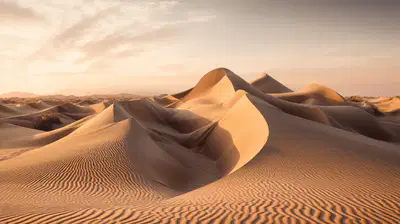
How does wind shape Earth’s surface?
How do slow changes shape Earth’s surface?
How are sand dunes formed?
5

6
How does wind shape earth’s surface?
6

5
Lesson Vocabulary
landform
weathering
erosion
deposition
sediment
sand dune
7
8

7
How does wind shape Earth’s surface?
Materials
Sand
Straw
Plastic container/bin
Protective eyewear (goggles)
Illustration
Observation
Sand Hill
(before blowing
the wind)
Sand Hill (after
blowing the
wind)
1. Put sand in the plastic container/bin. What
observations can you make?
2. Now, make a hill of sand in the container
using your hands. Draw and record your
observations.
3. With your protective eyewear on, blow into
the straw towards the sand to create ‘wind’
blowing on the hill. What changes do you
observe? Draw and record your observations.
9

Copyright © Savvas Learning Company LLC. All Rights Reserved. Savvas is not responsible for any modifications made by end users to the content posted in its original format.
How do slow changes shape Earth’s surface?
A landform is a natural feature on Earth’s surface. The movement
of water, wind, and icecause slow changes that shape Earth’s
landforms.
The changes are
very slow and occur
over periods of time
that are longer than
one person’s
lifetime, such as
thousands or
millions of years.
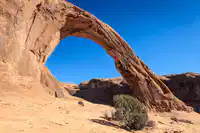
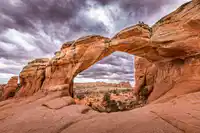
How long do you
think it took for this
desert arch to form?
10

Copyright © Savvas Learning Company LLC. All Rights Reserved. Savvas is not responsible for any modifications made by end users to the content posted in its original format.
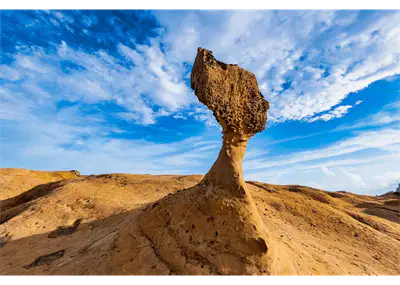
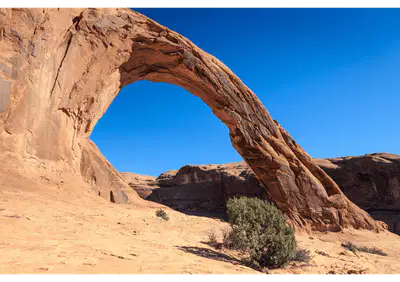
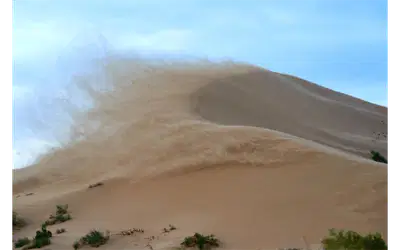
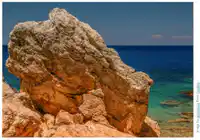
What is weathering by wind?
Weathering is the breaking down of landforms by natural forces
such as wind.
Photo credit: CHC3537/Shutterstock; Louise Murray/Science Source
11

Copyright © Savvas Learning Company LLC. All Rights Reserved. Savvas is not responsible for any modifications made by end users to the content posted in its original format.
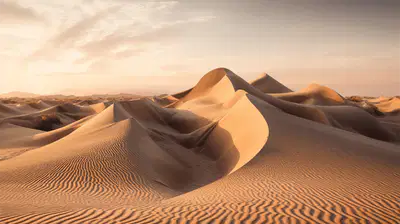
What is erosion by wind?
Erosion is the process of sediments or rocks being moved from
one place to another by wind.
Photo credit: Yerbolat Shadrakhov/Shutterstock; Dr Morley Read/Shutterstock
Wind
contributes
to erosion by
blowing the
particles
away.
12

Copyright © Savvas Learning Company LLC. All Rights Reserved. Savvas is not responsible for any modifications made by end users to the content posted in its original format.
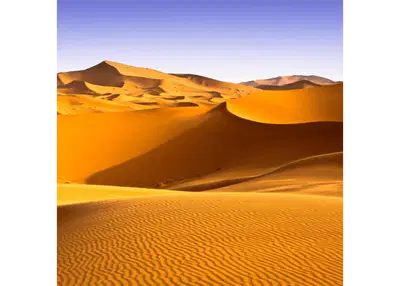
What is deposition by wind?
Deposition is the drop off of particles in a new place by wind.
13

12
How are sand dunes formed?
Where do sand
dunes come
from?
14


Copyright © Savvas Learning Company LLC. All Rights Reserved. Savvas is not responsible for any modifications made by end users to the content posted in its original format.
How Wind Shapes Landforms
Explain how weathering, erosion, and deposition by wind can cause
the formation of a sand dune.
Weathering by wind
breaks rocks into smaller
pieces. Wind moves the
sand from one location to
another. Then the sand is
deposited in a pile,
forming a sand dune.
Photo credit: apstockphoto/Shutterstock
15

Landform
A natural feature of the
Earth’s surface
16

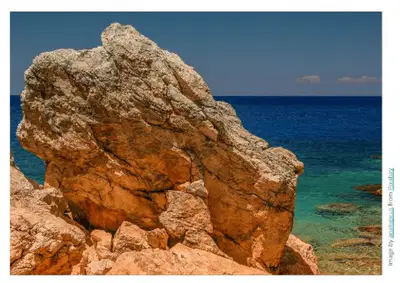
Weathering
The breaking up of
rocks into smaller
pieces by water, wind,
or ice
17

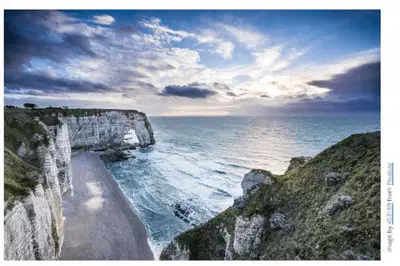
Erosion
The movement of rocks
and sediments by
water, wind, ice, or
gravity
18

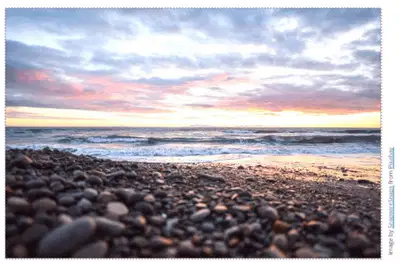
Deposition
Sediments are
deposited or dropped
off in a new location
19

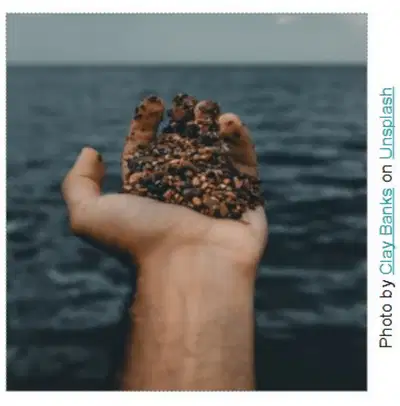
Sediment
Material that is broken
down by the processes
of weathering and
erosion and is carried
by wind, water, or ice.
20

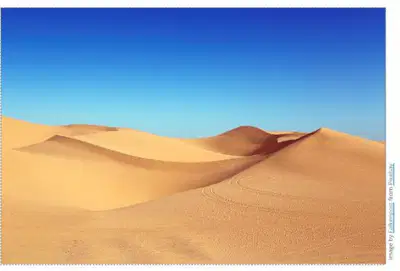
Sand Dune
A hill that is created by
sediments being
deposited in a specific
area
21

20
Sand dunes can be found in a beach or desert ecosystem. Which
of the following best explains the process that forms sand dunes?
A.
Sand dunes are formed when the ocean weathers sand particles and deposits
them in a new location.
B.
Sand dunes are formed when cacti roots erode rocks and shells and deposit
them in a new location.
C.
Sand dunes are formed when the wind erodes sand particles and deposits them
in a new location.
D.
Sand dunes are formed when glaciers cut through the land and deposit sand
particles in a new location.
22

21
How does wind contribute to weathering?
A.
It causes chemical reactions that dissolve rocks.
B.
It transports water that breaks down rock surfaces.
C.
It compresses rock layers deep beneath the Earth's surface.
D.
It carries small particles that scrape against rock surfaces, wearing them down
over time.
23

22
DOL: Given
scenarios, SW
correctly describe
slow changes to
Earth’s surface
caused by
weathering, erosion,
and deposition by
wind in at least 4 of
5 questions.
Demonstration of Learning
24

●Some images used in this lesson are taken from Adobe Stock. Adobe Stock
https://stock.adobe.com
●Some images used in this lesson are taken from Great Minds. Great Minds
https://digital.greatminds.org
●Some images used in this lesson are taken from SAVVAS realize. SAVVAS
realize https://www.savvasrealize.com
23
Copyright for Reference
4th Grade Science
Patterns on Earth
Lesson 7
Thursday
November 21, 2024
Show answer
Auto Play
Slide 1 / 24
SLIDE
Similar Resources on Wayground

20 questions
Weather Maps
Presentation
•
3rd - 5th Grade
20 questions
Sedimentary Rock and Fossil Fuels Recap
Presentation
•
5th Grade
19 questions
Cause and effect
Presentation
•
4th Grade
18 questions
Plants
Presentation
•
6th - 8th Grade
18 questions
Weather Tools
Presentation
•
4th Grade
17 questions
Rocks and Minerals Grade 4 Quiz
Presentation
•
4th Grade
15 questions
Soil
Presentation
•
4th Grade
16 questions
Kinetic Energy
Presentation
•
4th - 5th Grade
Popular Resources on Wayground
10 questions
Safety Day 2026 – Student Review

Quiz
•
9th Grade
21 questions
Continents and Oceans
Quiz
•
6th Grade
20 questions
Parts of Speech
Quiz
•
5th Grade
16 questions
Subject & Predicate
Quiz
•
5th Grade
25 questions
Multiplication Facts
Quiz
•
5th Grade
12 questions
Map Skills
Quiz
•
3rd Grade
22 questions
Continents and Oceans
Quiz
•
5th Grade
15 questions
Rounding Decimals
Quiz
•
5th Grade
Discover more resources for Science
10 questions
Mixtures and Solutions
Quiz
•
4th Grade
10 questions
Identifying Physical and Chemical Changes

Interactive video
•
1st - 5th Grade
13 questions
Reflect, refract, and absorb
Quiz
•
3rd - 5th Grade
15 questions
Weathering and Erosion
Interactive video
•
4th Grade
14 questions
Scientific Method
Quiz
•
3rd - 5th Grade
11 questions
Force and Motion
Quiz
•
4th Grade
30 questions
Unit 2 Energy Resources
Quiz
•
4th Grade
15 questions
Mixtures and Solutions
Quiz
•
4th Grade