Chemical Bonding
Presentation
•
Chemistry
•
10th - 12th Grade
•
Easy
+1
Standards-aligned
Sweetheart Tayong
Used 3+ times
FREE Resource
48 Slides • 43 Questions
1
Discover new features in Lessons!
Finish all phases of “I-do ; We-do ; You-do” with Quizizz


You can also create lessons directly on Google Slides using “Quizizz Extension”.
Read more about it here
2
3
4
5
Multiple Choice
6
Multiple Choice
What is made when an atom gain an electron?
Neutral(no charge)
Positive ion
Negative ion
7
Multiple Choice
Which type of bond transfers electrons
covalent bonds
ionic bonds
hydrogen bonds
8
Multiple Choice
MgO is bonded together with what type of bond?
ionic
covalent
metallic
hydrogen
9
Multiple Choice
C6H12O6 has what type of bond holding the atoms together?
ionic
covalent
metallic
Hydrogen
10
Multiple Choice
11
Multiple Choice
12
Multiple Choice
13
Multiple Choice
14
Multiple Choice
15
16
17
How to write electron configuration
Identify the row number
Identify the orbital
Identify the number of electrons in the orbital (based on the position on the periodic table)
Write out all configurations for the elements prior
18
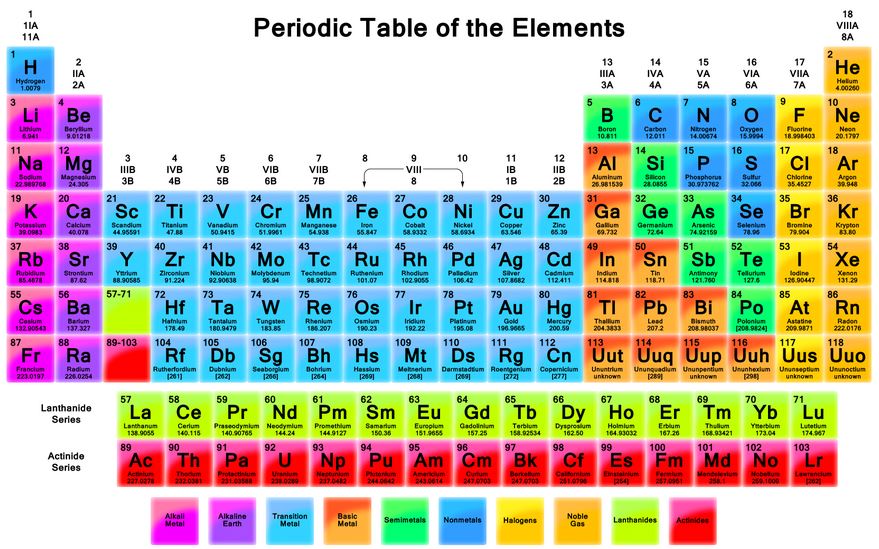
Using the periodic table to understand electron configuration
s orbital = blue
p orbital = green
d orbital = pink
f orbital = yellow
19
How to Write an Electron Configuration:
1. Start with the shell/period number
2. Followed by the type of orbital
3. Finally the superscript indicates the number of electrons in the orbital
Example: B = 1s2 2s2 2p1
20
21
22
Helium (1s2)
-The second element in period 1
-2 electrons on the inner most shell
-Start at H and move across the period to count the valence electrons
23
Multiple Choice
Choose the correct electron configuration for Terbium (Tb).
1s2 2s2 2p6 3s2 3p6 4s2 3d10 4p6 5s2 4d19 5p6 6s2
1s2 2s2 2p6 3s2 3p6 4s2 3d10 4p6 5s2 4d10 5p6 6s2 4f9
1s2 2s2 2p6 3s2 3p6 4s2 3d10 4p6 5s2 4d10 5p6 6s2 4f5
24
Orbital filling
Electrons fill these orbitals in a way that allows them to take the easiest root possible. The LOWEST energy levels are filled first.
25
26
Multiple Choice
What atom matches this electron configuration? 1s22s22p63s23p64s23d10
Zinc
Copper
Nickel
Germanium
27
Multiple Choice
The electron configuration of an atom is 1s22s22p6. The number of electrons in the atom is
3
6
8
10
28
29
30
Multiple Choice
Using your orbital filling cheat sheet, tell me which orbital fills after the 2 p orbital is full.
3p
3s
2s
1p
31
32
33
34
Lewis Electron Dot Structure
The chemical symbol of an element is surrounded by a number of dots which are the valence electrons.
35
Multiple Choice
The outermost electrons of an atom are __________.
outermost electron
Lewis electrons
valence electrons
octet electrons
36
Octet Rule or Rule of Eight
Elements with with complete number of electron are those with 8 valence electrons and they are described as STABLE ELEMENTS
Example: 18Ar 2) 8) 8) valence electron is 8 therefore 18Ar is stable.
Elements with incomplete number of valence electrons are those with less than 8 valence electrons and they are described as UNSTABLE ELEMENTS
Example: 11Na 2) 8) 1) valence electron is 1, its is less than 8 therefore 11Na is unstable.
37
Drawing Electron-Dot Structures
Trivia: Lewis Electron-Dot Structures are a visual representation of valence electrons in a molecule. By drawing these structures, we can determine the number of bonds in a molecule. This method helps us understand the bonding patterns and predict the chemical properties of substances. It's a fundamental tool in chemistry!
38
Multiple Choice
39
Multiple Choice
What is the correct Lewis Dot Structure for ammonia NH3
40
Multiple Choice
Which is the correct molecular structure for carbon dioxide?
41
Multiple Choice
42
Multiple Choice
Which Lewis Dot Model drawing correctly shows an O2 molecule?
43
Multiple Choice
44
Multiple Choice
45
Multiple Choice
Which is the correct structure for NH3?
Pictures correspond with a-d.
Option A.
Option B.
Option C.
Option D.
46
Multiple Choice
47
48
Multiple Choice
ions that are made up of more than one atom
ionic bond
atomic ion
monoatomic ion
polyatomic ion
49
Multiple Choice
ionic bond forms because
two ions of the same charge are attracted to each other
two atoms share their electrons
two or more atoms share their protons
two ions of different charges are attracted to each other
50
Multiple Choice
Ionic compounds have
a positive charge
a negative charge
no electrical charge
changing electrical charge
51
Multiple Choice
A symbol Li+ means
lithium isotope has one positive charge
lithium has one valance electron
lithium ion is looking for positive one atom
lithium ion has one positive charge
52
Multiple Choice
NaCl is an example of a chemical formula of
ionic molecule
crystal
ionic compound
covalent compound
53
Multiple Choice
How many chloride ions are needed to cancel the 2+ charge of magnesium in magnesium chloride?
6
2
-1
-2
54
Fill in the Blanks
Type answer...
55
Multiple Choice
What is the name of the outermost electrons?
outside electrons
electron clouds
valence electrons
negative electrons
56
Multiple Choice
When an electron is removed from or added to an atom, the atom/s becomes
ion
isotopes
atoms
bonded
57
58
59
60
FORMATION OF COVALENT COMPOUNDS
61
FORMATION OF COVALENT COMPOUNDS
1) The two atoms of nonmetals share valence electrons to obtain the same number of electrons as the nearest noble gas, producing molecular covalent compounds.
62
​
Hydrogen's configuration is 1s1. S orbital has a maximum number of valence electrons.
For the atoms to become stable, they should have a completely filled last main energy level.
63
Multiple Choice
How many electron/s is/are needed for the hydrogen atom to have a completely-filled last energy level?
1
2
3
4
64
Multiple Choice
How many electrons are needed by oxygen atom to have 8 valence electrons?
1
2
3
4
65
Multiple Choice
How many electrons can be shared by oxygen atom?
1
2
3
4
66
2.9 Covalent Bonding
Sharing electrons to achieve stability.
It's how nonmetals bond with other nonmetal atoms.
Molecules are formed. (discrete, electrically-neutral particles of matter... they be small y'all)
67
68
69
Covalent Bonds involve nonmetals only.
...Who are the Nonmetals again?
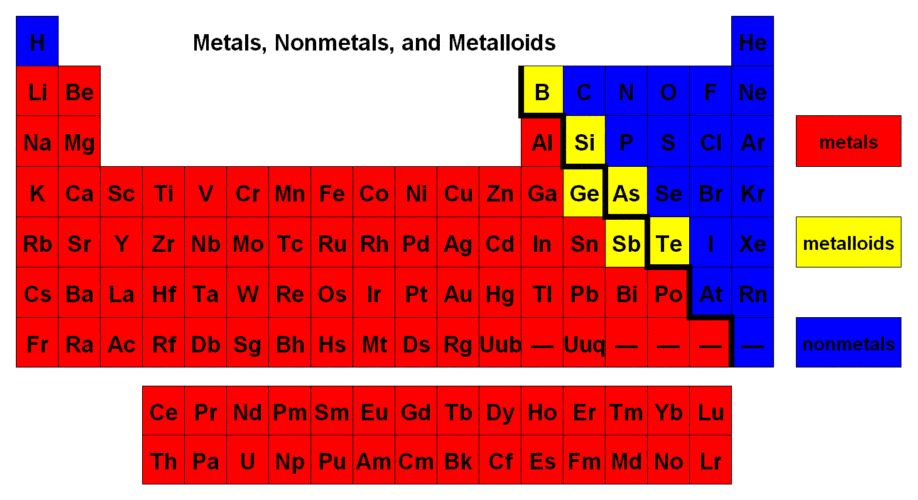
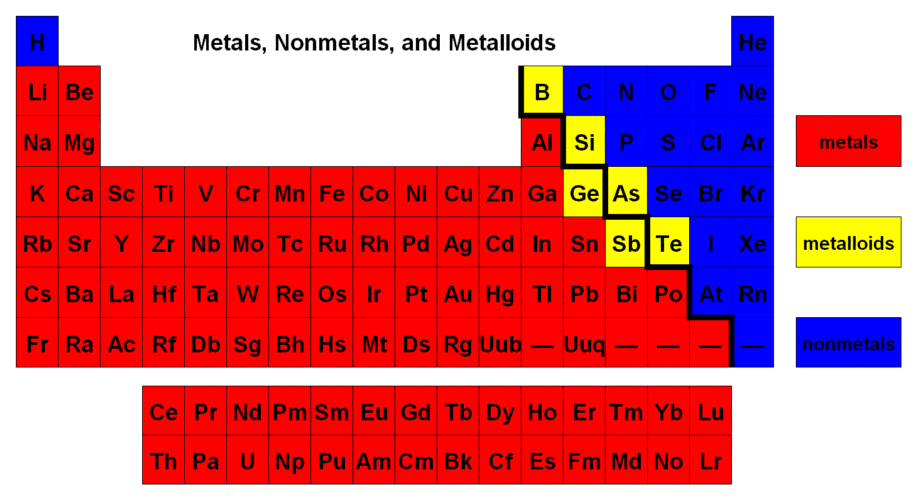
Elements to the right of the staircase line AND Hydrogen , H
70
Prior Knowledge
Electron configuration
Valence electrons
location of nonmetals on P.T.
Octet Rule
rapid fire set of questions up next. Be ready to flip to periodic table
71
Multiple Choice
What is the electron configuration of chlorine? (symbol, Cl , Group 17)
2-7
2-8-7
2-8-8
72
Multiple Choice
How many valence electrons does an atom of chlorine have?
2
7
8
73
Multiple Choice
If forming an ion, What will an atom of chlorine do to achieve 8 valence electrons?
gain 1
lose 7
74
If a metal atom is around, 1 electron will transfer to the chlorine atom... making it a 1- chloride ion (that is ionic bonding)
But what if there are no metal atoms around?
What if there are only other nonmetal atoms nearby?
75
Covalent Bonding
Sharing valence electrons , not transferring them.
76
Key information for Covalent Bonding
" Co " = share ; "valent" = valence shell (valence electrons)
A Covalent Bond is: A chemical bond formed when two atoms share valence electrons. (Typically, two nonmetal atoms)
Sharing takes place until each atom has access to 8 valence electrons (Octet Rule ; exceptions of Hydrogen... needs only 2)
Example: In a molecule of Cl2 , each chlorine atom donates an electron into a covalent bond in the molecule , which results in each Cl atom having access to 8 total valence electrons (each started with 7).
77
Hydrogen is a nonmetal and is an exception to the Octet Rule
It only needs to form one covalent bond and have access to 2 valence electrons.
Can bond to itself, making H2
Or to others, such as carbon (CH4)
78
Electrons are shared to form one, two, or three bonding pairs
Single Covalent Bond: One shared pair (Ex: in Cl2)
Double Covalent Bond: Two shared pairs (Ex: in O2)
Triple Covalent Bond: Three shared pairs (Ex: in N2)
Bonding pairs of electrons represented as dots or as dashes in Lewis Dot Diagrams (examples on next slide)
79
80
81
82
New Term: Valency
The number of covalent bonds that an atom needs to reach stability
(Typically, to reach access to 8 valence electrons.)
How-to:
Simply count the number of unpaired electrons in the atom's Lewis Dot Diagram
83
Multiple Choice
How many unpaired electrons in the Lewis Dot Diagram of an atom of fluorine? (this will determine how many covalent bonds it needs to form... its valency)
(click the image to enlarge)
1
2
3
84
Multiple Choice
How many covalent bonds does an atom of oxygen need to form to be stable?
(click image to enlarge)
1
2
3
85
86
Lewis Dot Diagrams of nonmetal atoms are the key to determining how they bond with each other
But how to draw them?
87
(Mr. M demonstrating after the Quizizz Lesson concludes)
88
Recap
nonmetals can form covalent bonds with other nonmetal atoms
covalent bonds involve the sharing of valence electrons
Typically, each atom contributes one valence electron into each covalent bond (thus, bonding pairs are formed)
The number of unpaired valence electrons an atom has determines how many covalent bonds it needs (a.k.a. its valency)
89
Multiple Select
Which of the following elements could be involved in covalent bonds?
Select all that apply.
H, hydrogen
Na, sodium
S, sulfur
Fe, iron
90
Multiple Choice
Covalent bonding involves the ...
transferring of electrons from one atom to another
the sharing of electrons between atoms
the attraction between metal cations and a sea of mobile electrons
91
For Definitions and Examples of Covalent Bonding, Lewis Dot Diagrams and Structures... go to Quizlet
"2.9 Covalent Bonding"
Discover new features in Lessons!
Finish all phases of “I-do ; We-do ; You-do” with Quizizz


You can also create lessons directly on Google Slides using “Quizizz Extension”.
Read more about it here
Show answer
Auto Play
Slide 1 / 91
SLIDE

Similar Resources on Wayground
82 questions
Introduction to Covalent Bonding
Presentation
•
9th - 12th Grade
85 questions
Federalism
Presentation
•
9th - 12th Grade
87 questions
Memory
Presentation
•
9th - 12th Grade
85 questions
Ch. 8 Covalent Bonding
Presentation
•
9th - 12th Grade
84 questions
Writing Chemical Equations from Word equations
Presentation
•
9th - 12th Grade
84 questions
AP Psychology Unit IX - Developmental Psychology
Presentation
•
9th - 12th Grade
90 questions
Key Features of Graphs
Presentation
•
9th - 12th Grade
88 questions
Breakout at Pusan - S3 - Part 1
Presentation
•
10th - 12th Grade
Popular Resources on Wayground
6 questions
Secondary Safety Quiz
Presentation
•
9th - 12th Grade
10 questions
MyPath Diagnostic Overview
Presentation
•
6th - 8th Grade
20 questions
Lab Safety Quiz
Quiz
•
6th Grade
21 questions
Continents and Oceans
Quiz
•
6th Grade
20 questions
Adding and Subtracting Decimals
Quiz
•
5th Grade
20 questions
Parts of Speech
Quiz
•
5th Grade
16 questions
Subject & Predicate
Quiz
•
5th Grade
21 questions
Lab Safety
Quiz
•
10th Grade
Discover more resources for Chemistry
21 questions
Lab Safety
Quiz
•
10th Grade
20 questions
Lab Equipment and Safety Quiz
Quiz
•
10th - 12th Grade
20 questions
Scientific Method
Quiz
•
10th - 12th Grade
20 questions
Lab Safety
Quiz
•
10th Grade
20 questions
Metric Conversions
Quiz
•
11th Grade
12 questions
Significant figures
Quiz
•
9th - 12th Grade
20 questions
Lab Safety and Lab Equipment
Quiz
•
9th - 12th Grade
16 questions
ACA Unit 1 Atomic Structure
Quiz
•
9th - 12th Grade