

Printmaking

Presentation
•
Arts
•
9th - 12th Grade
•
Practice Problem
•
Hard

Amber Jensen
Used 3+ times
FREE Resource
15 Slides • 0 Questions
1

Fine Art Printmaking
& Introduction to relief printing
2

History of Printmaking
The history of printmaking began in Han Dynasty China. The earliest known example, a woodblock
print on silk, has been dated sometime during the Han Dynasty from 206 B.C. to 220 A.D. The first
print on paper was made during the seventh century. The original form of printmaking used a small
wooden board as the matrix.
Printmaking continued to spread throughout the world and in the 15th century, Johannes
Gutenberg’s printing press revolutionized the art form and the culture. While not the original inventor,
Gutenberg perfected the movable type printing press around 1450 and popularized it in Europe. His
most famous works, the 1,300-page Gutenberg Bibles, were masterful prints that used printed gothic
type designed to look like hand calligraphy.
3


Relief Printing
What is a relief print? Relief printing is when you carve into a printing block that you then use to press
onto paper and make a print. The lines or shapes you carve into the printing block will not have ink on
them, so will not show up on your paper.
4


Intaglio Prints
Intaglio printing is the opposite of relief printing, in that the printing is done from ink that is below the
surface of the plate. The design is cut, scratched, or etched into the printing surface or plate, which can be
copper, zinc, aluminum, magnesium, plastics, or even coated paper.
5

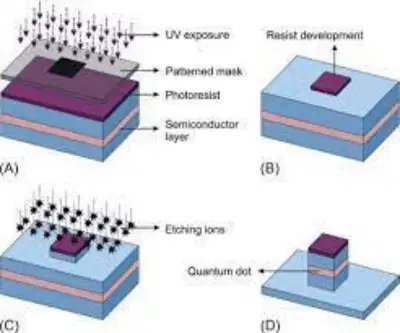
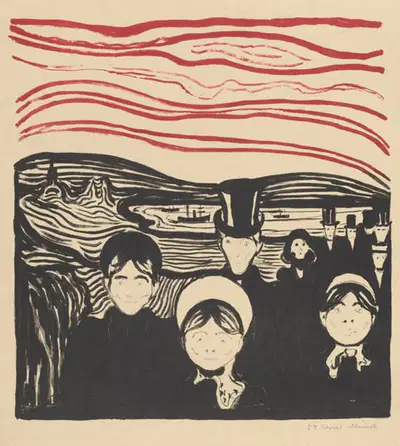
Planographic or Lithography
Lithography is a planographic printmaking process in which a design is drawn onto a flat stone (or
prepared metal plate, usually zinc or aluminum) and affixed by means of a chemical reaction.
6

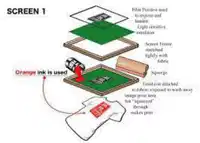
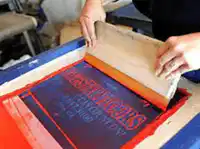
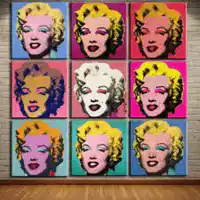
Stencil or Silkscreen
Silkscreen Printing is a stenciling method that involves printing ink through stencils that are supported
by a porous fabric mesh stretched across a frame called a screen. Silkscreen Printing is ideally suited for
bold and graphic designs.
7

Some important vocab: Glossary of Printmaking
Artist Proof: Artist’s proof prints are made by the artist to check the print quality
and design before printing an edition. Artist’s Proof prints usually shouldn’t exceed
10% of the overall number in the edition. They are usually identical to the edition
but may sometimes include slightly flawed prints omitted from the edition.
Barren: a disk-shaped printmaking tool used to hand burnish a print by rubbing it
over the surface of the paper when it is in contact with the inked-up block.
Block: the material into which a design is carved for relief printmaking, e.g. lino, ply
etc.
Matrix: the printmaking surface – plate, block, stone etc. from which the image is
taken.
8

Vocab continued
Brayer: a roller used to apply ink to a printing surface.
Hand Burnishing: taking a print by hand or by using a baren instead of a press.
Paper is placed over the inked up block and then rubbed over with a hand, baren,
wooden spoon or similar to transfer the ink to the paper.
Edition: a set of identical prints taken from the same matrix or matrices (printing
surfaces). Editions can either be limited or open. Limited editions mean that no
more of the same prints will be made.
Limited Edition: a set of identical prints taken from the same matrix or matrices
(printing surfaces). Limited editions mean that no more of the same prints will be
made.
9

Exploring Printmaking and Artists assignment
Go to Schoology and open the assignment “Exploring Printmaking and Artists”, follow the
instructions on the “worksheet”
Some artists to look at:
Relief Prints: Holbein the Younger, Fred Hagen, Vincent Van Gogh, James Whistler, any Japanese printmaker.
Intaglio Prints: Francisco Goya, Pablo Picasso, Thomas Gainsborough, Rembrandt van Ryn, Albrecht Durer
Planographic (Lithography) Prints: Eugene Delacroix, Edouard Manet, Henri de Toulouse-Lautrec, Edvard
Munch
Stencil/Screen Prints: Andy Warhol, Ben Shahn, Robert Guathmey
10

Linocut prints
11

Linocut printmaking
What is a Linocut?: Linocuts are very similar to woodcuts. It is a printing method using a sheet of
linoleum, in which a subtractive cutting method is used to take away the parts of linoleum where
you want to leave the white of the page, and keep the parts you want to be inked! In the result you
have a linocut that can reproduce the same image over and over again.
A Short History: While linoleum was first invented in the 1860s, it wasn't used as a medium for
printing until the early 1900s in Germany, where it was first used for making patterns on wallpaper!
Artists ranging from Pablo Picasso to Henri Matisse have made linocuts, and today it is considered
a respected art form. Linocuts are also very popular in teaching children in schools about the
rewarding art of printmaking.
How to Make Linocuts!
12


Linocut supplies
13

Linocut steps
1.
Come up with a design
*BEFORE YOU DO ANYTHING: Remember this is a print, and ANYTHING YOU PUT ON YOUR
PLATE WILL BE BACKWARDS WHEN PRINTED!
* Anything you want to “receive” ink needs to remain raised and anything that you don’t want
to “receive” ink will need to be removed.
2.Plan out the black and white areas of your design
3.Transfer design onto plate
4.Begin carving your design. Remember to always crave away from yourself!
5.Set up and roll out ink
6.Roll ink onto your block
7.Do a few test prints on Newsprint paper, you may find areas you need to crave way
8.Create 3 to 4 Artist Proofs to work out any issues with your design
9.Then begin creating your editions create
14

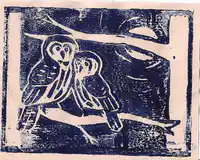
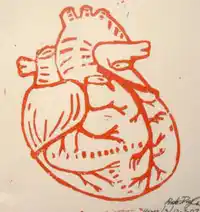
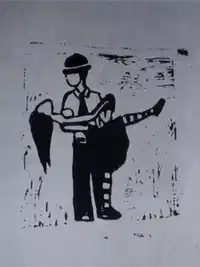
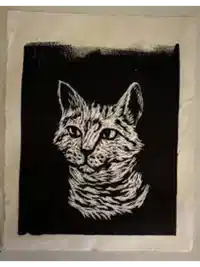
Examples of Linocut Prints
15

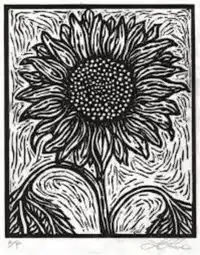
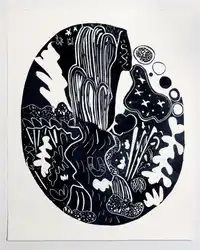
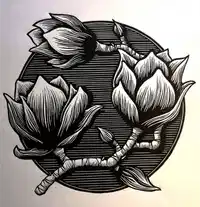
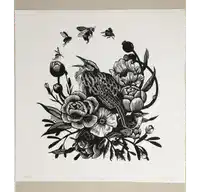
More examples. . .
Fine Art Printmaking
& Introduction to relief printing
Show answer
Auto Play
Slide 1 / 15
SLIDE
Similar Resources on Wayground

12 questions
Resumes Pre-knowledge
Presentation
•
9th - 12th Grade
10 questions
Absolute Value Equations
Presentation
•
9th - 12th Grade
11 questions
Quadrilaterals
Presentation
•
9th - 12th Grade
11 questions
Factoring: Quadratic Trinomial when a=1
Presentation
•
9th - 12th Grade
11 questions
Color Theory 2.2
Presentation
•
9th - 12th Grade
10 questions
Evaluación MANIFESTACIONES ARTISTÍSTICAS
Presentation
•
KG - University
12 questions
Writing Linear Equations From Two Points
Presentation
•
9th - 12th Grade
12 questions
Medical Math- Military Time
Presentation
•
9th - 12th Grade
Popular Resources on Wayground
10 questions
Safety Day 2026 – Student Review

Quiz
•
9th Grade
21 questions
Continents and Oceans
Quiz
•
6th Grade
20 questions
Parts of Speech
Quiz
•
5th Grade
16 questions
Subject & Predicate
Quiz
•
5th Grade
25 questions
Multiplication Facts
Quiz
•
5th Grade
12 questions
Map Skills
Quiz
•
3rd Grade
22 questions
Continents and Oceans
Quiz
•
5th Grade
15 questions
Rounding Decimals
Quiz
•
5th Grade